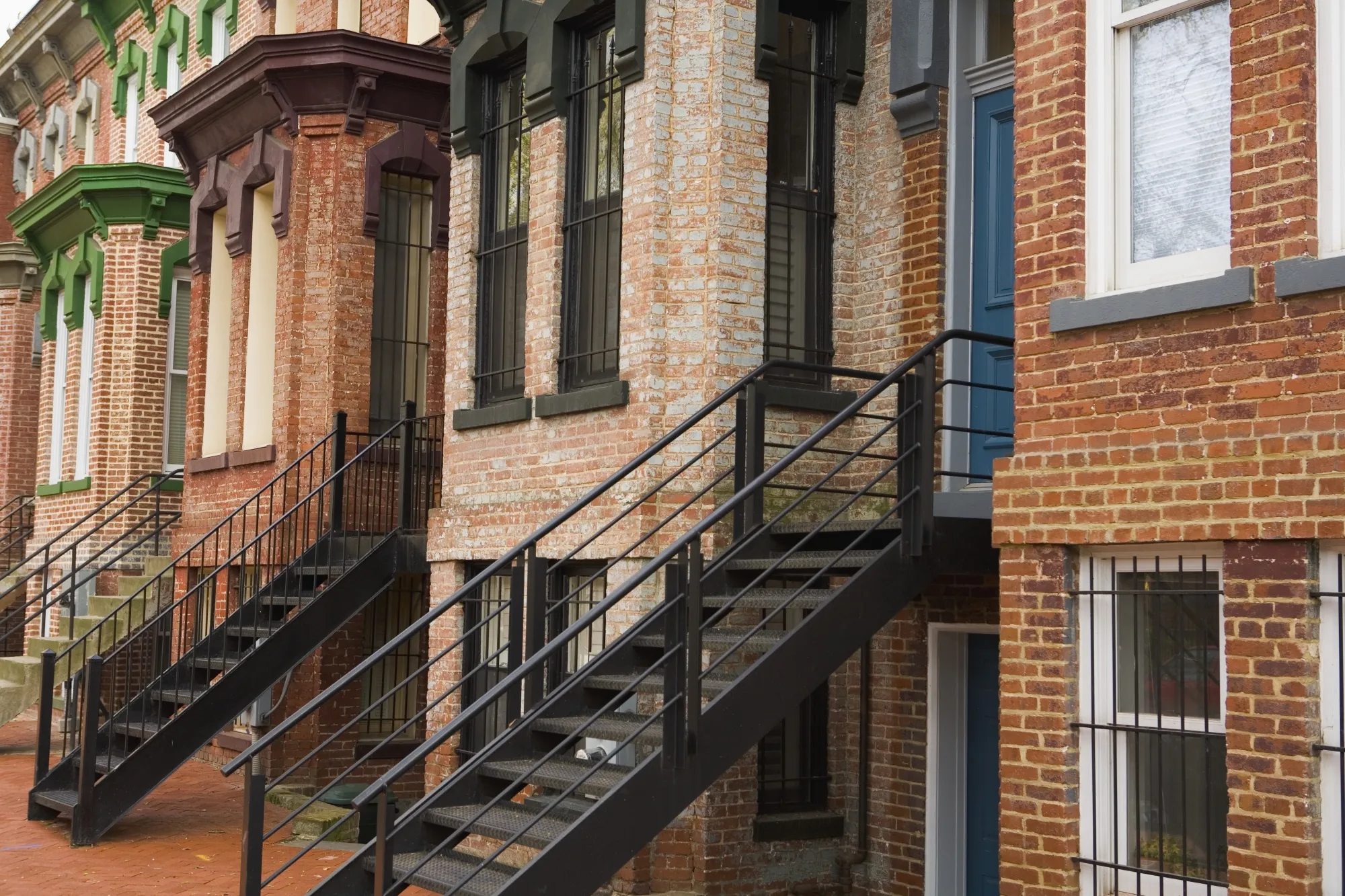
The design history of the English basement in D.C. is inextricably linked to its parent structure, the row house.
Photographer: Rudy Sulgan/The Image Bank via Getty Images
How the English Basements of Washington, D.C., Came Into Their Own
Once used by wealthy homeowners for kitchens, guest rooms or coat closets for parties, many D.C. basements have been turned into more affordable rental units.
(This article is part of Bloomberg CityLab’s series exploring the iconic home designs that shaped global cities. Read more from the series. Get the next story sent to your inbox by subscribing to the CityLab Daily newsletter.)
Walk through many residential areas of inner Washington, D.C., today, and the architecture gives an impression of enduring grandeur. The city’s elegant Victorian era row houses — some elaborately decorated in historic styles, and others more staid — have a look of deep-rooted solidity. But there’s more beneath the row houses than meets the eye.