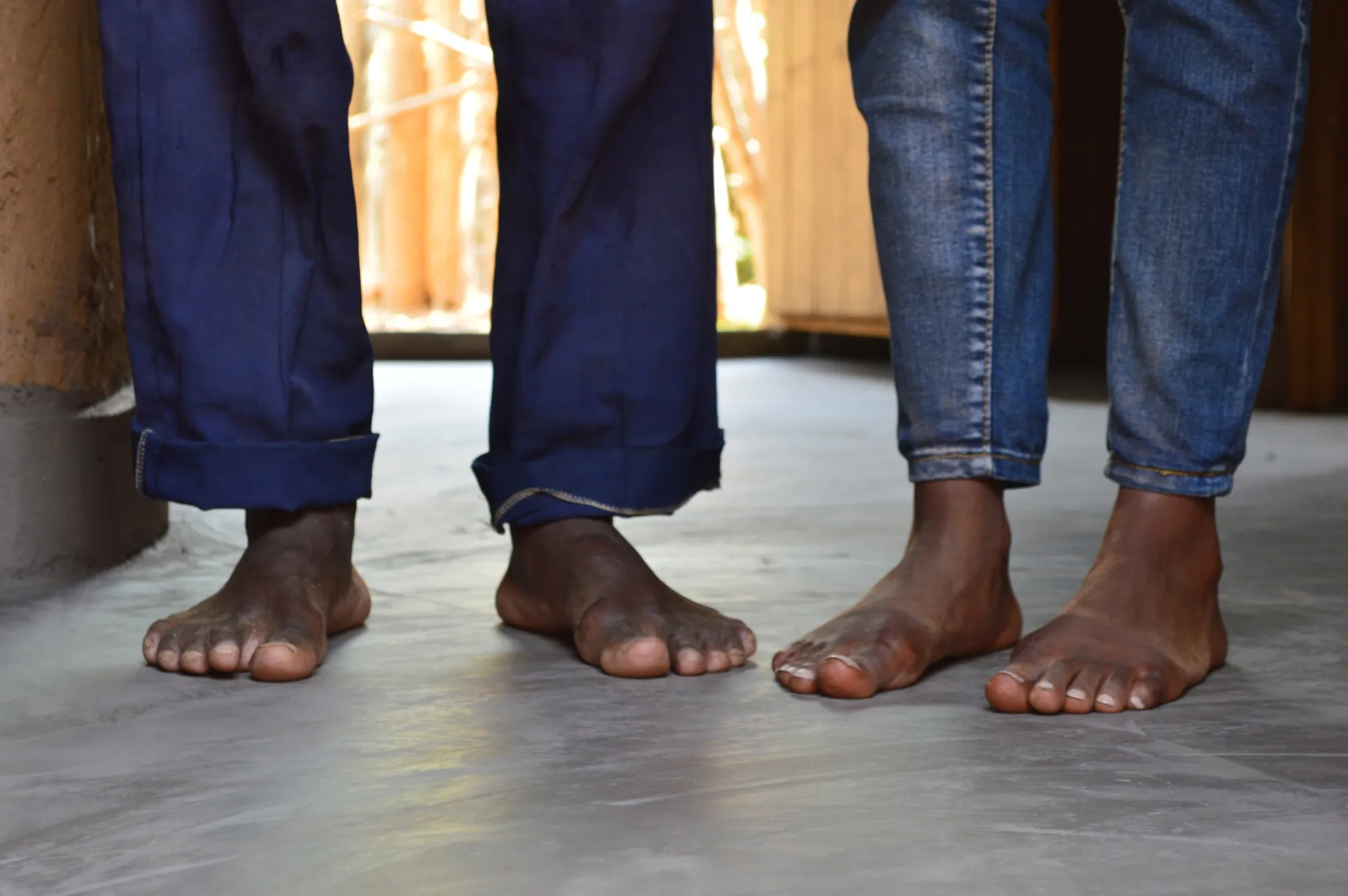
Rwandan children on the flaxseed oil floor that replaced the former dirt base.
Photo courtesy of EarthEnable
One Way to Tackle Extreme Poverty: Replace Dirt Floors
Nonprofits are creating innovative housing solutions to cut cases of diarrhea and other illness, but more than a billion people still live on earth floors that can cause problems.
When Gayatri Datar and some of her classmates from Stanford University traveled to Rwanda for a course on entrepreneurial design for extreme affordability, they encountered a country where around 75% of the population lived on dirt floors. Coughing was common from dust clouds formed during sweeping. Rain filled houses with mud and insects. And fecal matter, from humans and animals, was often on the ground.
“It was not only a challenge for health, but also for comfort and dignity,” said Datar, who used that 2013 class as a springboard to start a business that builds floors for rural Rwandans and Ugandans.
The organization, EarthEnable, added almost 3,600 new floors in the 12 months through July, bringing its total number of floors built to just shy of 11,000. It plans to expand the number of districts where it operates in the two countries in 2022, as well as add to the 181 people it employs in its hybrid structure of being nonprofit in the U.S. and running the local businesses with a for-profit model.