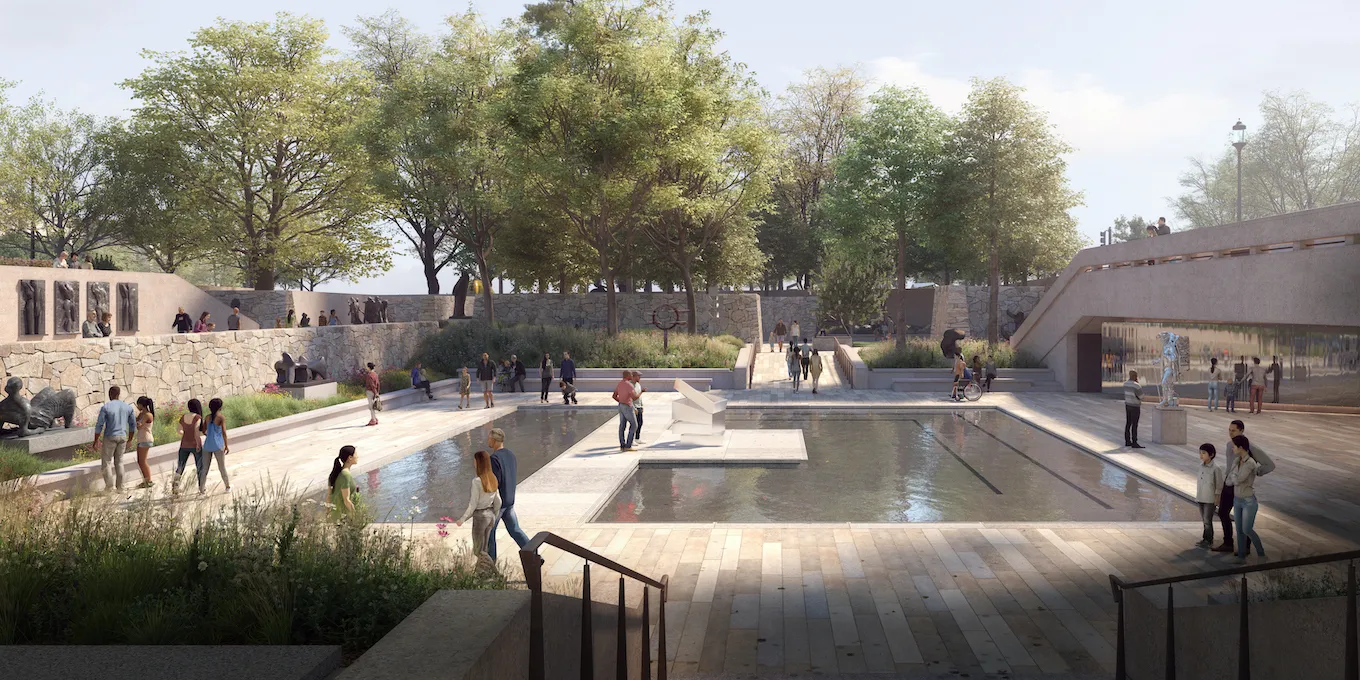
Hiroshi Sugimoto’s planned renovation for the sculpture garden at the Hirshhorn Museum in Washington, D.C.
Courtesy Hirshhorn Museum and Sculpture Garden
How to Give a Modernist Icon a Makeover
Hiroshi Sugimoto’s renovation of the Hirshhorn Museum’s sculpture garden will bring the Japanese designer’s touch to a space long acclaimed as a modernist landmark.
Japan’s influence on the National Mall in Washington, D.C., goes beyond the brilliant bloom of cherry blossoms every spring.
Gordon Bunshaft looked to Japan for inspiration in his Brutalist design for the Smithsonian’s modern art museum, the Hirshhorn Museum and Sculpture Garden, which opened on the Mall in 1974. He tapped Zen principles for the limited palette and minimal plantings of the museum’s sunken sculpture garden. Later, when the garden proved to be a little too austere, the Hirshhorn called on landscape architect Lester Collins, who studied in Japan during the 1950s, to improve the experience for visitors; Collins’ 1981 redesign incorporated ideas from Chinese “cup gardens,” offering hidden reveals for visitors.