A Black Vision for Development, in the Birthplace of Urban Renewal
Pittsburgh’s Lower Hill District was razed by the federal government 65 years ago. Now developers are testing the question of how to correct for a racist past.
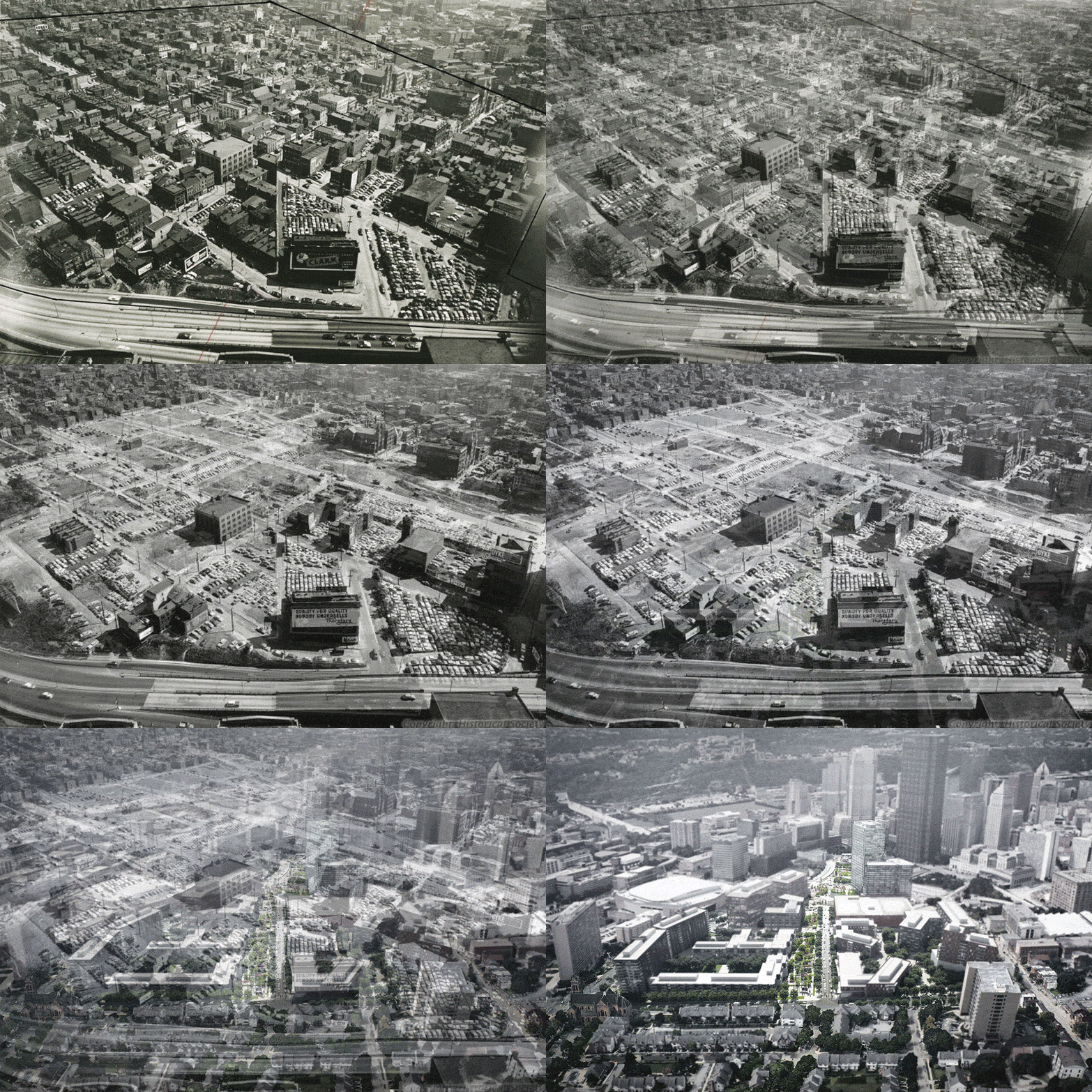
The Lower Hill District neighborhood in Pittsburgh was transformed from the first image, in 1951, to the second image, in 1957, when urban renewal was almost complete. The third image shows what the neighborhood would look like under new development plans.
Source: Historic Pittsburgh, Detre Library & Archives, Heinz History Center; Buccini/Pollin Group
Some 65 years ago in Pittsburgh’s Lower Hill District, 1,300 buildings were razed, displacing thousands of Black, Jewish, Italian and Eastern European families under a “slum clearance” mandate. It was the first federal program in the U.S. to engage in urban renewal, the now-notorious term for demolishing neighborhoods that officials considered blighted.
Now, a new $230 million project approved this month by local government authorities to redevelop the neighborhood puts Black people in the driver’s seat of the Hill District’s remaking. It’s a test of the nagging question: Can racist urban redevelopment practices of the past ever be corrected with more urban redevelopment?