Japan’s Green Future Requires Returning to Its Nuclear Past
To meet its global climate commitments, Japan will need to restart almost every reactor it shuttered after the 2011 Fukushima disaster, and then build more.
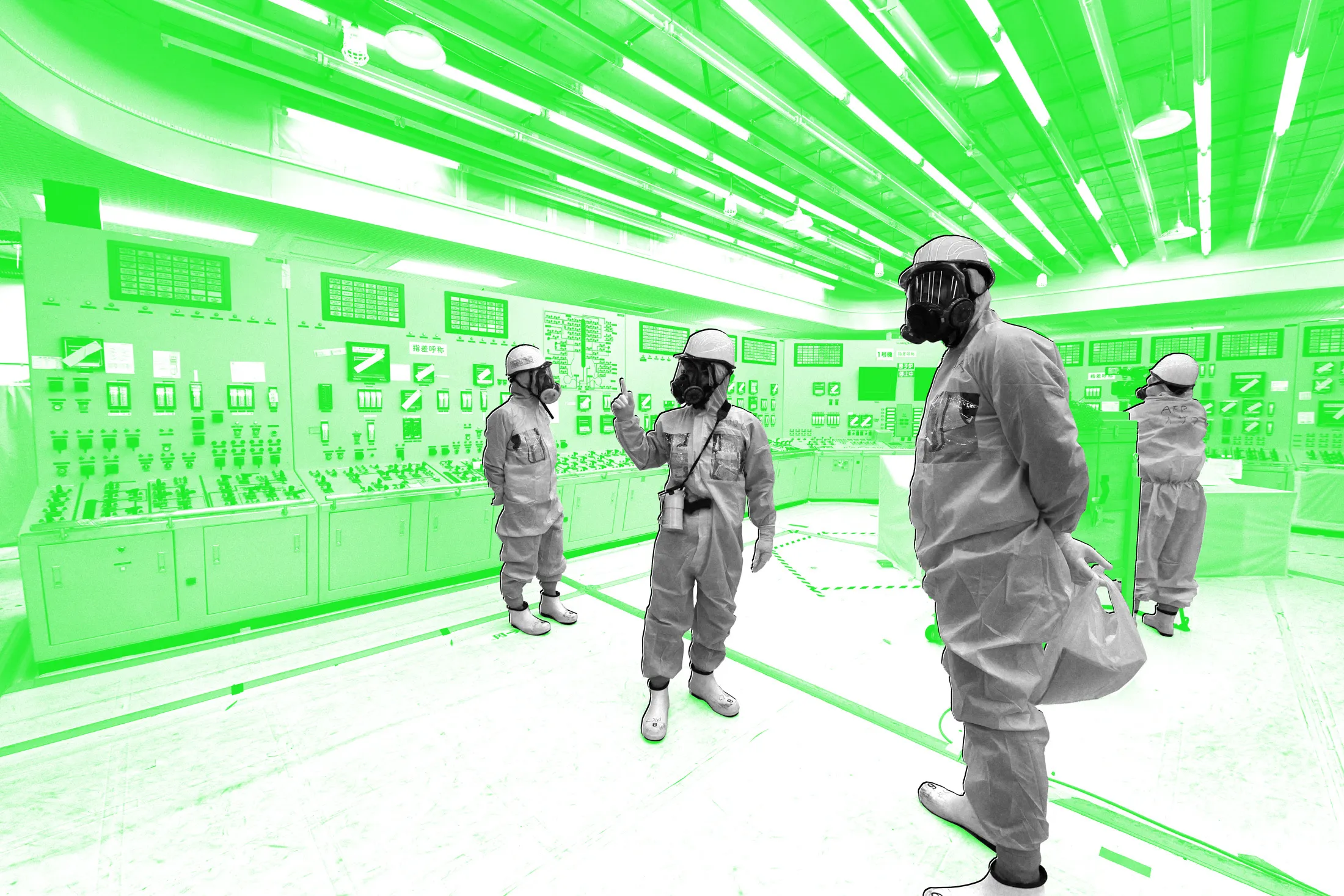
Clean-up and decommissioning continues in Feb. 2020 at the central control room for the unit one reactor at the Fukushima Daiichi nuclear plant in Okuma, Japan.
Photographer: Kazuhiro Nogi/AFP/Getty ImagesAbout once a month, the same group of two dozen Japanese government officials, company executives and professors file into a bland white and beige conference room at the nation's economy, trade and industry ministry to plot its long-term energy future.
Each has a printed agenda, tablet computer and carton of green tea neatly laid out before them, and politely flips over a rectangular name card to request a turn to speak. Beneath the rigid formality, there’s an increasingly divisive debate: what’s the role of nuclear energy a decade after the Fukushima disaster.