China Struggles to Change Entrance Exams That Reward the Wealthy
The biggest overhaul to the gaokao system in decades is not going as planned
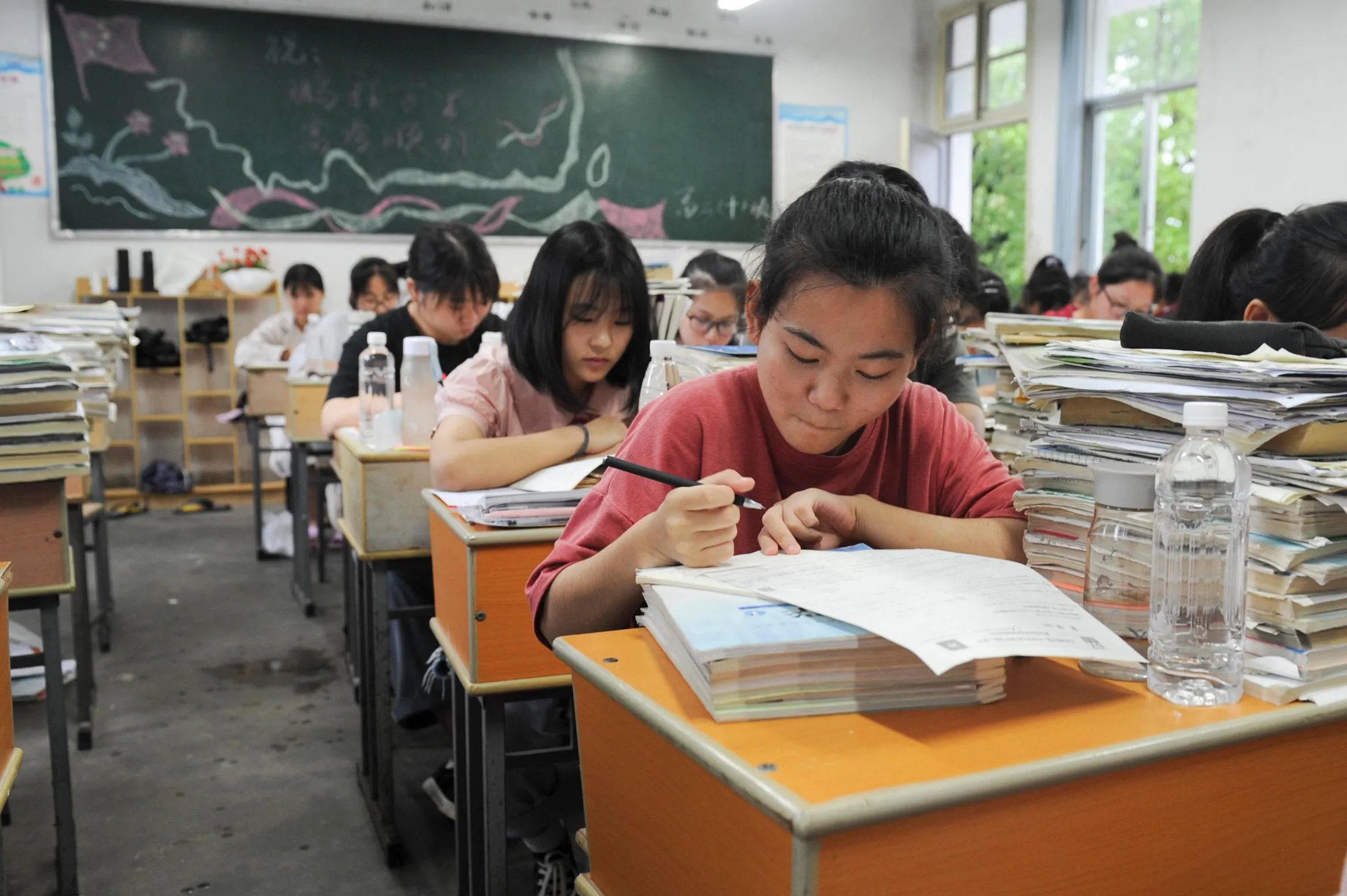
Students at a classroom in China’s Anhui province study on the first day of the National College Entrance Examination, known as the gaokao, on July 7.
Photographer: Zhang Yazi/China News Service/Getty ImagesHere’s a tough one: Is the gaokao — China’s notoriously grueling, dayslong college entrance exam — a fair way to funnel the country’s brightest students to its top universities?
Unlike the questions on the test itself, there’s no right answer. Officially, China has unwavering faith in the exam, the single most important component of college admissions since the founding of the People’s Republic. Under the gaokao system, anyone with high-enough scores can theoretically enroll at elite universities such as Tsinghua, Peking or Fudan, a first step toward upward mobility.
Unofficially, however, the system is aging poorly. The gaokao is increasingly seen less as a gateway to opportunity and more as a barrier, largely due to a rapidly growing student population and a widening disparity between top schools and all the rest. What’s more, the government’s most recent efforts to make the test more fair and less stressful have been as divisive as the problems they’re attempting to fix.
A record 10.7 million students took the test this year, and while the Ministry of Education doesn’t release nationwide admissions statistics, roughly 1% got into one of China’s top 20 schools, according to Bloomberg calculations. Going by history, a disproportionate share will have come from the country’s wealthiest cities. Of the more than 3,400 new undergraduates last year at Tsinghua University — the gold standard — less than one-fifth came from rural or less developed areas.
That poor, rural students are at a disadvantage to their wealthy, urban counterparts is a criticism of standardized tests everywhere. But the gap between China’s top institutions and second- and third-choice options is particularly vast. As part of a national push to establish globally competitive universities, the government has poured resources into already established schools. Meanwhile, the new institutions designed to absorb the rest don’t offer the alumni networks or name-recognition that could give grads a boost in the job market.