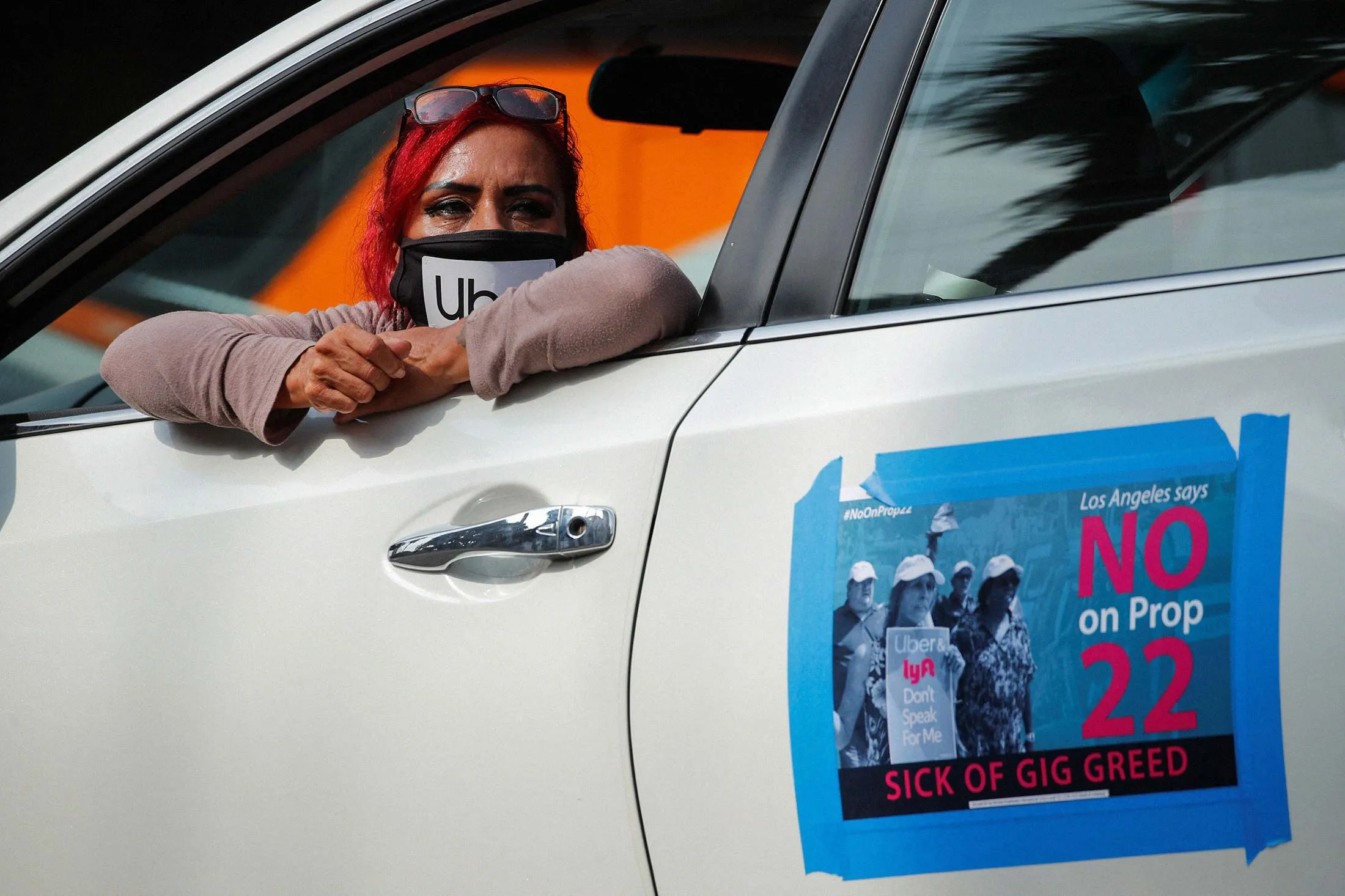
An app-based gig worker at an Oct. 8 demonstration outside Los Angeles City Hall.
Photographer: Mike Blake/ReutersCalifornia Prop 22 Vote Heralds Judgment Day for Uber, DoorDash
The gig economy is preparing for a reckoning. California voters are set to pick sides during the Nov. 3 elections in one of the most fraught debates of today’s labor market: Are flexible working arrangements worth the trade-offs of weaker job security and fewer benefits? A state ballot measure, known as Proposition 22, would exclude app-based companies from California’s new gig economy law, which makes it tougher for companies to classify workers as contractors rather than employees. If voters reject the proposition, the companies would have to start treating drivers as staff who are eligible for benefits such as guaranteed minimum wages, paid sick days, and other standard protections.
Ride-hailing apps Uber and Lyft and food delivery services DoorDash, Instacart, and Postmates sponsored the initiative, pouring a record $200 million into the campaign to convince voters that app-based drivers want to preserve their freedom and that an employee-based model would raise costs for customers. The outcome—while legally binding only in California—could have ramifications across the U.S., potentially influencing states looking to tighten regulation of the gig economy, which has thrived in the era of app-based work. Lawmakers from New York to Illinois who are also rethinking labor laws for gig and freelance workers may take a cue from California’s handling of Prop 22.