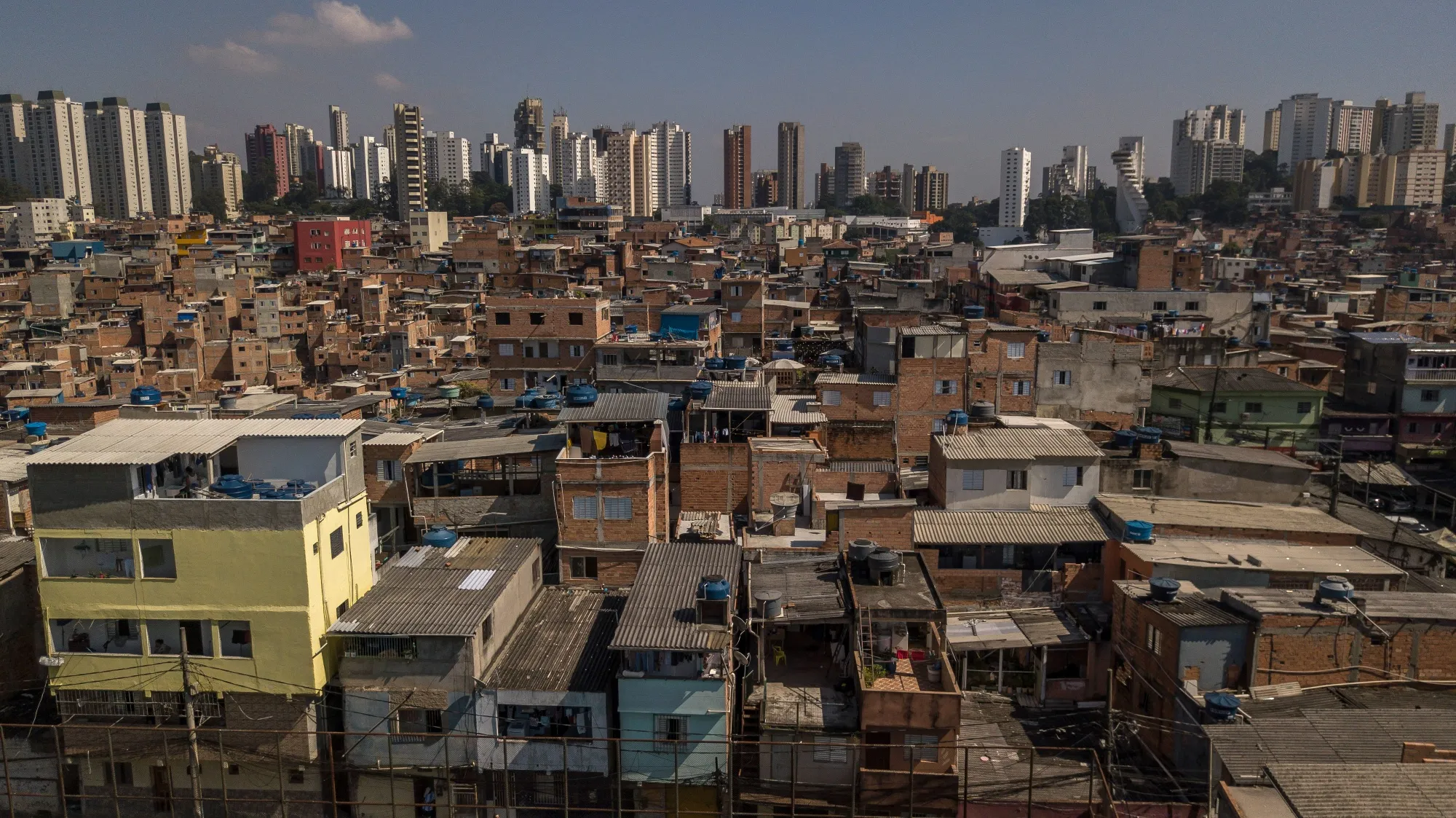
Paraisopolis, Sao Paulo’s second largest favela, sits next door to one of the city’s most affluent neighborhoods, Morumbi.
Photographer: Rodrigo Capote/Bloomberg
How One of Brazil’s Largest Favelas Confronts Coronavirus
In a neighborhood where social distancing is almost impossible, Paraisopolis is using creativity and organization to combat the coronavirus.
The onset of the coronavirus pandemic in Brazil’s favelas, shantytowns that sprawl around the country’s largest cities, has left the 11.4 million Brazilians living in these densely-populated neighborhoods in a particularly vulnerable position.
In addition to their usual problems -- violent shootouts, open sewage, military-style police operations against drug traffickers -- they now struggle to embrace social distancing guidelines while living side-by-side in haphazard constructions and crowded homes.
Yet residents of Paraisopolis, Sao Paulo’s second-largest favela, have come up with a plan to combat the coronavirus with little government help.
Their campaign involves a number of actions made possible by donations and volunteer work, from 10,000 free meals to private ambulances to a grid system of volunteer “street presidents,” who check to make sure everyone on their street is OK. They have dedicated one building as a quarantine house, and they are turning closed schools into centers where residents who are unable to self-isolate can come to sleep.