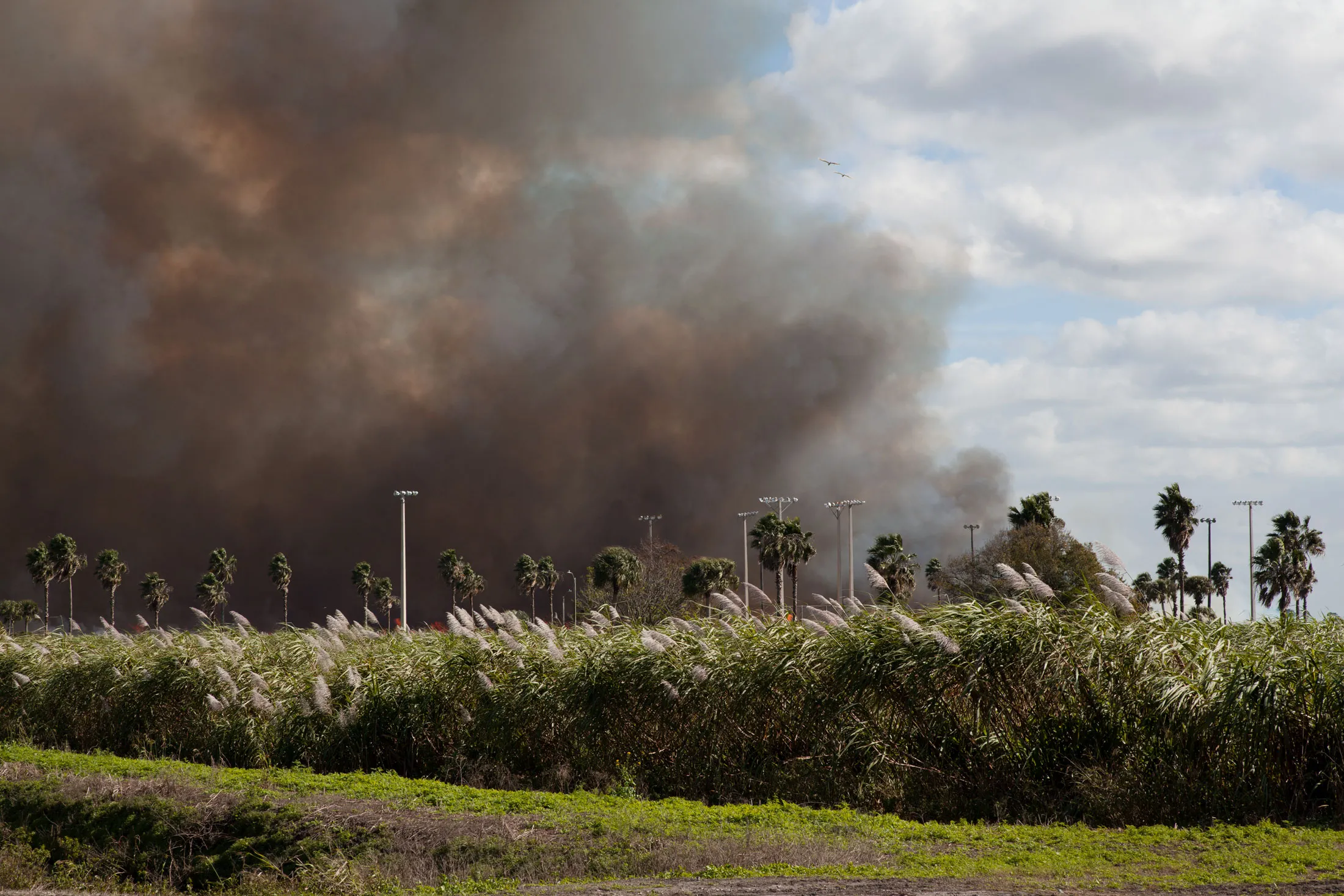
A controlled burn outside of the sugar mill in Belle Glade, Florida.
Photographer: Sofia Valiente for Bloomberg GreenThe Burning Problem of America’s Sugar Cane Growers
There’s a hidden cost to the way Florida’s farmers bring in the sugar crop. Just visit the hospitals and measure the climate impact.
Driving west on Florida Route 98 from Palm Beach, the smoke is visible before the warning signs. Near the Lion Country Safari (“Florida’s only drive-through safari”), there are, far across a vividly-green expanse, dark gray clouds climbing into the sharp-blue sky. A minute later, by the roadside, comes the announcement, courtesy of the state transportation authority: “REDUCED VISIBILITY POSSIBLE.” If the immediate danger isn’t present, it’s nonetheless clear: You’re entering sugar country.
On the following November day, about 50 miles west, a John Deere tractor towing a water tank rumbles through a narrow dirt path between two cane fields, or “blocks,” as the sugar growers call them. Behind the tank, a man stands holding a fire-starting device called a driptorch. The tractor’s driver sprays water on the block to its left so it won’t ignite—flowers have not yet formed at the tops of the stalks to indicate they are ready for harvest—while the man in the rear sets fire to the one on the right. The driver covers his airways with a bandana; the firestarter has chosen not to.