Bourbon and Scotch Makers Find a Common Enemy in Tariffs
Weaponized trade is rattling the global whiskey business.
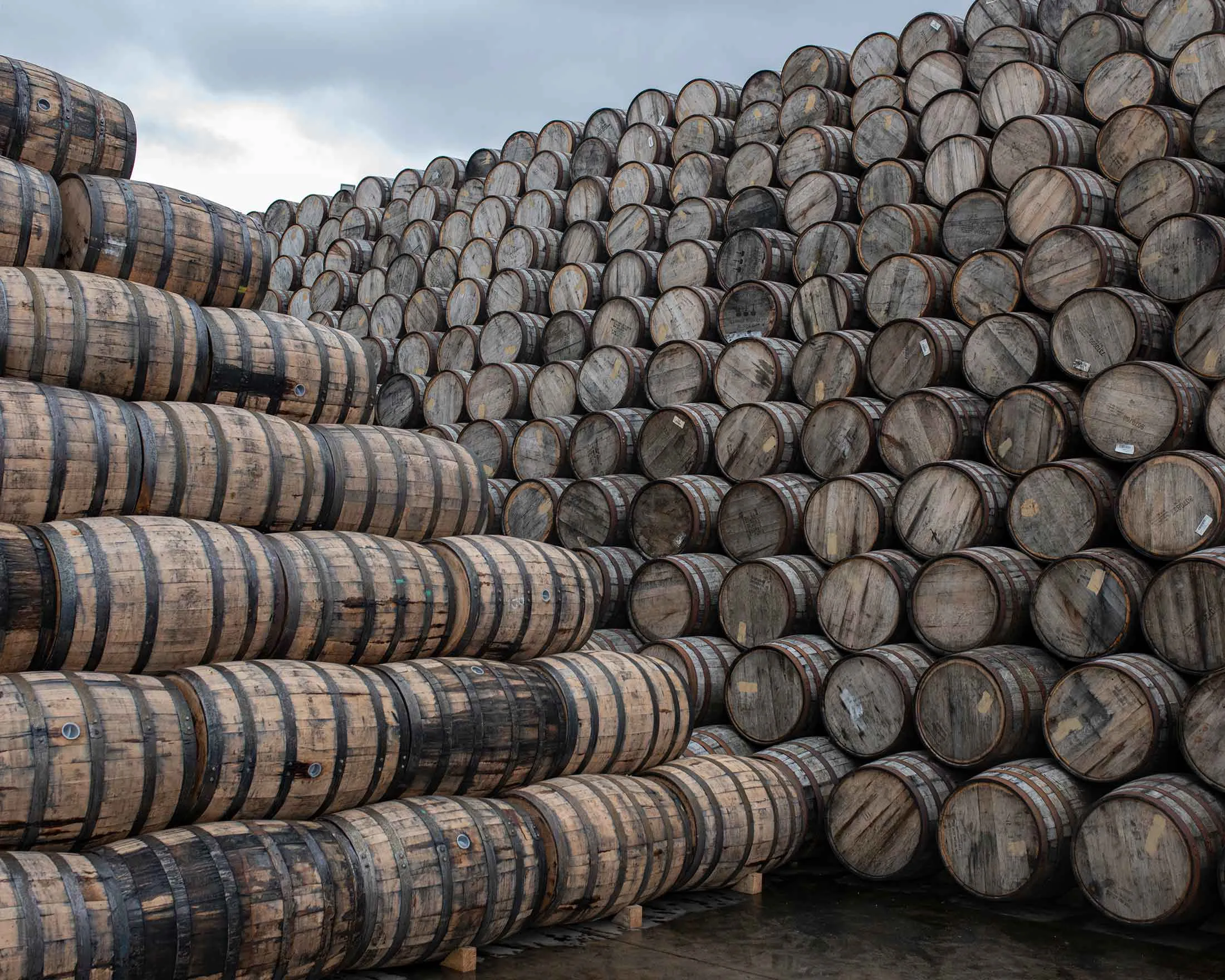
Used bourbon barrels stacked and waiting to get moved into a brand new warehouse at the Speyside Cooperage Alloa.
Photographer: Kristine Potter for Bloomberg Markets
Ask Aaron Willett what the future of bourbon looks like, and he’ll take you out onto the floor of Speyside Cooperage’s outpost in Shepherdsville, Ky. There, on a recent winter day, what you’d have seen was a phalanx of 450-liter (119-gallon) Armagnac casks stacked two high. The brandy had been drained. But the oak barrels imported from France were now about to embark on a new phase of their life, poised to lend flavor to a generation of Kentucky’s finest.
Bourbon, the most American of spirits, has for decades been governed by a 1964 congressional resolution requiring that corn make up at least 51% of the mash from which it’s distilled, that it be made in the U.S., and that it be aged in virgin American oak barrels with a charred interior. And through history that’s what Kentucky distillers have done, leaving their bourbons to mature through hot summers and damp winters in warehouses filled with tens of thousands of barrels.