How the #MeToo Cases That Shook India Have Played Out
- Accusers have faced setbacks
- Still, they have changed the system in India — for everyone
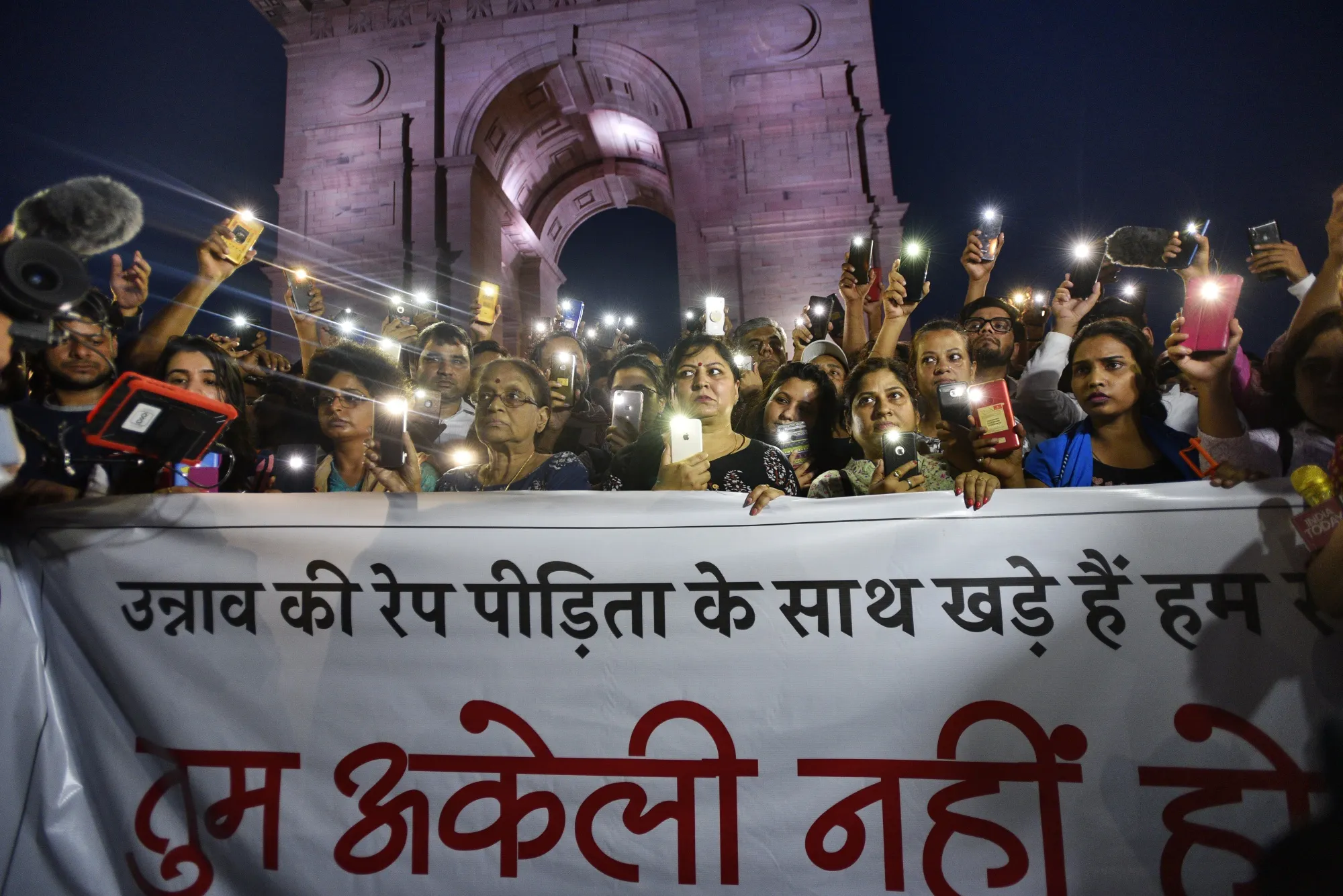
People gather for a silent protest in support of the Unnao rape case victim at India Gate in New Delhi, on July 29, 2019.
Photographer: Burhaan Kinu/Hindustan Times via Getty Images
In October 2018, almost a year to the day after the #MeToo movement erupted in the U.S. around film producer Harvey Weinstein, allegations of sexual harassment and assault flooded India. Women began recounting tales from years or even decades earlier, often at great risk to their reputations and safety.
For five of India’s most prominent accusers, the price has been steep. A young victim of alleged rape by a lawmaker attempted to burn herself outside the residence of her state's chief minister, after her father died in police custody. A high-profile journalist has been sued for defamation by the man she accused. Another journalist says she has had trouble finding work. And a Bollywood actress says she feels her allegations led to real change in India, though the fallout since she first made them more than a decade ago contributed to her decision to relocate to the U.S., exhausted.