In Strike at GM, Old Grievances Get Retooled for a New Era
Issues are similar to those that have sent UAW members to picket lines for more than 80 years.
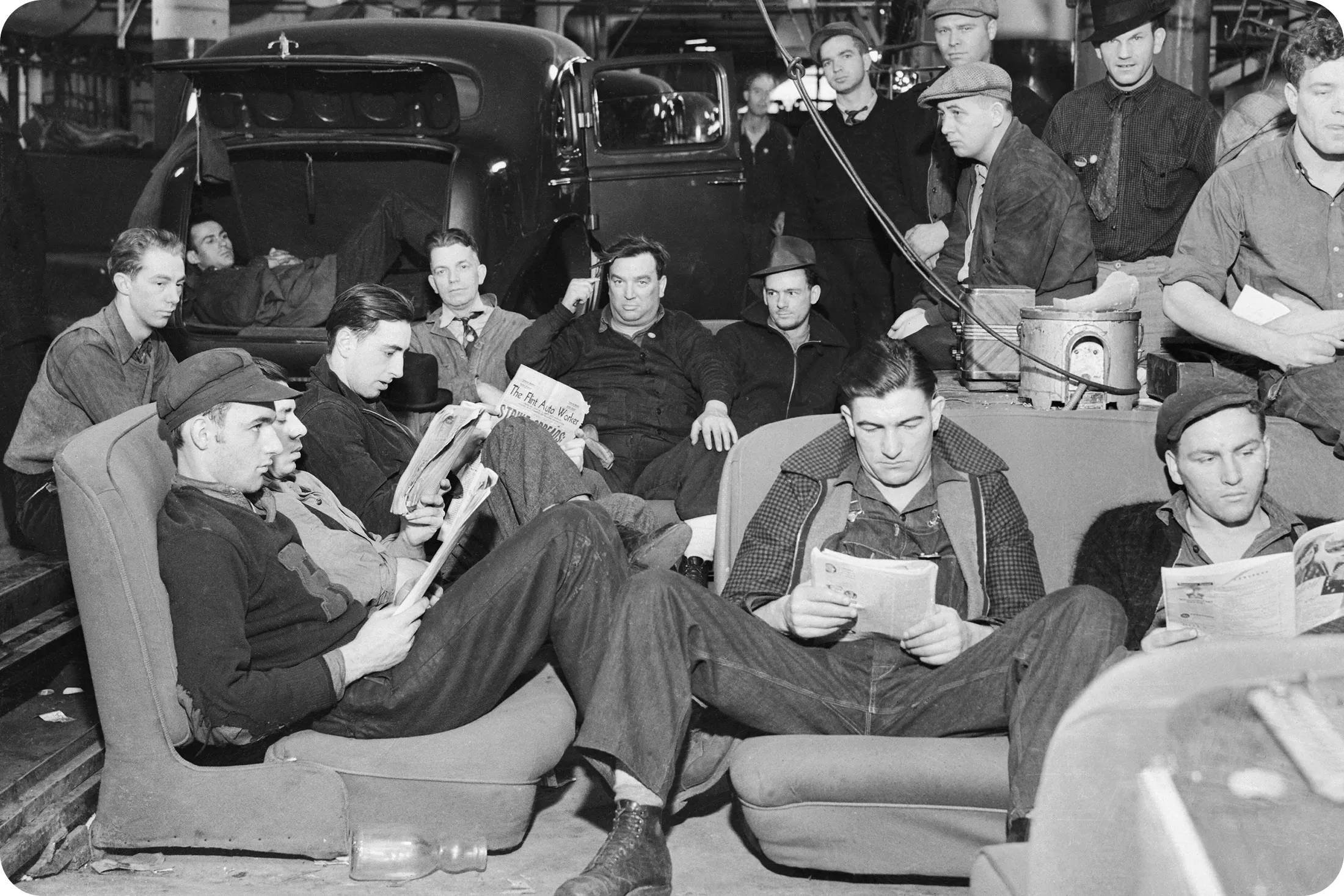
United Auto Workers stage the first successful sit-down strike at the General Motors factory in Flint, Michigan, beginning in December 1936.
Photographer: Bettmann ArchiveAs the United Auto Workers strike against General Motors Co. continues into a third week, the issues in dispute are similar to those that sparked strikes in the past: health care, wages and the company’s commitment to invest in U.S. facilities.
The conflicts stretch all the way back to Dec. 30, 1936, when GM employees — led by UAW Local 174 President Walter Reuther — stopped production at plants in Flint, Michigan, and Cleveland. They were protesting low wages and conditions that included 12- to 14-hour shifts, six days a week, often in oppressive heat on fast-moving assembly lines. But instead of walking out, they sat down in the factories, and there they stayed for 44 days.