Two 737 Max Crashes in Five Months Put Boeing’s Reputation on the Line
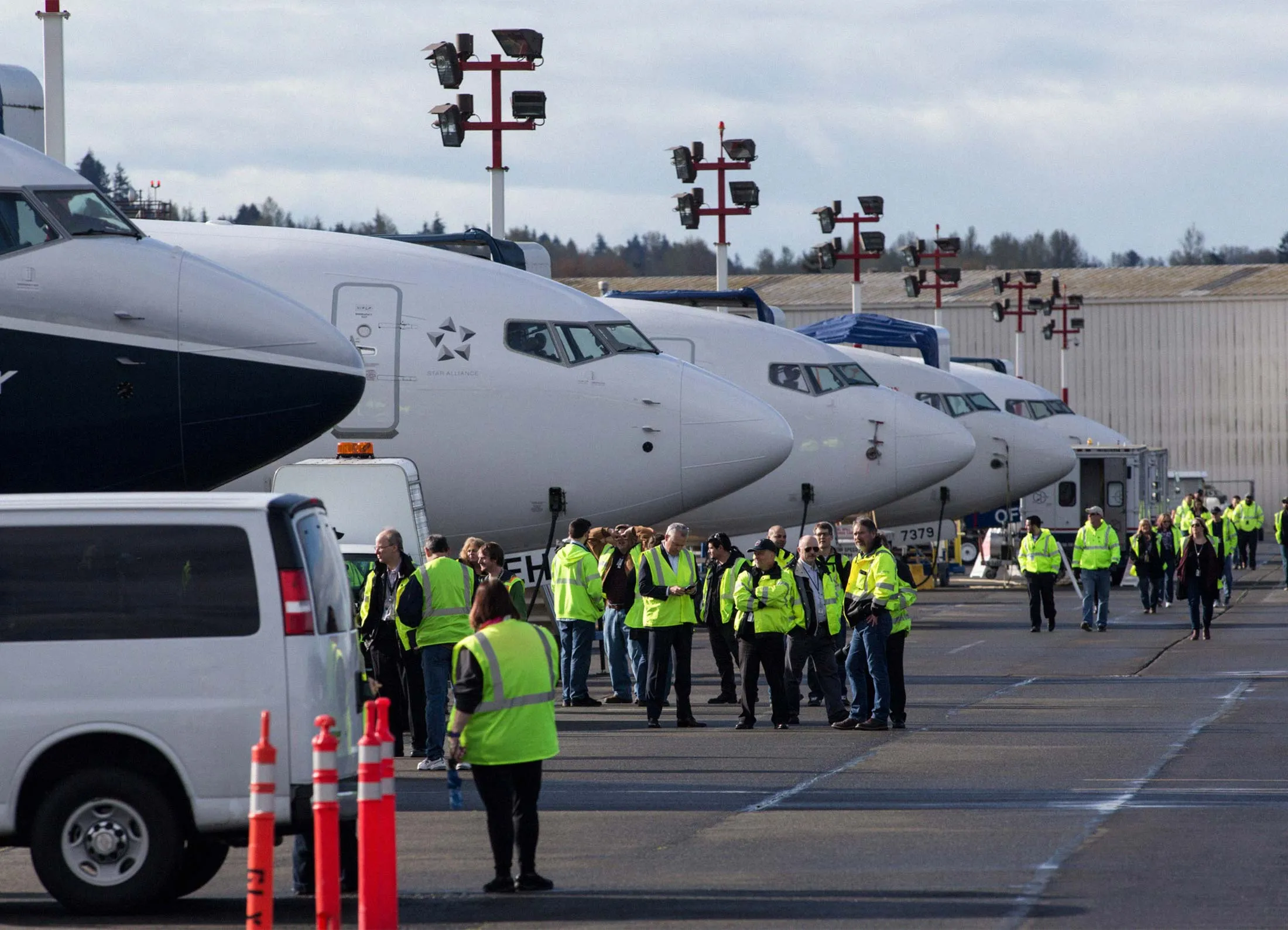
Boeing employees wait near the 737 Max 9, left, in a row of other 737s, before the Max 9’s first test flight in Renton, Wash., on April 13, 2017.
Photographer: Grant Hindsley/Polaris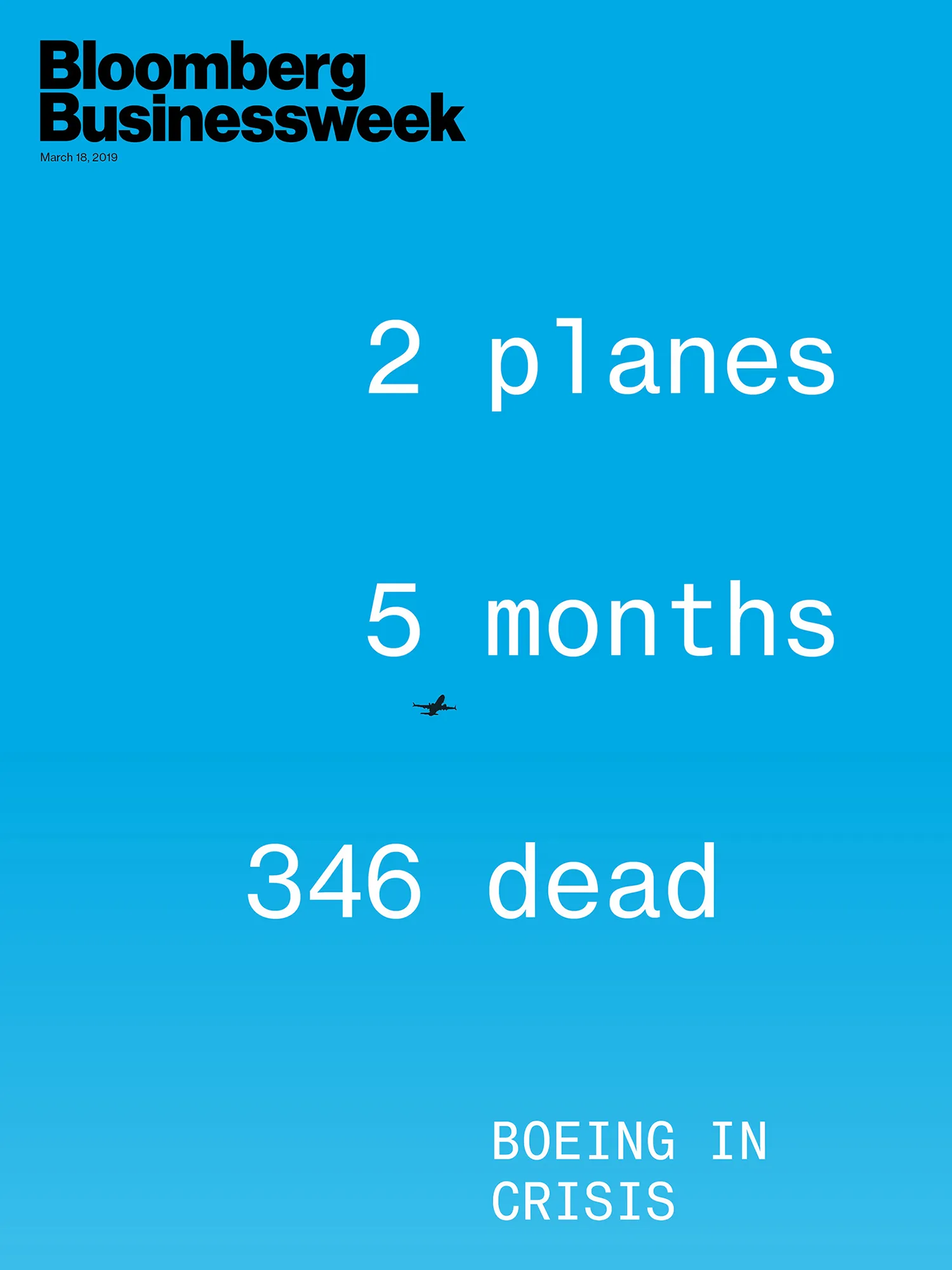
The skies had been, in aviation parlance, “severe clear” for Dennis Muilenburg since he took the helm at Boeing Co. four years ago. With air traffic increasing 6 percent annually, orders were booming, and revenue in 2018 topped $100 billion for the first time in the company’s 102-year history. Competitor Airbus SE has been distracted with the humiliating commercial flop of its A380 flagship and a bribery scandal that’s led to a huge management turnover. With Boeing’s stock price tripling during his tenure, its market value soared above $200 billion, making it the largest U.S. industrial company. It’s used the newfound clout to pursue acquisitions and ambitious projects such as a flying car.
The only cloud was the crash in October of a 737 Max 8 jet operated by Indonesia’s Lion Air Inc. That tragic but seemingly isolated incident has emerged as the turning point in a new narrative after a second deadly accident of the same model, in Ethiopia. It’s a scenario every chief executive officer fears: public panic over product safety puncturing a carefully groomed corporate reputation. For Boeing, the pressure is acute: The 737 is a cash cow that accounts for a third of its profit.