WhatsApp Groups and Misinformation Are a Threat to Fragile Democracies
In Brazil, social-media-induced polarization and apathy may linger long after the last vote has been counted.
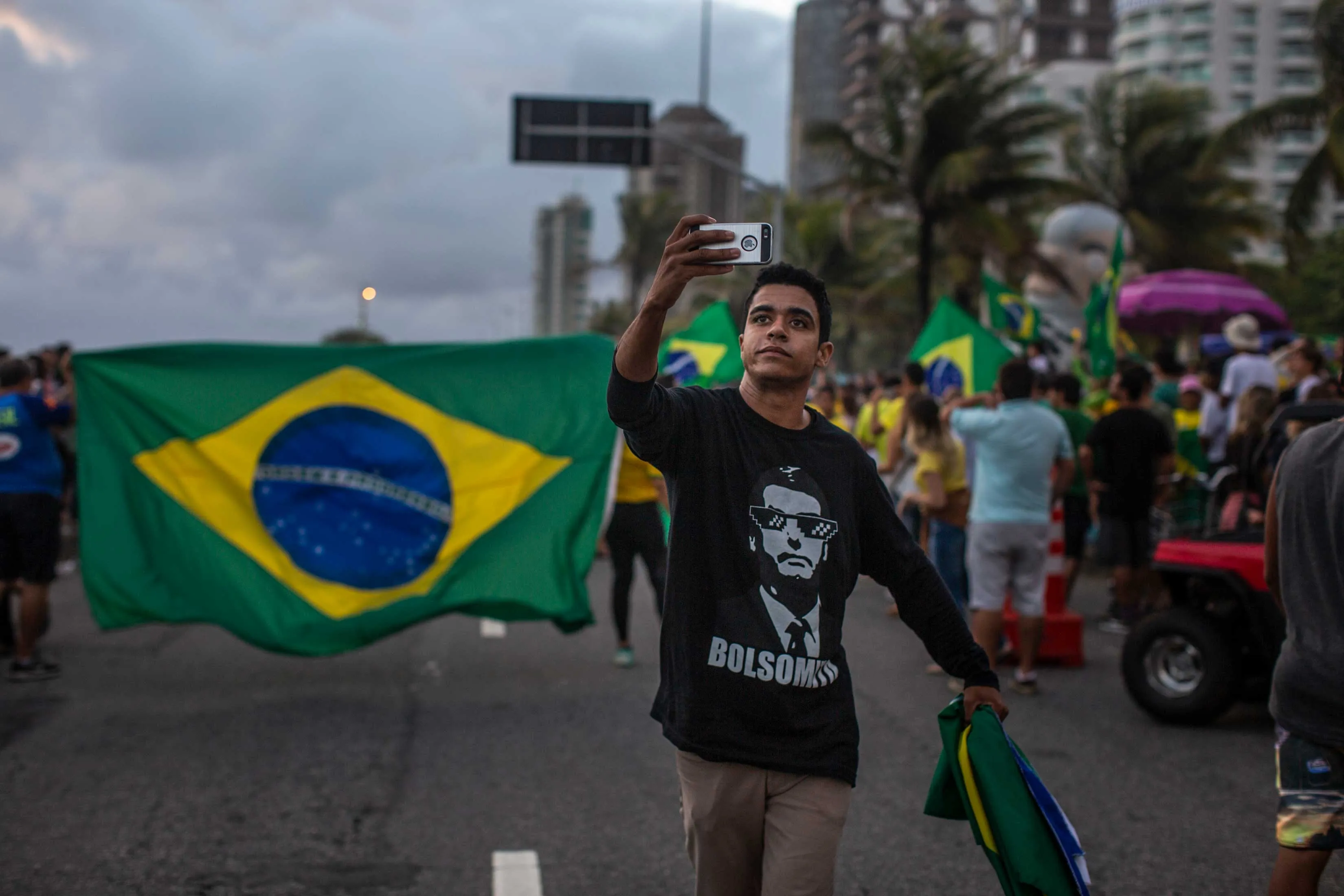
Recording the revelry after the runoff in Brazil’s presidential election.
Photographer: Lianne Milton for Bloomberg Businessweek
For Stela Wanda Pereira da Silva, the breaking point came when her father posted a video of a woman getting assassinated to the family’s private WhatsApp group, calling it an example of the violence that would ensue if leftist Workers’ Party candidate Fernando Haddad prevailed in Brazil’s presidential election.
Da Silva, a 22-year-old resident of the coastal city of Salvador and a Haddad supporter, did some digging and discovered that the woman in the video was the victim of a robbery gone bad and not a politically motivated hit, as her father maintained. When she showed her family that the post was fake news—from Venezuela, yet—a civil war broke out, with half the group’s members defending her and the other half taking her father’s side.