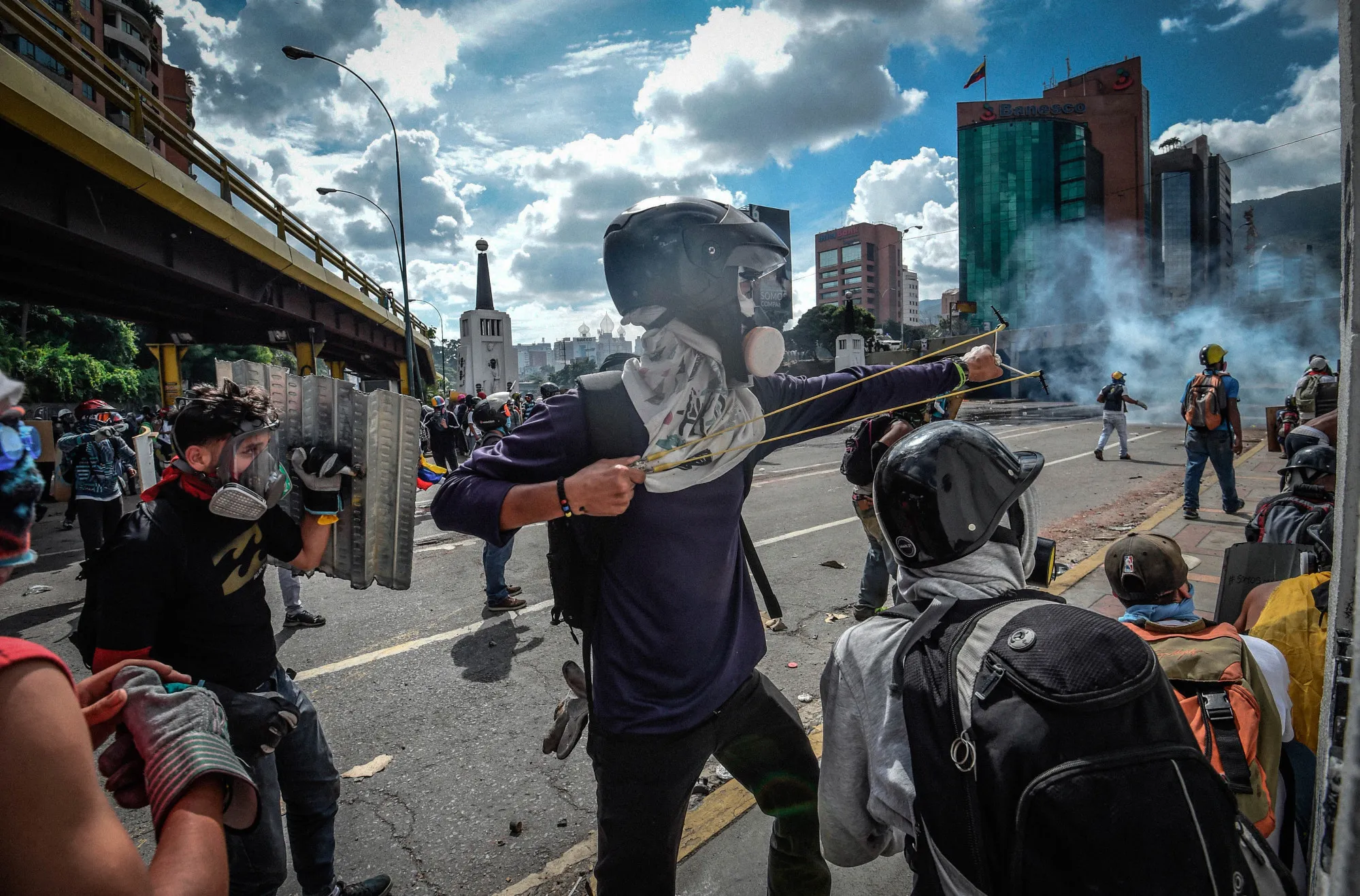
Activists clash with police as they block the Autopista Francisco Fajardo highway in Caracas in 2017. Deadly battles filled the streets, but the Maduro regime has persisted.
Photographer: Juan Barreto/AFP via Getty Images
Life in Venezuela, One Year After the Protests
Cash is nearly worthless. Food and medicine are scarce. After 2017’s protests, Venezuelans are trying to resume their lives.
Venezuela exists in a state of anticipation and apprehension as its 28 million remaining residents collectively ask “Que viene ahora?”—“What comes now?”
In 2017, violent protests engulfed Caracas and the nation, threatening to topple the autocratic regime of President Nicolas Maduro. Marches closed off vast swathes of the city, protesters flung Molotov cocktails and human feces at National Guard troops and paramilitary fighters on motorbikes. About 125 people died, among them Juan Pablo Pernalete, a student killed by the impact of a tear-gas canister, and David Vallenilla, shot by military police.