The High Cost of Free Speech, From Charlottesville to the Women’s March
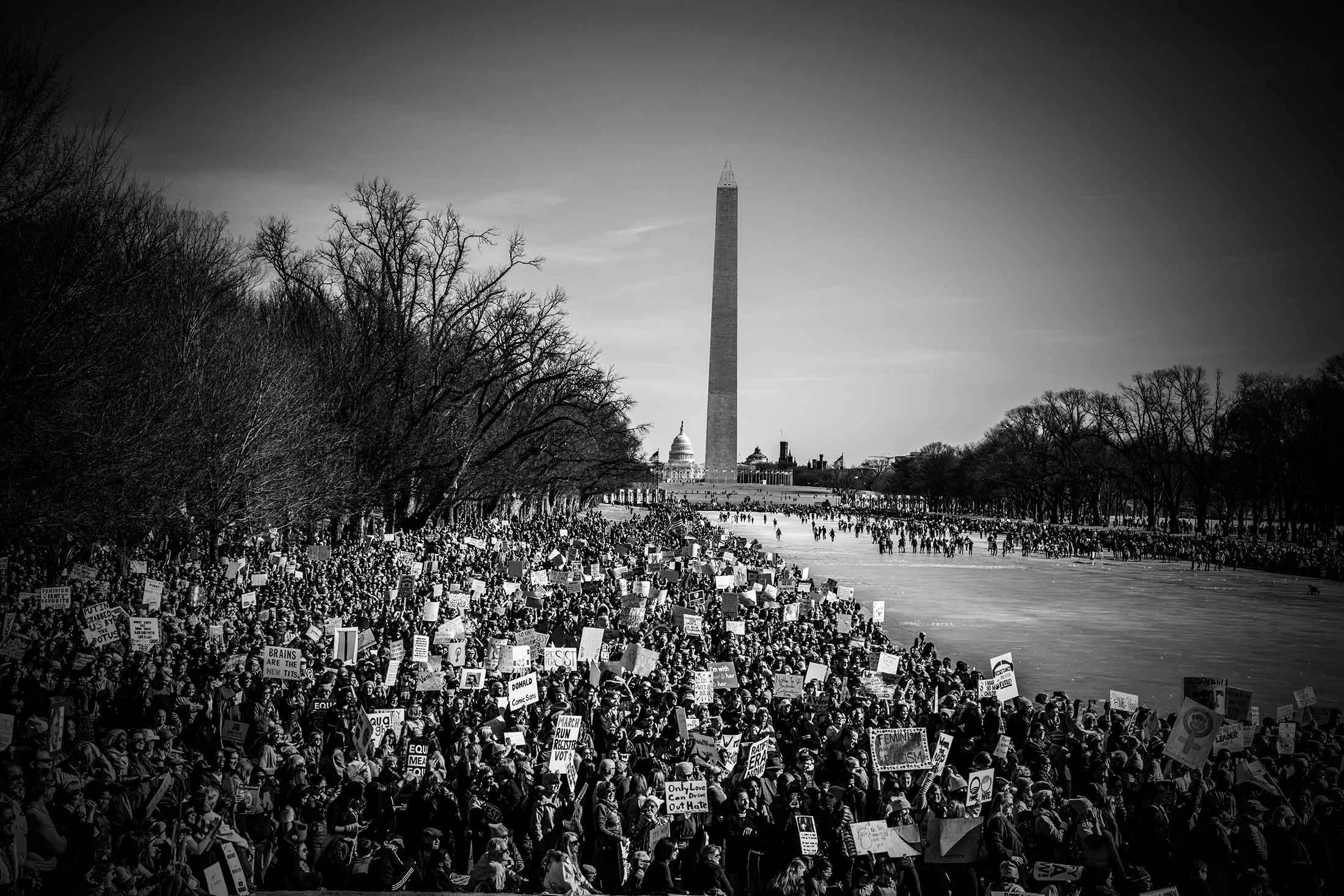
The Women’s March in Washington, D.C., on Jan. 20, 2018.
Photographer: Mark Peterson for Bloomberg Businessweek
The Women’s March in Washington on Saturday, Jan. 20, might have been the 8,701st protest in the U.S. since Donald Trump’s inauguration a year ago. Or maybe there were more. Even the Crowd Counting Consortium, run by two university professors, with lots of volunteer help, can’t track all the rallies and marches since Trump took office. But they do know that between anti-Trump protests, rallies by white nationalist groups, and counterprotests against both, Americans have been exercising their First Amendment rights at a frenetic pace.
Amid the commotion and disruption, the price of free speech has gone up. The Constitution guarantees freedom of speech in public spaces: It’s a civic right with civic costs. The Supreme Court ruled in 1992 that the government can’t impose fees on speakers based on the expected cost of security. “Speech cannot be financially burdened, any more than it can be punished or banned, simply because it might offend a hostile mob,” Justice Harry Blackmun wrote in a decision prohibiting Forsyth County, Ga., from charging the Nationalist Movement a fee to demonstrate against Martin Luther King Jr. Day.