Fighting the Toxic Nightmare Next Door
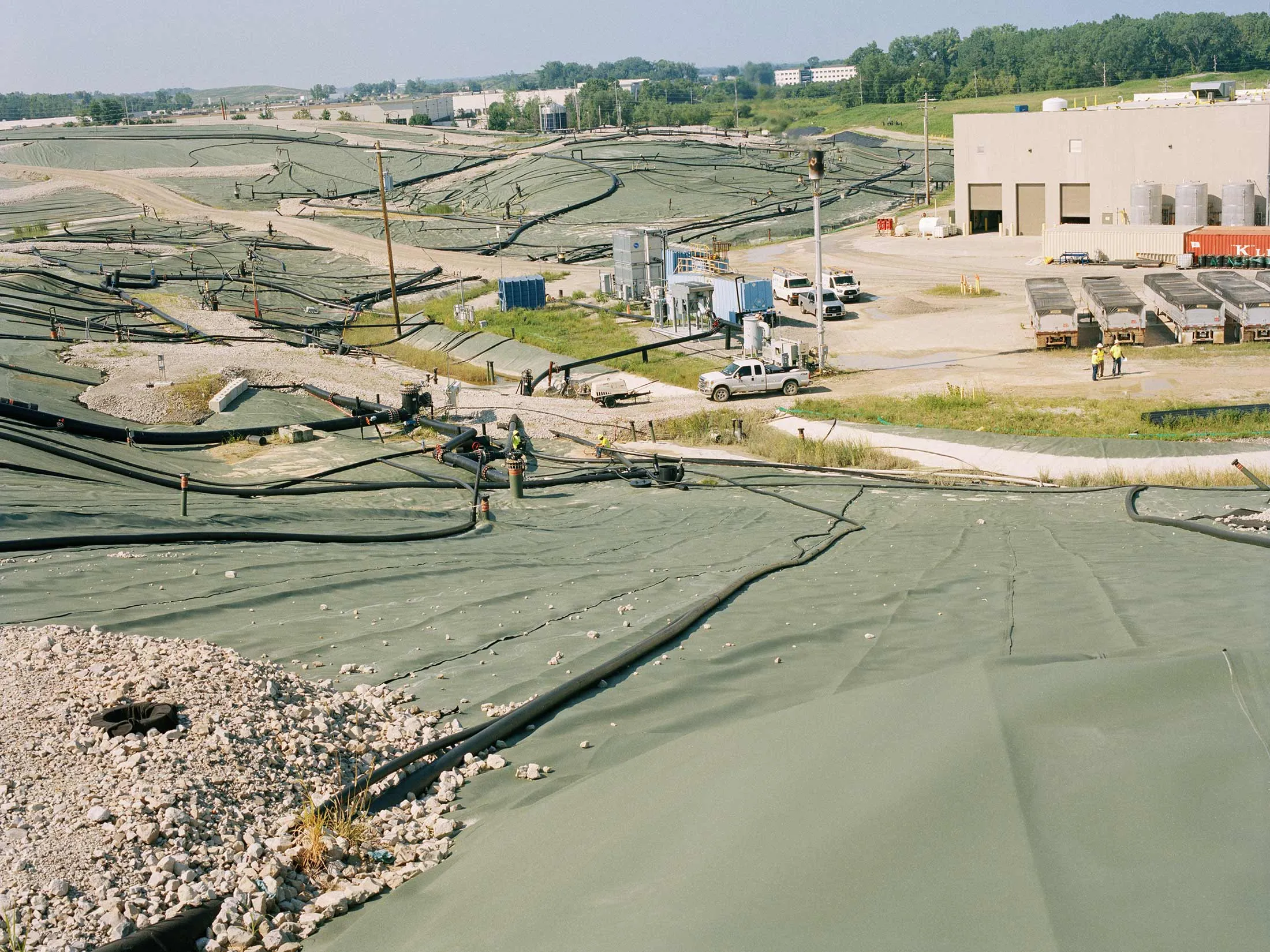
Infrastructure on the Bridgeton Landfill monitors and manages an underground fire. Republic built a plant on-site to process the increased amounts of toxic leachate produced by the high temperatures.
Photographer: Jen Davis for Bloomberg Businessweek
It was practical considerations that led Dawn and Brian Chapman to Maryland Heights, a modest suburb of St. Louis bound by two interstate highways, several strip malls, an international airport, and the Missouri River. They found a three-bedroom, one-bathroom, 1,000-square-foot home near good public schools and parks, and a reasonable drive to her parents, for $146,000. By 2012, after seven years there, the Chapmans had three kids with special needs, and Dawn had given up teaching preschool to stay home with them.
That was when the stench overcame their neighborhood. It wasn’t the usual methane smell from Bridgeton Landfill, about 2 miles away, that sometimes wafted through. “It was like rotten dead bodies, and there was a kerosene, chemical odor, too,” says Dawn. “People were gagging.”