Forced Into the City After 9,000 Years in the Jungle
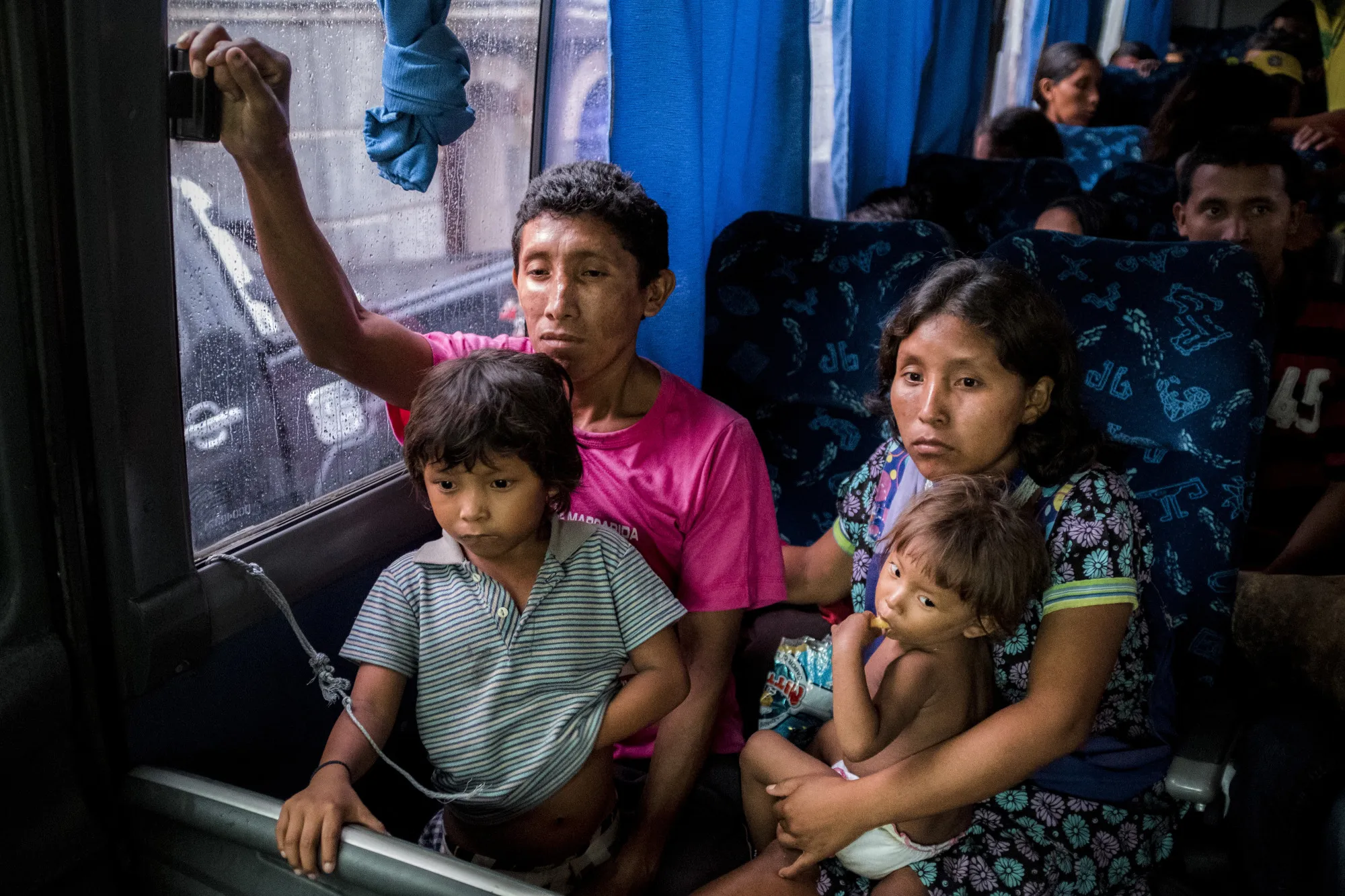
Warao refugees in Manaus on their way to temporary homes on July 14. About 500 have arrived in the city since December.
Photographer: Sebastian Liste for Bloomberg Businessweek
Riding in a van behind a moving truck, Rogelio Quiñonez, 20, is between homes for the fourth time in as many months. He’s 5 feet tall, and his high-cropped bangs, protruding forehead, and slight smile give him an impish look. With him are his wife and toddler and infant sons, four of the roughly 500 indigenous Warao people of Venezuela seeking refuge in the Brazilian city of Manaus.
On this afternoon in July, the local government is relocating dozens of the Warao to temporary accommodations in an apartment building in a neighborhood called, aptly, Cidade Nova—“New City” in Portuguese. As they drive, a downpour sends water sluicing toward the Manaus waterfront, where the Rio Negro becomes the Amazon. “The sun can’t shine the entire day,” Quiñonez says in halting Spanish, his second language. “It has to rain for the plants and animals and people to not be too hot.”