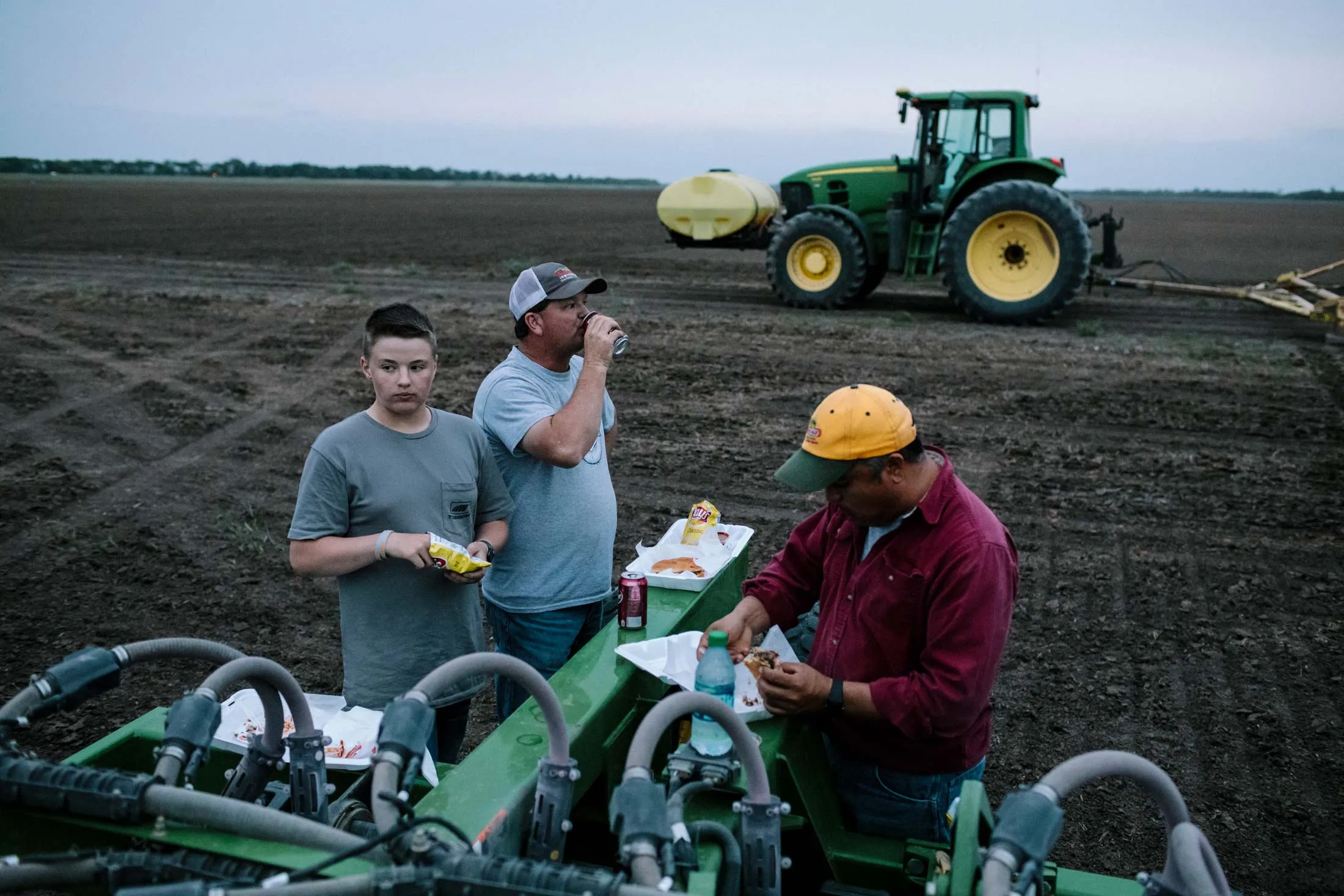
(Left to right) Lane Simmons, his father Chris Simmons, and Carlos Gomez take a late dinner break from tilling and planting fields at Whitaker Farms.
Photographer: William Widmer/Redux Pictures for Bloomberg
How U.S. Rice Farmers Could Slash Their Emissions (and Costs)
New technique uses half the water, less fertilizer, cuts carbon.
Generations of Arkansas rice growers who farmed the flood plains near the Mississippi River had little reason to pay attention to water supplies or their impact on a changing climate. Dan Hooks is different.
Defying the common practice of constantly flooding fields—which creates methane and makes rice the biggest emitter of greenhouse gases among U.S. crops—Hooks experimented for three years with a low-water technique on 500 acres of rice. Turns out, when he allows the crop to dry out before irrigating again, he’s cut water usage in half and saved money without hurting yield.