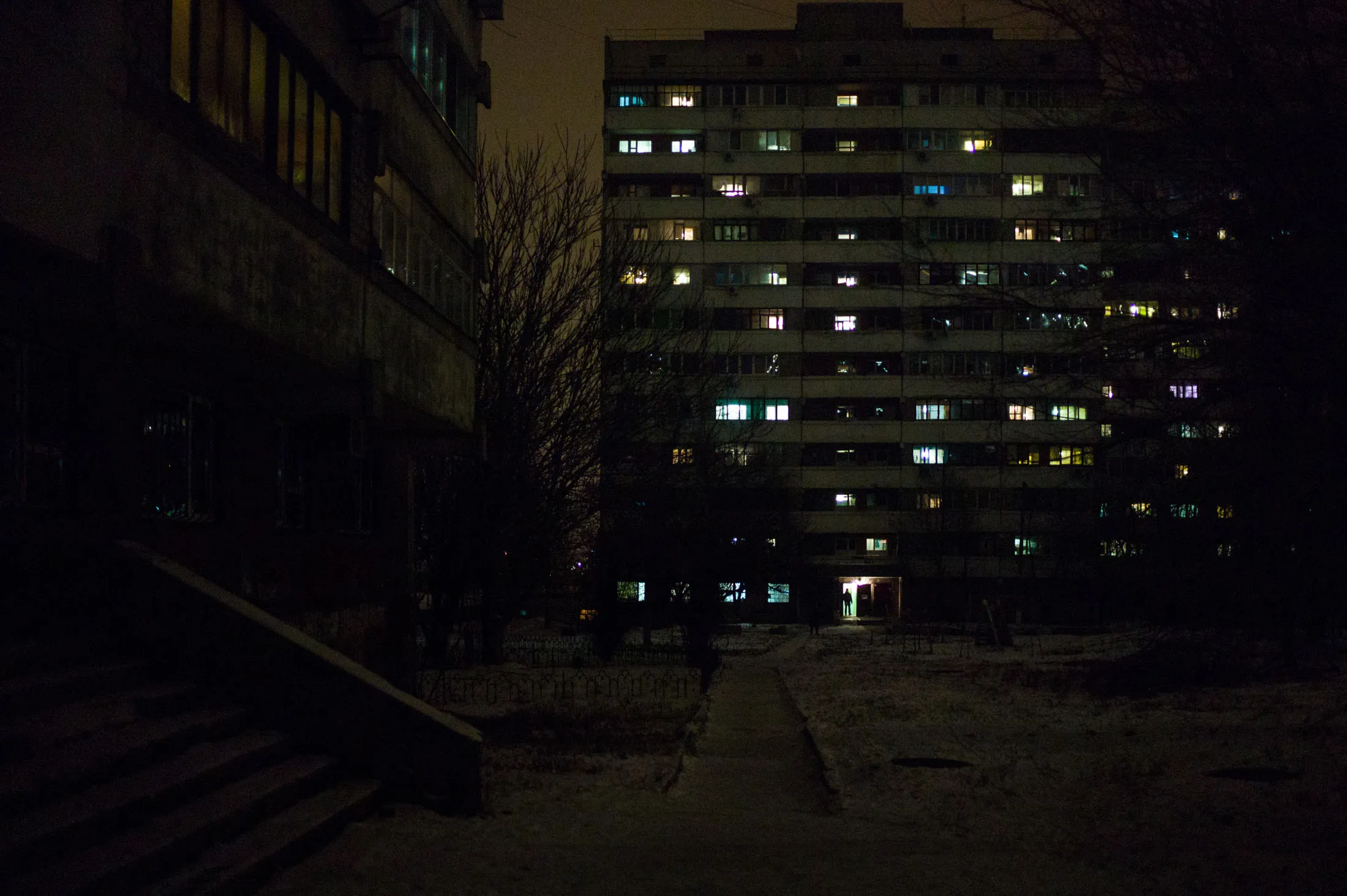
Iryna Okhota and her neighbors live in this 30-year old apartment block in a bleaker part of Dnipro. In the winter when the blistering wind blows from the Dnieper River the temperature outside rarely rises above freezing. Inside, there is barely any heat either.
Photograph by Misha Friedman for Bloomberg
Ukraine Is Fighting Its Own Cold War
Many are paying a high price to stay warm this winter while Russian attacks intensify in the east.
Vladimir Putin said only Russia predicted Donald Trump would win the White House. Trump, an admirer, wants to use that surprise victory to mend fences, signaling during the campaign that he may lift sanctions imposed after Russia annexed Crimea and launched a war on Ukraine—a war that continues to this day.
The aggression, and the 9,600 killed as a result, soured relations with U.S. President Barack Obama, who called out Putin as a canny foe of America intent on crushing Ukraine’s 2014 revolution. Until just recently, Trump had expressed ambivalence about the crisis in Ukraine. Trump and Putin have already had a cordial phone call, and there are plans for a meeting this summer.
For Ukrainians, there is concern about what this relationship may mean for them, the intensifying conflict in the east, and the complicated economic landscape the country faces. This is the third winter since the Euromaidan revolution ejected Ukraine’s pro-Moscow government, and the nation faces a difficult test. Required by the International Monetary Fund to end energy company subsidies, consumer costs have in some cases tripled, exceeding the ability of less-affluent Ukrainians to pay. Keeping the heat on is driving more people into poverty in a country where more than half already live below subsistence.