Why the Sports World Will Crush Opponents of LGBT Rights
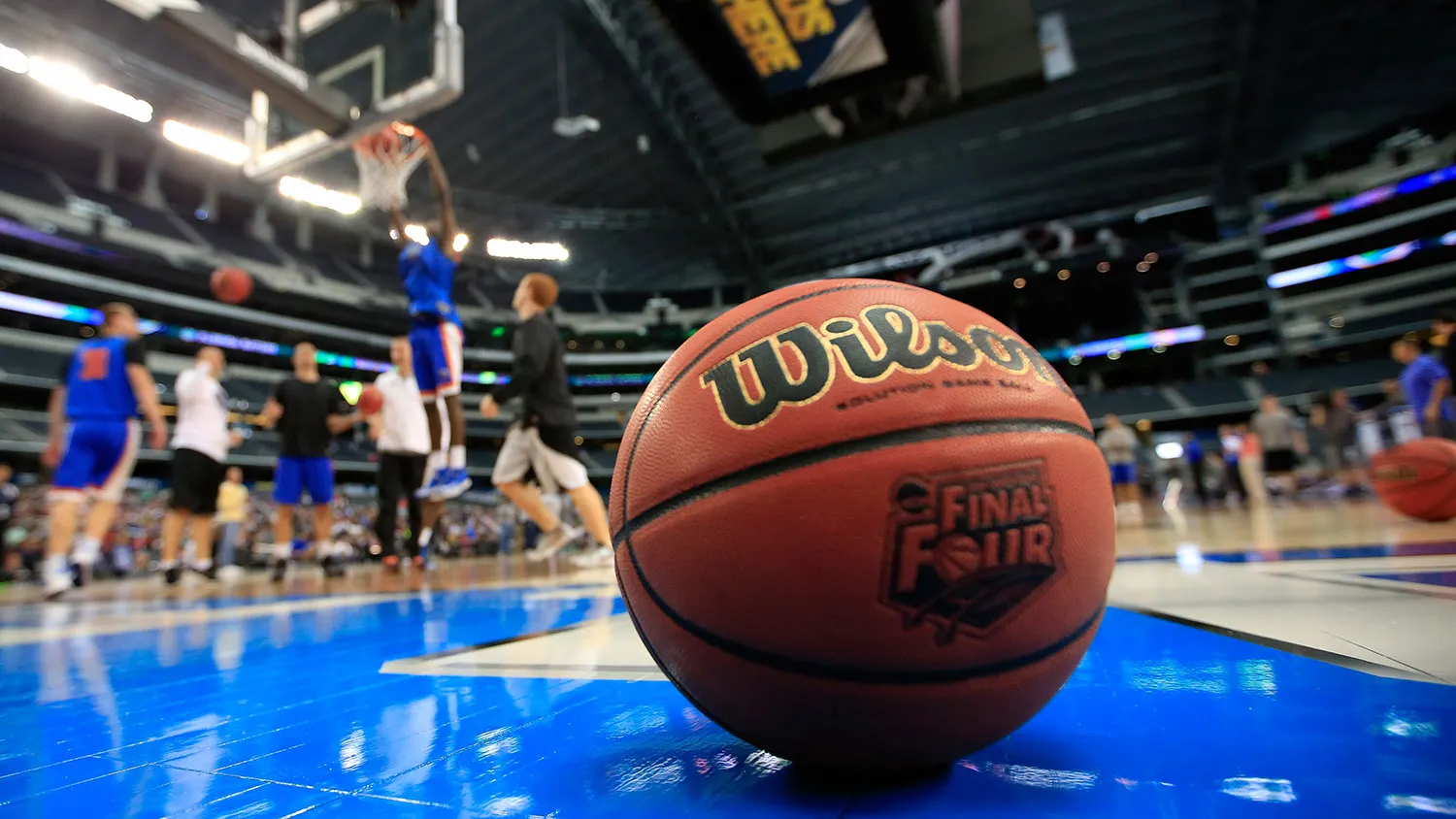
The Wilson basketball with the Final Four logo is seen as the Florida Gators practice ahead of the 2014 NCAA Men's Final Four at AT&T Stadium on April 4, 2014 in Arlington, Texas.
Photo by Jamie Squire/Getty ImagesThis weekend, tens of thousands of basketball fans—frankly, most of them screaming for Kentucky, those lunatics–will flock to Indianapolis to watch the NCAA Tournament Final Four. And they will accompanied by hundreds, maybe thousands of protestors. Despite terrific, iconic final four teams in Duke, Michigan State, Wisconsin, and undefeated Kentucky, the lead story on non-sports outlets is going to be about the protestors.
The blowback to Indiana’s passing (and Governor Mike Pence’s signing) of a religious-freedom law has surpassed what anyone involved had anticipated. Pence himself looked shocked, bewildered, and a little lost while trying to defend it on morning shows over the weekend, and the controversy has instantaneously metastasized into a national drama, thanks to the tournament this weekend. Much like the corporate world, the sports world is a force for the status quo—and on these issues, the status quo has been liberalizing rapidly. And, much like corporations, sports teams and organizations have real power, responsive to the sometimes vocal constituencies of their players. NCAA President Mark Emmert has already said the NCAA will examine how the law “might affect future events as well as our workforce.” (The NCAA is based in Indianapolis, and the Women’s Final Four is schedule to be held there in 2016.)