Now Is the Time to Stop and Think About What Satire Really Means
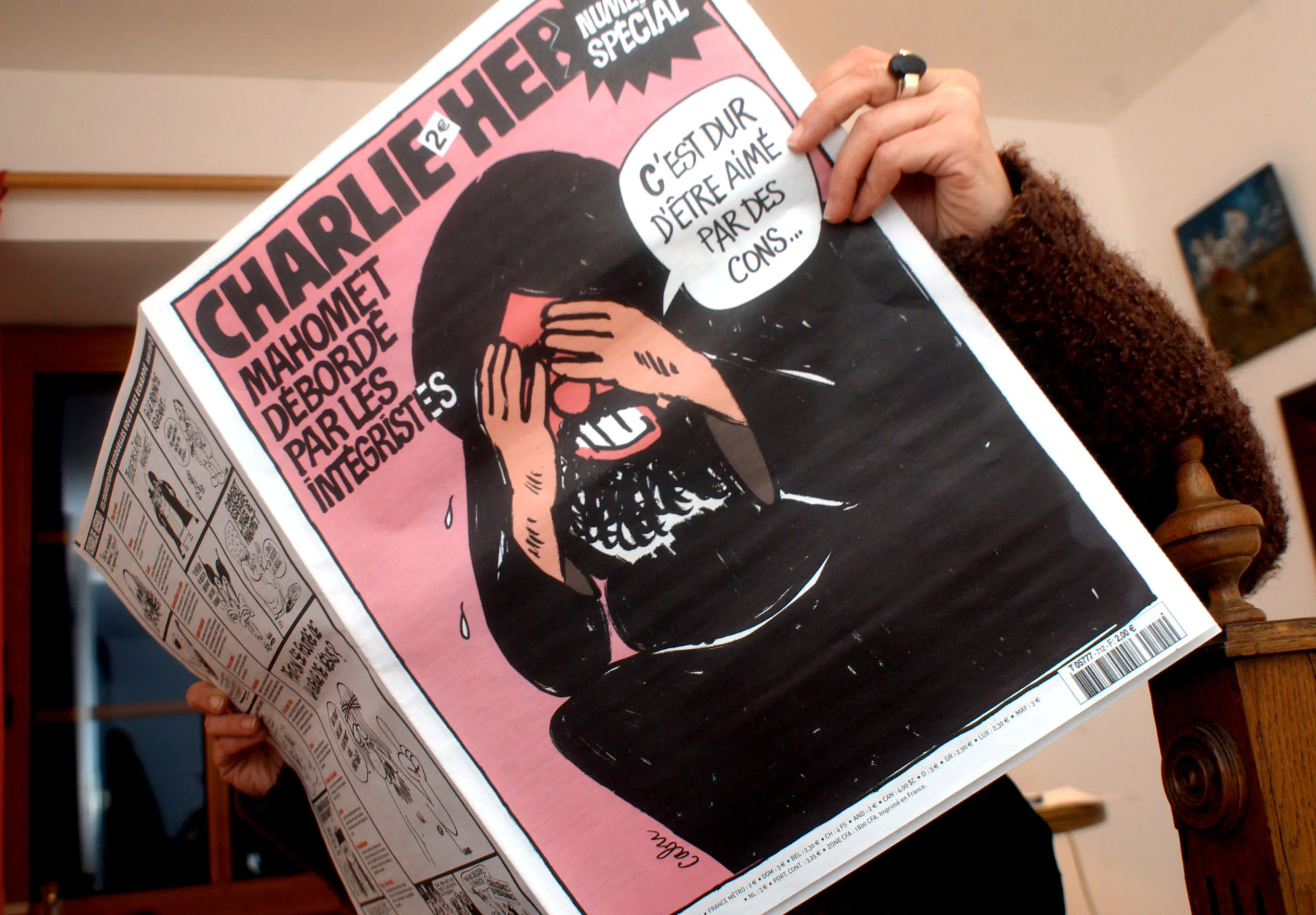
A woman displays an issue of Charlie Hebdo magazine for this photograph in Belleme, France Wednesday, February 8, 2006.
Alastair Miller/Bloomberg News“Satire is what closes on Saturday,” satirist George S. Kaufman wrote, satirically. It is worth unpacking what this quote really means. Ostensibly, it means that when you choose the rapier of satire rather than the comforting swaddle of mass entertainment, you are limiting your audience in a self-sabotaging matter: While you’re busy finding yourself clever, the crowd has moved on to giggle along with cute kittens singing catchy songs. Satire is satisfying, but generally speaking, the only people listening are the person doing the satirizing and those who already care enough to agree with him. Most people ignore him, or, if they do anything at all, call him a jerk.
In the wake of today’s tragic terrorist attack in Paris, which killed 12 people including top cartoonists at satirical French magazine Charlie Hebdo, the word “satire” has taken on its own power, its very existence a rejoinder to hatred, a founding pillar of Our Way Of Life. It is being cast as noble. But this is not how we usually see satire. Satire is usually a pain in the ass. Satire exists to discomfit the comfortable, to slaughter sacred cows, to puncture the illusion that we all live in a “polite” society. Satire is crude, and rowdy, and often self-aggrandizing: Satire is meant to call attention to itself in any way possible. Charlie Hebdo was particularly skilled at this: One cover, actually supporting the French law banning Muslim women from wearing burqas, featured a woman wearing a burqa … somewhere other than her head. Good satire is a little gross and cares not of taste. You want people to think … and you’re not against using a good dick joke to do it. Satire attempts, by its very nature, to shake people to alert.