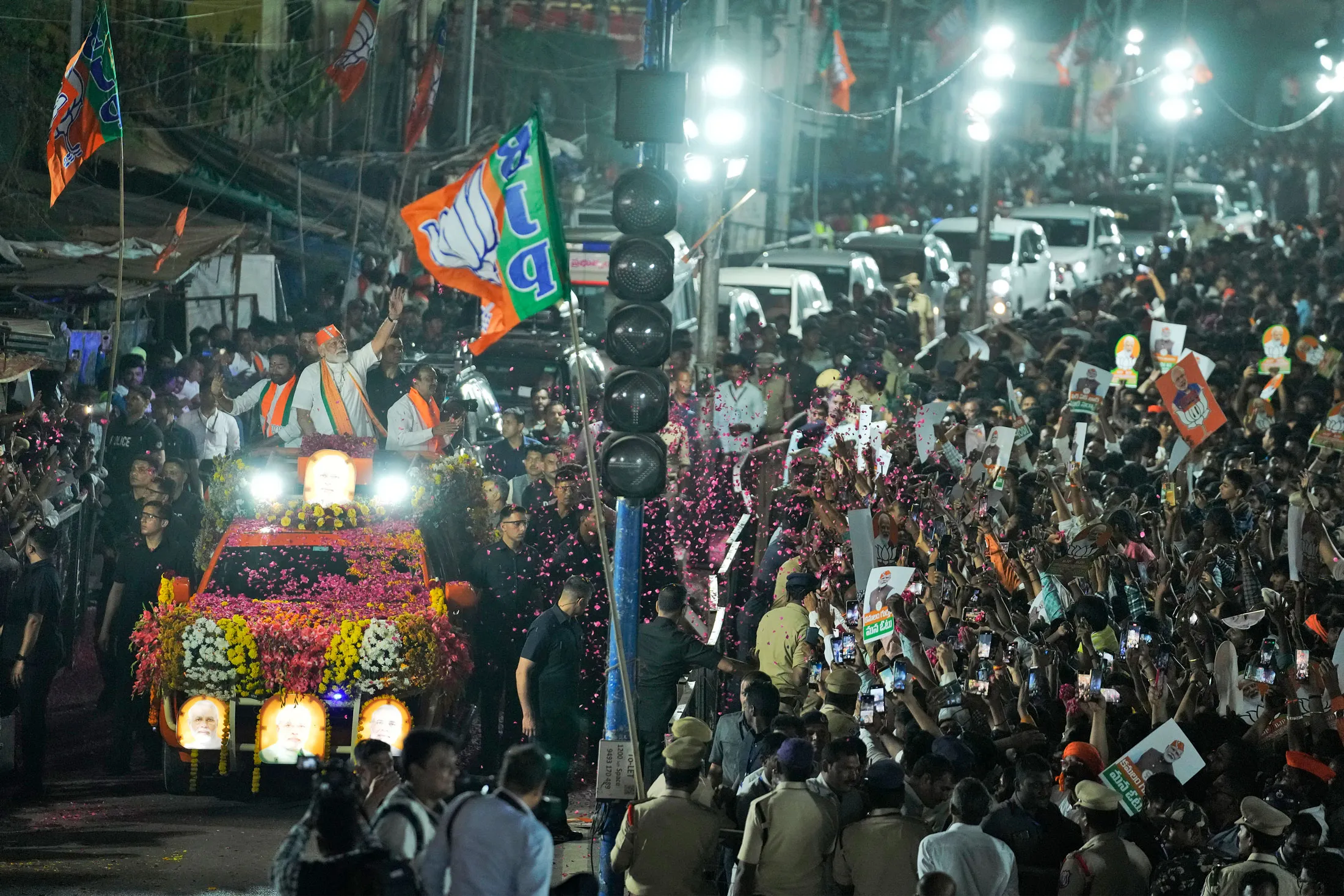
Indian Prime Minister Narendra Modi greets supporters in Hyderabad, India in March.
Photographer: Mahesh Kumar/AP PhotoThe World’s Biggest Election Is a Test of Modi’s Hold on India
Almost a billion people will head to the polls in the world’s largest democracy, where a booming economy may benefit the prime minister and his ruling BJP.
As India begins six weeks of voting, few analysts are voicing doubts as to whether Prime Minister Narendra Modi will emerge the winner in the parliamentary contest. But there is no shortage of questions about what the result might mean for the world’s most populous country. A strong showing by Modi’s Bharatiya Janata Party (BJP) party could see it advance its long-standing goals of elevating the role of Hinduism in public life, even as opposition parties warn of democratic backsliding, including the erosion of press freedoms. The BJP’s campaign manifesto is focused on accelerating what is already the world’s fastest-growing major economy, albeit one hobbled by low levels of investment, high youth unemployment and rudimentary infrastructure, especially in rural areas where the bulk of the population lives. The economy has benefited from a scramble by Western businesses to hedge their bets on investments in China, just as Modi’s government has been boosted by support from the US as it seeks a counterweight to Beijing’s growing global ambitions.
All 543 seats in India’s lower house of Parliament, the Lok Sabha, are on the ballot; the Prime Minister is chosen by whatever party or coalition of parties can command a majority.