Cold War Media Relics Gain Renewed Relevance in Ukraine
After Russia’s invasion, state-funded international broadcasters are filling gaps in coverage.
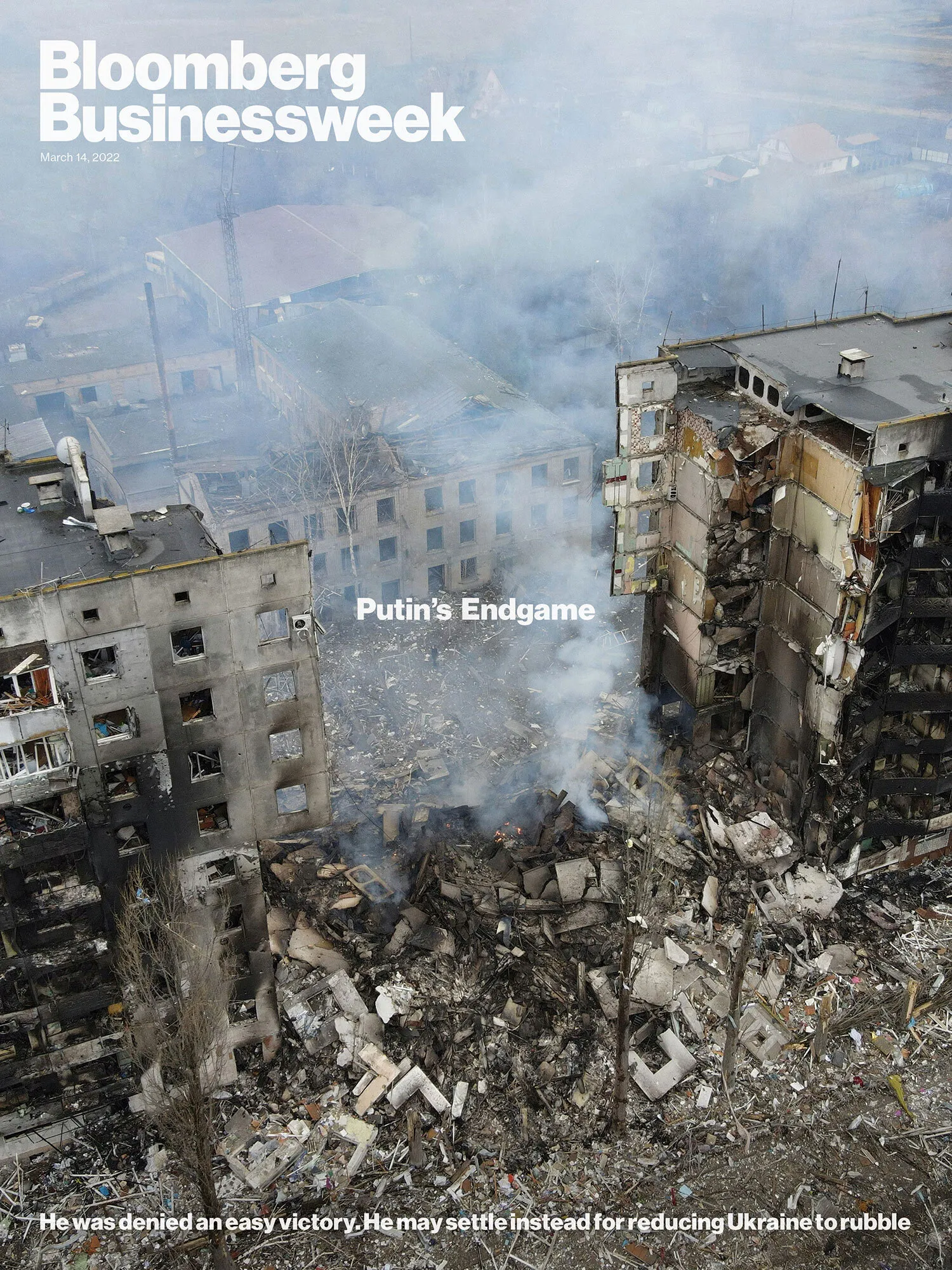
Russia’s invasion of Ukraine has been widely called the “First TikTok War” because of the flood of videos from the front lines, or at least purporting to be. But the fire hose of war content—often of unclear provenance—on social media has made it harder than ever to know what’s credible. A video might be the work of Russian or indeed Ukrainian propagandists or even come from a teen in Tennessee looking to make a quick buck with recycled viral content. “We have to double-check everything,” Iliya Semenov, a 25-year-old web designer in Kyiv told me as Russian troops sought to encircle the city.
The vast quantities of misinformation have brought renewed relevance to a family of state-owned news organizations that date to the dawn of the Cold War. The BBC World Service had a Russian-language station from 1946 to 2011, but it continues to employ scores of journalists who report for its Russian- and Ukrainian-language websites and has relaunched its shortwave service to the region. The U.S.-backed Radio Svoboda (a sister station of Radio Free Europe), which introduced Russian and Ukrainian broadcasts in the 1950s, has built a sizable presence on local social media.