The U.S. Child-Care Crisis Is Torturing Parents and the Economy
Expanding availability and lowering costs could deliver a $1.6 trillion boost to GDP.
Illustration: Ted Guerrero for Bloomberg Businessweek
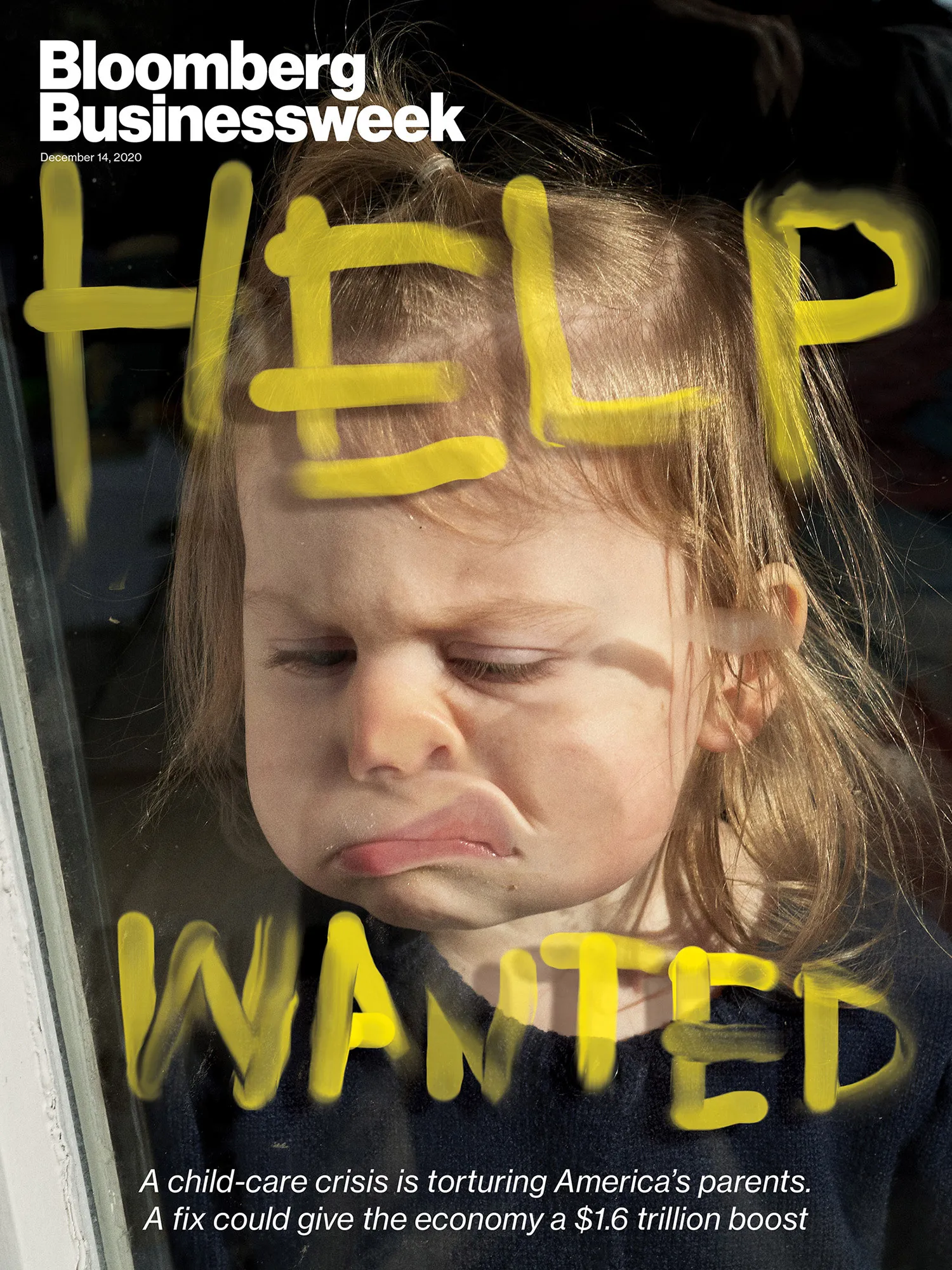
It didn’t seem possible that the U.S. child-care crisis could get much worse. Then came the pandemic, and parents were thrust into full-time caregiving roles for months on end. Beyond being stressful and exhausting, that reality has forced millions of parents, mostly mothers, to make tough decisions about how much to work, if at all.
Even C. Nicole Mason, who’s spent decades researching economic policies that benefit women, gained a new appreciation for the value of having some help watching her kids. Mason is president and chief executive officer of the Institute for Women’s Policy Research in Washington and a single mom with twin sixth graders. When the school year started in the fall, Mason and her children began their days by logging onto their laptops. It was a reassuring routine, and her son and daughter seemed to be adjusting well to all-remote learning, or at least that’s what they told her. Then, a few weeks in, a teacher reached out to tell Mason that her children were falling seriously behind. “I’m working, I can’t keep an eye on them,” she says. “I felt like a failure.”