The Big Hack: The Software Side of China’s Supply Chain Attack
It wasn’t just hardware. An online portal for firmware updates hid and distributed malware.
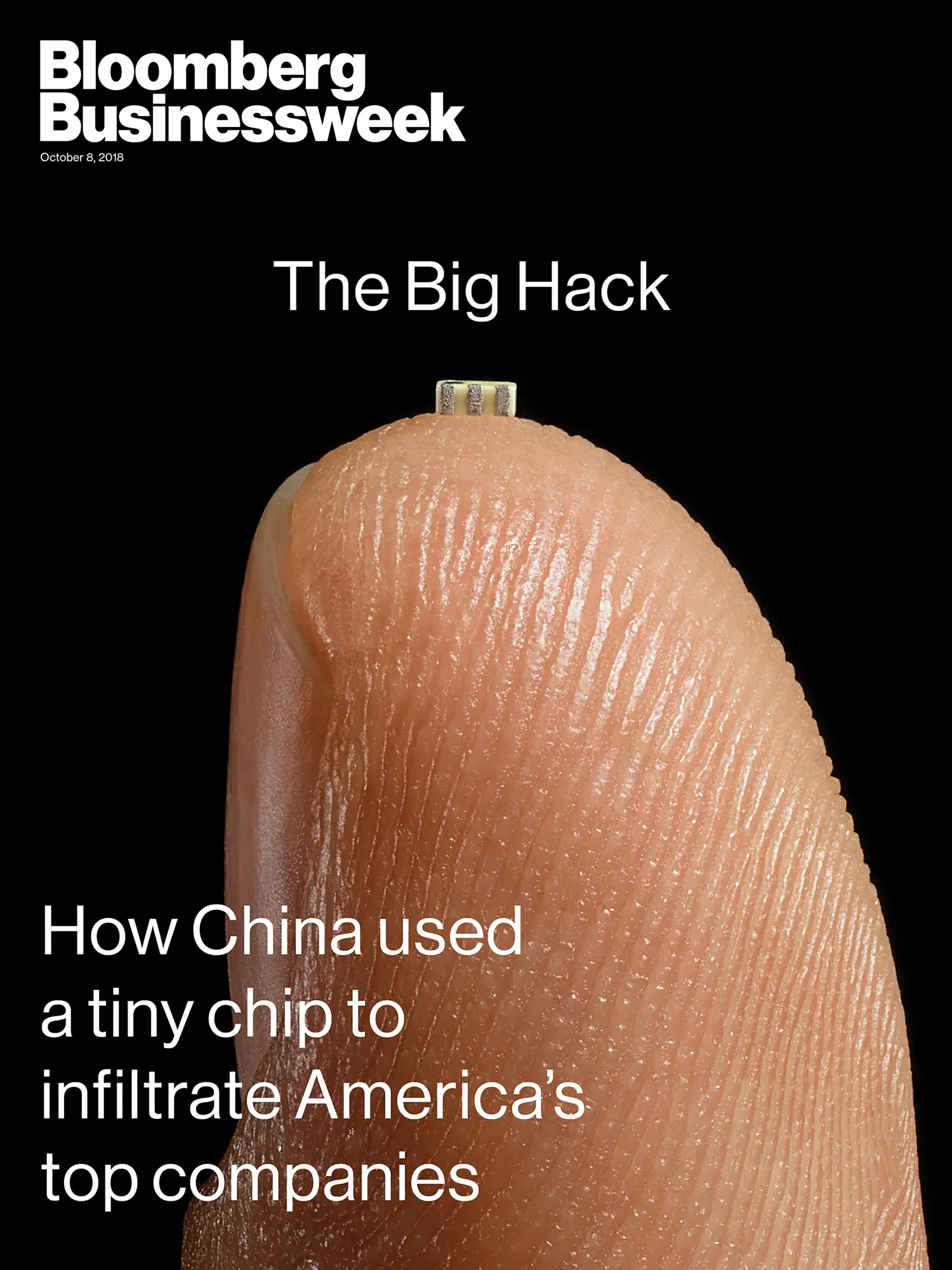
Even as Amazon, Apple, and U.S. officials were investigating malicious microchips embedded in Supermicro server motherboards, Supermicro was the target of at least two other possible forms of attack, people familiar with multiple corporate probes say.
The first of the other two prongs involved a Supermicro online portal that customers used to get critical software updates, and that was breached by China-based attackers in 2015. The problem, which was never made public, was identified after at least two Supermicro customers downloaded firmware—software installed in hardware components—meant to update their motherboards’ network cards, key components that control communications between servers running in a data center. The code had been altered, allowing the attackers to secretly take over a server’s communications, according to samples passed around at the time among a small group of Supermicro customers. One of these customers was Facebook Inc.

“In 2015, we were made aware of malicious manipulation of software related to Supermicro hardware from industry partners through our threat intelligence industry sharing programs,” Facebook said in an emailed statement. “While Facebook has purchased a limited number of Supermicro hardware for testing purposes confined to our labs, our investigations reveal that it has not been used in production, and we are in the process of removing them.”
The victims considered the faulty code a serious breach. Firmware updates obtained directly from the manufacturer are usually assumed to be secure. Firmware is tailored to specific types of computer hardware and embedded directly into those parts, where it provides a narrow set of operating instructions. Detecting attacks at this level requires specialized security programs, so the code is rarely scanned for bugs. By corrupting Supermicro’s update mechanism, the attackers were trying to get customers to infect themselves. While the chip and software attacks could be effective on their own, security experts say these approaches could also be used in concert, with the corrupted network cards amplifying the capabilities of the embedded chips.
Read: Statements from Amazon, Apple, Supermicro and Beijing
In its denial that a chip attack had reached its server network, Apple did acknowledge to Bloomberg Businessweek that it had encountered malware downloaded from Supermicro’s customer portal. Apple said the infection occurred in 2016, months after the events described by Facebook, and involved a single Windows-based server in one of the company’s labs. The malware was on a network card driver, which is distinct from firmware and allows an operating system and a piece of hardware to communicate. This was the reason Apple gave for dropping Supermicro as a supplier later that year. “As a matter of practice, before servers are put into production at Apple they are inspected for security vulnerabilities and we update all firmware and software with the latest protections,” Apple said in its statement to Businessweek. “We did not uncover any unusual vulnerabilities in the servers we purchased from Super Micro when we updated the firmware and software according to our standard procedures.”
However, a person familiar with Apple’s investigation says that around the time the company discovered malicious chips, it also found a more serious problem with network cards on Supermicro motherboards. Some Supermicro servers had network cards that came with outdated firmware, so the machines that were delivered to customers contained a critical security vulnerability that had been fixed in newer versions. This was potentially a third avenue of attack. Security experts say attackers could take advantage of a known firmware vulnerability in the same way they would use a more traditional software exploit. Once inside a target network, hackers could seek out servers with the dated code and easily infect them.