Bannon’s Back and Targeting China
Steve Bannon.
Photographer: Samantha Casolari for Bloomberg Businessweek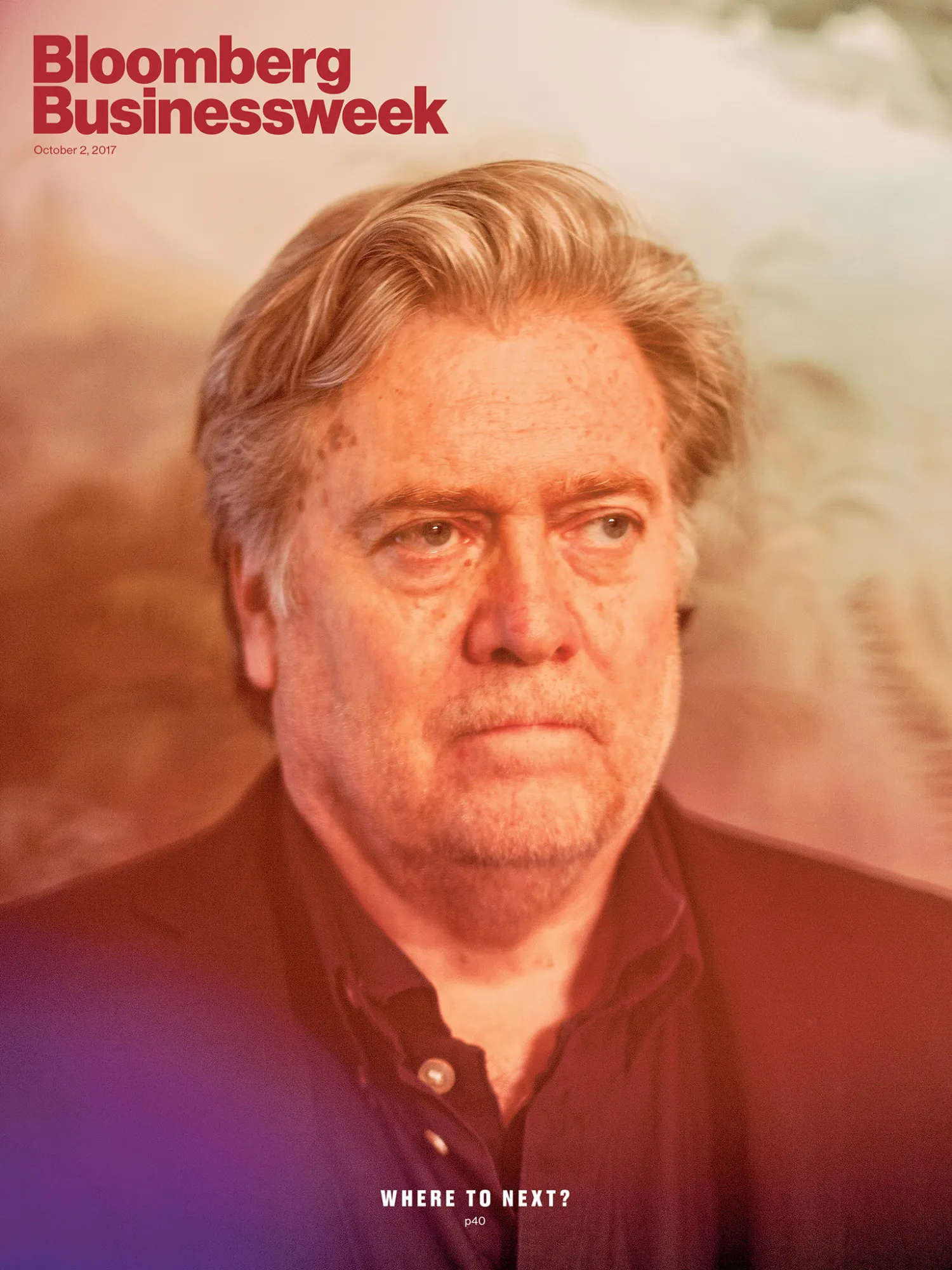
As President Trump’s chief strategist, Steve Bannon operated mostly behind the scenes to press his hard-right brand of nationalist politics, with only intermittent success. Since leaving the White House on Aug. 18, he’s taken on a much more public role—declaring war against GOP congressional leaders on 60 Minutes and endorsing Roy Moore’s insurgent candidacy in Alabama’s Senate primary, despite Trump backing his opponent, Luther Strange. Bannon claims he’s devoting his post-White House energies to “going to war for Trump.” But Moore’s Sept. 26 drubbing of Strange shows that Bannon remains influential—and is emerging as a political force of his own. “The populist-nationalist movement proved in Alabama that a candidate with the right ideas and a grass-roots organization can win big,” says Bannon, who introduced Moore at his victory rally. “Now, our focus is on recruiting candidates to take over the Republican Party.”
He’s also taking his cultural revolution overseas. Bannon, who’s been consulting with Henry Kissinger and other foreign policy veterans, is preparing a project to sound an alarm about what he views as the primary economic threat to America: China. “If we don’t get our situation sorted with China, we’ll be destroyed economically,” Bannon says, sitting in the Capitol Hill town house that serves as Washington headquarters of Breitbart News, where he returned as executive chairman after leaving the White House. “The forced technology transfer of American innovation to China is the single biggest economic and business issue of our time. Until we sort that out, they will continue to appropriate our innovation to their own system and leave us as a colony—our Jamestown to their Great Britain, a tributary state.”