Later, Baby: Will Freezing Your Eggs Free Your Career?
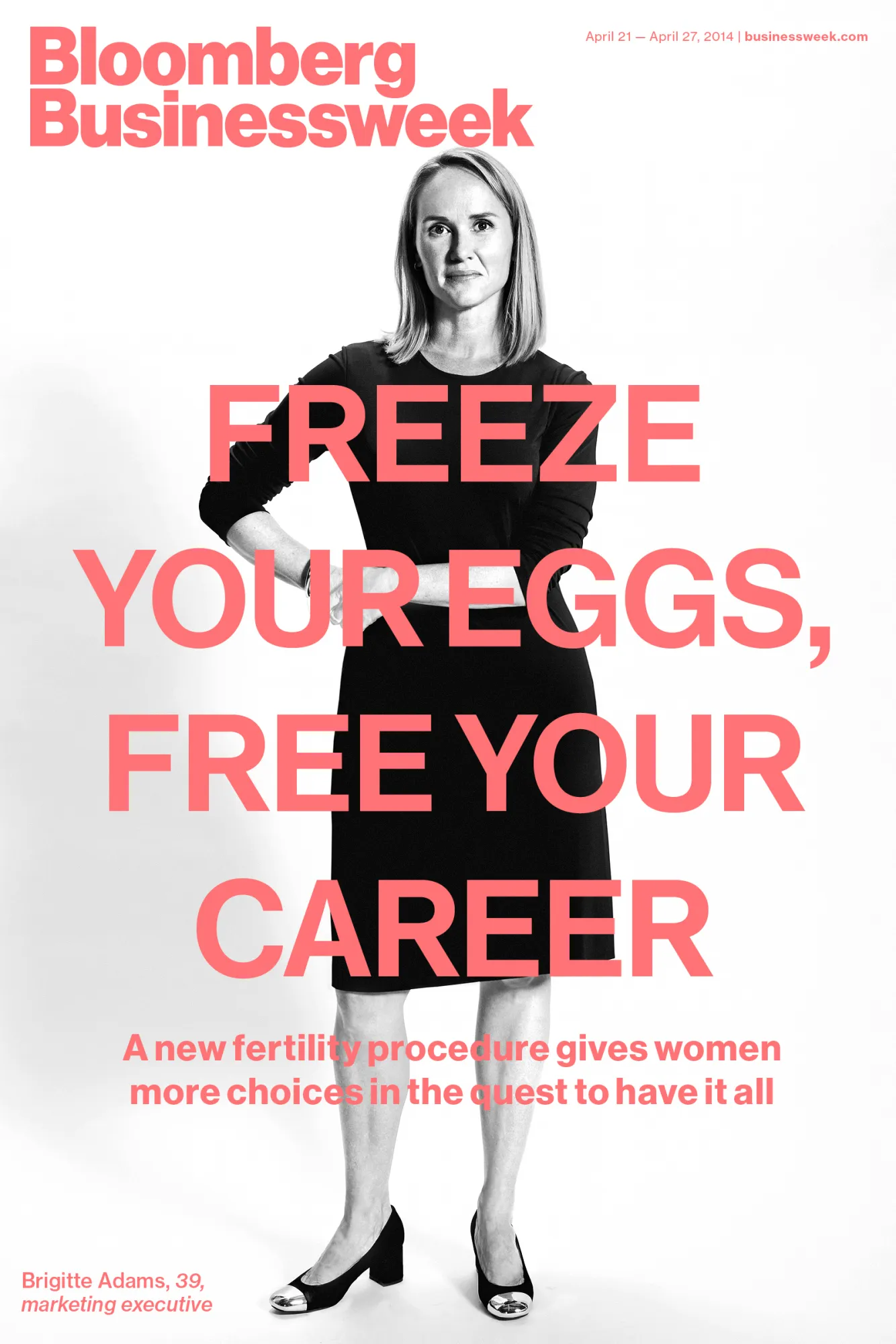
There comes a point in every childless woman’s life, usually around 35, when the larger world becomes very interested in her womb. Friends and family inquire about its health, asking why it’s not being utilized, when it will be, and then: Will it even work? For those who do want children, the pressure can be crushing and counterproductive. “I found myself going on dates thinking, is this marriage material? Is this? Is he? It was exhausting,” says Dr. Suzanne LaJoie, an ob-gyn in Manhattan. “When I was in med school and residency, all my friends were having babies.” She went through a breakup in her mid-30s and started to worry she wouldn’t be able to have a child of her own. So in 2007, at age 37, she paid $10,000 for a round of oocyte cryopreservation, more commonly known as egg freezing. “I just wanted to take the pressure off,” LaJoie says. “Men don’t have a biological clock, and I felt like it leveled the playing field a bit.”

“You feel bad about yourself, like you’re the odd man out, and somehow you’ve messed up on your path,” says Sarah Elizabeth Richards, who spent $50,000 freezing several rounds of eggs in 2006 to 2008 and wrote a book about the experience, Motherhood, Rescheduled: The New Frontier of Egg Freezing and the Women Who Tried It. “By freezing, you’ve done something about it. You’re walking taller; your head is held higher. And that can pay off in both your work and romantic lives.” Richards, now 43, is dating someone promising and says she’d like to thaw her eggs in the next year or so. She’s also at work on a new book and plans on finishing it before she tries to get pregnant. “Egg freezing gives you the gift of time to start a family, but it’s also, like, here’s how many years I actually have left for my other goals—what can I do with them?”
LaJoie got married soon after she froze (she told her husband about it on their very first date: “I was upfront and said, ‘This is my plan.’ He was, like, ‘OK!’ ”) and had her first baby naturally at 39. A few years later, after briefly trying fertility drugs, she thawed her eggs. The implantation worked, and her second son is 2 years old. “If I’d had kids when I was a resident, I wouldn’t have been able to spend any time with them—I was working a gazillion hours a week,” she says. “Now I can bring my 5-year-old to kindergarten every day.” In a 2013 New York University study of 183 women who’d frozen their eggs, 19 percent said they might have had a child earlier if their workplace had been more flexible.
The egg freezing generation, those latchkey kids of glass-ceiling breakers, were taught “that you create your career, and then everything else falls into place,” says Lauren, a 34-year-old lawyer in Los Angeles who froze her eggs in January and, like many of the women interviewed for this article, declined to reveal her full name in a national magazine for fear of staying single forever. “But now I know it’s not as easy as that.” Work hard, put off kids, and you might find yourself at 40 hearing a fertility doctor deliver the bad news. According to a 2008 analysis of data from the National Survey of Family Growth, among women 40 to 44, there are equal numbers of those who are childless by choice and those who would like to have children but can’t conceive.
Not since the birth control pill has a medical technology had such potential to change family and career planning. The average age of women who freeze their eggs is about 37, down from 39 only two years ago. (“Desperation level,” as Brigitte Adams, a marketing director at a Los Angeles software company who froze her eggs at 39, puts it.) And fertility doctors report that more women in their early 30s are coming in for the procedure. Not only do younger women have healthier eggs, they also have more time before they have to use them.

Emily loves to talk about her “Ivy League business school eggs.” The 35-year-old, who works in investor relations at a Wall Street reinsurance firm, is referring to her own baby insurance policy, the 19 oocytes (the medical term for egg cells) floating in liquid nitrogen at Reproductive Medicine Associates (RMA) in Midtown Manhattan. Last summer, and then again in October, Emily spent “more than a car but less than a house” to freeze her eggs, a procedure prompted by a recent breakup and an unforgiving work schedule. “I do want to have children eventually,” she says, “but I’m traveling all the time, and dating in New York is hard. I don’t want to marry someone just so I can get pregnant.” She’d heard about egg freezing from a friend who’d done it, and after consulting with a doctor at RMA, she went through two retrieval cycles. She didn’t tell anyone at her office why she had to miss a few days of meetings: “I work with all men. I’m not going to say, ‘Heeey, I need time off for fertility preservation. Awesome, K?’ ”

Since the 1970s the number of women having babies between the ages of 35 and 39 has increased 150 percent, according to the Centers for Disease Control and Prevention’s National Vital Statistics Report. (In 2010 alone, the first-birth rate for women from age 40 to 44 jumped 5 percent.) “What hasn’t changed is biology,” says Dr. Jamie Grifo, the program director of the New York University Fertility Center, who notes that many of these older mothers had to go to great and costly lengths. A study in February from the Society for Assisted Reproductive Technology found that 2 out of every 100 babies born in the U.S. are now conceived with advanced fertility help.
Egg freezing, which is similar to in vitro fertilization (IVF), has been around for 30 years, “but we were lousy at it until very recently,” Grifo says. The process was originally developed as a way to preserve the fertility of cancer patients undergoing possibly sterilizing chemotherapy, and it’s relatively simple. First, a woman’s ovaries are stimulated with fertility drugs (generally a nine-day course of shots administered at home) to produce as many eggs as possible. Then doctors do what’s called a transvaginal retrieval: They insert a needle through a woman’s vaginal wall and into her ovary and gently suck out the eggs. That’s the easy part. Unlike in vitro embryos, which have been fertilized by sperm, eggs are just one large cell consisting mostly of water.

Grifo says that, like Emily, most women who come in to discuss egg freezing have heard about it from friends, particularly ones who have struggled with age-related infertility. Other parties get involved, too. “I had one patient recently who’d received egg freezing as a holiday present from her mom,” says Dr. Alan Copperman, medical director of RMA. “I guess the mom had some self-interest—she was preserving the possibility for grandchildren—but I like to think of it as an altruistic gesture.”


This spike has to do with the improved technology of vitrification—not many women were willing to pay for an invasive procedure with unfavorable odds of success—together with increased media attention and an unlikely celebrity spokeswoman. In a 2012 episode of Keeping up With the Kardashians, Kim, post-divorce, consulted with a fertility doctor about freezing her eggs. Later in the episode, the then-31-year-old was shown grimacing through a fertility drug shot administered by her mother, Kris Jenner. (Kardashian now has a child, North, with her new partner, Kanye West. She hasn’t said whether she used a frozen egg.) Last April, actress Sofia Vergara confirmed she’d frozen her eggs in hopes of having a child with her fiancé. “I’m 40 years old. Nothing happens that naturally anymore,” she said on Good Morning America.
In 2012 the American Society for Reproductive Medicine removed the “experimental” label from the procedure, citing studies about improved success rates and data that showed no increase in birth defects in babies born from thawed eggs. Yet ASRM also warned against misleading women about the odds of eventually getting pregnant: “Marketing this technology for the purpose of deferring childbearing may give women false hope and encourage women to delay childbearing. Patients who wish to pursue this technology should be carefully counseled,” its report read. The final, slightly paternalistic recommendation: It’s best to conceive through natural intercourse at an appropriate age.
If eggs are successfully frozen and thawed, that gives a woman about a 1-in-5 chance of a live birth, depending on her age when she froze and other factors. It’s about the same odds as a regular IVF cycle. Many doctors will refuse to freeze the eggs of a woman past her early 40s (by the time a woman is 40, only 1 out of every 8 eggs is viable; at 45, it’s 1 out of 20), or anyone whose hormonal levels suggest her fertility is on the wane. “You’d basically be freezing her infertility,” says Grifo, who explains to every would-be egg freezer the probabilities of failure yet acknowledges that “denial is a force, and patients sometimes hear what they want to.” But the emotional benefits of freezing, the empowerment that Emily and her peers feel, is real. “I had a patient who at 39 froze three cycles of eggs, and at 42 she shows up with the guy. We thawed her eggs, did testing, and she didn’t have one normal embryo. I called her up six months later to check in, and she says, ‘Yes, I’m sad, and I’m eventually going to try to use a donor egg. But I’m glad I froze my eggs. At 39 I did something for myself, and it was worth it.’ ”
In the waiting room at the NYU Fertility Center, the theme song from St. Elmo’s Fire plays over the speakers, and women, a few visibly pregnant, idly flip through pamphlets featuring angelic sleeping infants. There’s a poster for a Mind/Body Stress Reduction Workshop with the tag line “The stress of infertility can be relieved!” Grifo is in his office in the back, a 58-year-old man surrounded by pictures of babies. “I’m mostly a therapist,” he says of his work with the women who come in for egg freezing. He breaks them into two groups: “The relationship grievers—they got divorced or dropped the guy, and they come in to focus on the future. And then there are the women who are career-oriented. They’re high-powered. They probably spend the $10K it costs to freeze eggs on hair and nails a year.”

Fertility is a $4 billion industry in the U.S., but egg freezing makes up only a tiny percentage of it. Of the $10,000 it costs a woman to freeze her eggs, most of that goes to labor and laboratory costs. “We barely break even on it,” says Grifo, who adds that, unlike IVF, the volume isn’t yet enough to make any real money. And because it’s cost-prohibitive, younger women aren’t lining up. Two companies, Extend Fertility and Fertility Authority, are working to bring down the price of the procedure to attract a less well-off segment of the population.

Extend Fertility’s website works more “as a Good Housekeeping Seal of Approval for egg freezing,” says founder and Chief Executive Officer Christy Jones. Fertility clinics pay a retainer, and women visit the company’s website to learn more about them. About seven years ago, Jones reached out to a few large companies with progressive benefits packages about the possibility of covering egg freezing. “We got a lot of pushback from them, saying, ‘Well, we don’t want to seem Machiavellian, that we’re paying to freeze a woman’s eggs so she just keeps working harder,’ ” she says.

The next frontier in egg freezing is genetic screening. The process is called a polar body biopsy and involves testing each egg’s DNA, then keeping only those that are normal, which would greatly increase the odds of a successful pregnancy. “Many women go through the process and end up with absolutely nothing,” Sher says. “With genetic testing, we can cut down on that emotionally damaging false hope.” Of course, no good thing is free: The tests cost an additional $3,000 to $4,000. And “nothing is ever going to be 100 percent,” Grifo says. “Listen,” he adds, after learning that I’m about to turn 33, “you shouldn’t wait too long to get pregnant. You’re never going to be totally ready.”