The U.S. Marine Corps Fights for Its Budget
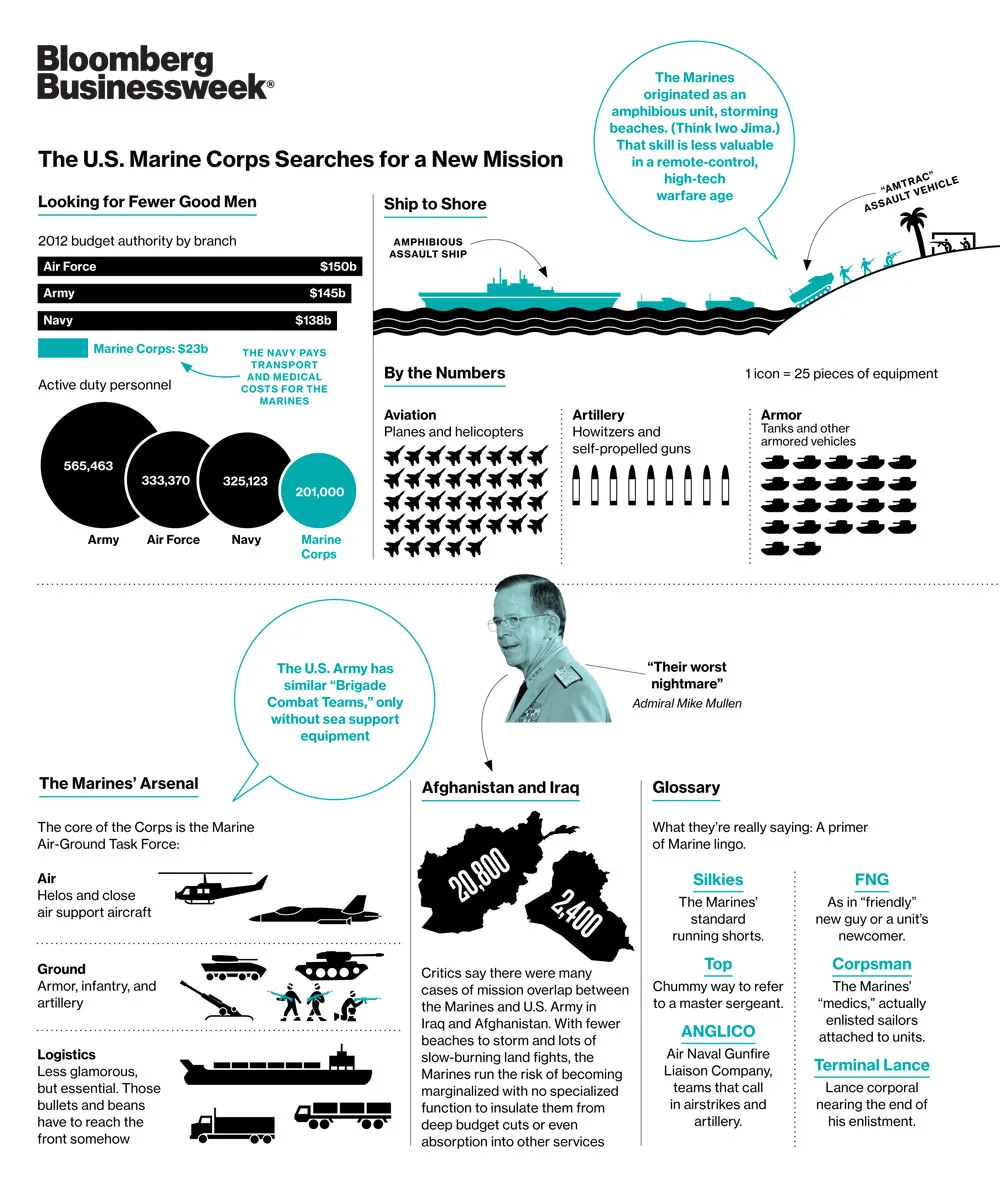
Ten thousand Marines and sailors will stage a mock invasion in North Carolina in early February 2012, the biggest U.S. display of large-scale amphibious warfare in 10 years. The target: Capitol Hill. While all the armed services are fighting for their budgets as the Pentagon looks for $450 billion in cuts over the next decade and possibly more, the Marine Corps in particular needs to prove its strategic relevance. Its specialty of wading ashore under fire, as they did with distinction in World War II, hasn’t played a decisive role in battle since the Korean War.
Marine Corps Commandant James Amos is trying to reposition the service, which was founded in 1775 as an infantry unit serving on Revolutionary-era naval vessels. Two recent land wars in Iraq and Afghanistan blurred the roles played between Marines and the Army, which often conducted near-identical missions. That has led some Pentagon officials, including former Defense Secretary Robert Gates, to question whether Marines’ historical role as a large-scale beach assault force still makes sense in this era of rapid-response, high-tech warfare. “The Marine Corps has to think really seriously about what its mission really is,” says Gordon Adams, a foreign policy professor at American University in Washington and a former White House national security budget official under President Bill Clinton.