A Tiny Alaska Village Stares Down Big Oil
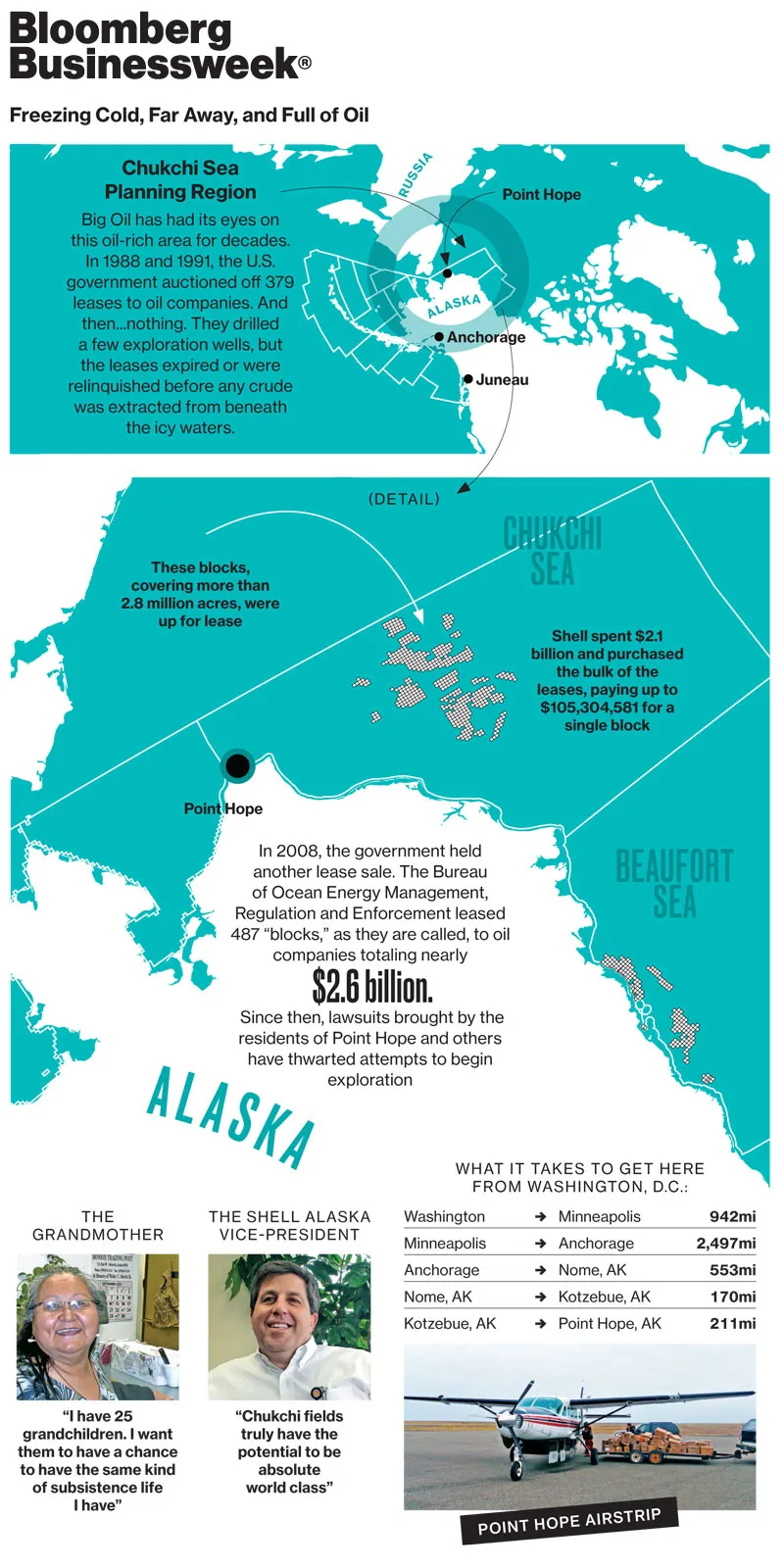
This summer, four-year-old Micah Kinneeveauk helped catch and kill his first seal. His proud grandmother plans to reward him with a special dessert at Thanksgiving: A big bowl of ice cream flavored with caribou meat and fat. Hunting seals and whales in the Chukchi Sea and caribou and polar bears on the tundra has provided food, clothing, and rites of passage for centuries in tiny Point Hope, Alaska, a barren gravel village of 800 Inupiat natives located 125 miles north of the Arctic Circle. Many of the people live largely on what they catch.
That’s why Micah’s grandmother, Caroline Cannon, sees trouble in Royal Dutch Shell’s plans to drill for oil in the Chukchi and Beaufort seas. In the long shadow of the Exxon Valdez and BP disasters, she’s unconvinced by Shell’s assurances that it has helicopters, robots, divers, and skimmers available to respond if it loses control of a well, along with a cap-and-containment system similar to the one that ultimately plugged the BP gusher. “There is no technology to clean up an oil spill, and it’s devastating if it happens,” says Cannon, who serves as the village president. “I have 25 grandchildren. That’s why I oppose offshore drilling 2,500 percent—I want them to have a chance to have the same kind of subsistence life I have.”