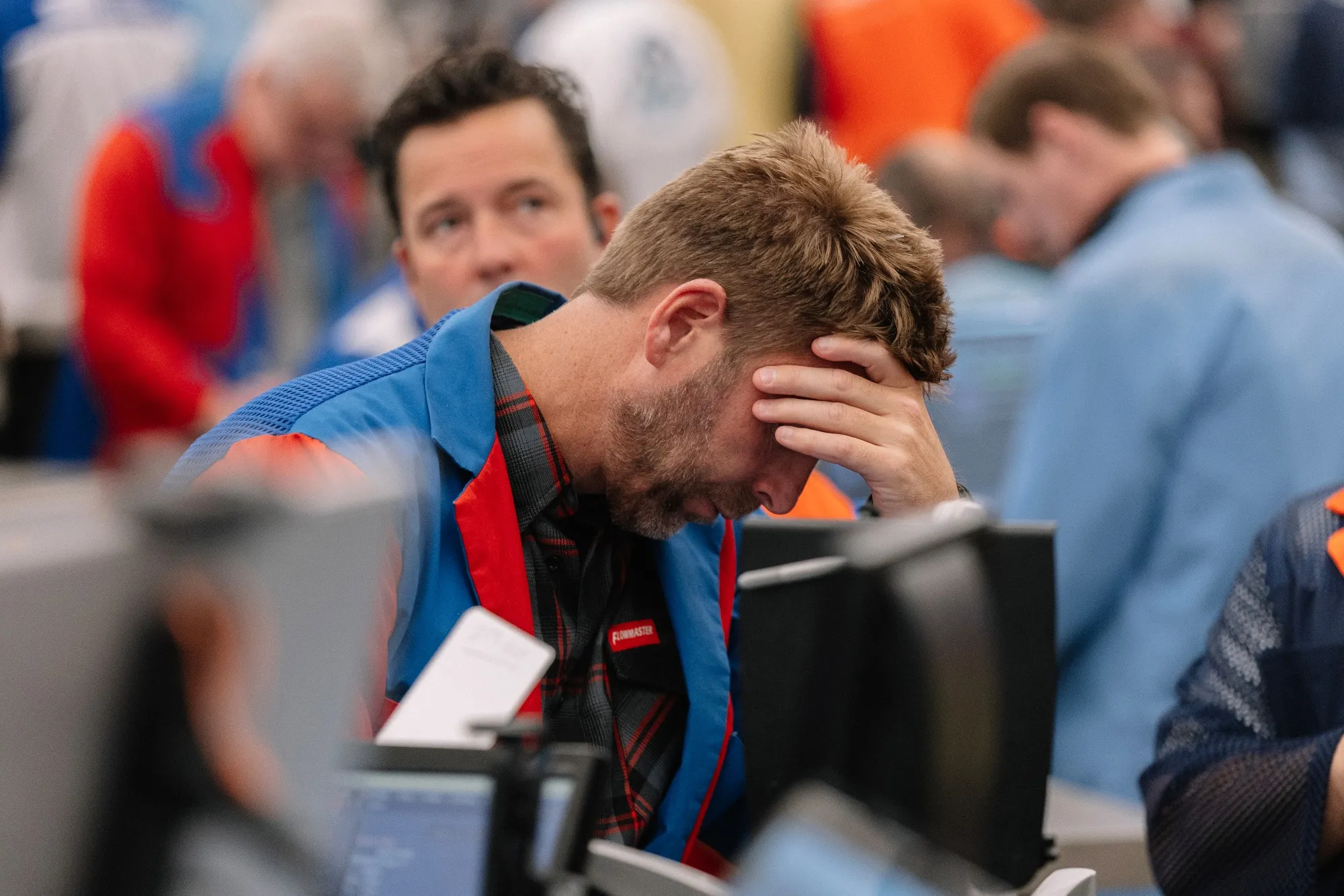
Traders at the Cboe Global Markets exchange in Chicago in April.
Photographer: Jim Vondruska/BloombergWhat Is a ‘Death Cross’ for Stocks? Does It Signal More Pain Ahead?
An unusual price formation in the S&P 500 suggests the downturn isn’t over.
US stock prices have fallen sharply since President Trump launched sweeping tariffs on imports. Now, traders say, an unusual pattern in the stock market known as a “death cross” suggests further losses might be in store for the S&P 500 Index. Here’s what to know about the market phenomenon and what it means for stock prices.
A death cross occurs when an index’s 50-day moving average crosses below its longer-term 200-day moving average, a reversal of the pattern that would be typical if the market were in an uptrend. Although the formation is unusual, it tends to emerge during volatile moments in the financial markets, especially as signs of economic distress appear. There was a death cross in November 1999 during the peak of the dot-com era, and again in October 2000 after the dot-com bubble burst, and in December 2007 ahead of the global financial crisis.