
Justin Trudeau Is in Trouble. Voters Get to Say How Much
View the Canada 2019 election results here
Prime Minister Justin Trudeau is on the ropes as Canadians head to the polls on Oct. 21. Opinion surveys show his approval ratings at near-record lows and his Liberals locked in a tight race with the opposition Conservatives, with neither party polling high enough (both are just above 30%) to win a majority of seats in the legislature.
Odds are high that if the 47-year-old Canadian leader does manage to hold on to power, he’ll be in a weakened position, working with a fragmented parliament and relying on two smaller left-leaning parties to survive—particularly the New Democrats, who have had a strong finish in the campaign.
This election was supposed to be a cinch for Trudeau—the charismatic heartthrob leader with a penchant for selfies and quirky socks who champions free trade and welcomes refugees. For one, he’s overseeing a strong jobs market, with the unemployment rate hovering at the lowest in decades. But a string of scandals and blunders over the past two years is making many Canadians doubt their prime minister’s judgment and authenticity.
The Main Contender

Conservative Party
The good news for Trudeau is that Canadians don’t like his main rival much either. Conservative chief Andrew Sheer’s approval ratings are in the low 30s. Even more problematic has been a sharp increase in recent months of Canadians who disapprove of the opposition leader, even though he remains somewhat of an unknown. This unfamiliarity has allowed the Liberals, and other groups like labor unions, to brand Scheer as a callous social conservative who will slash spending at the first opportunity. Yet his economic plan is basic Conservative fare: lower taxes and a return to balanced budgets, with plenty of economic handouts to families. He’s also denied any plans to roll back social rights.
The Conservatives have in recent decades been somewhat of an underdog, with a smaller universe of accessible voters than the Liberals. But they are the best financed party and have a phenomenally dedicated base of supporters in western Canada, in rural parts of the country and among social conservatives. One downside of this is that it tends to limit Conservative appeal with more centrist voters.
Possible Kingmakers

New Democratic Party

Green Party

Bloc Quebecois
With the Liberals and Conservatives struggling to grow support, the smaller parties may end up being the big winners.
Minority governments are not uncommon in Canada—it’s happened in three of the previous five elections. A government lacking a majority must get support from other parties to pass laws.
Past five general elections results by seats won
2015
2011
2008
2006
2004
If Trudeau fails to win a majority, he could still govern with the support of either of the two left-wing parties. The New Democrats, Canada’s version of a social-democratic party, had been down in the polls throughout the campaign, but leader Jagmeet Singh has seen a late surge in popularity and may end up as Canada’s power broker. For the Greens, led by Elizabeth May, it would be an unprecedented ascent in influence. May also seems to have been a beneficiary of the Liberal Party’s recent woes and polls show support for the Greens at historic highs.
Another big winner of the election could be the Bloc Quebecois, a separatist party in Canada’s French speaking province that is likely to make a comeback in this election.
How will Canadians rate Trudeau’s tenure as prime minister?
What could play in favor of Trudeau

Jobs and Economy
Trudeau is campaigning amid a relatively robust economy. Since he came to power in November 2015, employment gains have accelerated with Canada adding 1.2 million jobs over that time, or a 7% increase—in large part because the governing Liberals have overseen large inflows of immigration. Under Trudeau, the jobs picture has been particularly good for the nation’s three largest cities. Toronto, Montreal and Vancouver have accounted for more than half of the employment gains, even though they make up just over one third of the population.
Growth has been good, too. Canada’s economy has been expanding at a faster pace than all other Group of Seven nations except the U.S. Stock investors have done well under Trudeau, with equities posting about a 20% gain as the main index hits record highs. All this has allowed the prime minister to forge a comfortable lead over Scheer on the crucial question of economic stewardship.
Progressive Vote
Trudeau has a solid footing among progressives, even those who don’t like him personally. He’s implemented one of the most left-leaning agendas the country has seen in at least a generation—strongly liberal on social issues, willing to run deficits to tackle income disparities and assertive on climate change. His most important achievement is a new child benefit program that has helped lower poverty levels across the country.
And the Liberals have worked hard to hold on to this voting bloc. Trudeau’s team regularly demonizes the Conservatives as regressive, riddled with closeted bigots and ready to reverse women’s and gay rights and cut government services.
History
Canadians almost always give new leaders a second mandate. Only four times in the nation’s history has a prime minister been turfed from power after only one term.
What could play against Trudeau

Energy
Getting Canada’s massive oil reserves to market has become the paramount question—an issue that divides Canadians like no other—and Trudeau came to power with a compelling idea to bridge the divide. Why not try to forge a grand bargain on resources: be more pro-environment and supportive of indigenous concerns in order to win the “social license” for development?
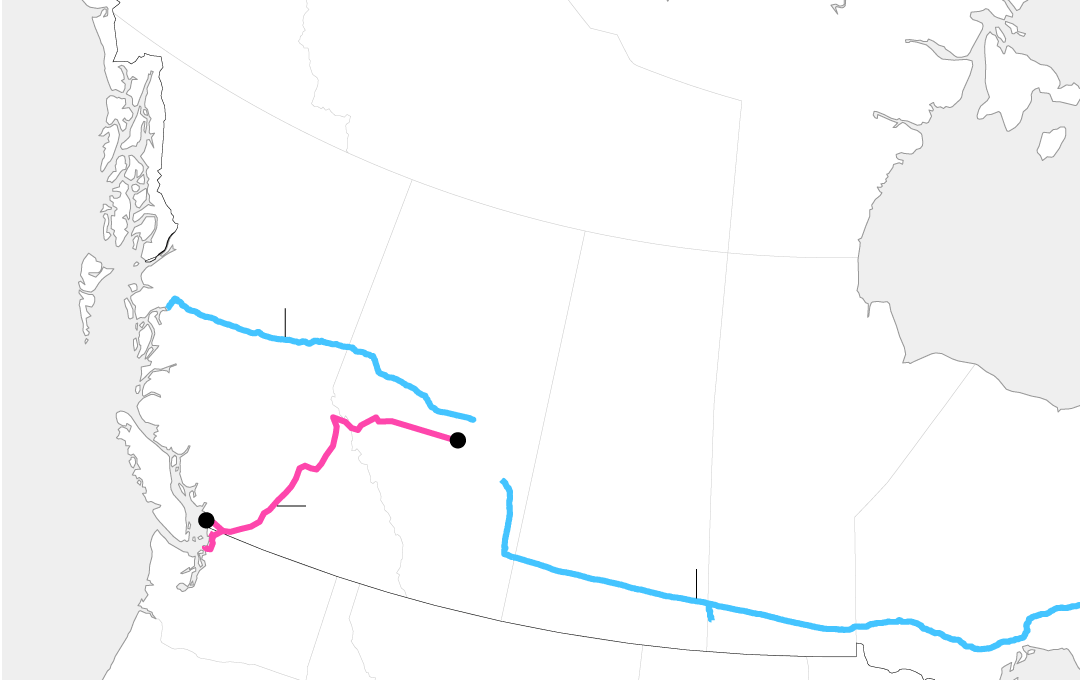
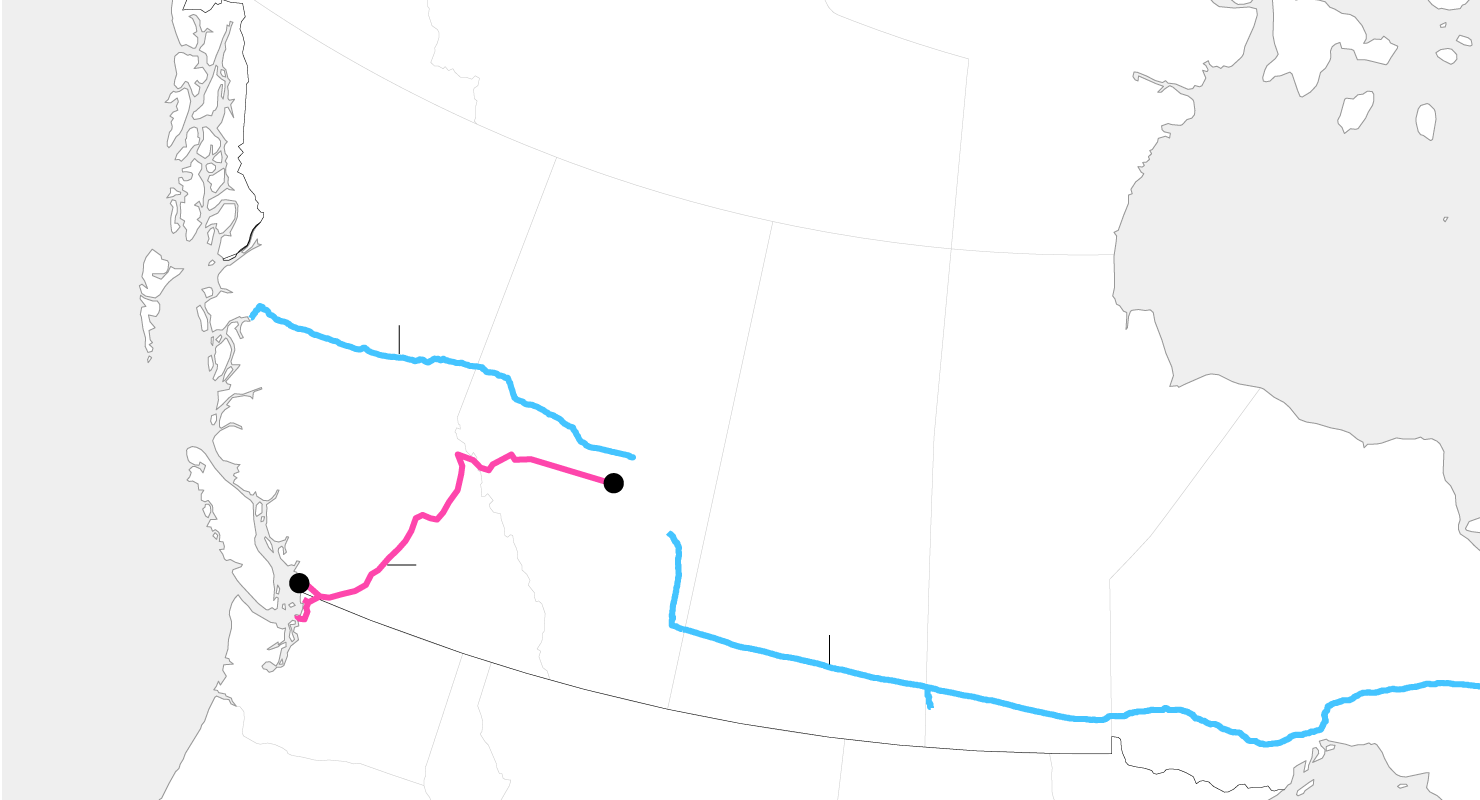
The end result is that nobody is happy. Many environmentalists oppose Trudeau’s plan to move ahead with crude oil pipelines. The industry believes the situation has deteriorated under his watch. Two options, the Energy East and Northern Gateway projects, were taken off the table, and the government was forced to nationalize the one that remained: the Trans Mountain expansion.
Pipe Dreams
- Project scrapped
- Nationalized by Trudeau

B.C.
Northern Gateway
Alta.
Sask.
Man.
Edmonton
Vancouver
Trans
Mountain
Ont.
Energy East
B.C.
Hudson Bay
Northern Gateway
Alberta
Sask.
Pacific Ocean
Manitoba
Edmonton
Trans
Mountain
Vancouver
Ontario
Energy East
B.C.
Pacific Ocean
Hudson Bay
Northern Gateway
Alberta
Sask.
Manitoba
Edmonton
Trans Mountain
Vancouver
Ontario
Energy East
There’s also concern the government’s new environmental assessment legislation will do lasting damage. Capital, meanwhile, keeps marching out of Canada’s oil industry. It could all lead to losses for the Liberals in both resource regions and places where the environment is a primary concern.
Affordability
The economy may be doing well, but it’s not doing well for you. At least that’s what the opposition parties say and their narrative seems to be resonating in a campaign that’s put affordability front and center. Yes jobs are plenty, but wages have been sluggish, housing prices seem out of reach and those who do own homes are carrying a lot of debt.
The Liberals, too, have jumped on the affordability bandwagon, focusing many of their promises on things to help alleviate financial pressures on families. The problem is they’ve been in power for four years and—unlike the Conservatives—can’t blame the governing party for the angst felt by voters.
Leadership
The shine on the Trudeau brand has faded. While he did have a prolonged honeymoon with Canadians, his approval ratings have tanked over the last couple of years amid a series of scandals. It’s a long list. He’s been reprimanded twice by the country’s ethics watchdog—once for accepting a free vacation from a billionaire, another time for intervening in a judicial matter. There was an embarrassing state visit to India, where he was criticized for over-the-top attire and rubbing elbows with Sikh separatists. Accusations also surfaced that Trudeau groped a reporter before entering politics.
The most serious scandal broke in the middle of the campaign, with the release of shocking photos and video of the prime minister wearing brown and blackface make-up as a younger man. All this has taken a toll. According to the Canadian Broadcasting Corp.’s aggregate poll averages, 54% of Canadians disapprove of his performance with an approval rating of just 35%.
The Four Key Races
Ultimately, Trudeau’s fate will be determined by how well he does in four regions of the country that show the biggest propensity to see votes swing.
Number of seats by province or territory prior to election
- Liberals
- Conservatives
- New Democrats
- Green Party
- Bloc Quebecois
- Other or independent
- Vacant
1 British Columbia
It’s a four-way race between the Liberals, Greens, New Democratic Party and Conservatives. Trudeau’s ridings here are mainly in the lower mainland (in and around Vancouver), and the Liberals are vulnerable because of the government’s decision to move ahead with Trans Mountain, which will increase the flow of Alberta’s oil to British Columbia’s coast.
2 Southern Ontario
Dozens of seats in this region, which includes Toronto, switched from Conservative to Liberal in the 2015 vote, and the Conservatives are working hard to win some of those back. Affordability will resonate with suburban voters here, but the Conservatives are heavily reliant on a strong NDP showing in order to split the progressive vote.
3 Quebec
The political dynamics in the French-speaking province may even be messier than in B.C. The NDP isn’t likely to hold many of its seats, with the biggest net gainer poised to be the Bloc Quebecois. The Conservatives are expected to hold onto the seats they have around Quebec City, but will struggle to pick up any more.
4 Atlantic Canada
After winning every single seat in the region in 2015, the Liberals will lose quite a bit of ground here, with the Conservatives expected to gain some of the ridings in which they’ve done historically well. They’ll pick up seats in New Brunswick and will compete in Nova Scotia. Like Ontario, jobs and the economy play a greater role electorally here, given higher unemployment rates and the seasonal nature of the local labor market. While Trudeau can boast of 1 million new jobs created under his watch, hardly any materialized in the Atlantic provinces.
What to Watch
In one of the closest election races in Canada’s history, it will all come down to Trudeau’s ability to persuade his marginal supporters to look past his missteps and cast their ballots. Women and young voters are key. If he succeeds, he should win a second term, albeit with a weakened mandate. If he doesn’t, he’ll go down as a one-term wonder, allowing little-known Andrew Scheer to become the next prime minister.