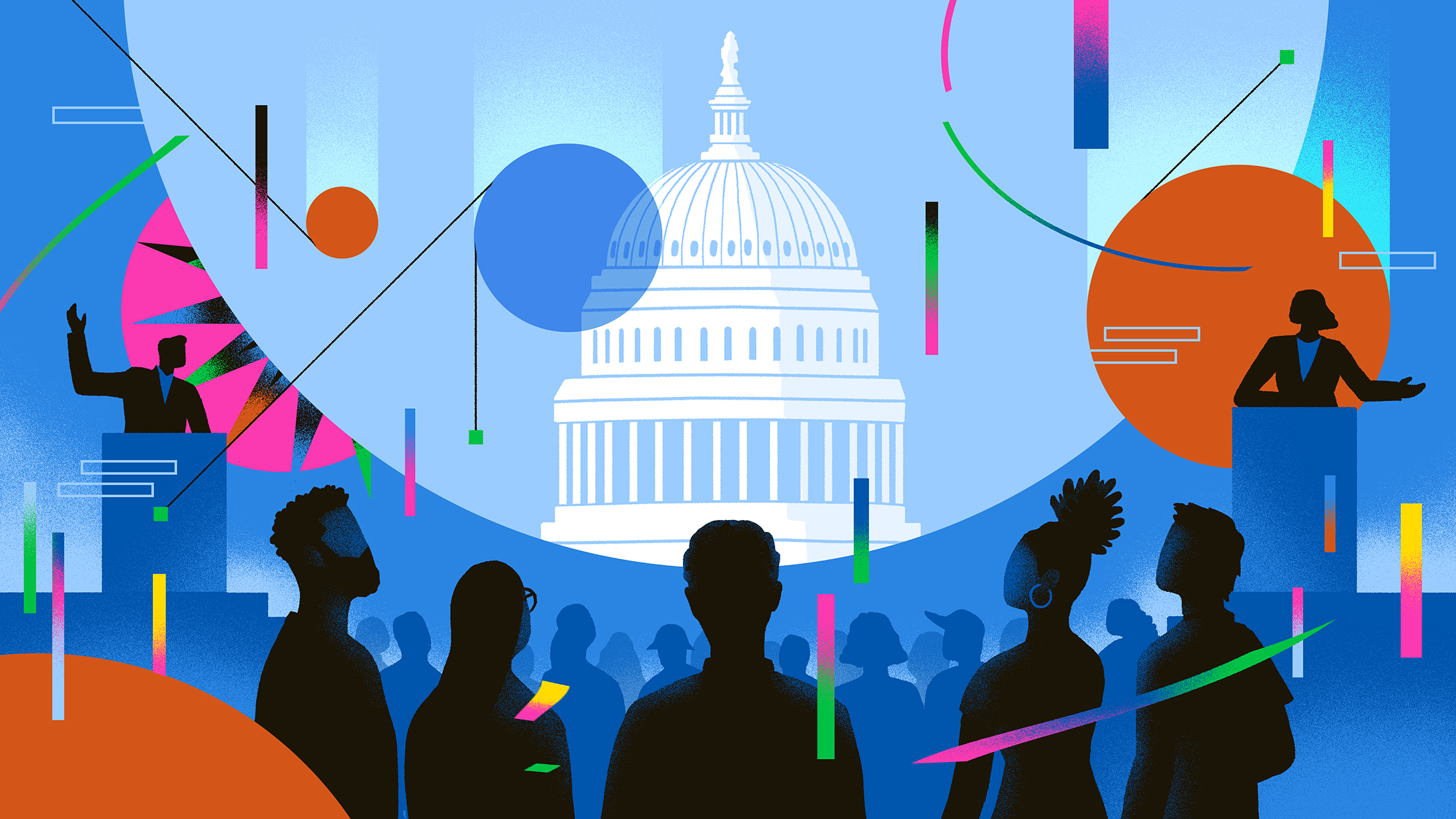
Illustration for the Republic of Distrust series. Three figures are in the center of the illustration each seen on a disjointed platform. Around them are floating objects including a pie chart, text bubbles, a computer grid, a broken image of various Washington monuments and varying shapes. The figures appear to all be looking up.

Republic of Distrust

Illustrator: Matt Chinworth

How America Became a Republic of Distrust

Bloomberg Opinion columnists looked at data for nine American institutions, like government, science, and big business, to get to the heart of the country’s crisis of trust.

By Kristen Bellstrom Published: | Updated:

When trust collapses, what can hold a nation together? A shared history? A common language? The unavoidable interconnections that come from living in close proximity? Or nothing at all?

This question weighs heavily on American life. It hangs over the biggest issues of the day: our fractured politics and government, the rise of artificial intelligence, the culture wars raging in businesses and schools, the existential threats of climate change and disease.

True, we’ve been living through a crisis of trust for some time. Bright spots may appear here and there. (See: the military and small business.) And world-shaking events may have periodically scrambled our feelings about specific institutions; the earliest days of the Covid pandemic, for example, briefly boosted our belief in science and medicine. But widen the aperture, and the overall picture is unmistakable: The trend line goes in one direction — down.

Trust in Most US Institutions Has Withered

Percentage of respondents who have a “great deal” or “quite a lot” of confidence

Source: Gallup

Now, as the US approaches an election that is, in some sense, a referendum on our faith in democracy itself, the question of trust feels increasingly urgent. How did Americans lose our faith in the integrity of our most cherished and important institutions? And more urgent still: How can we restore it?

When confronted with a thorny problem, Bloomberg Opinion always turns to the data. But trust is slippery in that respect — there are no hard numbers to grab onto as we might when tracking, say, GDP or unemployment. Instead, we’re left with sentiment. And as any good pollster will tell you, theirs is an imperfect science. Surveys help take the public temperature (and track its changes over the decades) but tell us little about the forces undermining public trust and even less about what might rebuild it.

In this series, we’ll dig into both. Our columnists turned to experts, history, and their own deep knowledge of American institutions to pinpoint the causes of disillusionment and chart a path forward.

Some themes surface repeatedly in our reporting. The internet and all it unleashed (particularly social media and now artificial intelligence) is a critical part of the trust puzzle. The democratization of information has made people less dependent on institutions and elites. But it also shattered the frame that formed our shared picture of reality.

Another drumbeat is the country’s growing political polarization, which automatically puts anyone from “the other side” on enemy territory. The evolution of the economy has played into that division by minting new groups of winners and losers and creating segments of society with little reason to trust those who’ve left them in the dust.

What we learned is surprising, often scary, and sometimes even hopeful. We believe it will leave you with a richer understanding of why we find ourselves suspicious, divided and uncertain about our future — and how we might start to repair the damage that’s been done.

Click the images below to explore the series as it unfolds in the coming weeks.

Illustration of a debate amongst figures in front of the Capitol building as a diverse crowd looks onward. The two figures appear on opposing sides of the image separated by the Capitol Building in the center of the image. The figures appear to be making hand gestures. The crowd looks up, seemingly engaged with both the figures and the view of the building beyond them.

Government

by Stephen Mihm


Illustration of a larger businessman with smaller figures working alongside him. In the top left corner, a female figure focuses on a chart that appears to be shattered. In the top right corner, two figures work alongside each other on crumbling desktop computers. The final group of figures in the bottom right hand corner are working on an assembly line that appears split in half with a crane reaching above them.

Business

by Beth Kowitt


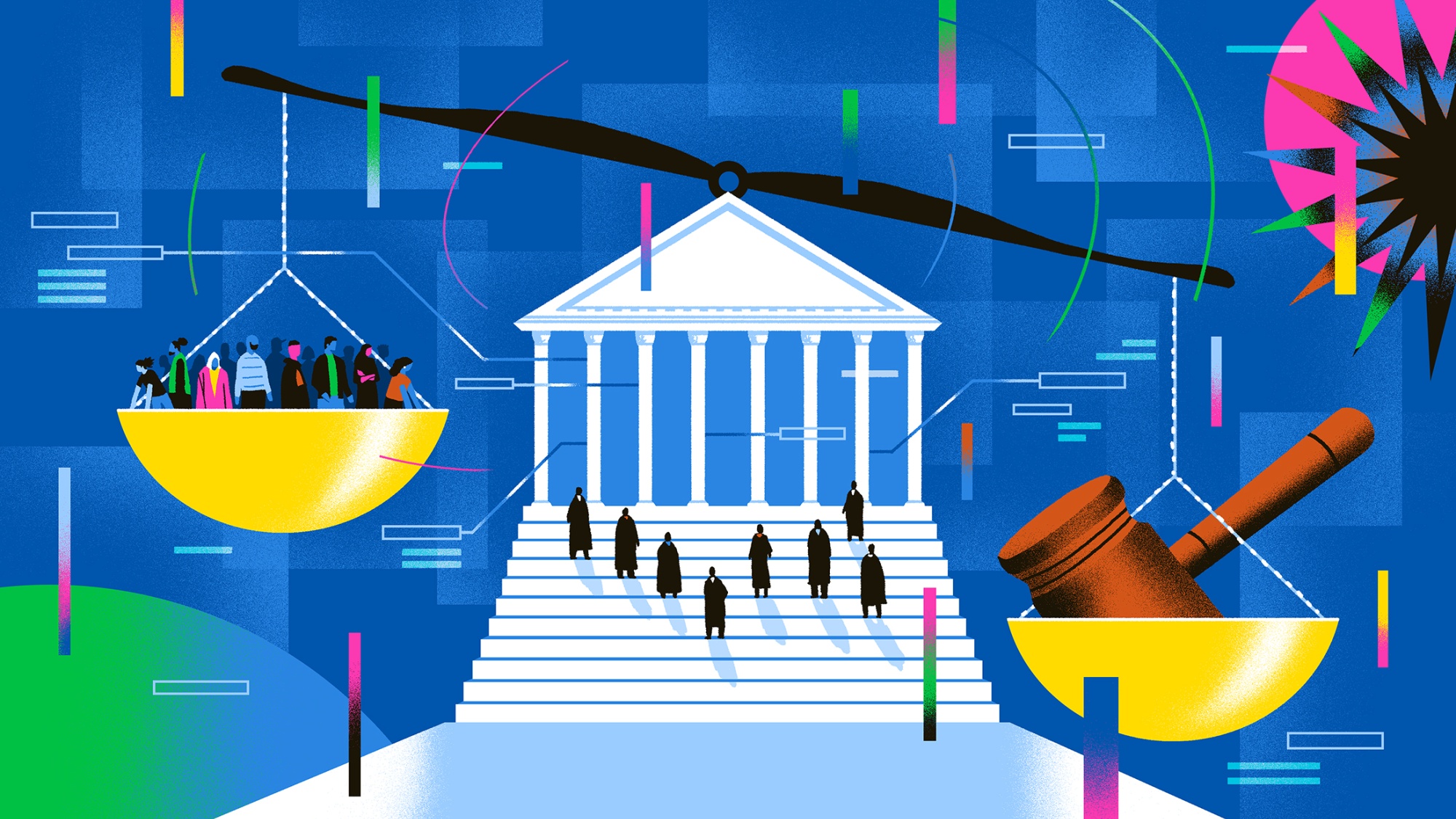
Illustration of the Supreme Court Building with nine justices standing on its steps. Above the building is a large scale. On one side of the scale is a diverse group of figures appearing to be looking down at the ground below them. On the other (lower) side of the scale is a large gavel.

Supreme Court

by Noah Feldman


Illustration of a scientist sharing ideas with a diverse group of figures with floating images of beakers, syringes, and cell strains. The group of figures appear open and engaged as two of the figures are seen conversing. Another figure holds a paper, looking at the scientist. The last figure is looking directly at the floating images.

Science

by F.D. Flam


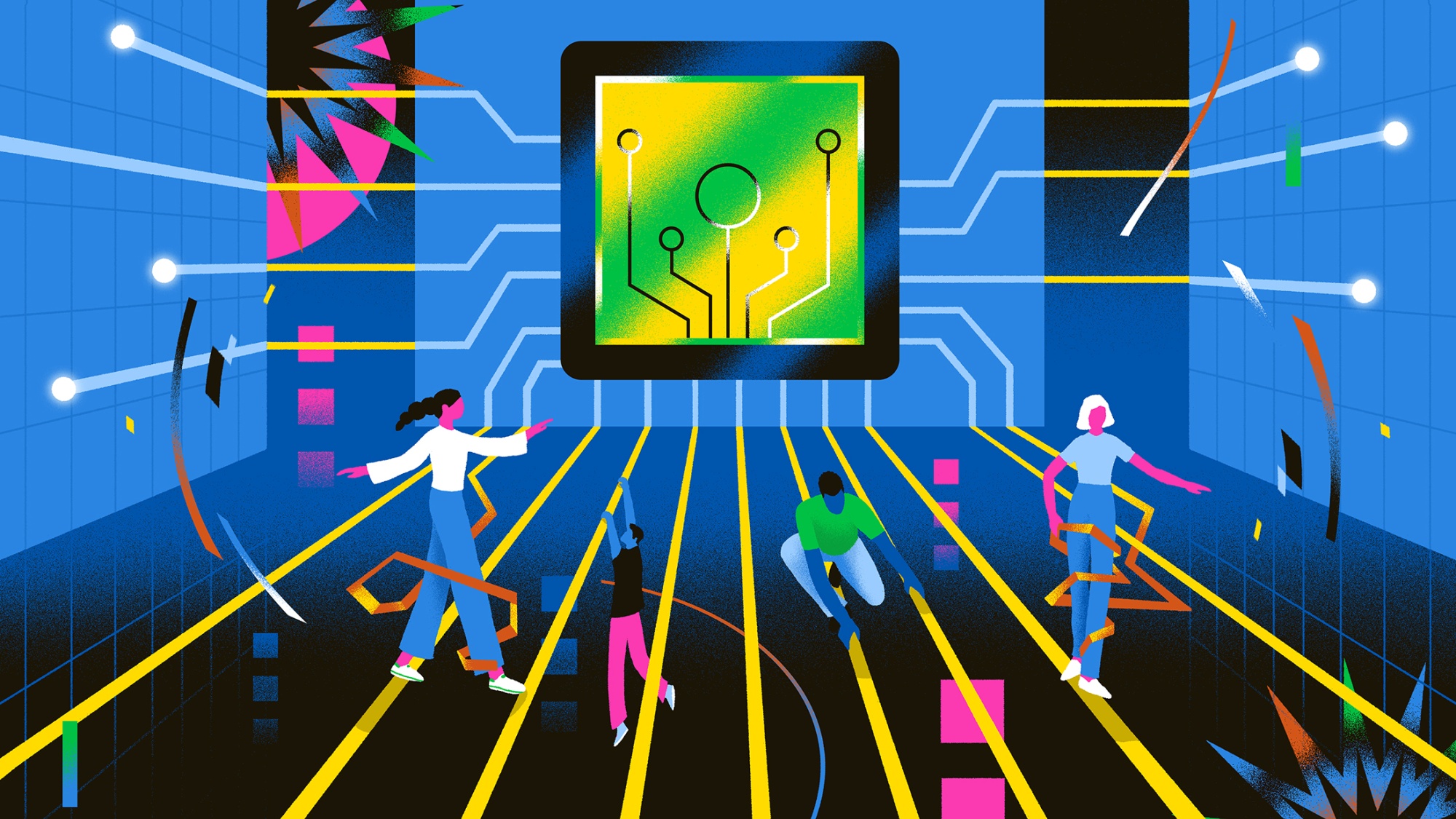
Illustration of a shining computer chip with connecting lines flowing alongside the walls of the image. The lines appear to be balance beams or tightropes as figures weave between them. There is one figure holding on from below as another is tangled within the ropes.

Tech

by Parmy Olson


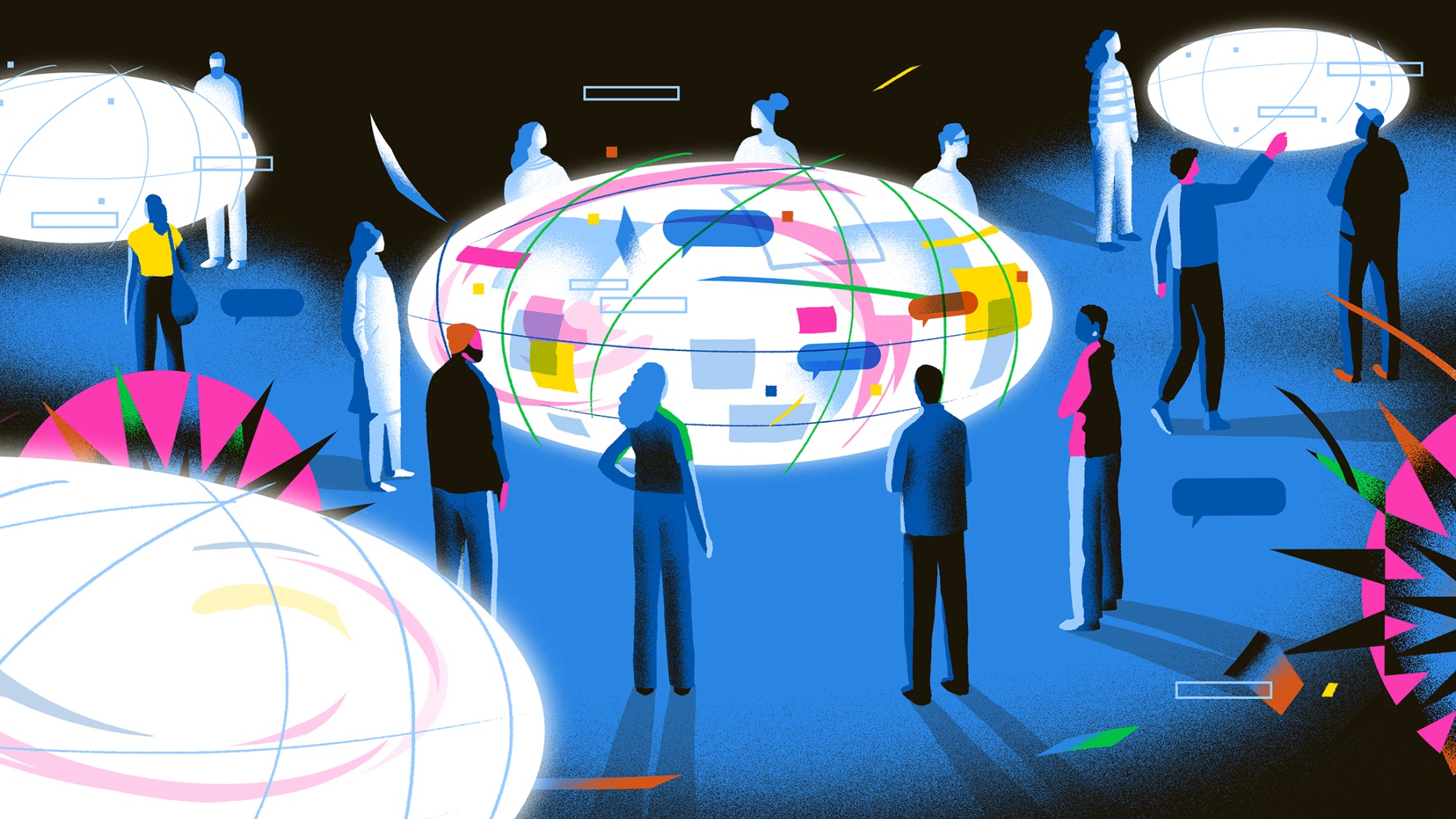
Illustration of figures gathering around four glowing orbs filled with various chat bubbles. There is one large orb in the center of the image with a much larger crowd gathered around it. However, several of the figures appear to be looking at the three smaller orbs on the outer edges of the illustration.

Media

by Bill Keller


How can we rebuild trust? Click here for solutions.

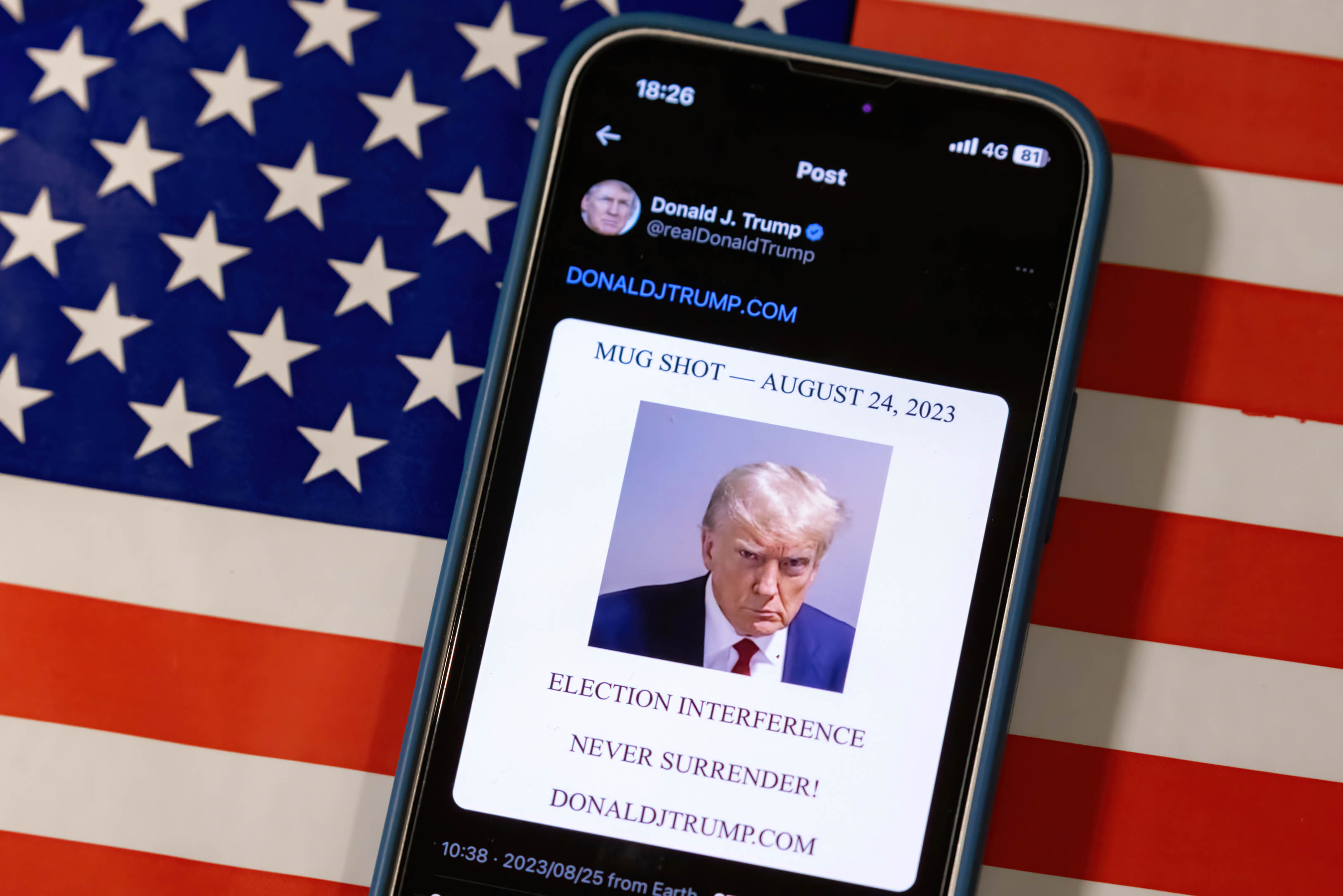
In this photo illustration, Donald J. Trump came back to X formerly known as Twitter to post his mugshot from in a xeet/tweet. Donald J. Trump posted his mugshot on his X account in defiance of his arrest in Atlanta, Georgia and to rally his supporters behind him in his bid for re-election as US President.

Government

Yes, We Can Rein In a Rogue President

by Nia-Malika Henderson

A horse stands in the sales pavilion as two potential bidders converse in the foreground during the Keeneland September Yearling Sale in Lexington, Kentucky, on Sept. 10,2007.

Government

Lexington, Kentucky, Is Building Trust From the Ground Up

by Mary Ellen Klas

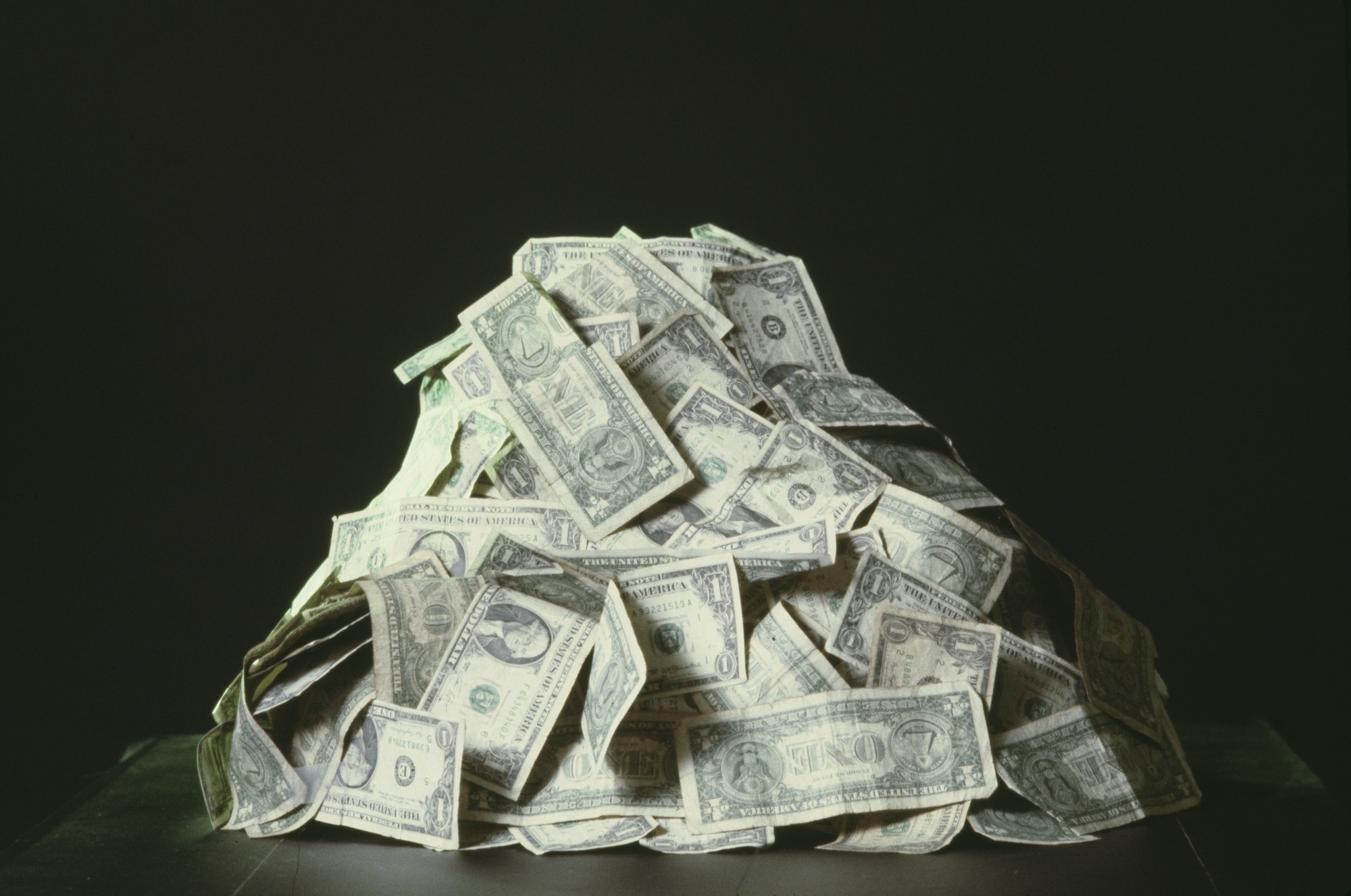
A bunch of American dollar banknotes (1$), US, circa 1985.

Government

Dark Money Is a Cancer on Congress — But It's Curable

by Patricia Lopez

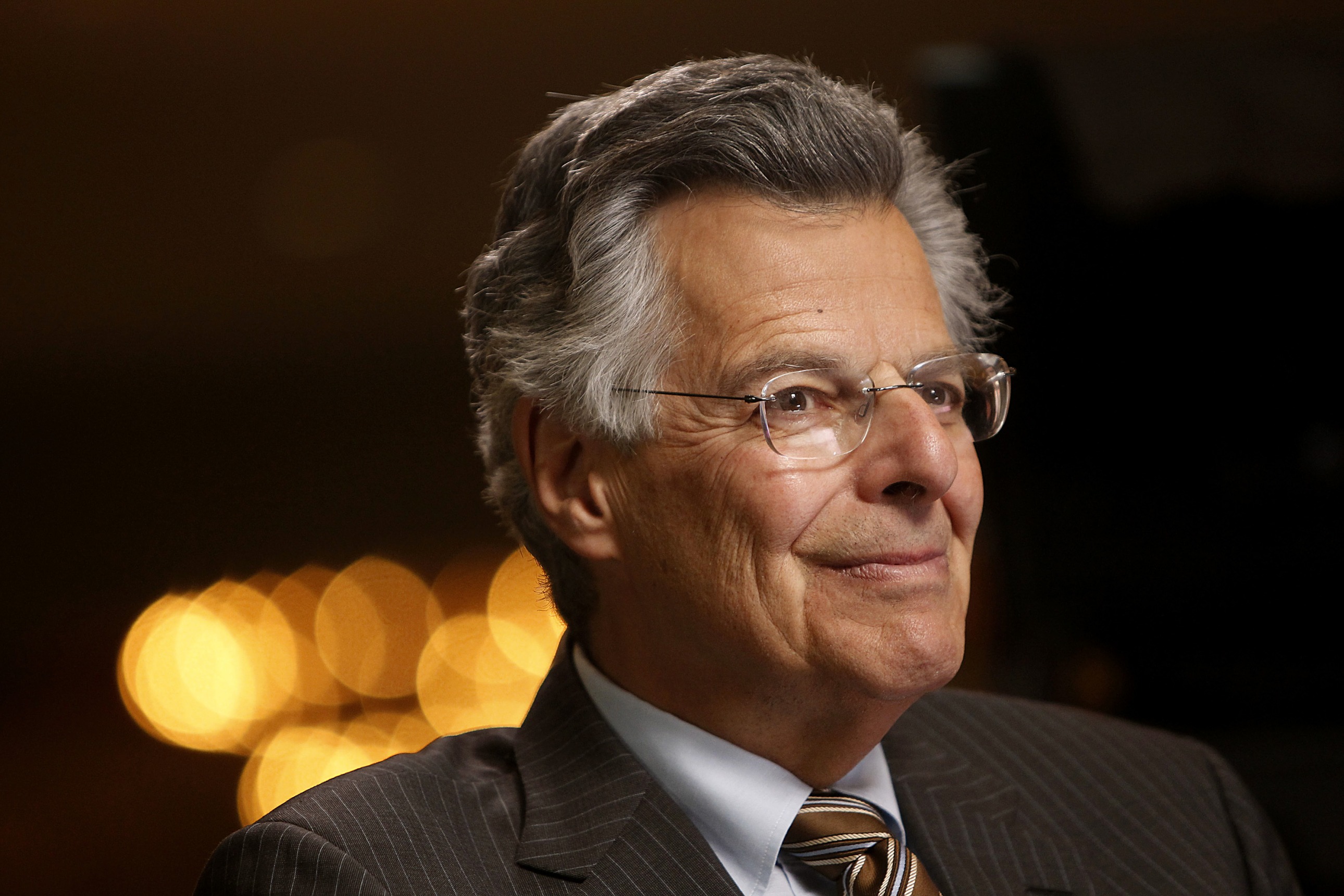
Nobel Laureate Myron Scholes listens during a Bloomberg Television interview at the annual Milken Institute Global Conference in Beverly Hills, California, U.S., on Tuesday, May 1, 2012. The conference brings together hundreds of chief executive officers, senior government officials and leading figures in the global capital markets for discussions on social, political and economic challenges.

Business

We Asked a Nobel Prize-Winning Economist How to Fix Fintech

by Nir Kaissar

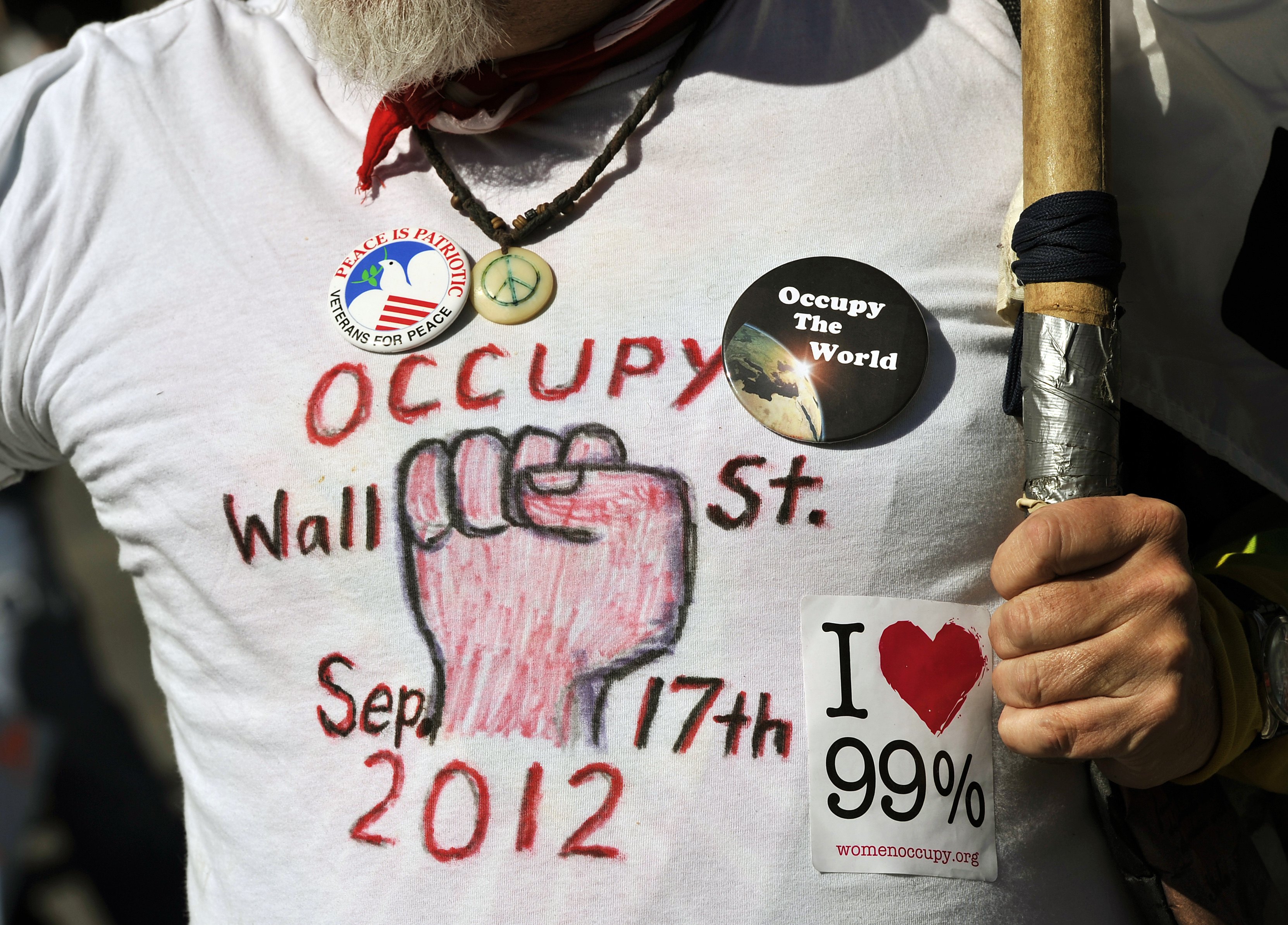
People gather in Washington Square Park in New York on September 15, 2012 during an Occupy Wall Street (OWS) One Year Anniversary Convergence Weekend. The special all-day Occupy Town Square with OWS tables, performances, and teach-ins. OWS is the name given to a protest movement that began on September 17, 2011 in Zuccotti Park.

Business

Wall Street Has Proven that Trust Can Be Rebuilt

by Allison Schrager

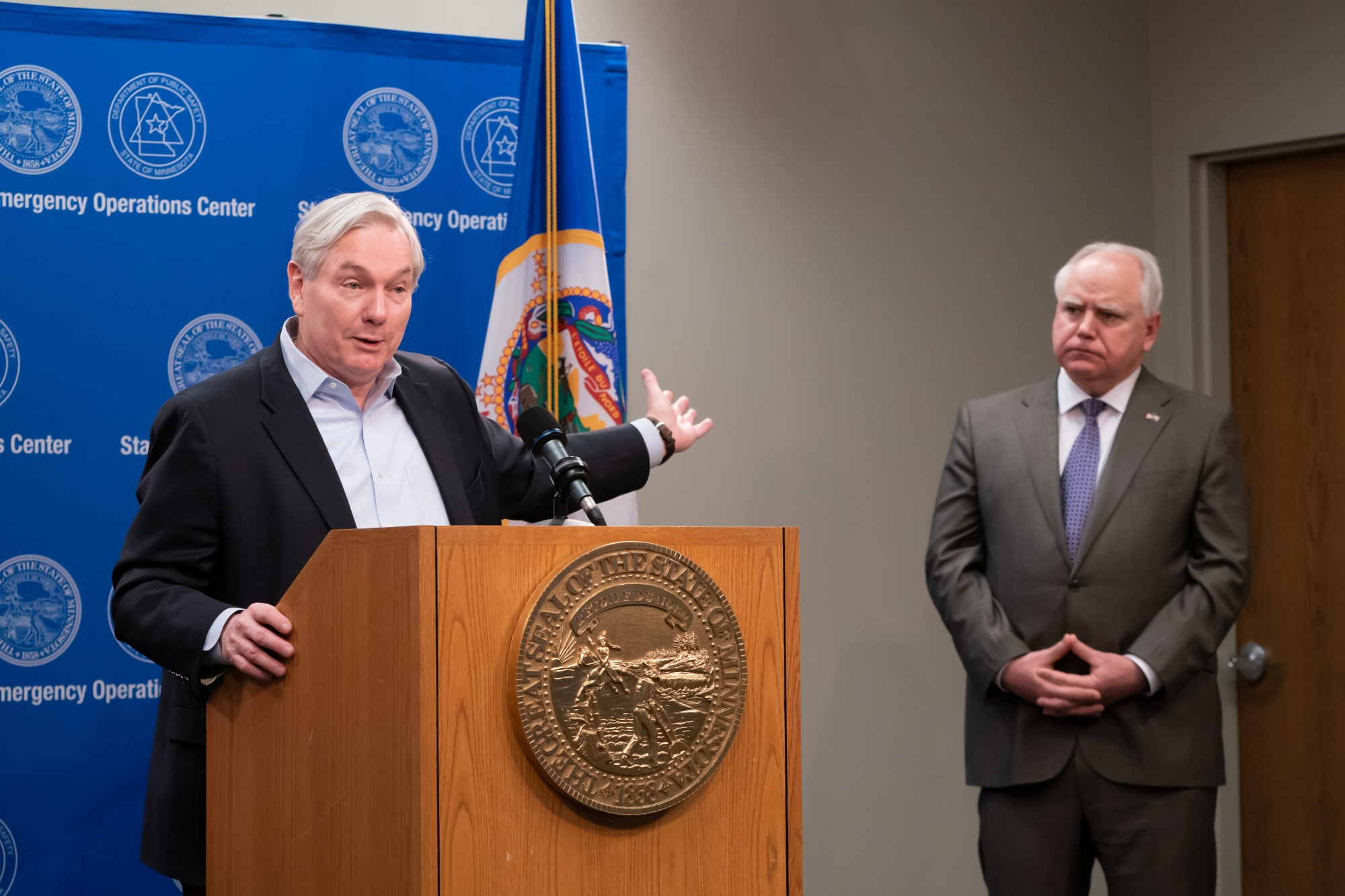
Dr. Michael Osterholm, left, Minnesota governor Tim Walz, right, April 2020, by Glen Stubbe, Star Tribune

Science

‘I Don’t Know’ Is the Best Weapon Science Has Right Now

by F.D. Flam

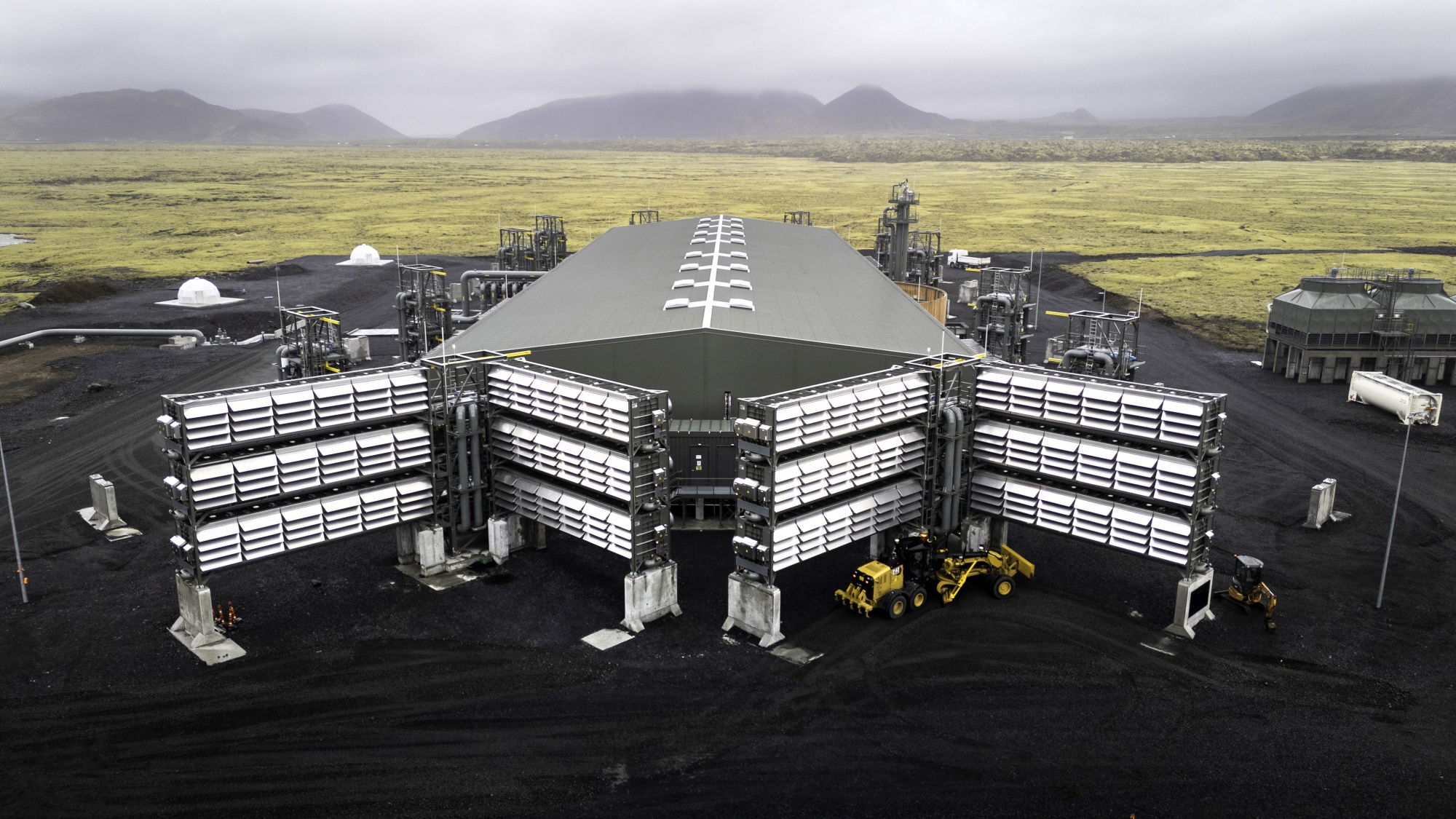
In this aerial view, the Mammoth carbon removal plant, considered the largest direct-air capture plant in the world is seen on May 24, 2024 in Reykjavik, Iceland. The Swiss start-up Climeworks and Icelandic partner Carbfix collaborated on the Mammoth project, utilizing Climeworks' Direct Air Capture (DAC) technology to extract CO2 directly from the air using fans and special filters. Powered by clean geothermal energy, the CO2 is then pumped deep into Iceland's bedrock, locking it away permanently. Mammoth's annual capture of 36,000 tons of CO2 is seen as a significant step in fighting climate change. (Photo by John Moore/Getty Images)

Science

Geoengineering Can Save the Planet — If We Demystify It

by Lara Williams

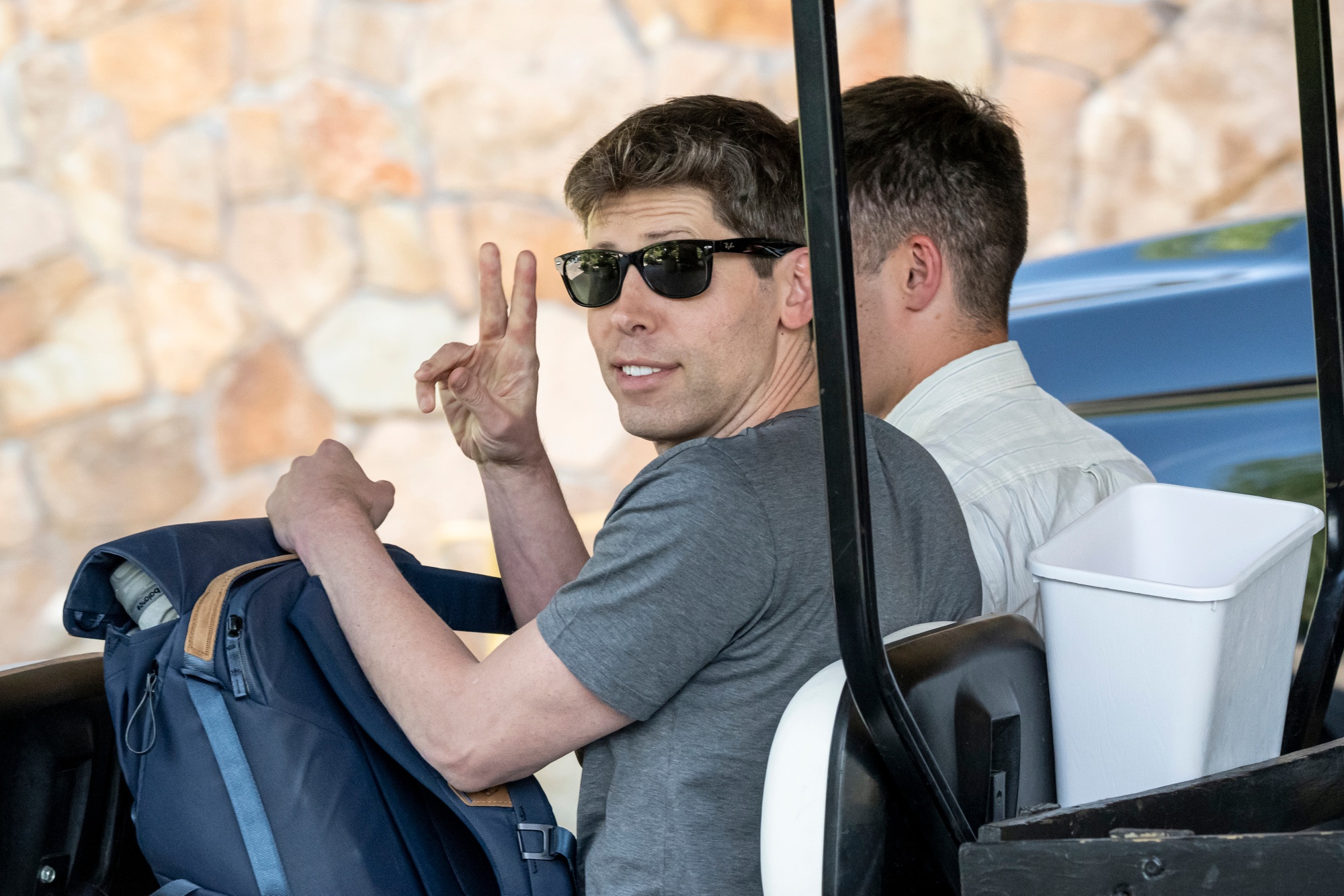
Sam Altman, chief executive officer of OpenAI, arrives for the Allen & Co. Media and Technology Conference in Sun Valley, Idaho, US, on Tuesday, July 9, 2024. The annual event has been a historic breeding ground for media deals and is usually a forum for tech and media elites to discuss the future of their industry. Photographer: David Paul Morris/Bloomberg

Tech

California’s ‘Surgical’ Approach to Regulating AI Is Working

by Dave Lee