
Republic of Distrust
How Americans’ Trust in Big Business Went From Bad to Worse
There was a time when the growing economy lifted everyone. These days, only the rich seem to be rising.
This column is a part of Republic of Distrust, a series about the loss of trust in American institutions and what can be done to restore it.
For almost a century, the Boeing Co. was an icon of US business, spreading the gospel of American engineering and corporate excellence across the globe. Every day, millions of travelers stepped from the jet bridge into a Boeing aircraft with a sense of absolute confidence.
We all know what happened next. After a pair of fatal crashes in 2018 and 2019, whistleblowers and investigations revealed a company that had slashed away at quality and safety and blown up its culture of innovation as it pursued fatter profit margins and a higher share price. Even before a door plug blew off a Boeing plane mid-flight in January or the company left a pair of astronauts stranded in space in June, the damage had been done: The trust Boeing had built decade by decade was gone — and may never return.
Boeing is an extreme case, but the company is not alone. Americans’ faith in big business as a whole has been slowly but surely eroding for years.
The percentage of Americans who told Gallup that they have “a great deal” or “quite a lot” of confidence in major companies has dropped from 30% in 1999 to 16% this year. The repercussions are serious: Just 40% of people between the ages of 18 to 29 had a very or somewhat positive impression of capitalism in 2022, according to Pew Research Center. That’s 33 percentage points lower than those 65 and older. Considering that US corporations, while imperfect, have been some of the most powerful drivers of innovation and wealth creation the world has ever seen, those stats should unsettle anyone who cares about the American economy.
Trust in Corporate America Has Hit Extreme Lows
Source: Gallup
Diagnosing the forces undermining trust in business writ large is more complicated than unpacking the problems at Boeing — and requires starting at the beginning. While we don’t have polling data from the earliest days of the US economy, there’s little evidence to suggest there was then any expectation that workers or society could rely on companies to look out for their best interests. (For examples of just how ruthless American business once was, look no further than the enslaved Africans powering its plantations or the factory workers who lost lives and limbs during the Industrial Revolution.)

So where does Americans’ idea that we should trust business come from? Historians point to the roughly 25 years following World War II — a short window in the grand scheme of things, but one that’s left an indelible mark on the American consciousness. The post-war years were a strikingly prosperous period, marked by a rare closing of the gap between the poorest and wealthiest Americans. In the aftermath of the war, there was an avalanche of things to build and sell, and an influx of Americans returning from the front lines to do so; the US became the manufacturing center of the world, a post it held for decades. Technological advances helped overall worker productivity hit historic highs, boosting corporate revenue.
Critically, a greater chunk of those gains landed in workers’ pockets than had in the past, due in part, argue some economists, to the strength of unions, which were in their heyday, and a progressive tax code. While far from a perfect era (ask any non-White citizen and many female ones), “the rising tide lifting all boats actually happened,” says Benjamin Waterhouse, a history professor at the University of North Carolina, who studies the culture and politics of US business.
But the promise of the post-war period was short-lived. By the late 1960s and early 1970s, it felt like an unraveling was underway — stagflation, civil rights clashes, the oil crisis, Watergate, Vietnam. Meanwhile, once-prostrate international economies like those of Germany and Japan were coming back online. The unique collision of forces that had supercharged US financial might was fading away. “You can’t ring that bell twice,” Waterhouse says. As productivity and profits flagged, the income gap began to climb. “There was a long-term change in how the economy actually worked,” he adds. The expectation that things would consistently get better, that wages would always rise and improve the quality of life of the middle class, was becoming less of a reality.
Globalization was rising and America was no longer the center of the economic world. For workers, that meant the new and discomfiting experiences of watching jobs go overseas and being buffeted by financial shocks like the oil embargo, which originated far from US shores. For domestic companies, it meant mushrooming competition — and, in that fight to survive, an increasingly single-minded focus on University of Chicago economist Milton Friedman’s famous decree that their “one and only social responsibility” is to increase profits.
The impact of these shifts has been far reaching. David Kelly, chief global strategist with JPMorgan Asset Management, has argued that one of the factors driving income inequality is how US GDP is changing: namely, that corporate profits now make up a larger share of the pie, while worker compensation has lost ground. In the 1980s, after-tax corporate profits accounted for 5.5% of GDP; in 2023, they had reached nearly 10%. Over the same time span, worker compensation dropped from 55.8% to 52.1% of GDP. “The success of corporations in chipping away at the labor share of the pie has been a major factor in increasing their own slice,” Kelly wrote earlier this year in a note to clients.
Those most impacted are, of course, the middle and lower classes. The top 1% now hold a greater share of wealth than the entire middle 40%; three decades ago, the reverse was true. For that to happen, the wealth of the very richest Americans had to grow exponentially faster than that of the poorest.
The Top 1% Didn’t Always Have More Wealth Than the
Middle Class
Source: Realtime Inequality from Thomas Blanchet, Emmanuel Saez and Gabriel Zucman at the Department of Economics, University of California, Berkeley
The Top 0.01% Grew Their Wealth Nearly Six Times as Fast as the Bottom 50%
Source: Realtime Inequality from Thomas Blanchet, Emmanuel Saez and Gabriel Zucman at the Department of Economics, University of California, Berkeley
For some ordinary Americans, it felt like the US economy — and the corporations that power it — was breaking the covenant of what it had promised: a society where a job and hard work would let you pay your bills, maybe buy a house, and where, regardless of background, each generation could advance by building on the achievements of the last.
Instead, doubters saw those at the top of the pyramid getting richer — and seeming to escape significant consequences even when they broke the rules. From the dot-com crash, the Enron scandal, the rise and fall of WorldCom to Madoff, Theranos, FTX and Boeing, struggling Americans found plenty of evidence to fuel their distrust. The 2008 financial crisis and ensuing Great Recession are perhaps the ultimate example: People lost jobs and homes and saw their 401(k)s empty, even as many of the executives who helped set the crash in motion walked away with millions.
The latest force to undermine trust in business is less dramatic, but still powerful: hypocrisy. In 2019, the Business Roundtable, an industry group made up of some of the most important executives in the US, published a much-lauded update to its definition of “the purpose of a corporation.” It stated that the paramount duty of management and boards was no longer to a company’s stockholders. Instead, companies had a “fundamental commitment to all of our stakeholders” — including customers, employees, and communities. As businesses embraced the doctrine, known as “stakeholder capitalism,” they took public stances on issues like immigration and gun control, or pledged to make changes such as cutting emissions or diversifying their workforces.
Then came the “war on woke.” Amid a barrage of pressure from conservative forces opposing DEI, ESG or any other policy deemed as having a political agenda, many companies flip-flopped, going mute on social issues while quietly discarding the initiatives they’d so proudly embraced just a couple years earlier. Those who supported the stakeholder-era policies were angered, and even those who were happy to see a return to corporate “neutrality” couldn’t miss just how quickly companies had abandoned their promises.
How can a breach so many decades in the making be repaired?
Researchers have found trust in another party derives from three factors: their competence, empathy and values. The theory is dubbed the ABI model for ability, benevolence and integrity. Of these, academics have found that only violations of integrity — of values — seem to be truly unforgivable.
“If you’re caught lying, cheating or stealing, people assume that is a really strong indication of who you are and so the assumption is that’s not a malleable quality,” explains Cecily Cooper, a professor at the University of Miami’s business school who has been conducting research on workplace trust for more than 20 years.
Here, Boeing is once again a prime example. When the crashes of 2018 and 2019 resulted in the deaths of 346 people, what truly inflamed Washington and the public was not simply the fact that they occurred; it was the charges that the company knowingly cut corners on safety and deceived the Federal Aviation Administration (FAA) about alterations it made to the flight control software implicated in both accidents. (In July, Boeing agreed to plead guilty to criminal conspiracy in connection with the crashes.)
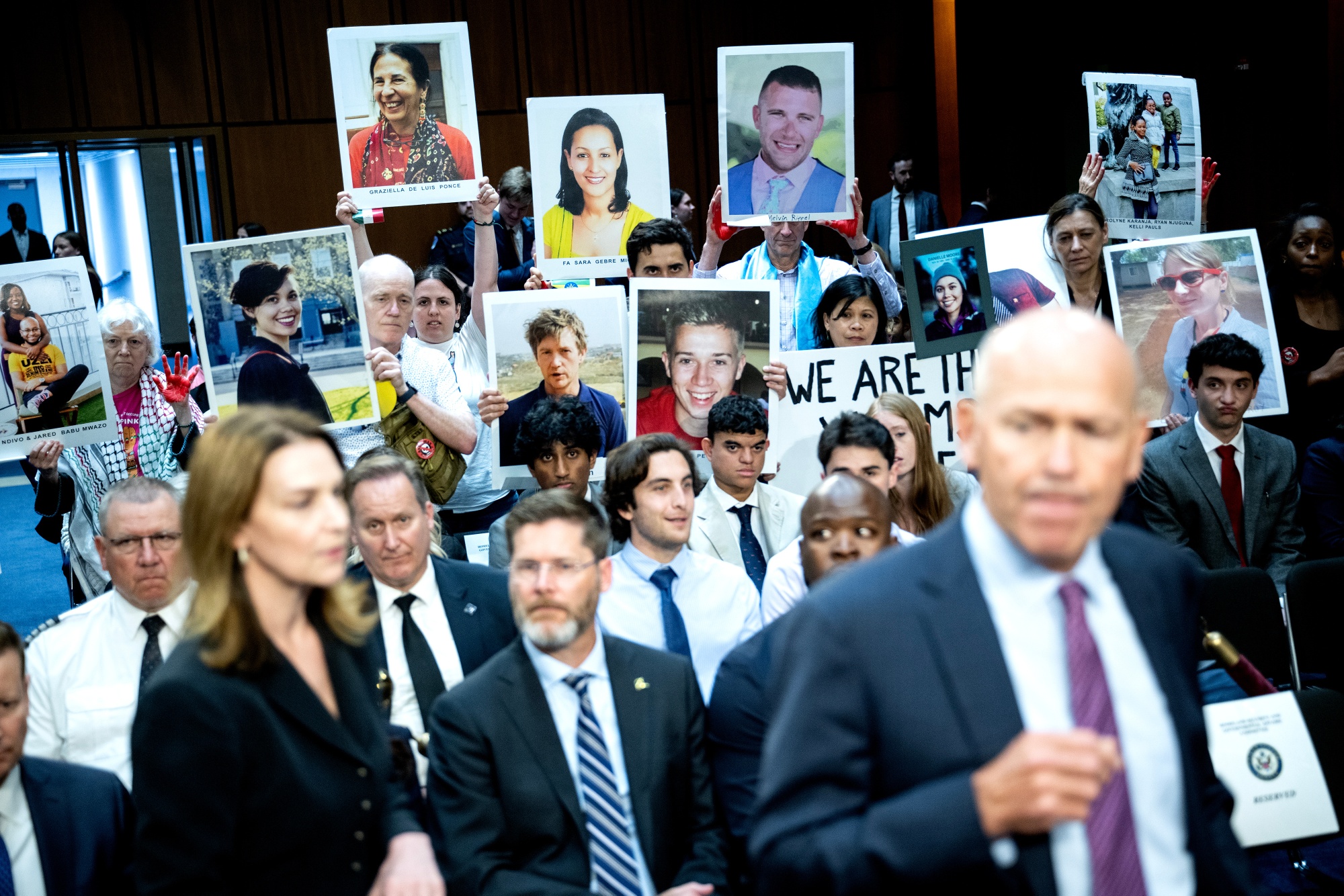
The public no longer trusts that Boeing is operating with integrity. Photographer: Graeme Sloan/Bloomberg
Boeing now has a new CEO who has vowed to overhaul its planes and culture, but even more important is fixing the underlying regulatory system tasked with keeping it and other companies in line. In the case of Boeing, that’s the FAA, which effectively allowed the company to regulate itself — partly because of limited resources but also out of a desire to give the company an edge in the fierce global marketplace. Congress must prioritize not only adequately funding regulators, but also holding them to account — despite the risks of stepping on the toes of a company like Boeing, which is both critically important to the US economy and a powerful lobbying force.
Boeing, like all corporations, will argue that more oversight makes it less competitive — and there’s truth to that. But in the long-term, forcing businesses to follow the rules, even at the cost of cutting into profitability, will rebuild trust in corporate integrity and, ultimately, result in more enduring companies.
In 2019, the University of Miami’s Cooper started to wonder if, in our current era, there might be more to assessing trust than the ABI model. To find out, she started looking at the ways social context, not just behavior, was influencing how much people trusted their work colleagues. Researchers had historically found that demographics — age, gender, race — soon became irrelevant once two people start working together. But as Cooper started interviewing subjects, she found something different happens with politics. “This is what’s weird — it becomes a relevant category at any point in the relationship,” she says. Two people might work together and get along well for five years, but if they then find out they have political differences, “it can all of a sudden change the way I think of you and alter trust in you,” she explains.
These insights about politics and trust provide an important bridge between companies’ latest debacle — their awkward retreat from stakeholder capitalism — and the fundamental economic issues that have been eroding confidence in corporate America for decades.
As much as C-Suites and boardrooms across the US might wish it were different, there is no path to complete neutrality in today’s world. Even staying silent on a particular issue is now likely to be seen as a political statement. (See: Disney’s initial reaction — or lack thereof — to Florida’s “Don’t Say Gay” bill). A misstep in any direction is bound to tromp on someone’s political beliefs or sense that a company is acting in accordance with their values. And in the era of social media, you can be sure that slight will be well publicized. “It’s a way that you can violate trust that didn’t really exist 25 years ago,” says Cooper.
The path forward is not neutrality but de-polarization. That’s a lofty goal, but it’s one where business could have a real impact. The influential 2006 book Polarized America advanced the theory that both political polarization and the divide between the rich and poor have increased in tandem since the 1970s, with the two behaving like “a dance of give and take and back and forth causality.” Since then, new research has further captured the link, showing that income inequality has a statistically significant effect on political polarization.
Consider CEO pay (a glaring lacuna in the Business Roundtable’s 2019 missive about the new era of corporate responsibility). A report from the Economic Policy Institute found that in 2022, the projected average compensation of CEOs at the 350 largest publicly owned US companies was $25.2 million. Meanwhile, the CEO-to-worker pay ratio was approximately 344-to-one, meaning it would take nearly 350 years for a typical employee to match what their CEO made in just one year. Compare that with 1965 when the ratio was 21-to-one.
CEOs Made 344 Times as Much as Workers in 2022
Source: Economic Policy Institute
Note: Average realized compensation of CEOs at the 350 largest publicly owned US companies includes salary, bonus, long-term incentive payouts, stock options exercised and vested stock awards. Average compensation of typical workers is for production/nonsupervisory employees in the industries that the top 350 companies operate in.
Narrowing the pay gap between the tippy top of corporate America and the workers who are key in generating those profits would go a long way toward reducing income inequality, combating political polarization, restoring trust and easing the messy tension that exists among all three.
Some scholars now argue that the more universal prosperity of the years following World War II was an aberration — that for the last five decades, we’ve been fighting to reclaim something that isn’t reclaimable. “Fifty years later and we are still living with the thwarting of those expectations,” Waterhouse says. “Even people who weren’t alive then have this notion that this is the way things were supposed to be.”
That may be true, but while the global economy has changed, what people want from the economy they participate in has not. A sense of security. That hard work is rewarded. That life can get better. Corporate America may not be able to go back in time, but it does have the power to improve. And that’s the bar it will need to clear if it hopes to regain trust.