Taipei’s Too Cool to Be China’s Banker
If you tried to recreate the recipe that gave birth to modern Hong Kong, you could do worse than look to its near-neighbor across the South China Sea.
Taiwan, like Hong Kong before the 1997 handover, has the virtue of being culturally Chinese without being ruled by the People’s Republic. Its business links with the mainland are as long-standing as Hong Kong’s, and almost as deep. China and Hong Kong together account for almost a third of Taiwan’s bilateral trade.
It’s also a major investor in the world and in China specifically. Taiwan is the world’s fifth-biggest creditor economy, with a stock of foreign net assets that ran to $1.28 trillion at the end of 2018. Several of the island’s biggest companies — including iPhone assembler Foxconn Technology Group, snack company Want Want China Holdings Ltd. and athletic shoemaker Pou Chen Corp. — are deeply dependent on their links with Chinese manufacturing facilities. Much of China’s modern industrial supply chain was set up with Taiwanese capital and expertise.
On top of that, Taiwan is increasingly seen by Hong Kongers as a refuge from their anxious and strife-torn city — a modern Berlin to set against the West Berlin-style embattled freedoms of their own city. The number of Hong Kongers applying for residency in Taiwan rose 28% from a year earlier in the first seven months of 2019.
Compared to Hong Kong’s skyscraper-studded urban jungle, Taipei is low-rise and slow-paced, with locals riding share bikes and scooters along tree-lined boulevards. While Hong Kongers can only dream of democracy, Taiwanese have been holding free elections for a generation. In May, the island became the first place in Asia to legalize same-sex marriage. It’s the best place in the world for expatriates to live, according to one recent survey.
“It’s just a cool city,” said Peter Kurz, chief strategy officer of Quantum International Corp. and Citigroup Inc.’s former head of equity research in Taipei. “Everything is cheap in Taiwan. Everything is expensive in Hong Kong, and people are marching in the streets.”
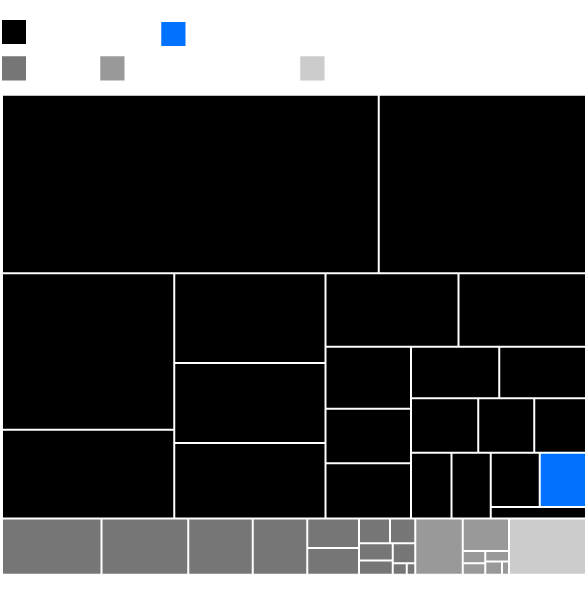
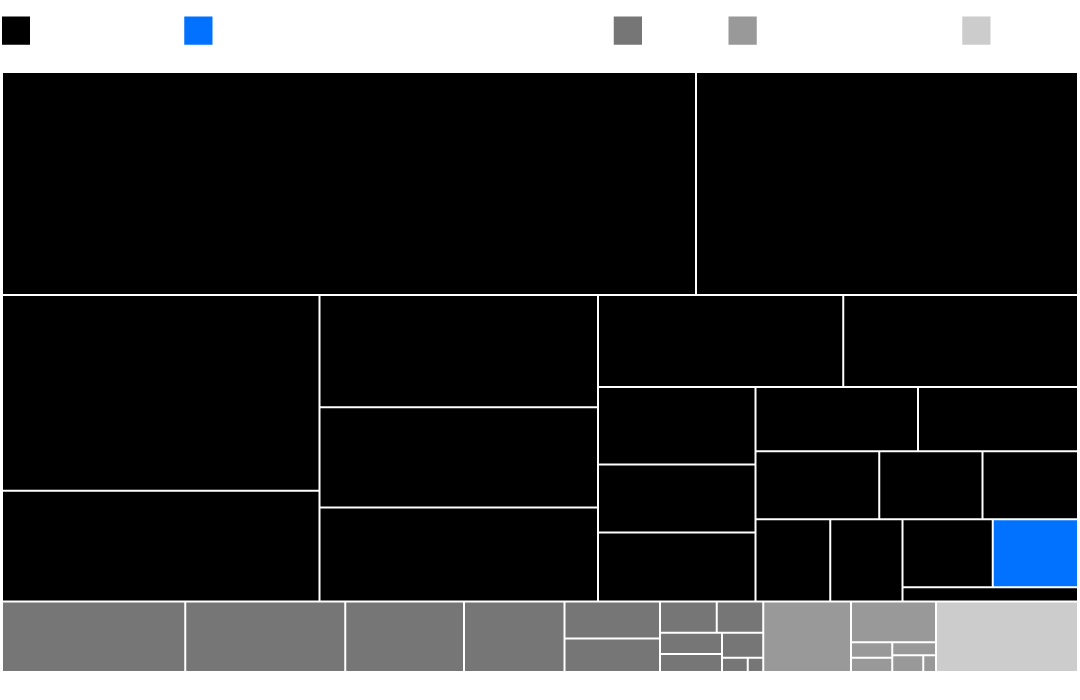
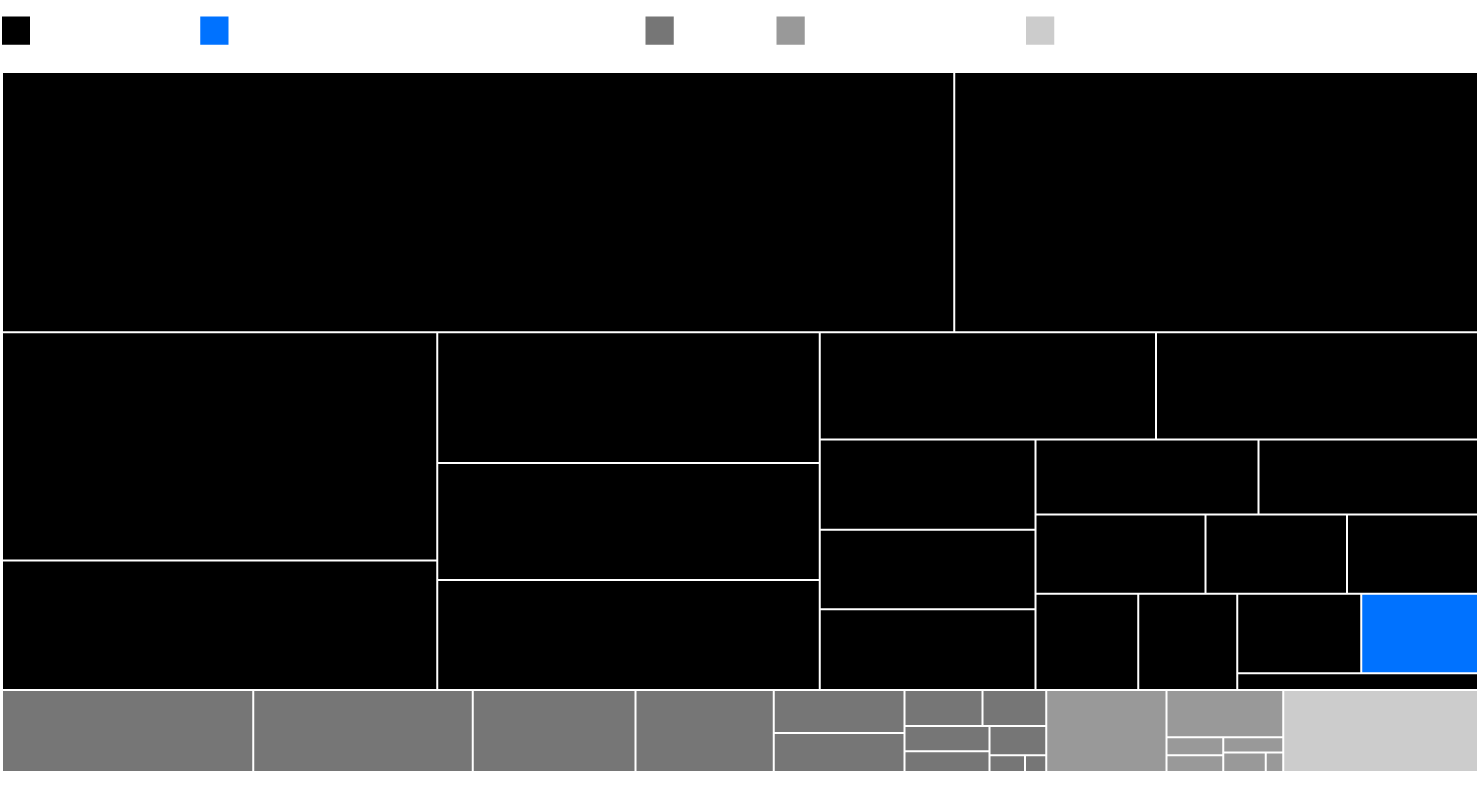
For all that, the city remains a backwater in financial terms. None of the locals I interviewed thought it could take more than a sliver of Hong Kong’s business. The equity market has a smaller market capitalization than those in South Korea or Australia, and is well below the likes of Hong Kong, Japan and China. Foreign-exchange transactions between the Taiwanese dollar and the greenback amount to about 0.9% of the global currency market, making it about as important a trade instrument as the Turkish lira or South African rand.
Low Traffic
U.S. dollar
U.S. dollar/New Taiwan dollar
Euro
Japanese yen
Other
$1.6T
EUR
JPY
GBP
Other
CHF
HKD
KRW
NZD
MXN
CAD
SEK
INR
AUD
CNY
SGD
GBP
JPY
U.S. dollar
U.S. dollar/New Taiwan dollar
Euro
Japanese yen
Other
$1.6T
EUR
JPY
Other
CHF
HKD
GBP
KRW
NZD
MXN
CAD
SEK
INR
AUD
CNY
$59B
SGD
GBP
JPY
Other
CHF
Other
U.S. dollar
U.S. dollar/New Taiwan dollar
Euro
Japanese yen
Other
$1.6T
EUR
JPY
GBP
Other
CHF
HKD
KRW
NZD
MXN
CAD
SEK
NOK
BRL
INR
AUD
CNY
$59B
TWD
RUB
ZAR
TRY
SGD
SEK
AUD
GBP
JPY
Other
CHF
Other
Other
NOK
Note: Data are daily averages for April 2019.
Much of that comes down to the heavy hand of the state. Taiwan has one of the world’s largest populations of billionaires, but wealth managers typically commute back-and-forth to Hong Kong to sign contracts rather than jumping through the regulatory hoops necessary to do paperwork locally, according to Seraphim Ma, executive partner at law firm Baker & McKenzie.
“We are still very strict on regulation,” she said. “We are highly regulated in terms of finance products and insurance products. If we want to have a regional financial hub then we need to limit this.”
Whereas the common-law system in Hong Kong and Singapore allows innovation wherever it’s not explicitly forbidden, companies in Taiwan must first seek government approval for new financial products under the island’s civil-law code, said Kurz. The government will in turn take soundings from industry groups before deciding whether to go ahead. That makes innovation grind to a halt, he said: “You’re asking to be approved by your competitors.”
That’s not unrelated to Taiwan’s unique political status.
Under the One-China policy backed by both the Communist Party and Taiwan’s formerly dominant Kuomintang, both Beijing and Taipei claim authority over the entire territory of Taiwan and mainland China. Thanks to this legal fiction and Beijing’s increasing geopolitical muscle, Taiwan has diplomatic ties with a dwindling band of 15 minor countries, and isn’t a member of the United Nations or most other multilateral bodies. Alongside North Korea and Cuba, it’s one of few economies that isn’t a member of the International Monetary Fund. If it were ever to experience a currency crisis, there’s no safety net.
Bank On It
China
$3.4T
Japan
Switzerland
Russia
Hong Kong
Taiwan
$468B
India
South Korea
Brazil
Singapore
$272B
Note: Data as of August 2019.
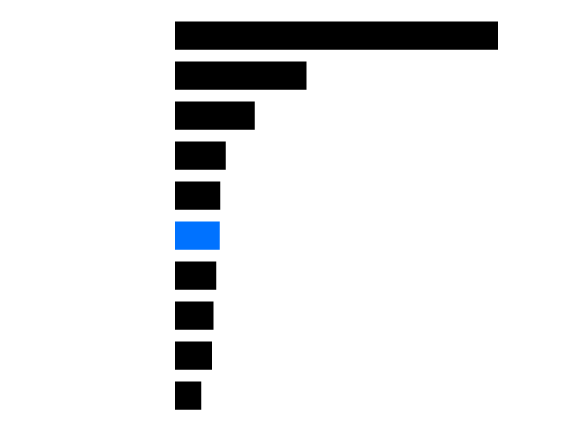
The government’s defense against this has been to build up a formidable capital buffer. Its position as the world’s fifth-largest creditor economy is bolstered by the sixth-largest foreign-exchange reserves. That’s a good reason why Taiwan’s banking sector has been kept relatively small and in the service of the industrial base, resembling Frankfurt’s pedestrian banking scene more than London’s vibrant capital market. Rapid movements of portfolio investments and a large stock of foreign liabilities are key attributes of both an international financial center, and a looming balance-of-payments crisis.
Being a major financial center would weaken Taiwan’s foreign asset base, according to Hung-Ju Chen, a professor of economics at National Taiwan University. It would also involve a cultural shift that many Taiwanese don’t want, she said, by bringing a lot of high-paid workers into a society that’s more egalitarian these days than even nominally communist China: “Most Taiwanese resent inequality.”
Beyond China
China
Other
$15B
10
5
0
2000
2005
2010
2015
2018
That’s a striking contrast with Asia’s financial capitals, where white-collar workers see low taxes and live-in domestic helpers earning around HK$5,000 ($640) a month as key lifestyle benefits. While pay and conditions for such workers aren’t necessarily much better in Taiwan, households have to demonstrate they have a pressing need for assistance before they’re granted a license to employ a maid. As a result, helpers are far less common than in Singapore and Hong Kong.
Taxes are steeper, too, with progressive marginal rates rising to 40% on income over NT$4.53 million ($148,500). The Taiwanese government has been trying to level the playing field with lower-taxed rivals: Foreigners who spend less than half the year in Taiwan pay a flat rate of 18%, and a new employment visa introduced last year allows full-time residents to pay tax on only half their income above NT$3 million. So far, though, neither loophole appears to be widely used.
The problem for Taiwan is that the compromises it would have to make to turn itself from its current role as Asia’s Silicon Valley into its Wall Street are likely to be too profound for most locals to stomach. That’s more than ever the case as the declining influence of the Kuomintang, which favors closer links with mainland China, has brought a more independence-minded streak to the fore.
Under President Tsai Ing-wen’s Democratic Progressive Party, the push has been for Taiwan to look toward South Asia, Southeast Asia and Australasia rather than to its larger neighbor.
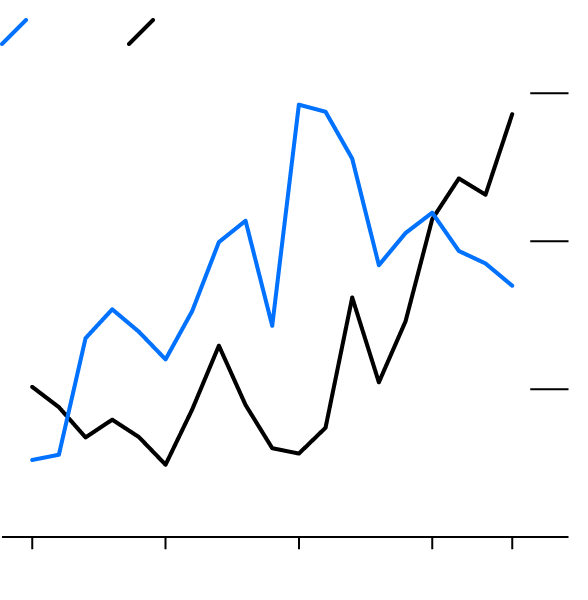
Foreign direct investment from Taiwan into mainland China peaked a decade ago, and looks on track this year to hit its lowest levels since China joined the World Trade Organization in 2001. Reducing dependence on China isn’t just symbolic: Formal independence as a separate nation is a fringe view in Hong Kong but in Taiwan it’s the official policy of Tsai’s party, though one that leaders have finessed away for decades for fear of angering Beijing.
If Taiwan took on Hong Kong’s role as China’s banker it would rightly be worried that Beijing might want to meddle even more aggressively in its affairs. In light of this year’s events in Hong Kong, where people are protesting for rights that Taiwanese have long taken for granted, that bargain looks less attractive than ever.