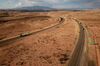
Photographer: Patrick T. Fallon/AFP/Getty Images
Great American Road Trips Are Impossible for Most Electric Cars
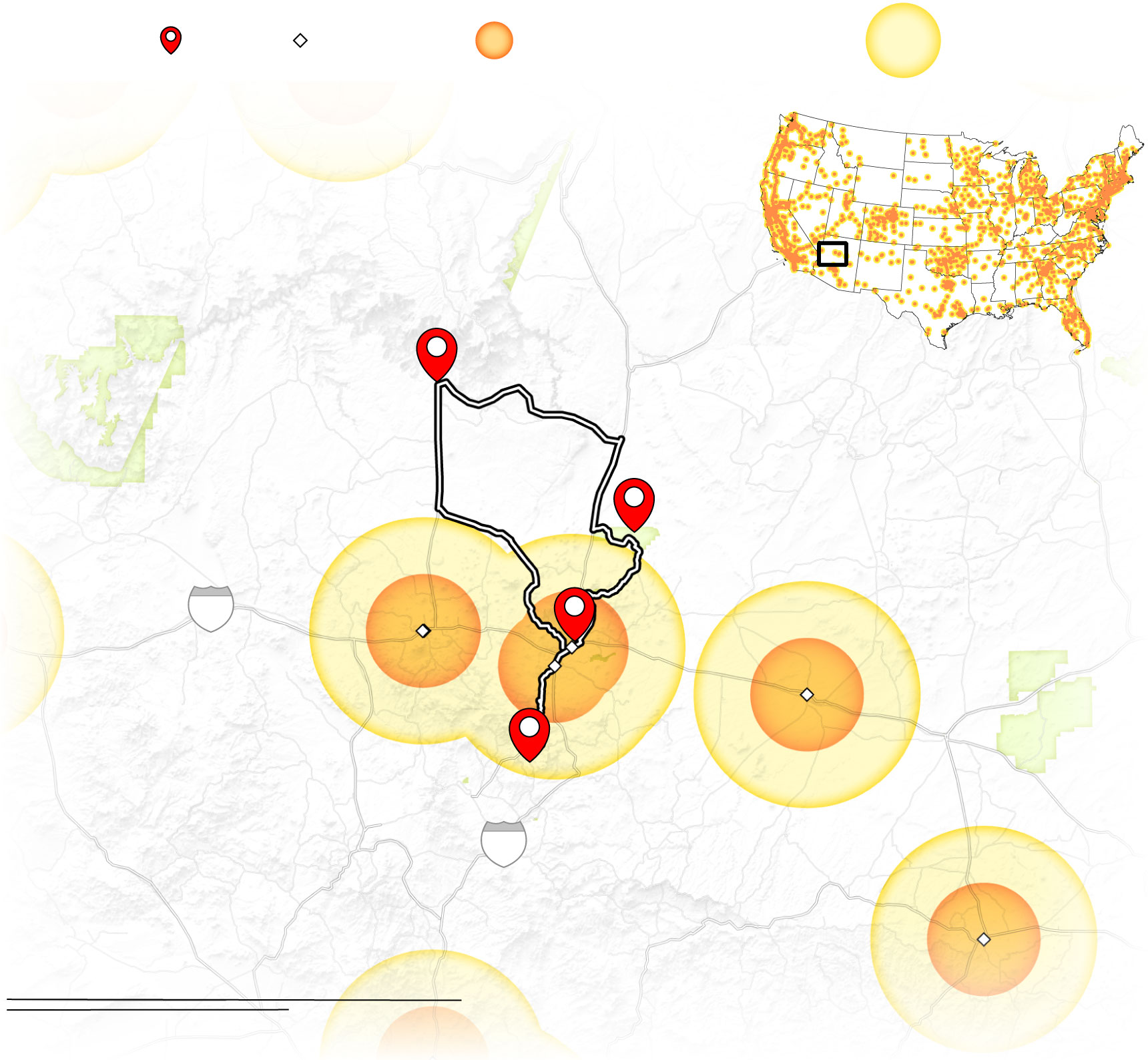
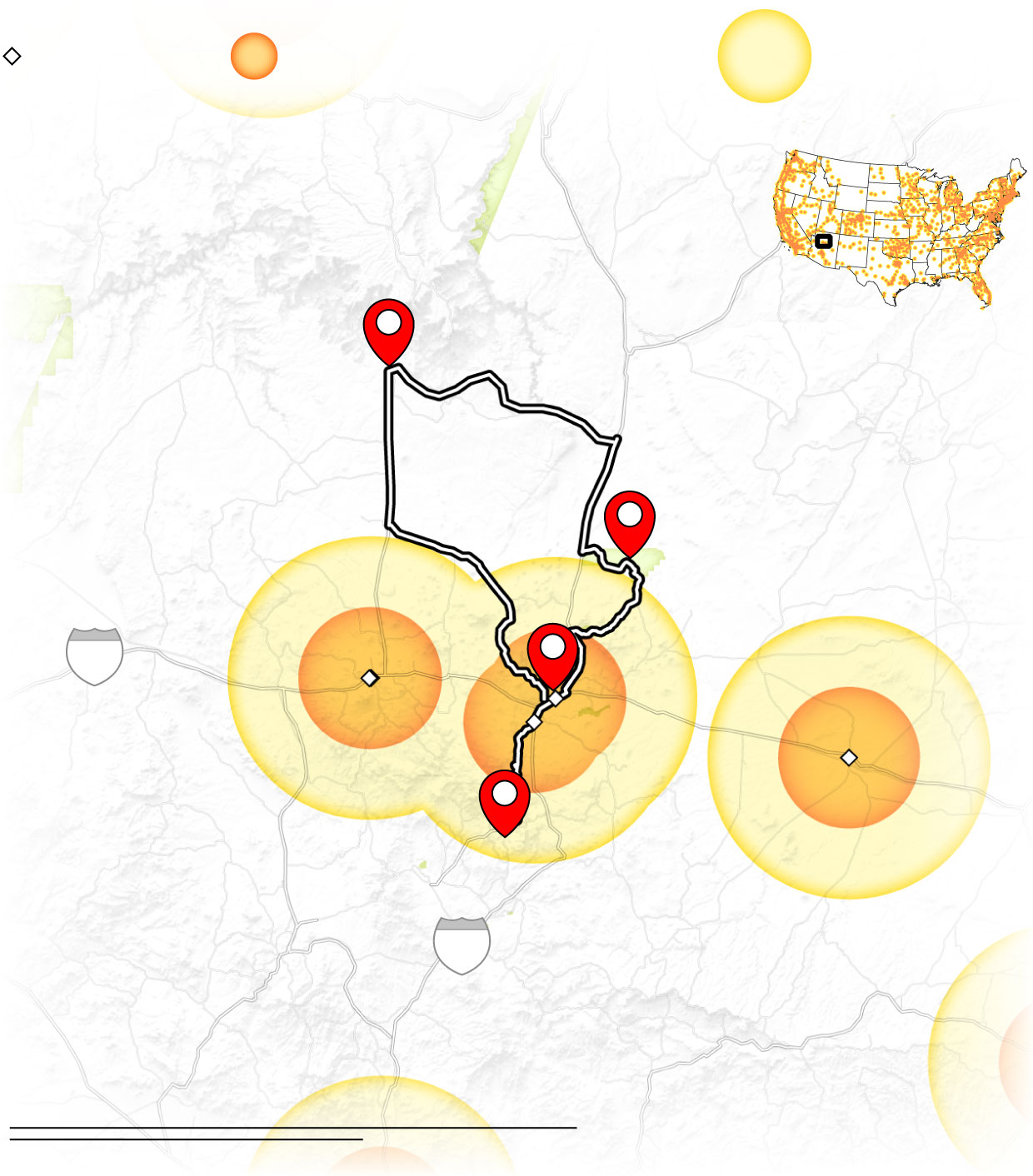
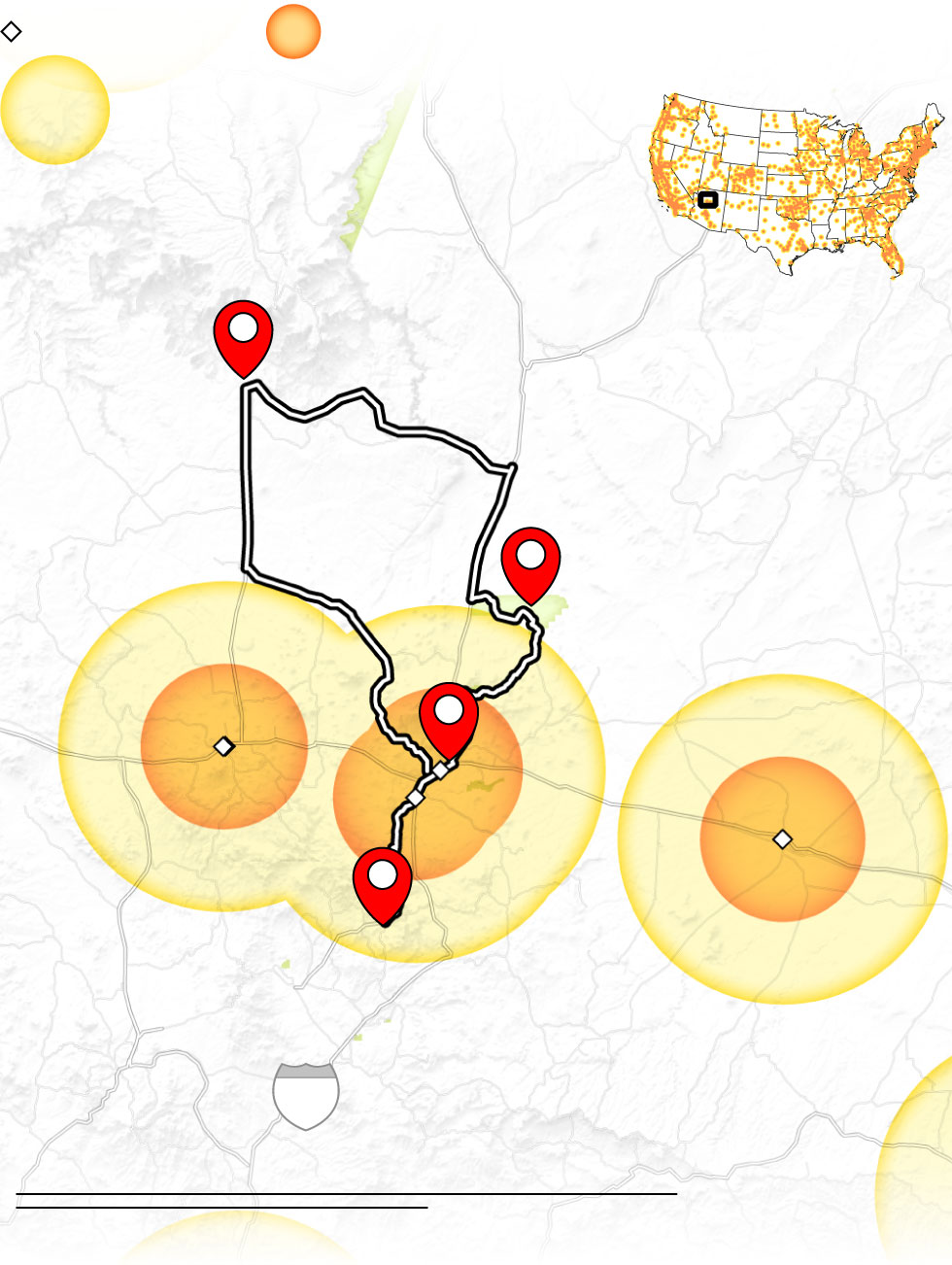
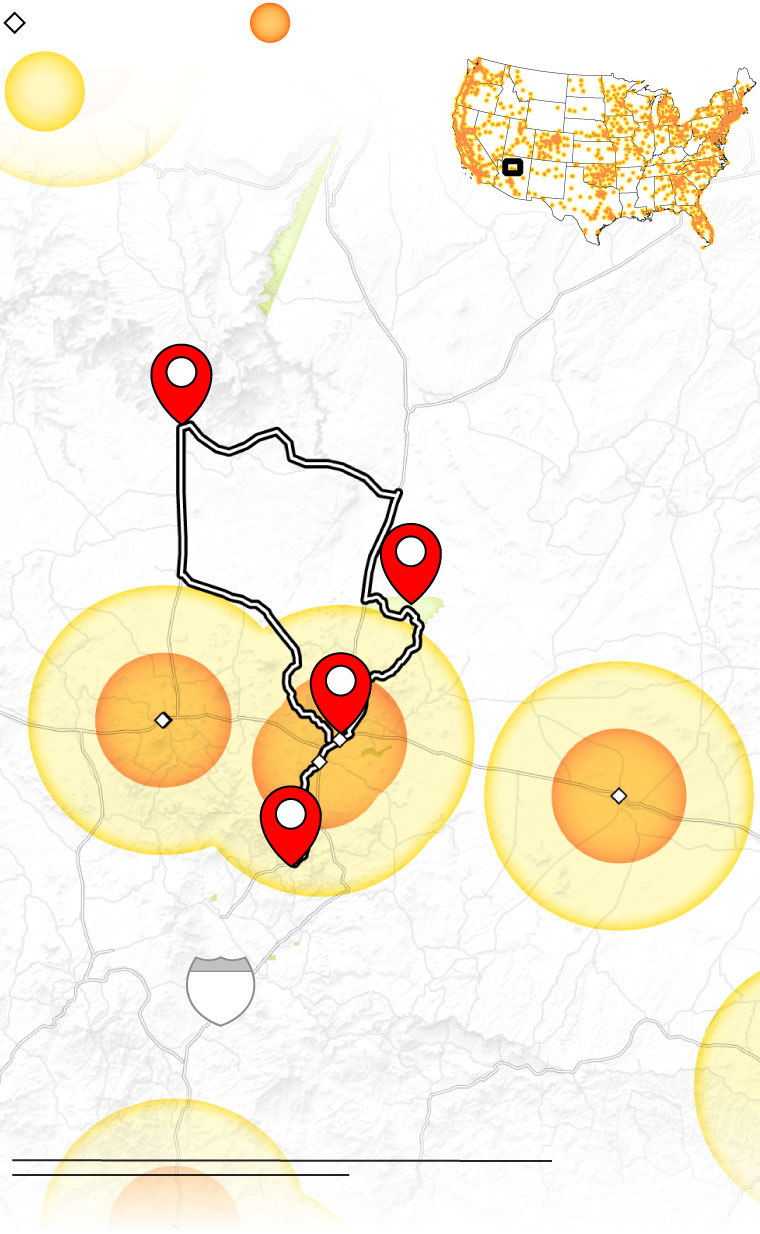
There are more electric vehicles in Arizona than all but six other states, but their pilots would be wise not to venture too far north of Flagstaff. There, among the cacti and coyotes, they’ll find an electron desert. The closest fast-charging station that caters to cars not made by Tesla is 207 miles away in Kanab, Utah.
Alas, a quick jaunt to the Grand Canyon is still a bridge too far for the electric vehicle revolution.
Read More: How far can your EV go on the open highway? Find out with Bloomberg Green’s Electric Car Ratings.
In fact, many of America’s favorite driving journeys are still off the map for non-Tesla EVs. Of the 11 most popular road trips as determined by AAA, four have stretches of at least 200 miles between public fast-charging stations, a dicey proposition for those driving a battery-powered vehicle that can’t top up on Tesla’s proprietary network. Of the 80 or so electric vehicle model variants for sale in the US at the moment, 31 travel less than 250 miles on a charge. That range shrinks further with any of three conditions common on a summer road trip: interstate speeds, heavy cargo and hot weather.
Road Trip to the Grand Canyon

Landmark
Charging station
Up to 12.5 miles from charging station
Up to 25 miles
160
Grand Canyon
National Park
Grand Canyon
Village
180
Wupatki
National Monument
Petrified Forest
National Park
Kingman
Williams
40
Flagstaff
Winslow
Sedona
Arizona
17
Showlow
100 mi
100 km
Landmark
Charging station
Up to 12.5 miles from charging station
Up to 25 miles
Grand Canyon
National Park
Grand Canyon
Village
Wupatki
National Monument
Petrified Forest
National Park
40
Williams
Flagstaff
Winslow
Sedona
Arizona
17
Showlow
100 mi
100 km
Charging station
Up to 12.5 miles from charging station
Up to 25 miles
Grand Canyon
Village
Wupatki
National Monument
Williams
40
Winslow
Flagstaff
Sedona
17
Arizona
100 mi
100 km
Charging station
Up to 12.5 miles from charging station
Up to 25 miles
Grand Canyon
Village
Arizona
Wupatki
National Monument
Williams
Flagstaff
Winslow
Sedona
17
100 mi
100 km
Up to 12.5 miles from charging station
Charging station
Up to 25 miles
Grand Canyon
Village
Arizona
Wupatki
National Monument
Williams
Flagstaff
Winslow
Sedona
17
100 mi
100 km
The Grand Canyon is also an electron challenge for those coming from Las Vegas. On AAA’s recommended loop, EV drivers have to navigate a 265-mile chasm from Williams, Arizona, to Kanab, Utah, plus another 202-mile charging gap between Bryce Canyon and Utah’s Zion National Park.
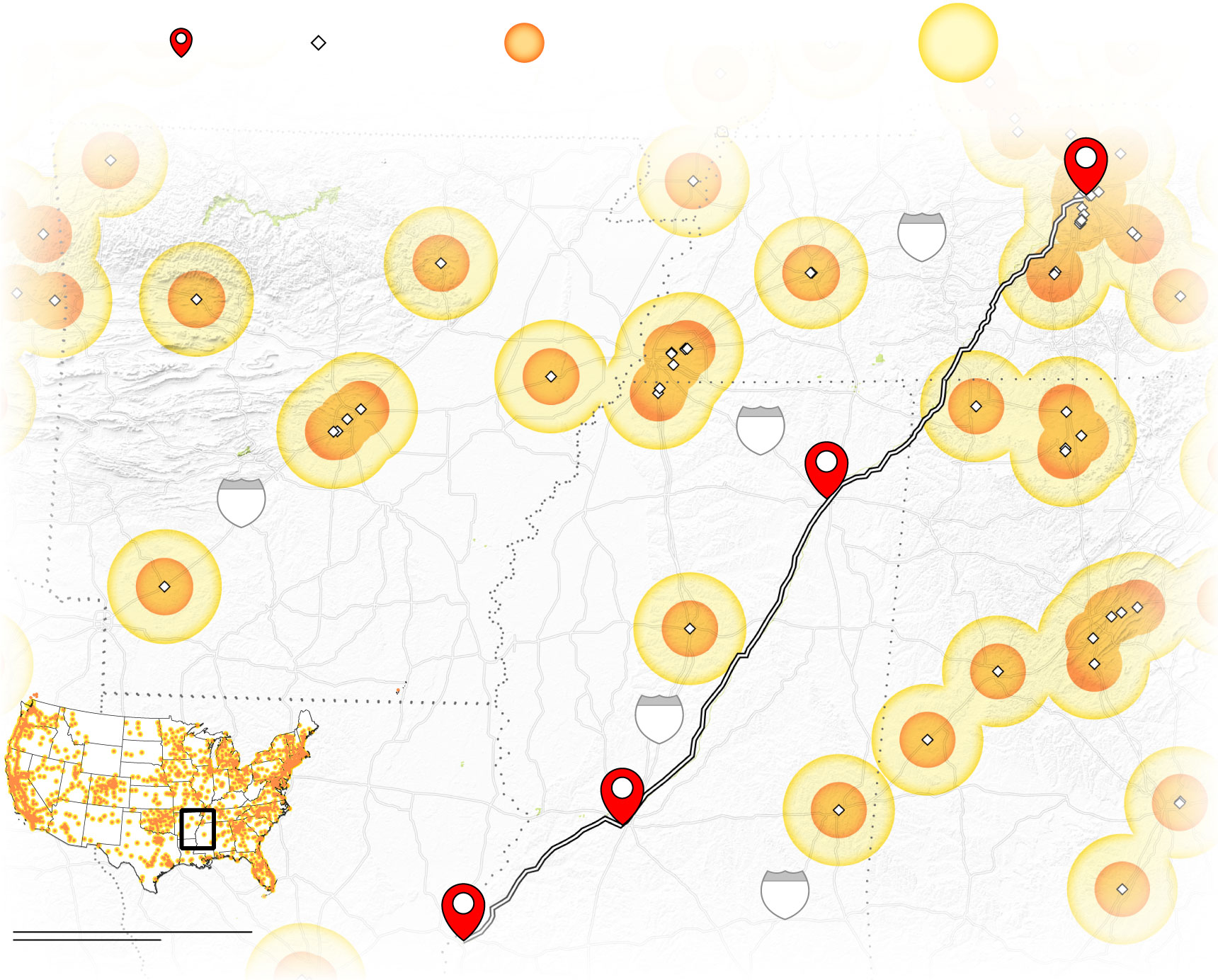
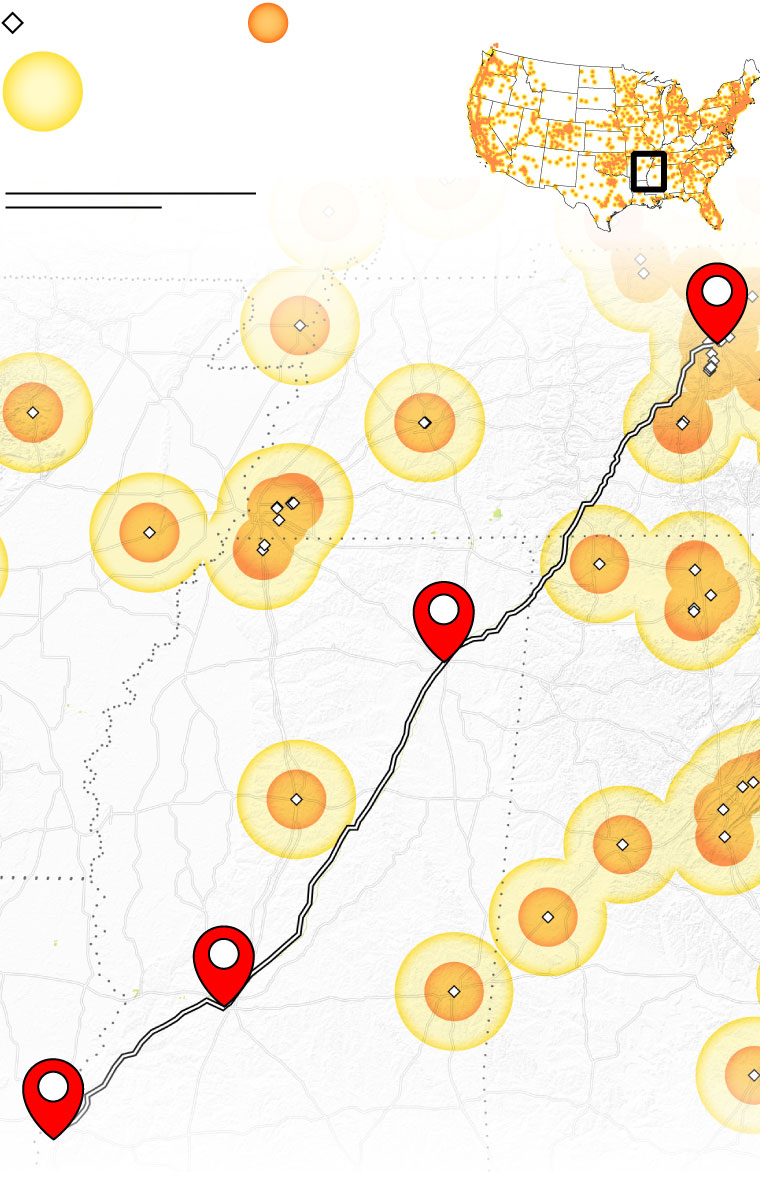
Likewise, those traveling the Natchez Trace Parkway—an ancient Native American trail between Nashville, Tennessee, and the heart of Mississippi—would do best to burn gasoline. Tesla drivers can top up in Tupelo, Mississippi (the birthplace of Elvis), but those in another brand of EV won’t find a single public fast-charging station on the entire 495-mile route. The only respite is at a McDonald’s 39 miles out of the way, in Winona, Mississippi.
Road Trip Along the Natchez Trace Parkway

Landmark
Charging station
Up to 12.5 miles from charging station
Up to 25 miles
Nashville
Tennessee
40
Memphis
Tupelo
22
Little Rock
Huntsville
30
Mississippi
Alabama
Arkansas
Birmingham
55
Jackson
Montgomery
Louisiana
Natchez
59
100 mi
100 km
Charging station
Landmark
Up to 12.5 miles from charging station
Up to 25 miles
Nashville
Tennessee
40
Memphis
Tupelo
22
Little Rock
Huntsville
30
Mississippi
Alabama
Arkansas
Birmingham
55
Montgomery
Jackson
Natchez
59
100 mi
100 km
Charging station
Up to 12.5 miles from charging station
Up to 25 miles
100 mi
100 km
Nashville
Tennessee
40
Memphis
Tupelo
Arkansas
Mississippi
Alabama
Birmingham
Jackson
Natchez
Charging station
Up to 12.5 miles from charging station
Up to 25 miles
Nashville
Tennessee
40
Memphis
Tupelo
Arkansas
Mississippi
Alabama
Birmingham
Jackson
100 mi
Natchez
100 km
Up to 12.5 miles from charging station
Charging station
Up to 25 miles
100 mi
100 km
Nashville
Arkansas
Memphis
Tupelo
Mississippi
Alabama
Jackson
Natchez
A little further east, the famed Blue Ridge Parkway presents a similar challenge. AAA’s recommended route scratches through the lazy mountain spines north of Asheville, North Carolina, for 208 miles without passing a public fast-charger. At the end of the line on the Virginia border, the nearest electrons are at a Circle K, 30 miles east. American, yes. Scenic, not so much.
Bringing chargers to the entire US
For the 48 million Americans who took a driving vacation this Fourth of July, the choice was often stark: Avoid side roads and slower routes—or pay at the pump to enjoy them, as the US experienced its highest gas prices on record.
Steve Birkett, who documents road trips in his Hyundai Ioniq 5, tries to strategically overnight at hotels or campsites with a Level 2 charger. “Our rule of thumb is often that the east-west routes seem to be covered pretty well, but the north-south routes tend to be a little trickier,” he explained. Birkett also often chooses slower, scenic roads where regenerative braking—when the act of slowing the vehicle simultaneously charges the battery—can stretch his car’s range. “There’s a lot of potential work-arounds,” he said.

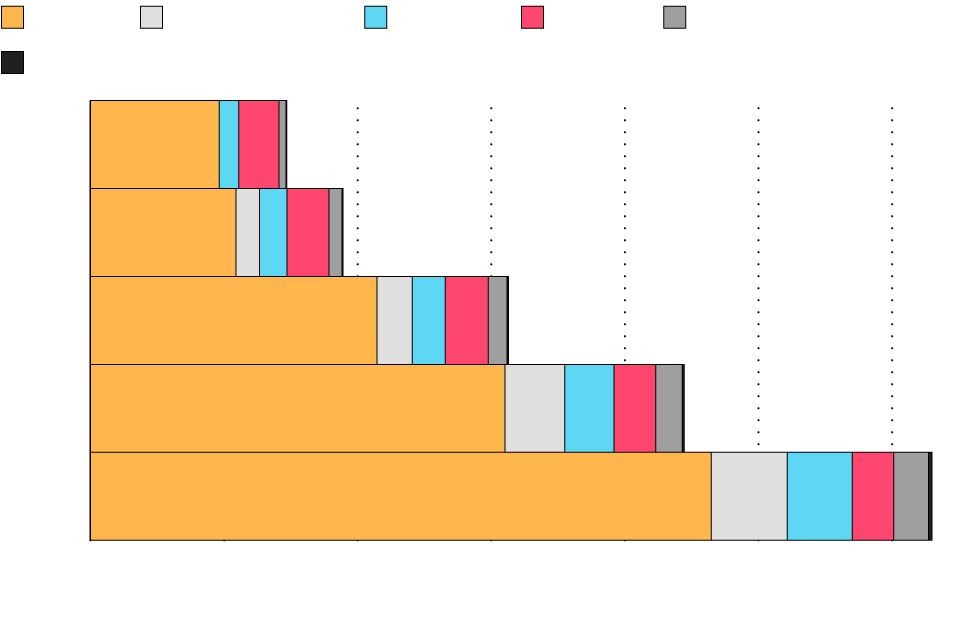
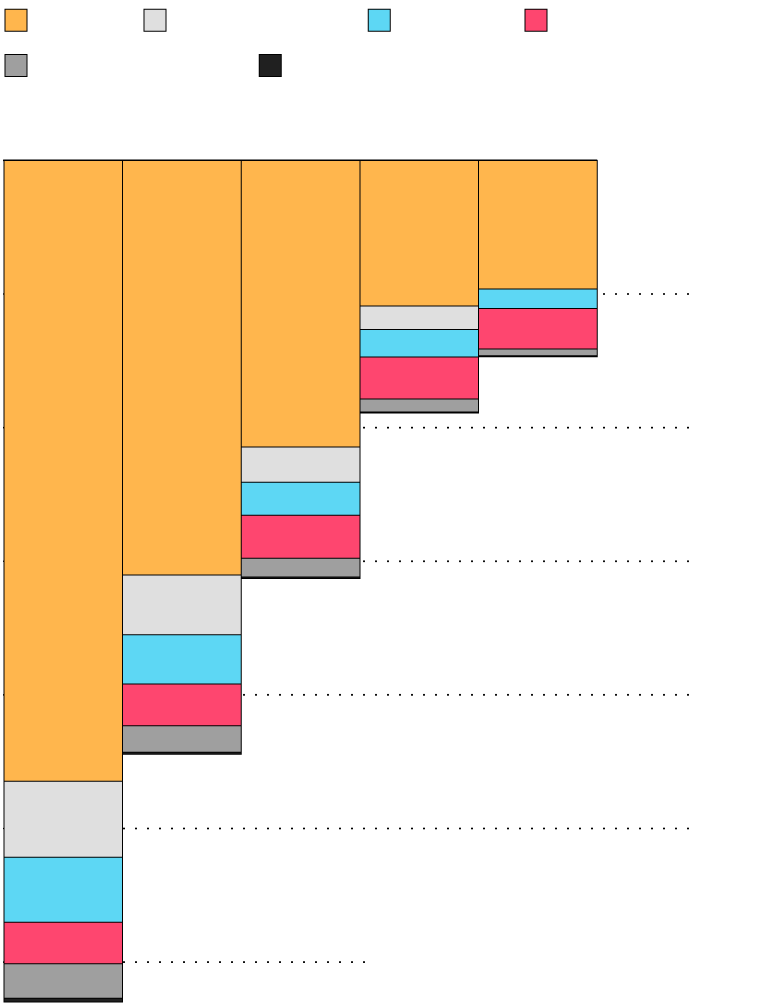
The dearth of available EV charging is unique to the US, where vast spaces pair with a lack of public policy and limited incentives for electric vehicle stations. At the end of last year, China had 18 times as many public fast-charging cords as North America and Europe; South Korea had roughly twice as many, according to a tally from BloombergNEF.
Still, the map could fill in quickly. This fall, the Biden administration will begin deploying $5 billion to build electric vehicle infrastructure, prioritizing plans for fast-charging cords in rural areas. As part of its proposal, the government is calling for a public charger every 50 miles on major transit corridors. That might not help much on the Blue Ridge Parkway, but could fill in nearby.
“Very soon, you’ll see a lot of those existing gaps start to close,” said Joe Britton, executive director of the Zero Emissions Transportation Association. “[The federal money] kind of forces charger deployment to outpace that pure market-based mechanism.” In other words, networks will build chargers even in places where there still aren’t many EVs.
Outcharged

China
South Korea
Europe
Japan
North America
The rest of the world
2017
2018
2019
2020
2021
0
100
200
300
400
500
600K
Fast-charging connectors
China
South Korea
Europe
Japan
North America
The rest of the world
2017
2018
2019
2020
2021
0
100
200
300
400
500
600K
Fast-charging connectors
China
South Korea
Europe
Japan
North America
The rest of the world
2021
2020
2019
2018
2017
0
100
200
300
400
500
600K
Fast-charging connectors
Likewise, the energy crisis could spark development. Electric vehicle adoption has surged in step with gas prices, none of which is lost on the companies that build charging stations. A parade of bigger, burlier electric trucks and SUVs is also redrawing the map for those executives.
Rivian, for example, says orders for its electric pickups are spread widely throughout the US, rather than clustered in coastal states that mandate auto companies sell a certain percentage of “zero-emission” vehicles. As such, the EV startup has decided to fill in some of the charging gaps on its own. By the end of next year, Rivian hopes to have built 600 public fast-charging stations and 10,000 slower-charging waypoints, at first for only its own vehicles. The company’s network map is still a work in progress, but is already geared toward rural routes, including national parks and trailheads.
“For us, we really focus on whether we can get the customers where they want to go,” said Trent Warnke, Rivian’s senior director of energy and charging solutions. “We as a country just need a lot more fast charging to enable these summer road trips.”
A few days before July 4, Rivian flipped the switch on its first station, in Salida, Colorado, home to 6,000 residents. The company probably won’t sell many trucks there, but Salida sits in the heart of the Rocky Mountain wilderness, on the banks of the Arkansas River and just down the road from the Collegiate Peaks, a hiking mecca.
And on Rivian’s map of coming sites, it has a pin right at the edge of the Grand Canyon.