
Race &Recovery
New York’s Once-Thriving Asian Businesses Struggle to Recover From 4,000% Unemployment Spike
Mom-and-pop shops have an uphill road to recovery.
New York City’s Asian-American small businesses, a key driver of growth pre-pandemic, are now facing one of the longest roads to recovery.
A lack of access to financial relief—often inaccessible in Asian languages—technology barriers and a surge in anti-Asian hate crimes are hampering a return to normalcy for many restaurants, salons, groceries, laundries and other services that were among the first hit at the onset of the Covid-19 crisis.

Limited English proficiency rates among self-employed Asian New Yorkers
79%
Laundry services
Nail salons
70%
Beauty salons
69%
Food services
68%
Taxi and ride share
66%

Limited English proficiency rates among self-employed Asian New Yorkers
79%
Laundry services
Nail salons
70%
Beauty salons
69%
Food services
68%
Taxi and
ride share
66%
Their firms suffered early on, as customers shunned Asian stores when the new coronavirus first spread in China, and were helped the least by government aid, according to a report from the nonprofit Asian American Federation (AAF). In Manhattan’s Chinatown, where many enterprises are Asian and immigrant-run, storefronts are shuttered. The neighborhood sits next to big offices and courts that normally provide a vital stream of customers.
While activity has come back as the city reopens, workers and tourists have still not completely returned. Local foot traffic remains below 2019 levels, according to SafeGraph data.
“Clearly if you’re working from home, you’re not coming to downtown business districts. Across the board, restaurants are not doing well,” said Wellington Chen, executive director of Chinatown Business Improvement District.
Asian share of population (2019)
10
25
40
50%
Bronx
Parkchester
Manhattan
Flushing
Koreatown
Elmhurst
Chinatown
Queens
Ozone
Park
Brooklyn
Sunset
Park
Bensonhurst
Staten
Island
5 mi
5 km
Asian share of population (2019)
10
25
40
50%
Bronx
Parkchester
Manhattan
Flushing
Koreatown
Elmhurst
Chinatown
Queens
Ozone
Park
Brooklyn
Sunset
Park
Bensonhurst
Staten
Island
5 mi
5 km
Asian share of population (2019)
10
25
40
50%
Bronx
Parkchester
Manhattan
Flushing
Koreatown
Elmhurst
Chinatown
Queens
Ozone
Park
Brooklyn
Sunset
Park
Bensonhurst
Staten
Island
5 mi
5 km
Asian share of population (2019)
10
25
40
50%
Bronx
Manhattan
Flushing
Elmhurst
Chinatown
Queens
Ozone
Park
Brooklyn
Sunset
Park
Staten
Island
5 mi
5 km
Median household income (2019)
40K
80K
120K
$160K
Bronx
Parkchester
Asians make up the largest share in these zip codes
Manhattan
Flushing
Koreatown
Elmhurst
Chinatown
Queens
Ozone
Park
Brooklyn
Sunset
Park
Bensonhurst
Staten
Island
5 mi
5 km
Median household income (2019)
40K
80K
120K
$160K
Asians make up the largest share in these zip codes
Bronx
Parkchester
Manhattan
Flushing
Koreatown
Elmhurst
Chinatown
Queens
Ozone
Park
Brooklyn
Sunset
Park
Bensonhurst
Staten
Island
5 mi
5 km

Median household income (2019)
40K
80K
120K
$160K
Bronx
Parkchester
Asians make up the largest share in these zip codes
Manhattan
Flushing
Koreatown
Elmhurst
Chinatown
Queens
Ozone
Park
Brooklyn
Sunset
Park
Bensonhurst
Staten
Island
5 mi
5 km
Median household income (2019)
40K
80K
120K
$160K
Asians make up the largest share in these zip codes
Bronx
Manhattan
Flushing
Elmhurst
Chinatown
Queens
Ozone
Park
Brooklyn
Sunset
Park
Staten
Island
5 mi
5 km
PPP loan acceptance rate (2020)
10
20
30
40%
Bronx
Parkchester
Manhattan
Flushing
Koreatown
Elmhurst
Chinatown
Queens
Ozone
Park
Brooklyn
Sunset
Park
Bensonhurst
Staten
Island
5 mi
5 km
PPP loan acceptance rate (2020)
10
20
30
40%
Bronx
Parkchester
Manhattan
Flushing
Koreatown
Elmhurst
Chinatown
Queens
Ozone
Park
Brooklyn
Sunset
Park
Bensonhurst
Staten
Island
5 mi
5 km
PPP loan acceptance rate (2020)
10
20
30
40%
Bronx
Parkchester
Manhattan
Flushing
Koreatown
Elmhurst
Chinatown
Queens
Ozone
Park
Brooklyn
Sunset
Park
Bensonhurst
Staten
Island
5 mi
5 km
PPP loan acceptance rate (2020)
10
20
30
40%
Bronx
Manhattan
Flushing
Elmhurst
Chinatown
Queens
Ozone
Park
Brooklyn
Sunset
Park
Staten
Island
5 mi
5 km
PPP loan acceptance rate (2021)
10
20
30
40%
Bronx
Parkchester
Manhattan
Flushing
Koreatown
Elmhurst
Chinatown
Queens
Ozone
Park
Brooklyn
Sunset
Park
Bensonhurst
Staten
Island
5 mi
5 km
PPP loan acceptance rate (2021)
10
20
30
40%
Bronx
Parkchester
Manhattan
Flushing
Koreatown
Elmhurst
Chinatown
Queens
Ozone
Park
Brooklyn
Sunset
Park
Bensonhurst
Staten
Island
5 mi
5 km
PPP loan acceptance rate (2021)
10
20
30
40%
Bronx
Parkchester
Manhattan
Flushing
Koreatown
Elmhurst
Chinatown
Queens
Ozone
Park
Brooklyn
Sunset
Park
Bensonhurst
Staten
Island
5 mi
5 km
PPP loan acceptance rate (2021)
10
20
30
40%
Bronx
Manhattan
Flushing
Elmhurst
Chinatown
Queens
Ozone
Park
Brooklyn
Sunset
Park
Staten
Island
5 mi
5 km
Median PPP loan amount (2020–2021)
15K
20K
30K
$40K
Bronx
Parkchester
Manhattan
Flushing
Koreatown
Elmhurst
Chinatown
Queens
Ozone
Park
Brooklyn
Sunset
Park
Bensonhurst
Staten
Island
5 mi
5 km
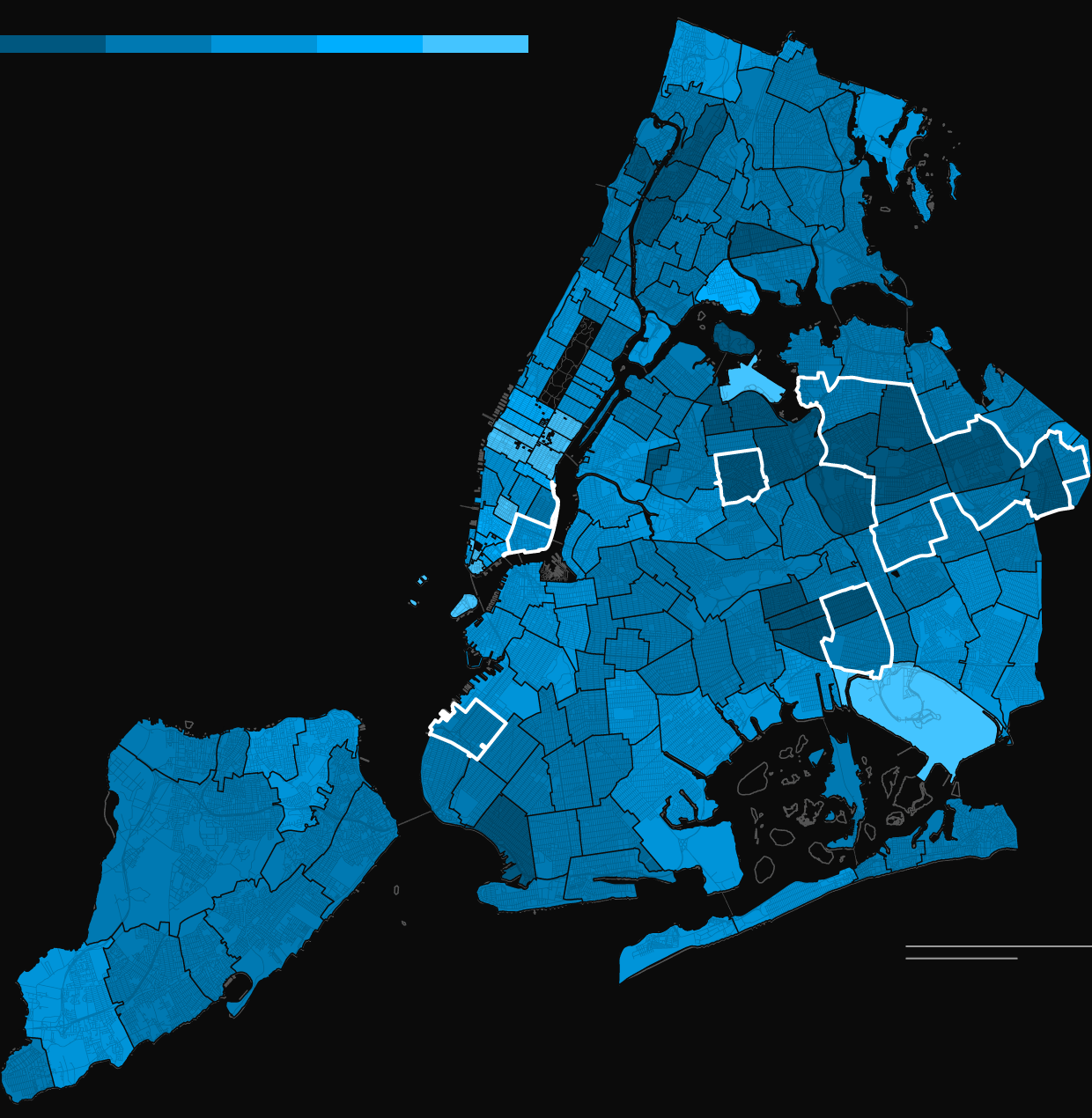
Median PPP loan amount (2020–2021)
15K
20K
30K
$40K
Bronx
Parkchester
Manhattan
Flushing
Koreatown
Elmhurst
Chinatown
Queens
Ozone
Park
Brooklyn
Sunset
Park
Bensonhurst
Staten
Island
5 mi
5 km
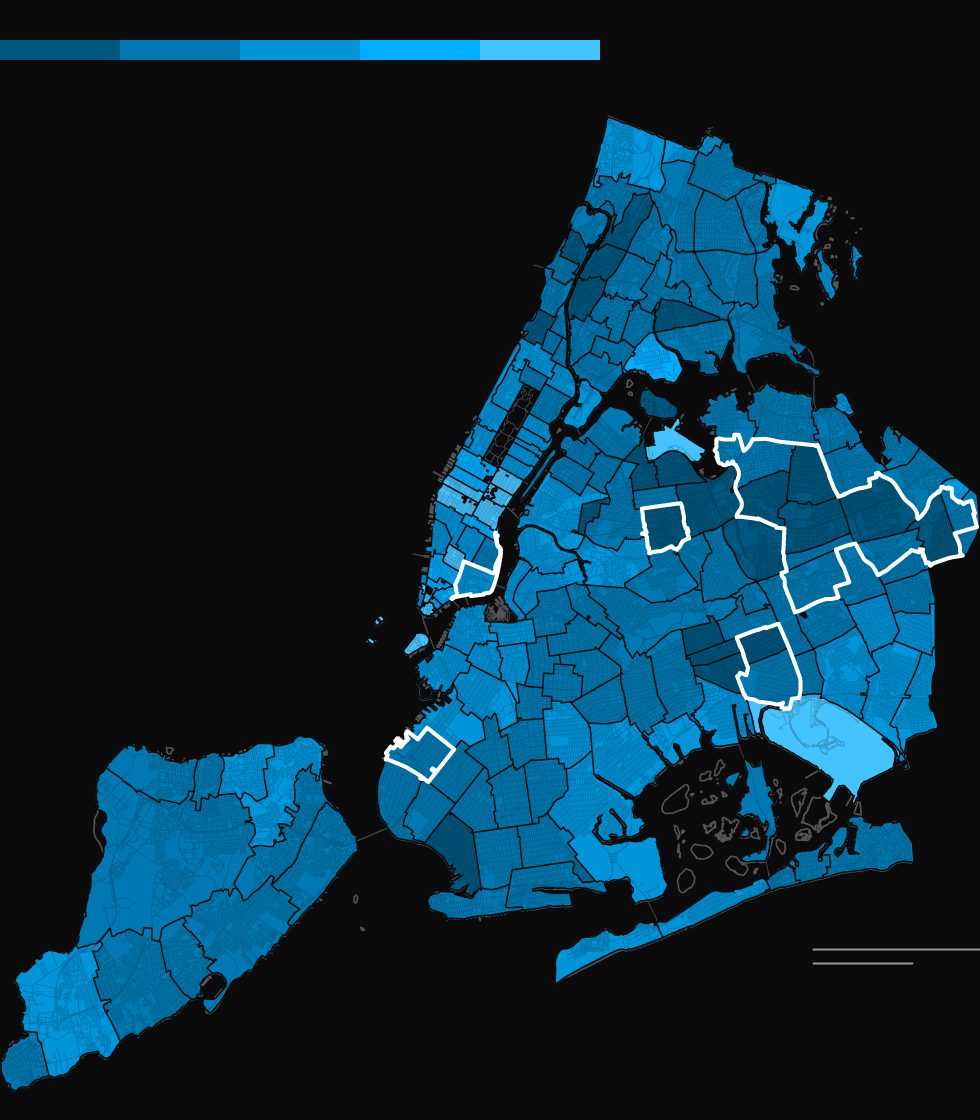
Median PPP loan amount (2020–2021)
15K
20K
30K
$40K
Bronx
Parkchester
Manhattan
Flushing
Koreatown
Elmhurst
Chinatown
Queens
Ozone
Park
Brooklyn
Sunset
Park
Bensonhurst
Staten
Island
5 mi
5 km
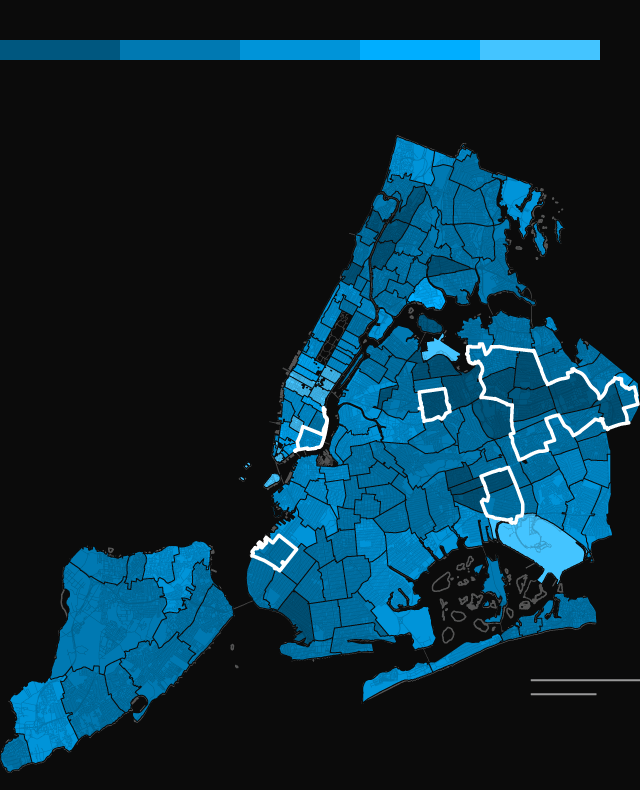
Median PPP loan amount (2020–2021)
15K
20K
30K
$40K
Bronx
Manhattan
Flushing
Elmhurst
Chinatown
Queens
Ozone
Park
Brooklyn
Sunset
Park
Staten
Island
5 mi
5 km
Scattered Across the City
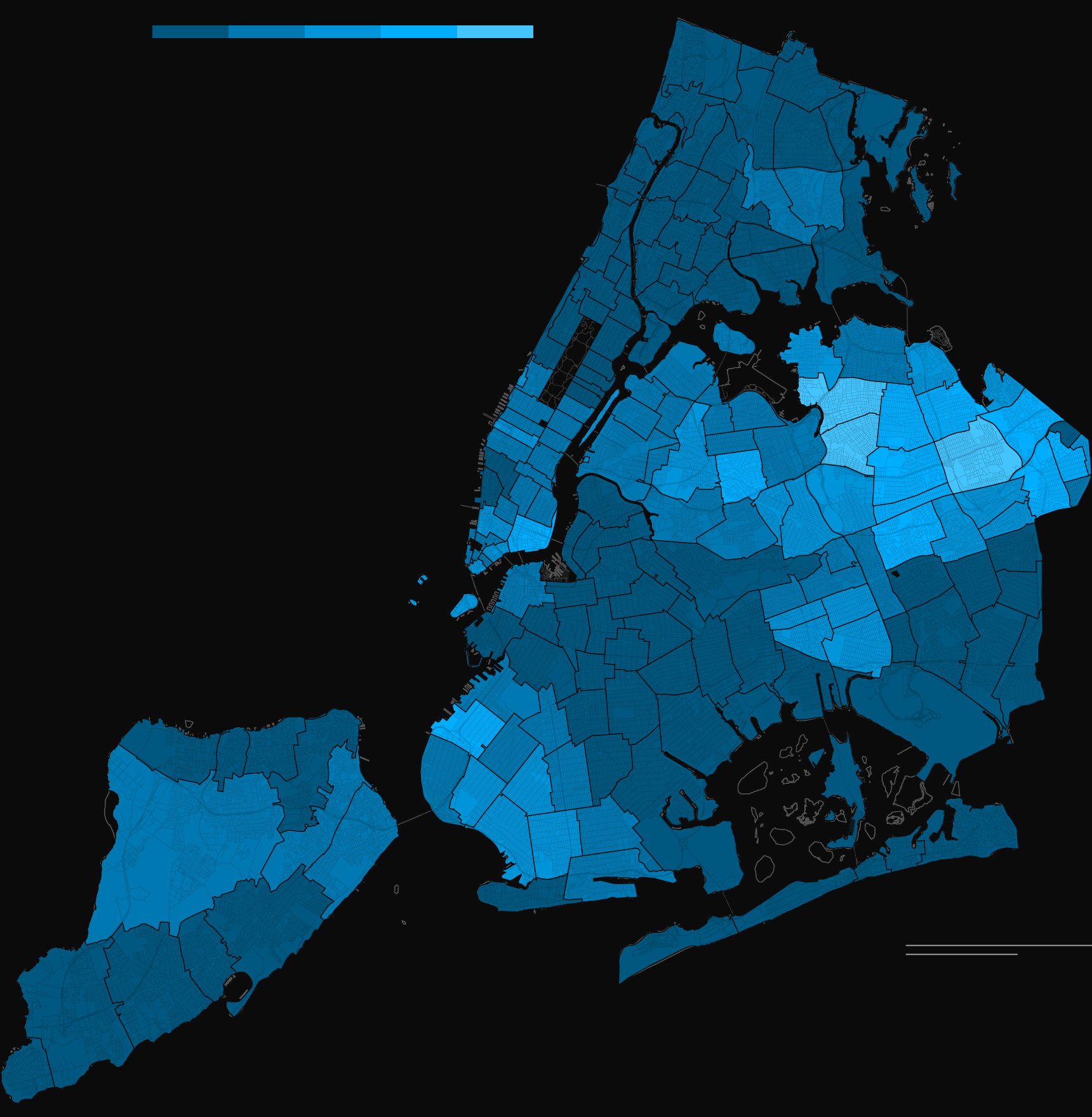
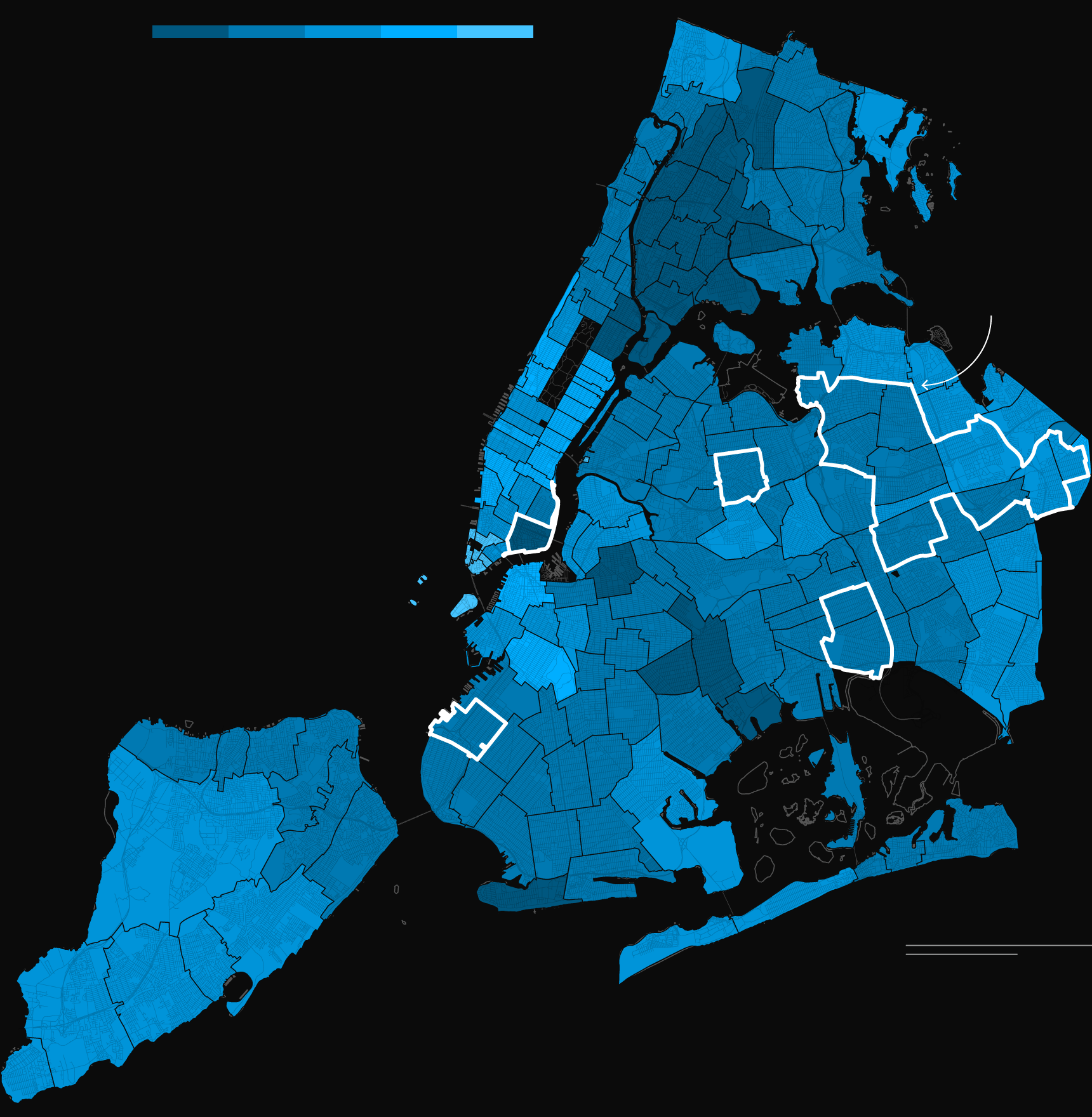
More than 1.3 million New Yorkers are Asian, or about 16%. They are the largest group in 15 zip codes, including in majority-Asian Flushing, in eastern Queens.
Economically Vulnerable
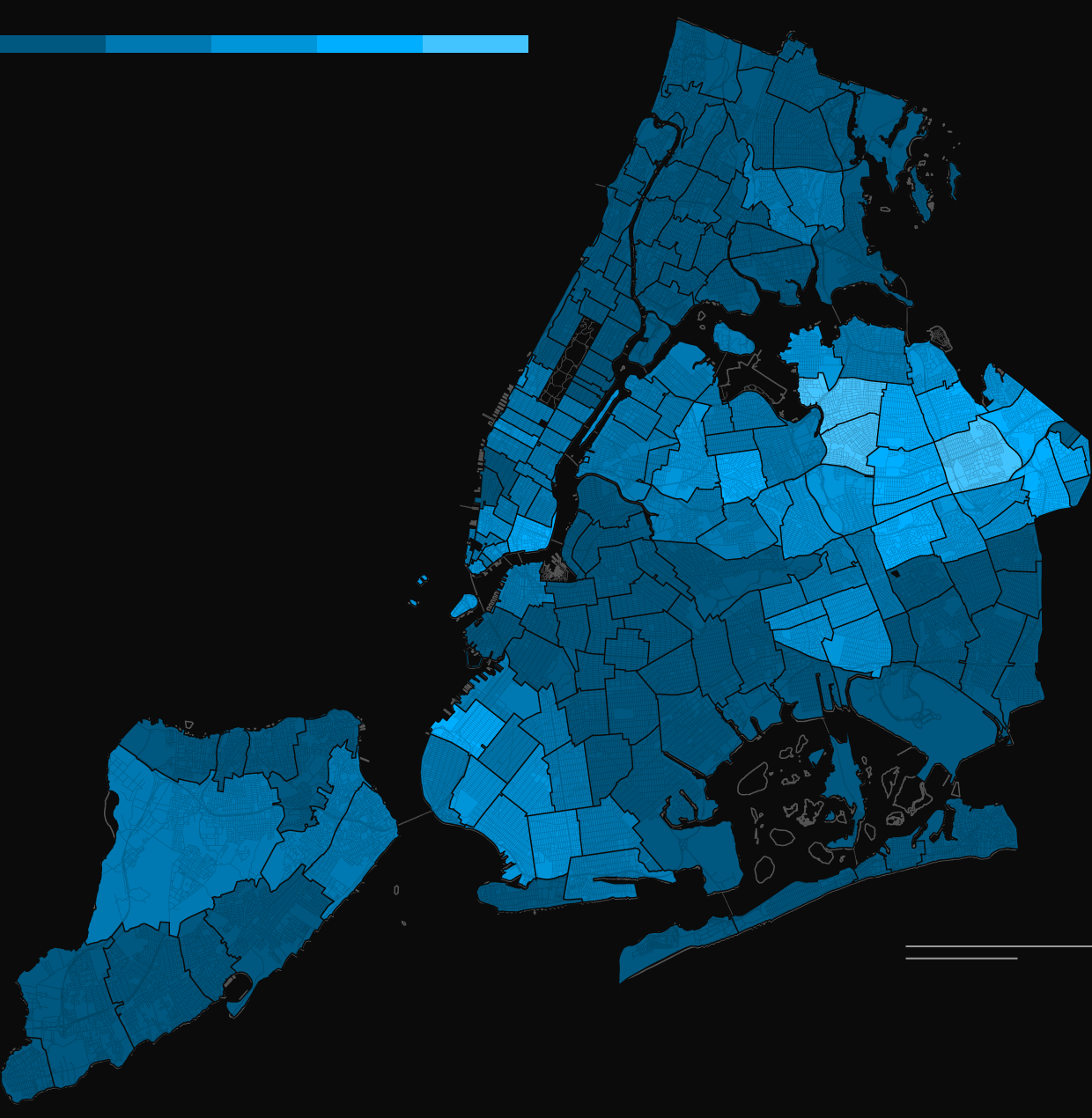
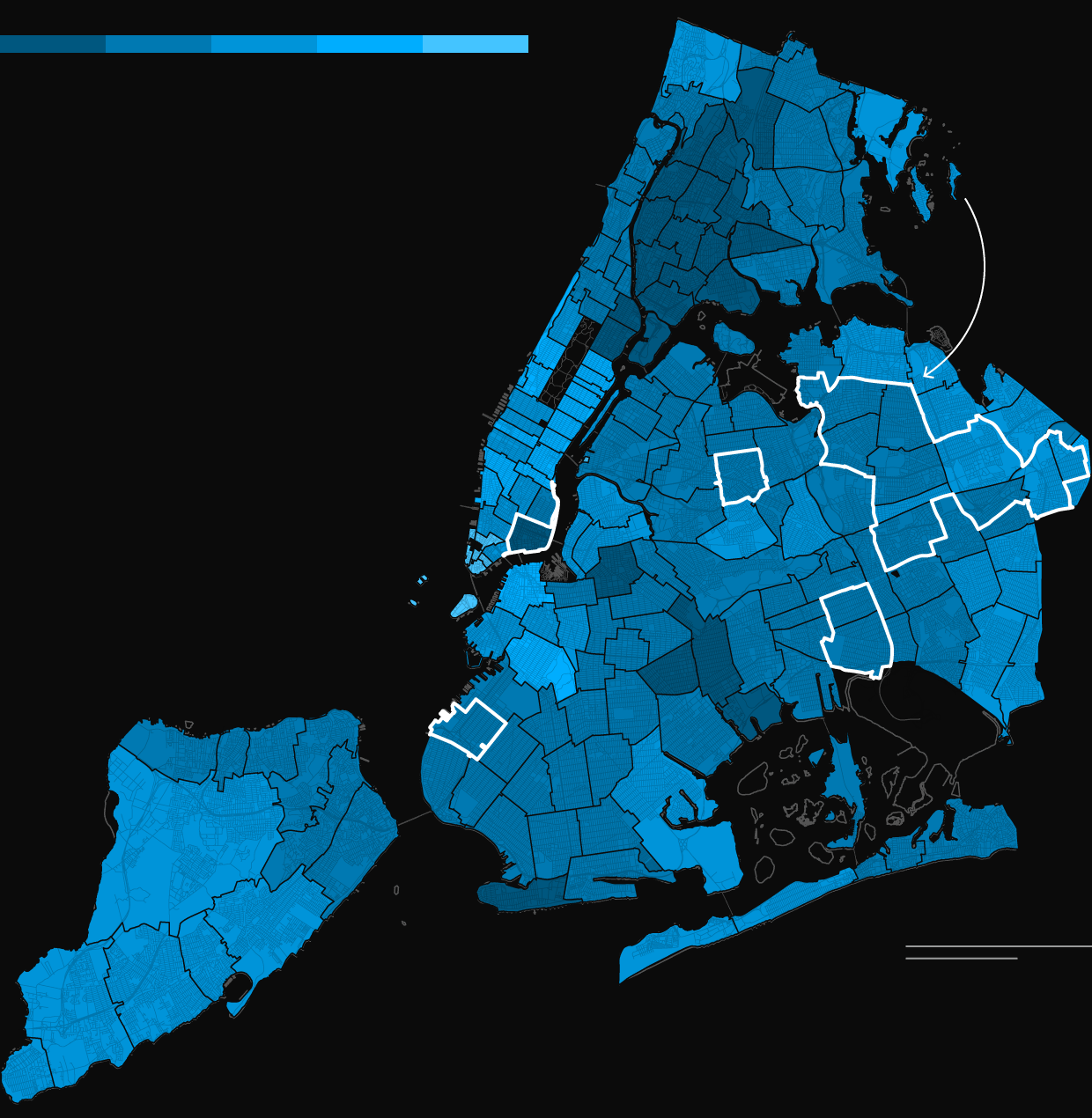
The most heavily-Asian zip codes are relatively less well-off and home to many recent immigrants.
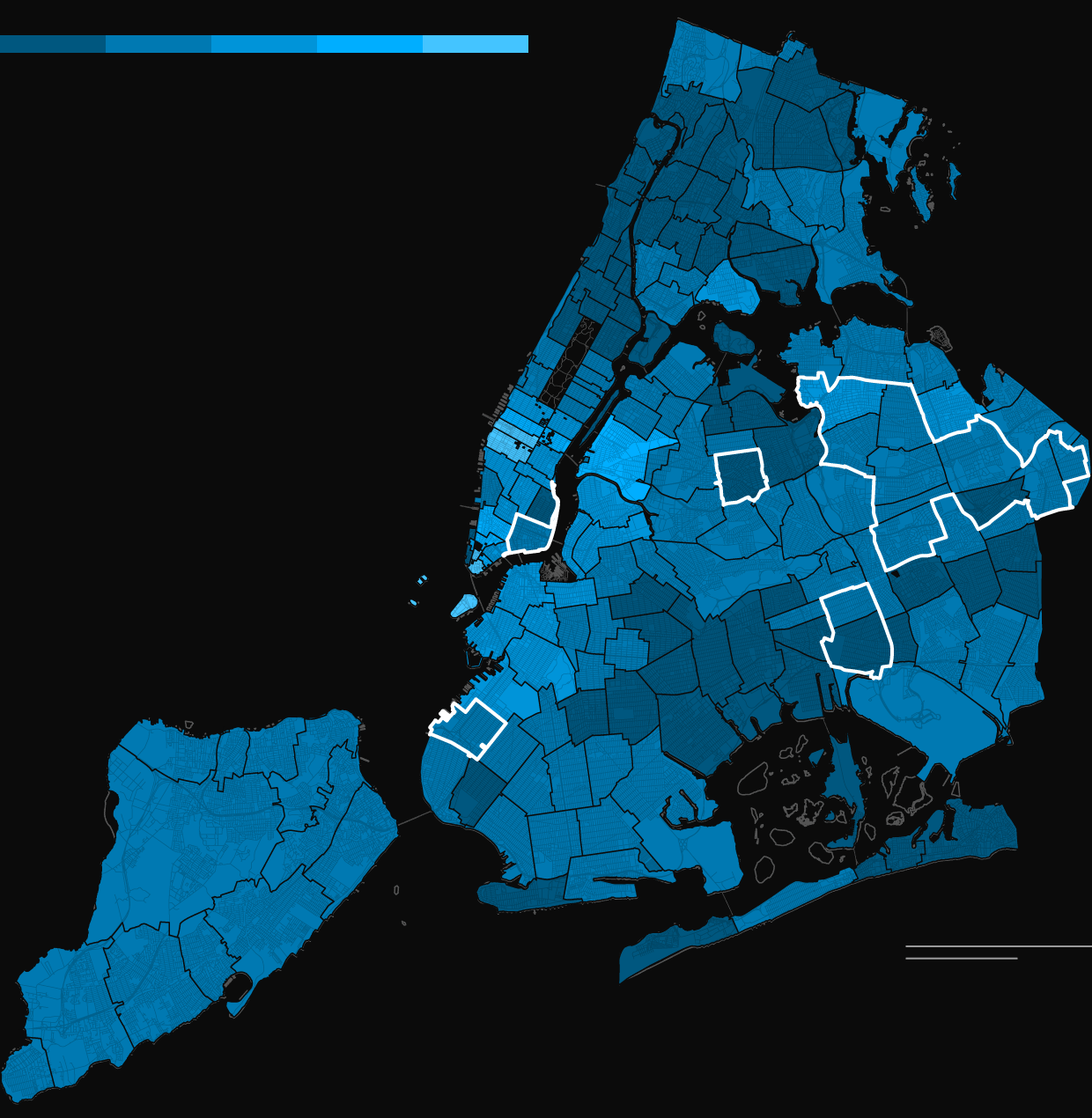
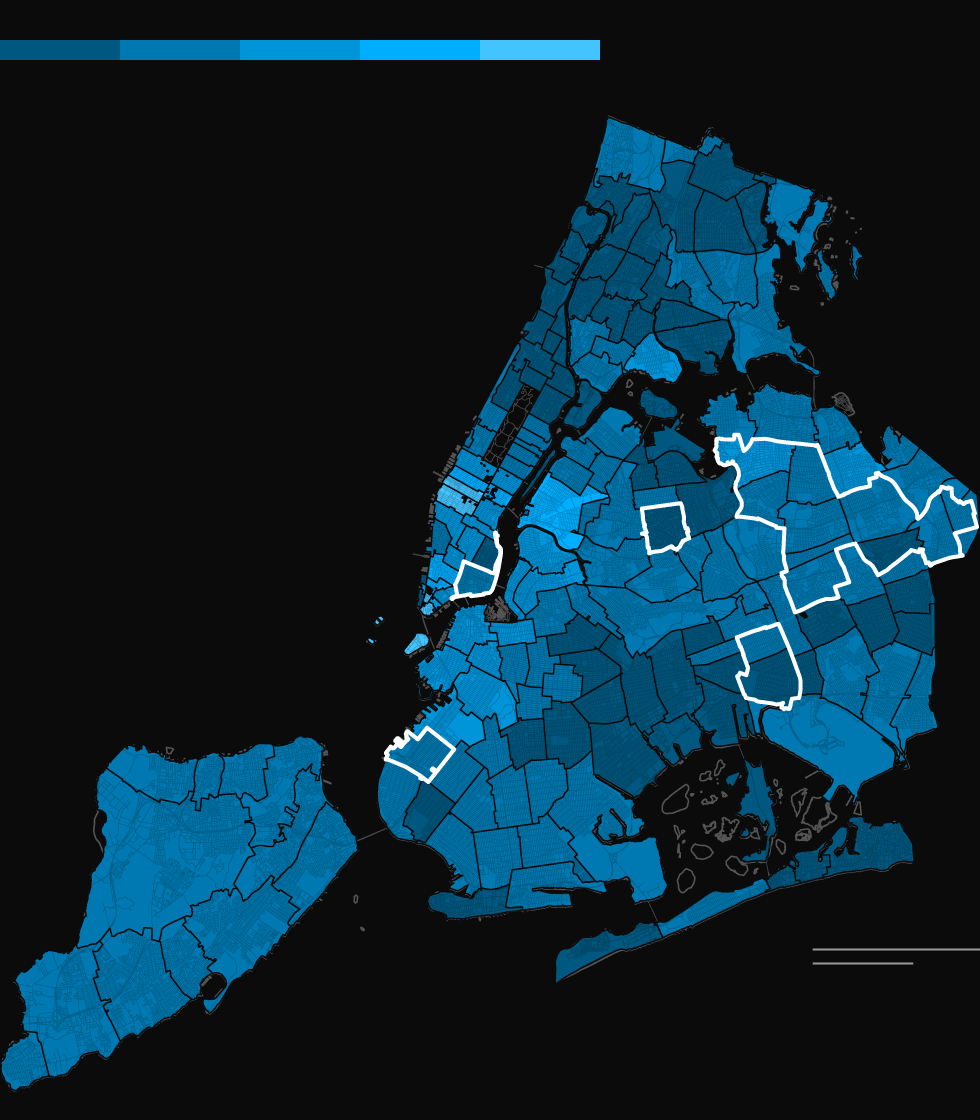
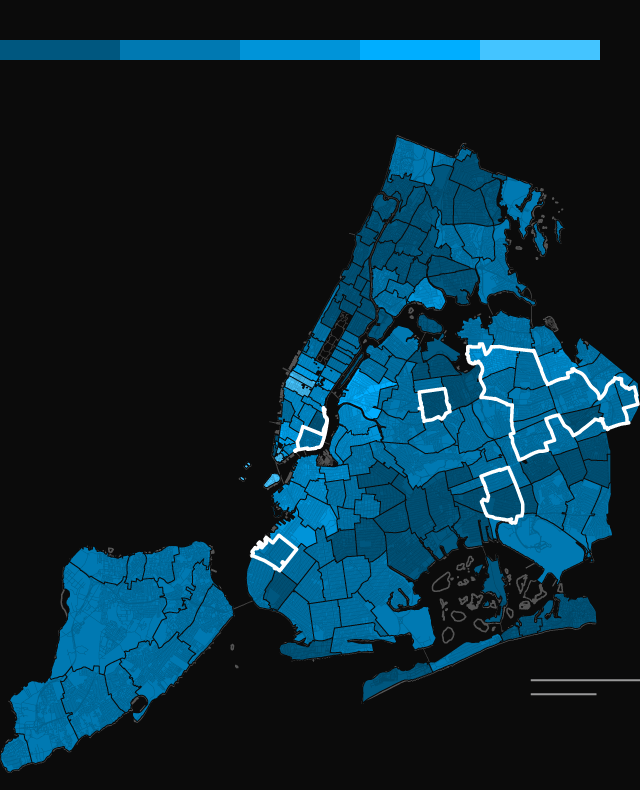
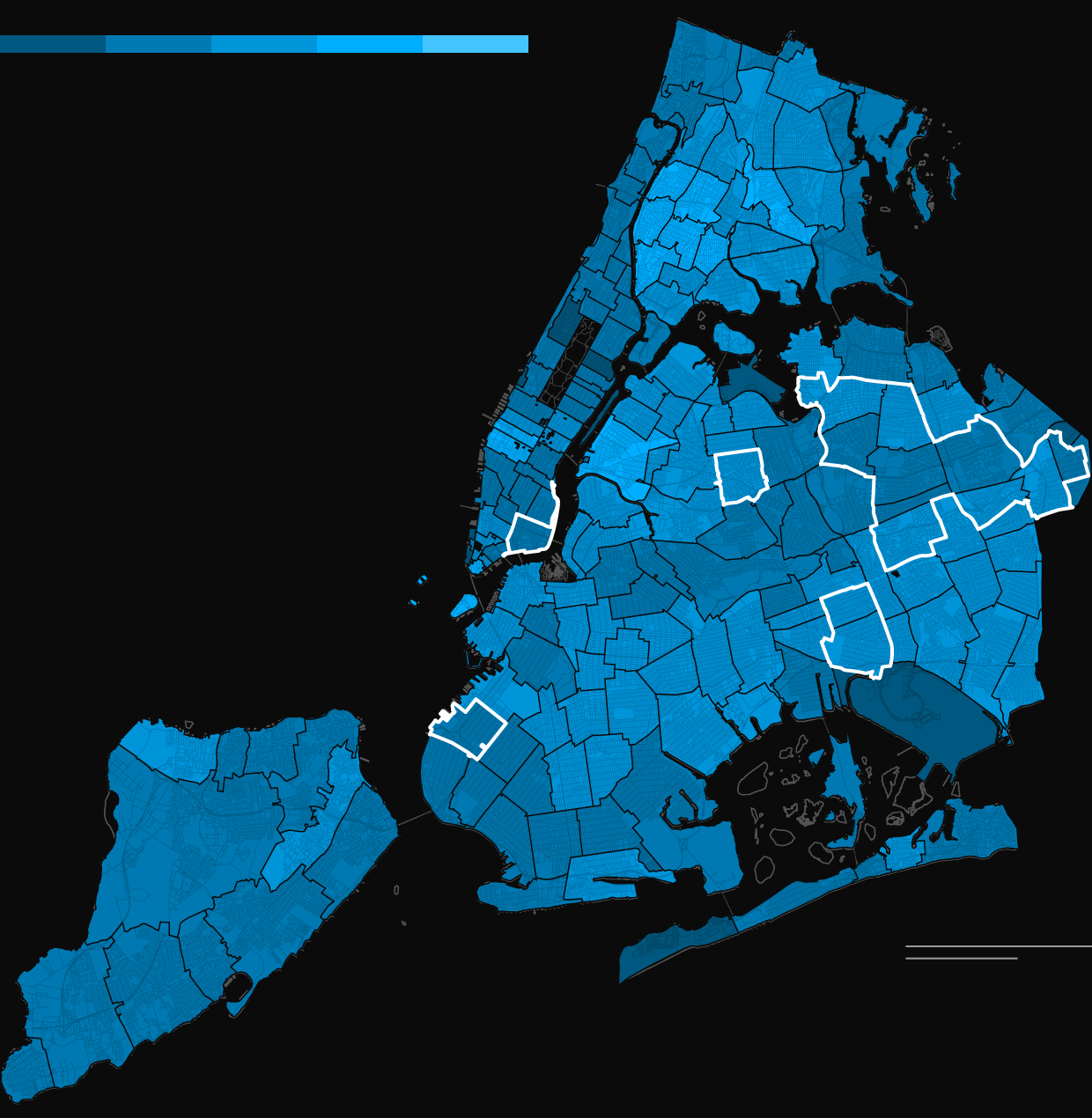
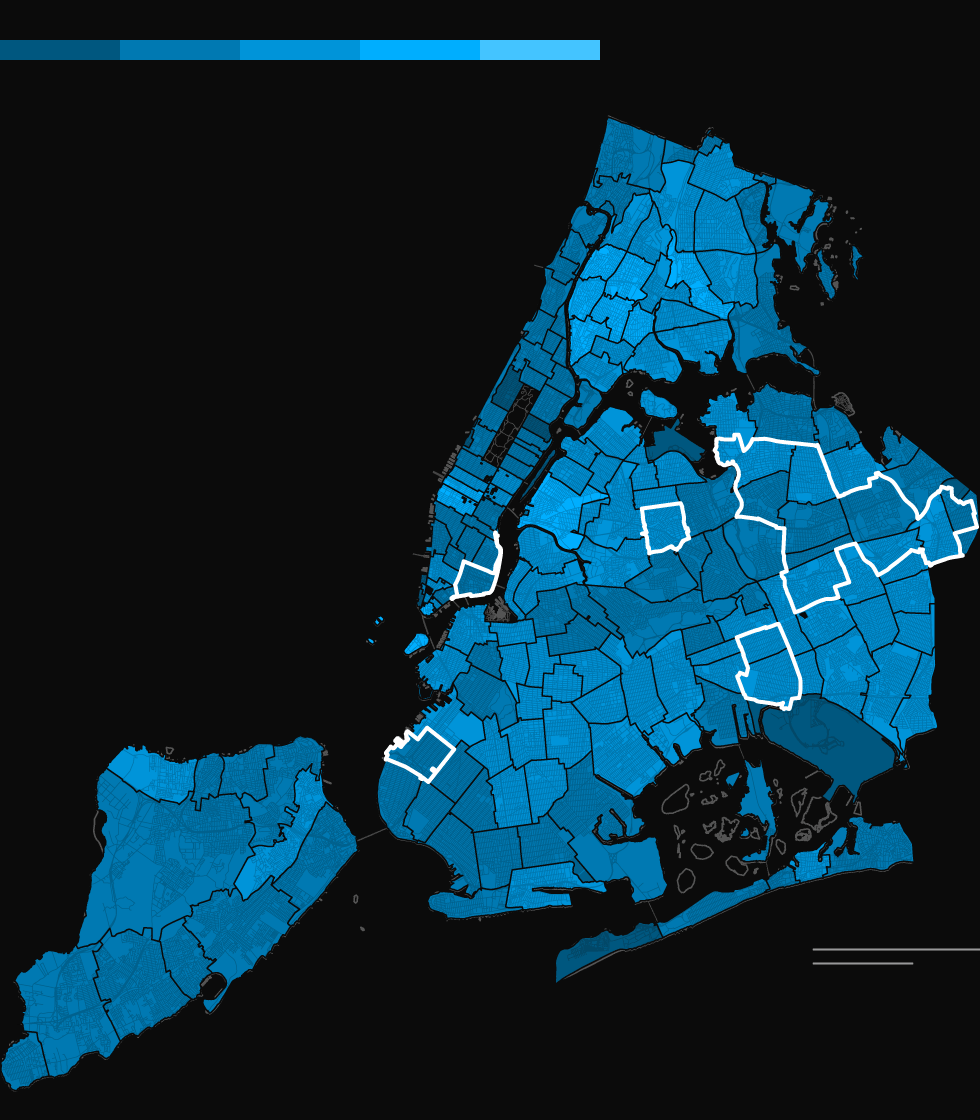
Few PPP Loans in 2020
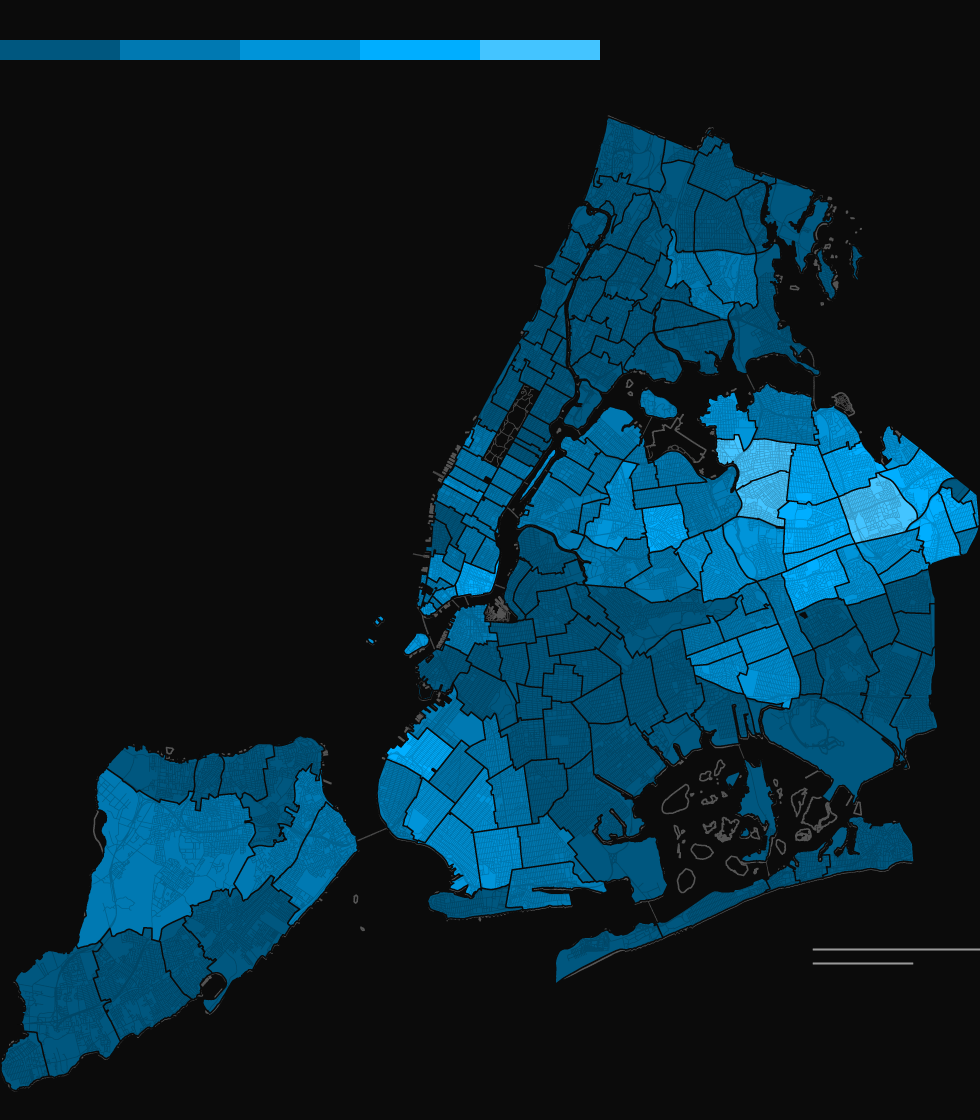
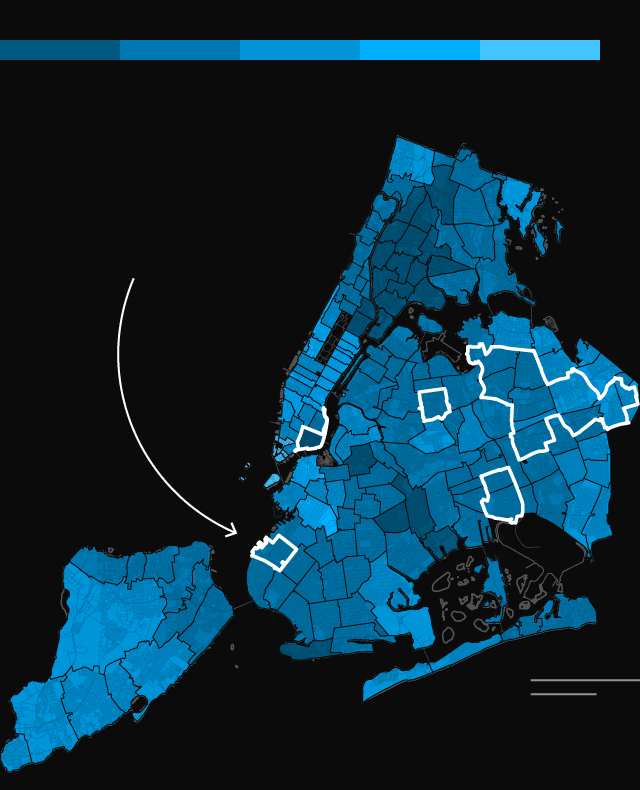
While these areas were hit particularly hard by the pandemic, they received less aid last year from the small-business Paycheck Protection Program than other parts of the city.
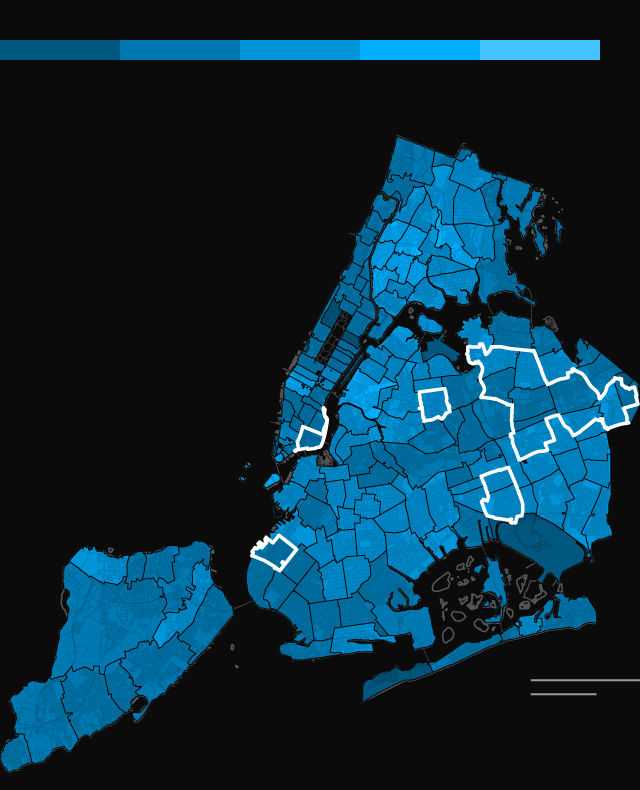
Note: Acceptance rates are calculated as the number of borrowers in a zip code who received PPP loans relative to the estimated number of small businesses (those with fewer than 500 employees) and sole proprietorships in the area.
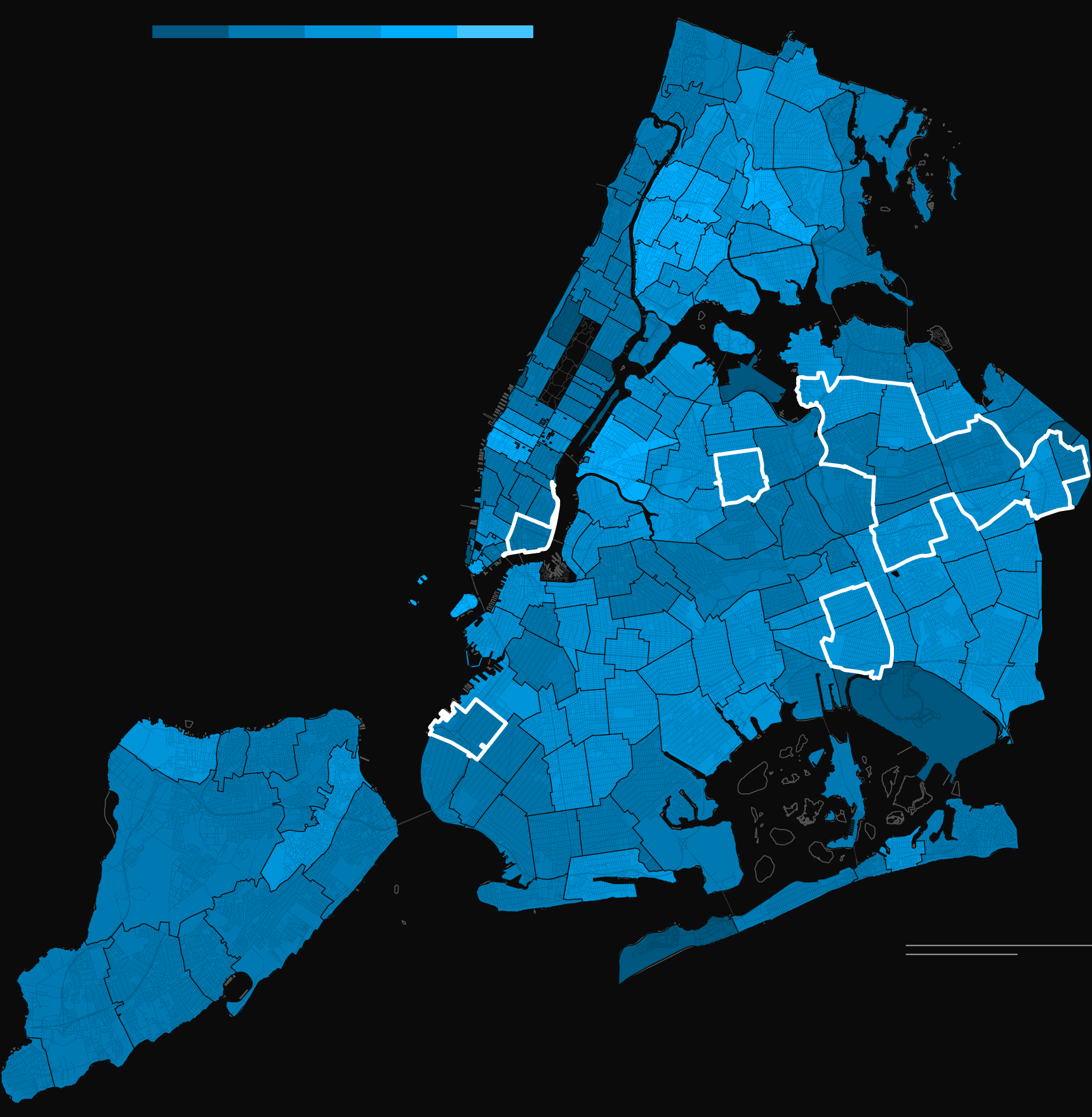
Not Much Aid in 2021 Either
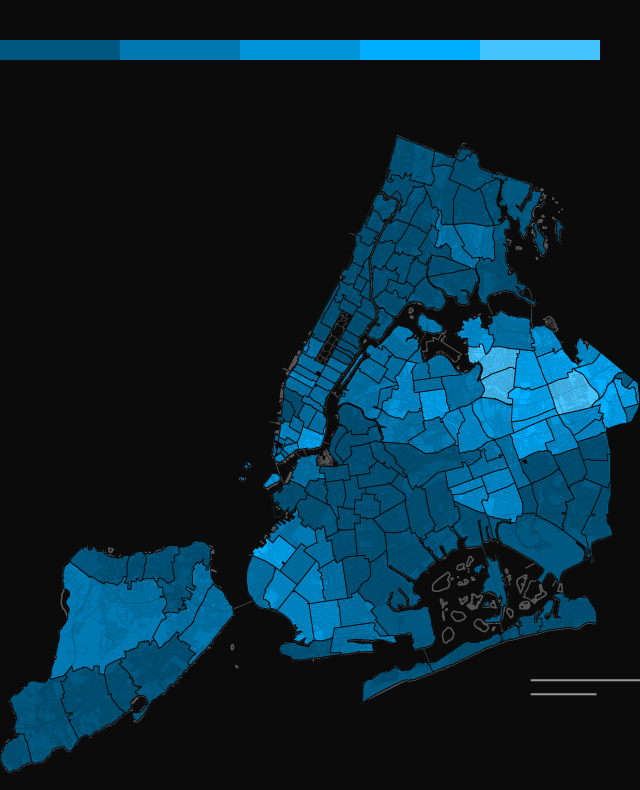
A similar pattern was seen with the final PPP round in 2021, which was less widespread in heavily-Asian areas while successfully targeting lower-income Black and Hispanic neighborhoods in the Bronx, Brooklyn and Queens.
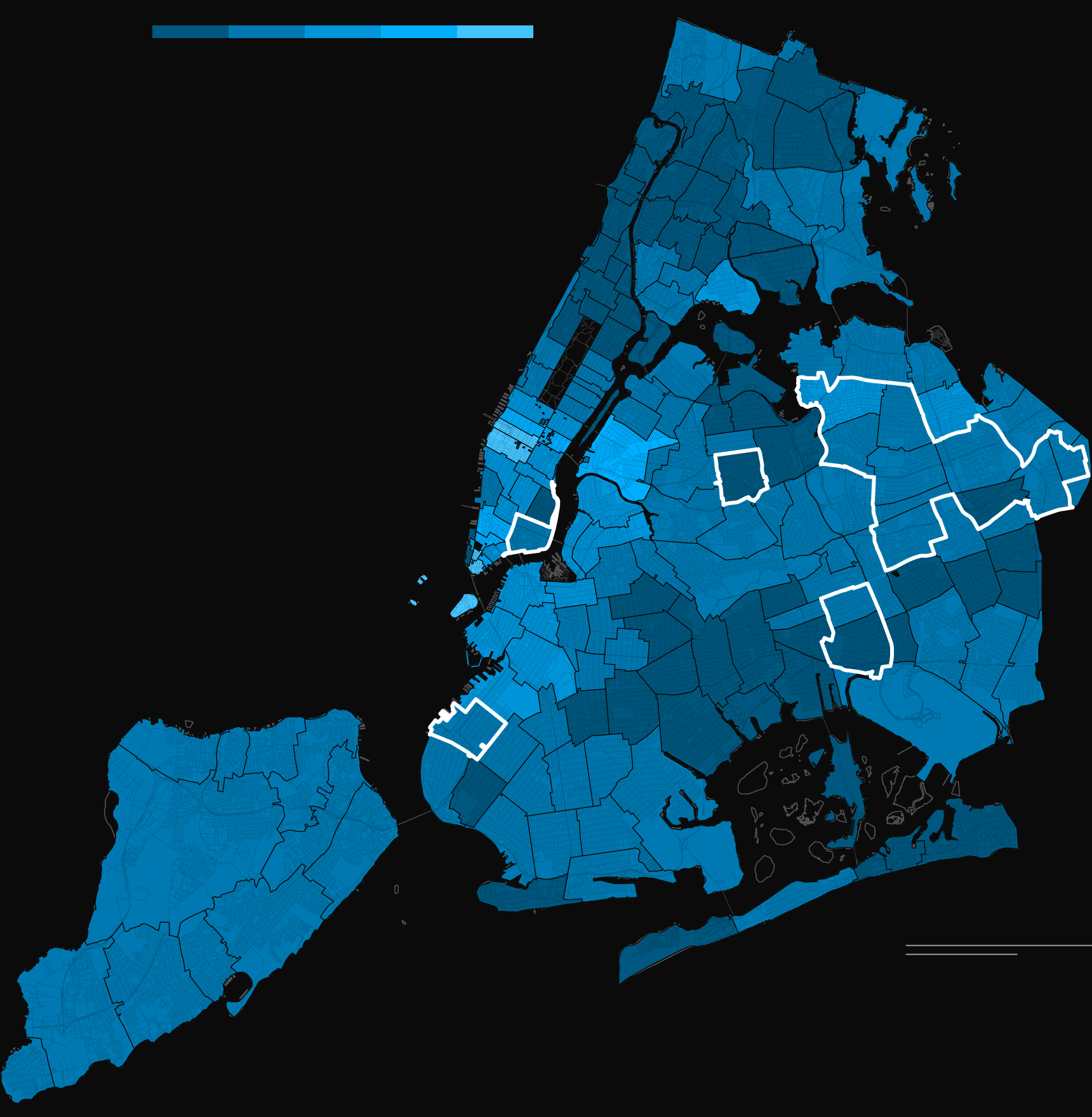
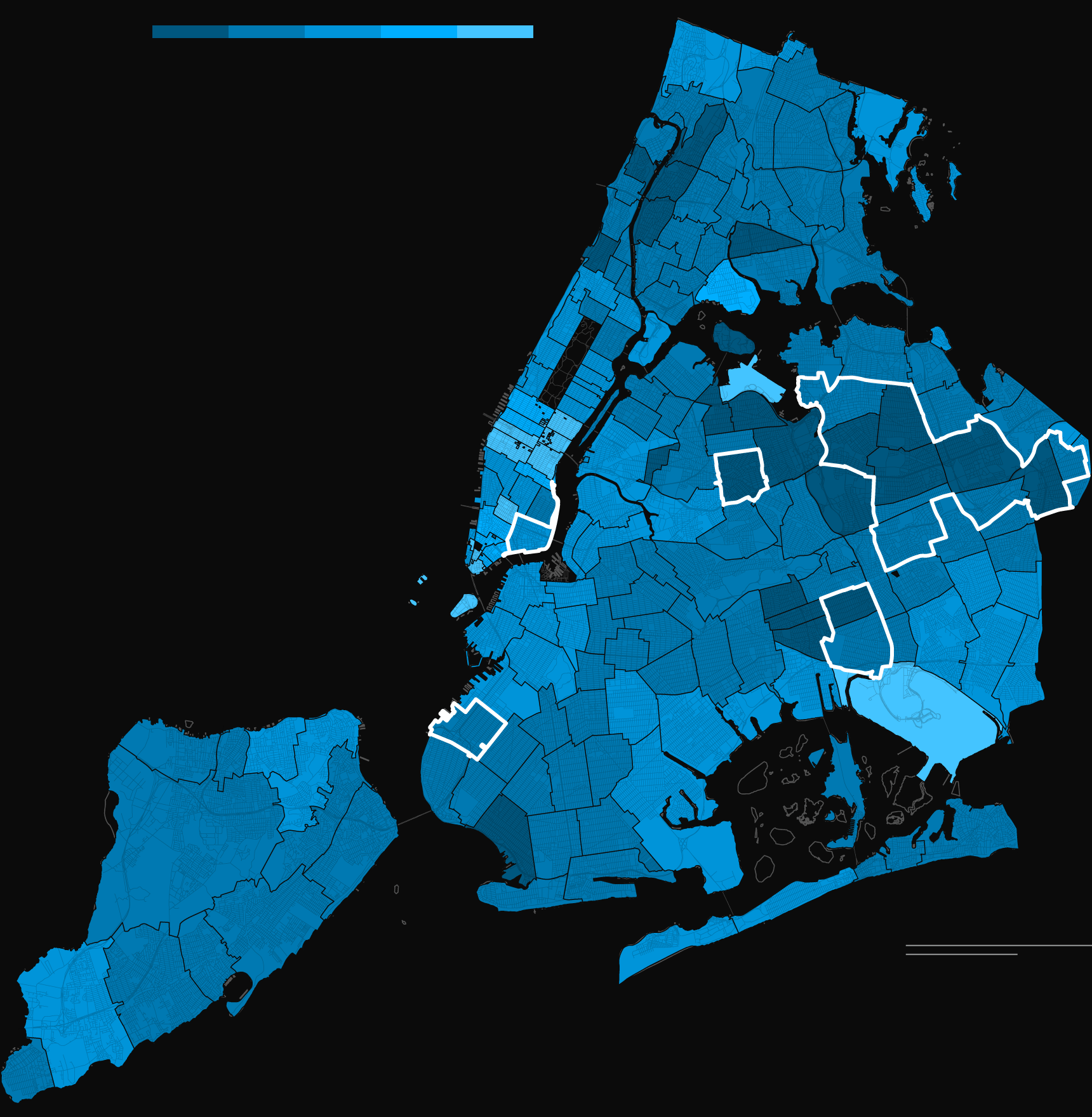
Small Dollar Amounts
Besides receiving fewer loans, businesses in heavily-Asian zip codes—such as taxi services, restaurants and beauty salons—tended to get less money.
Before the pandemic, Asian-American small businesses made up 20% of New York City’s businesses and were the fastest-growing segment of the group.

Drop in consumer spending, 2019 to 2020
–65%
NYC overall
Flushing
–71%
–73%
Jackson Heights
–82%
Chinatown

Drop in consumer spending, 2019 to 2020
–65%
NYC overall
–71%
Flushing
Jackson Heights
–73%
–82%
Chinatown
Consumer spending in Manhattan’s Chinatown and Flushing, a large Asian neighborhood in Queens, declined about six weeks before New York went into lockdown in March 2020, according to Mastercard Center for Inclusive Growth. By early March, spending in these neighborhoods had dropped more than the rest of the city. Over half of Asian-owned companies said their revenue dropped 75% or more last year, according to the AAF report.
Many also lack digital payment and online delivery capabilities that helped other businesses when in-person dining was restricted. In New York City, 24% of transactions in grocery stores and restaurants were digital in 2020, but only 3% were digital in Asian-American communities, according to Mastercard.
The hit to businesses meant many in the community lost their jobs. The number of Asian Americans claiming state unemployment benefits in New York rose by over 4,000% from May 2019 to May 2020—nearly three times the increase for the state overall.
Jobless Surge

Percent change
from prior year
Asian
Black
Hispanic
White
4,000%
There were more than 200,000 Asian claimants in May 2020
3,000
2,000
1,000
0
Jan
2020
Apr
Jul
Oct
Jan
2021
Apr
Jul

Percent change
from prior year
Asian
Black
Hispanic
White
4,000%
There were more than 200,000 Asian claimants in May 2020
3,000
2,000
1,000
0
Jan
2020
Apr
Jul
Oct
Jan
2021
Apr
Jul

Asian
Black
Hispanic
White
Percent change
from prior year
4,000%
There were more than 200,000 Asian claimants in May 2020
3,000
2,000
1,000
0
Jan
2020
Apr
Jul
Oct
Jan
2021
Apr
Jul
Across the U.S., Asian Americans with less education struggled during the pandemic. In California, 83% of Asian Americans with high school education or less filed unemployment claims by last July, compared to 37% for the general population with the same level of education, according to research from the University of California, Los Angeles.
Some owners say there hasn’t been enough of an improvement since. At Sichuan Hot Pot in Chinatown, partner Yong Zhong Lim offers a glimpse at the hardships that many of those businesses face.
One weekday evening, he greeted the few passersby in front of his Manhattan restaurant—a far cry from the once-crowded Pell Street. Lunch hours are slow too. Before the pandemic, Sichuan Hot Pot had three delivery workers during lunchtime. In early autumn, it was sharing two delivery workers with five other restaurants.
“I don’t mind hard work,” said Lim. “But there isn’t even a chance to do hard work.”

Rising food prices are a strain for Sichuan Hot Pot, in Manhattan’s Chinatown.
Photographer:
Amy Yee/Bloomberg

Rising food prices are a strain for Sichuan Hot Pot, in Manhattan’s Chinatown.
Photographer: Amy Yee/ Bloomberg

Rising food prices are a strain for Sichuan Hot Pot, in Manhattan’s Chinatown.
Photographer:
Amy Yee/ Bloomberg

Rising food prices are a strain for Sichuan Hot Pot, in Manhattan’s Chinatown.
Photographer:
Amy Yee/ Bloomberg
Rising food costs, supply-chain bottlenecks, and lingering fears of the delta variant further strained the eatery in recent months. There are other pressures too. Sichuan Hot Pot closed its outpost in Flushing, due to rising rent. And as hate crimes against the Asian community have spiked during the pandemic, restaurant staff commute home together for safety. Worries about anti-Asian bias were widespread among the 800 Asian-American business owners surveyed by AAF.
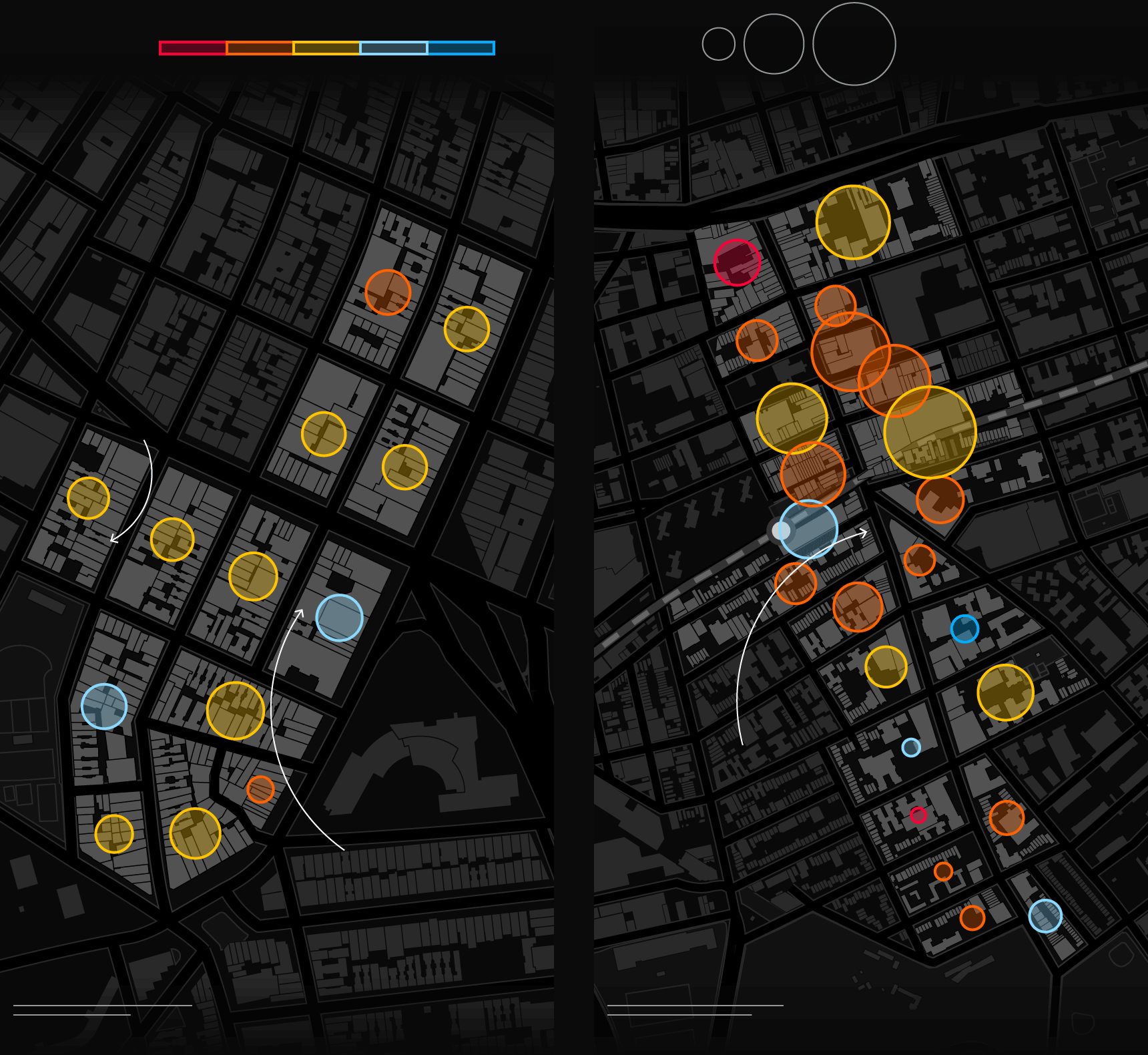
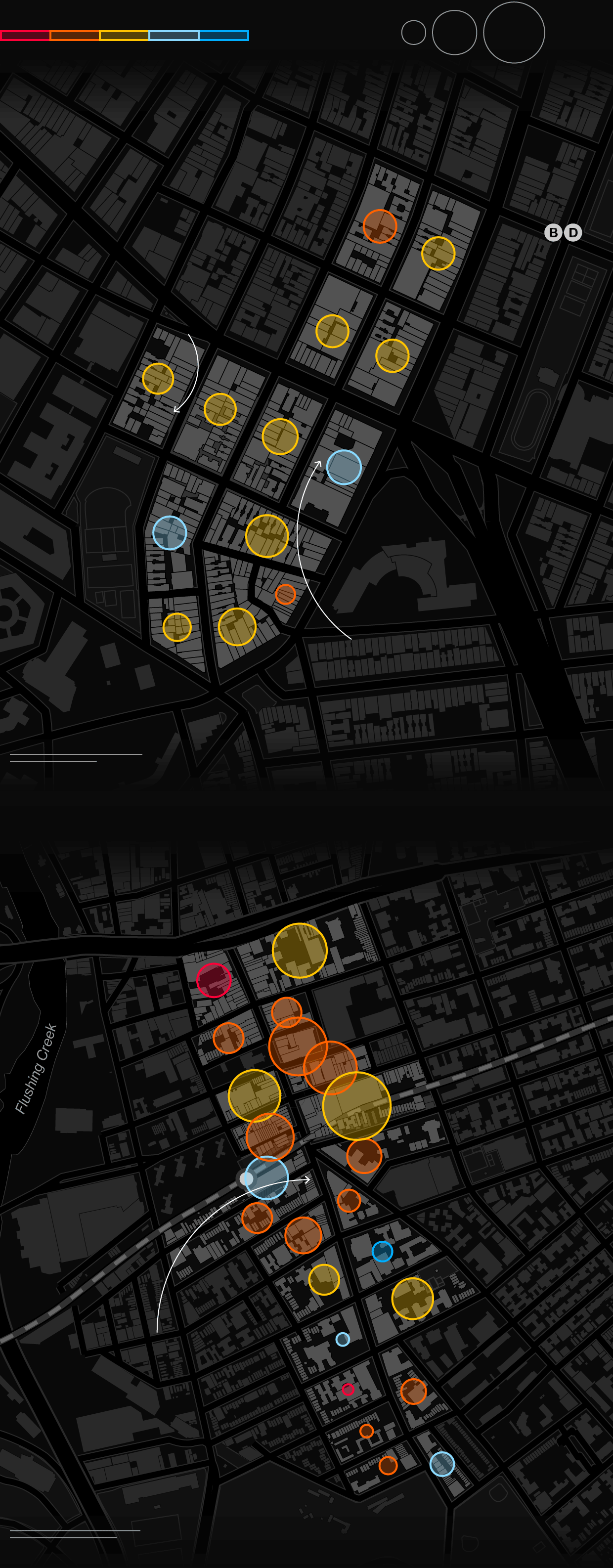
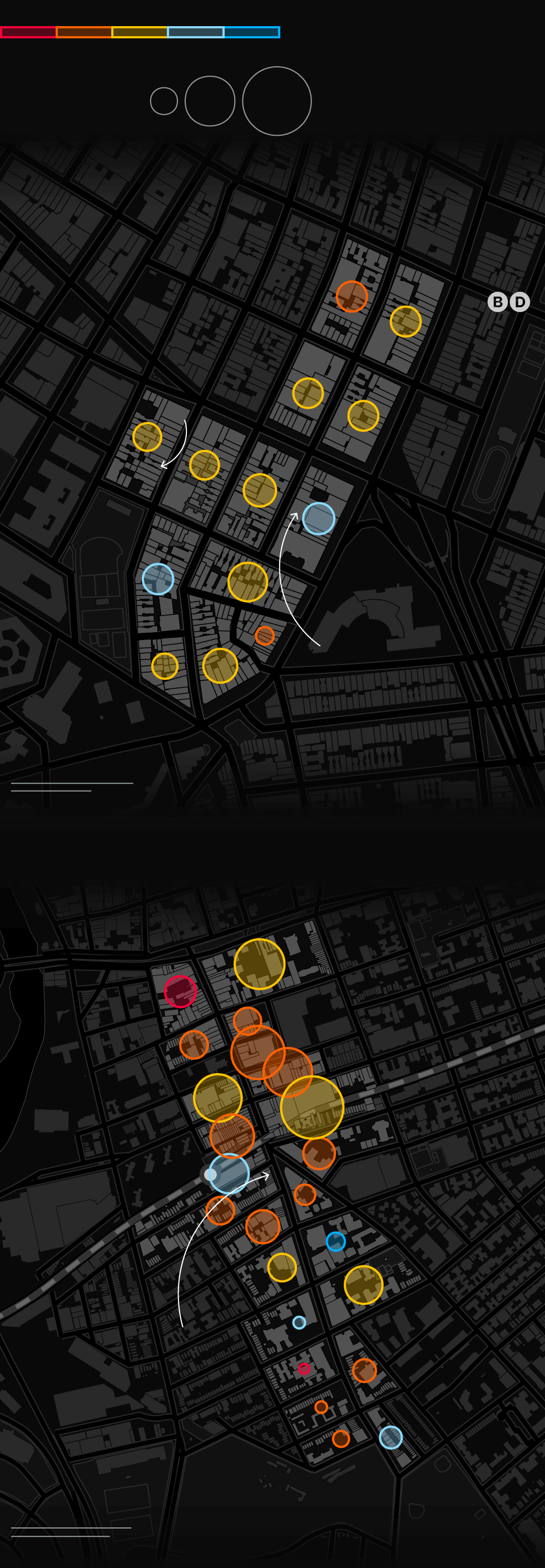
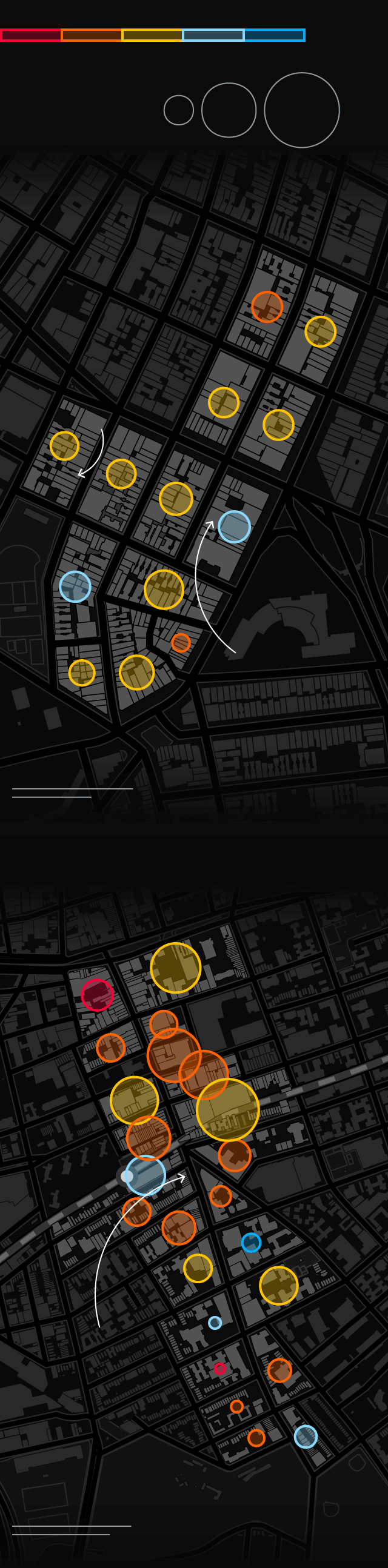
The local recovery remains relatively weak compared to pre-pandemic levels, with foot traffic still down as much as 30% in Chinatown and 50% along Main Street in Flushing, Queens, the area’s main drag and transportation hub, according to a Bloomberg analysis of SafeGraph mobile phone location data.
Slow Recovery
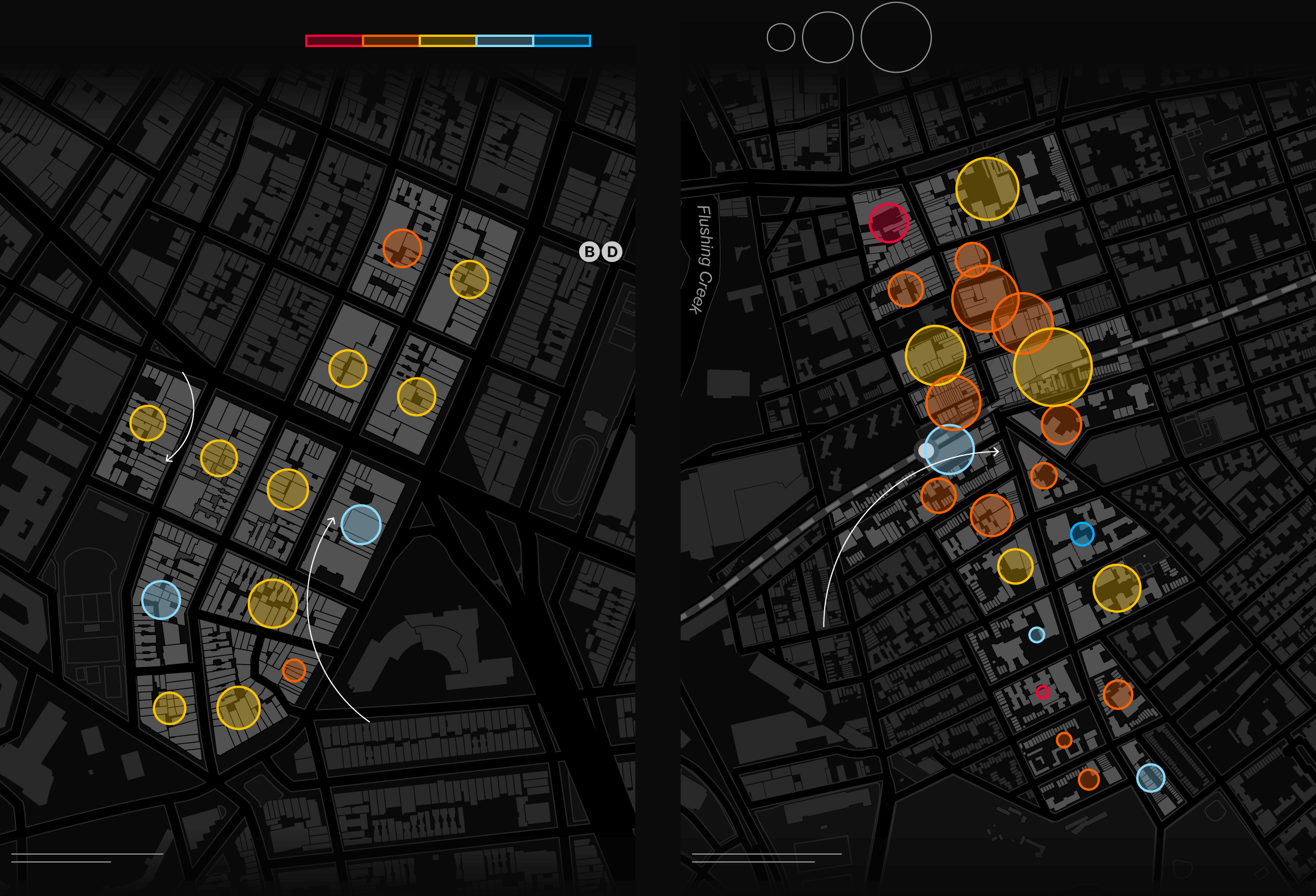
Change in foot traffic since 2019
Recorded visits,
last available month:
1K
4K
8K
–40
–20
0
+80%
Chinatown
FLUSHING
Northern Blvd
Elizabeth St
Grand St
Centre St
Baxter St
37th Ave
Mulberry St
Canal St
④⑥
38th Ave
Grand St
Mott St
Roosevelt Ave
Bodhi Kosher Vegetarian got PPP money but a nearby eatery didn’t and closed.
College Point Blvd
Main St
41st Ave
⑦
Hester St
Canal St
Flushing
Main Street
LIRR Station
Union St
Bowery
Kissena Blvd
Chrystie St
Main St
Bayard St
Frankin Ave
41st Rd
Columbus
Park
Sanford Ave
Maple Ave
Pell St
Manhattan Bridge
Xi’an Famous Foods,
which began as a stall in the Golden Mall in Flushing, closed six locations citywide during the pandemic.
Worth St
Chatham Sq
Elder Ave
Famous dim sum spot Jing Fong closed its original restaurant in May and is relocating to a smaller space.
Blossom Ave
Park Row
Queens Botanical
Garden
500 ft
1,000 ft
250 m
100 m
Change in foot traffic since 2019
Recorded visits,
last available month:
1K
4K
8K
–40
–20
0
+80%
Chinatown
FLUSHING
Northern Blvd
Elizabeth St
Grand St
Centre St
Baxter St
37th Ave
Mulberry St
38th Ave
Mott St
Roosevelt Ave
Bodhi Kosher Vegetarian got PPP money but a nearby eatery didn’t and closed.
Hester St
College Point Blvd
Main St
41st Ave
⑦
Canal St
Flushing
Main Street
LIRRStation
Union St
Bowery
Kissena Blvd
Main St
Bayard St
Manhattan Bridge
Columbus
Park
41st Rd
Maple Ave
Frankin Ave
Pell St
Xi’an Famous Foods,
which began as a stall in the Golden Mall in Flushing, closed six locations citywide during the pandemic.
Worth St
Chatham Sq
Famous dim sum spot Jing Fong closed its original restaurant in May and is relocating to a smaller space.
Elder Ave
500 ft
1,000 ft
Queens Botanical
Garden
250 m
100 m
Change in foot traffic since 2019
Recorded visits,
last available month:
1K
4K
8K
–40
–20
0
+80%
Chinatown
Elizabeth St
Lafayette St
Grand St
Centre St
Baxter St
Mulberry St
Canal St
④⑥
Grand St
Mott St
Bodhi Kosher Vegetarian got PPP money but a nearby eatery didn’t and closed.
Hester St
Canal St
Bowery
Chrystie St
Bayard St
Columbus
Park
Pell St
Worth St
Manhattan Bridge
Chatham Sq
Famous dim sum spot Jing Fong closed its original restaurant in May and is relocating to a smaller space.
Park Row
500 ft
100 m
FLUSHING
Northern Blvd
37th Ave
38th Ave
Roosevelt Ave
College Point Blvd
Main St
41st Ave
⑦
Flushing
Main Street
LIRR Station
Union St
Kissena Blvd
Main St
Frankin Ave
41st Rd
Sanford Ave
Maple Ave
Xi’an Famous Foods,
which began as a stall in the Golden Mall in Flushing, closed six locations citywide during the pandemic.
Elder Ave
Blossom Ave
Queens Botanical
Garden
1,000 ft
250 m
Change in foot traffic since 2019
–40
–20
0
+80%
Recorded visits,
last available month:
1K
4K
8K
Chinatown
Elizabeth St
Centre St
Grand St
Baxter St
Mulberry St
Canal St
④⑥
Grand St
Mott St
Bodhi Kosher Vegetarian got PPP money but a nearby eatery didn’t and closed.
Hester St
Canal St
Bowery
Bayard St
Manhattan Bridge
Pell St
Worth St
Famous dim sum spot Jing Fong closed its original restaurant in May and is relocating to a smaller space.
Chatham Sq
500 ft
100 m
FLUSHING
Northern Blvd
37th Ave
38th Ave
Roosevelt Ave
Main St
41st Ave
⑦
Flushing
Main Street
LIRR Station
Kissena Blvd
Union St
Main St
Maple Ave
Frankin Ave
Xi’an Famous Foods,
closed six locations citywide during the pandemic.
Elder Ave
Queens Botanical
Garden
1,000 ft
250 m
Change in foot traffic since 2019
–40
–20
0
+80%
Recorded visits,
last available month:
1K
4K
8K
Chinatown
Elizabeth St
Centre St
Grand St
Baxter St
Mulberry St
Mott St
Bodhi Kosher Vegetarian got PPP money but a nearby eatery didn’t and closed.
Hester St
Bowery
Canal St
Bayard St
Manhattan Bridge
Pell St
Worth St
Famous dim sum spot Jing Fong closed its original restaurant in May and is relocating to a smaller space.
Chatham Sq
500 ft
100 m
FLUSHING
Northern Blvd
37th Ave
38th Ave
Roosevelt Ave
Main St
41st Ave
⑦
Flushing
Main Street
LIRR Station
Kissena Blvd
Union St
Main St
Maple Ave
Frankin Ave
Xi’an Famous Foods,
closed six locations citywide during the pandemic.
Elder Ave
Queens Botanical
Garden
1,000 ft
250 m

Covid’s impact on New York’s Asian small businesses
Share of survey respondents that reported:
Revenue loss:
7%
0–25%
13%
26%
25–50%
50–75%
55%
75%+

Covid’s impact on New York’s Asian small businesses
Share of survey respondents that reported:
Revenue loss:
7%
0–25%
13%
26%
25–50%
50–75%
55%
75%+
It’s a similar situation in other parts of the country. Asian-American businesses surveyed in Southern California this spring reported greater losses during the pandemic than companies in the region overall. And 60% of Asian-owned businesses nationwide missed out on financial aid because owners did not believe they were eligible, according to a survey this year from the National Asian/Pacific Islander American Chamber of Commerce and Entrepreneurship.
In south Flushing, around 1,000 borrowers received federal Paycheck Protection Program loans in 2020—an estimated rate of 10%. In a few wealthier parts of the city, the acceptance rate was closer to 50%. While the latest round in 2021 was explicitly geared at lower-income neighborhoods and communities of color, heavily-Asian zip codes saw at most a modest increase in loan acceptance rates. (An analysis last July by RentHop found a similar 2020 trend.)

Shoppers on a street in Flushing, Queens.
Photographer:
Gabriela Bhaskar/ Bloomberg

Shoppers on a street in Flushing, Queens.
Photographer:
Gabriela Bhaskar/ Bloomberg

Shoppers on a street in Flushing, Queens.
Photographer:
Gabriela Bhaskar/ Bloomberg

Shoppers on a street in Flushing, Queens.
Photographer:
Gabriela Bhaskar/ Bloomberg

Shoppers on a street in Flushing, Queens.
Photographer:
Gabriela Bhaskar/ Bloomberg
“Even though Flushing is one of the most concentrated small business centers, it isn’t acknowledged as such and doesn’t receive the support that our community deserves,” said John Choe, executive director of the Greater Flushing Chamber of Commerce.
Local Differences

$20,100
New York City median
◀
PPP total median loan amount
10013 Chinatown (and Tribeca)
$37,957
10002 Chinatown (and Lower East Side)
$20,800
11354 Flushing
$16,827
11220 Sunset Park
$16,805
11355 Flushing
$13,750

$20,100
New York City median
◀
PPP total median loan amount
10013 Chinatown (and Tribeca)
$37,957
10002 Chinatown
$20,800
11354 Flushing
$16,827
11220 Sunset Park
$16,805
11355 Flushing
$13,750

PPP total median
loan amount
$20,100
NYC median
◀
10013 Chinatown (and Tribeca)
$37,957
10002 Chinatown (and Lower East Side)
$20,800
11354 Flushing
$16,827
11220 Sunset Park
$16,805
11355 Flushing
$13,750
Many Asian-American businesses lacked relationships with mainstream banks or were not eligible for PPP loans in the first place. Some don’t have formal payrolls because they are staffed by owners and family members. And others, especially immigrant-owned small businesses, often rely on cash and paper-based bookkeeping, making it difficult to get extensive documentation required for government aid applications. Many hired costly accountants to help navigate the process.
“There are a lot of cases where owners have been burned,” said Ahyoung Kim, AAF’s associate director of small business programs.

Kent Zhang would’ve closed his Chinatown restaurant if he hadn’t received government aid.
Photographer:
Amy Yee/Bloomberg

Kent Zhang would’ve closed his Chinatown restaurant if he hadn’t received government aid.
Photographer: Amy Yee/Bloomberg

Kent Zhang would’ve closed his Chinatown restaurant if he hadn’t received government aid.
Photographer: Amy Yee/Bloomberg

Kent Zhang would’ve closed his Chinatown restaurant if he hadn’t received government aid.
Photographer:
Amy Yee/Bloomberg
For many, getting that cash infusion was the difference between staying open or shuttering entirely. Kent Zhang, owner of Bodhi Kosher Vegetarian in Chinatown, managed to line up a PPP loan. “Otherwise this restaurant would close,” he said.
But the Vietnamese restaurant next to his wasn’t able to do the same and shut down, he said. “So many restaurants are permanently closed.”
For Asian-American businesses already hanging by a thread, it’s a tough path forward.
“Quite a number of restaurant owners did not survive this pandemic,” said James Chen, owner of Blink Marketing, a shop in Flushing that prints menus for many local eateries.
The ones that remain are still struggling, he said. “They don’t know where is the end of the tunnel.”