Switch 2 Shows Nintendo Is Still the Weird Genius of Gaming
An old-fashioned focus on fun and resistance to tech trends have built a game maker unlike any other.
Earlier this year, Nintendo Co. was under growing pressure. It had been eight long years since the release of the original Switch, and its profit was tumbling more than 40%. When the Switch 2 finally arrived in June, some critics initially panned it as little more than a modest upgrade to its predecessor and questioned whether the Japanese game maker still had its magic touch.
Yet the new console smashed records for opening weekend sales, selling out at retailers around the world and sending the company’s shares to a lifetime high. Three months later, it’s still flying off shelves and looks set to dominate Christmas.
It was the latest example of Nintendo’s weird genius — a masterclass in staying ahead by ignoring market expectations and concentrating on a seemingly simple mission: creating fun games.
“The emphasis has always been on what’s the most fun to play,” said Joost van Dreunen, an entrepreneur who founded a games data firm and now teaches at NYU Stern School of Business. “What Nintendo has never done is confuse itself for a tech company.”
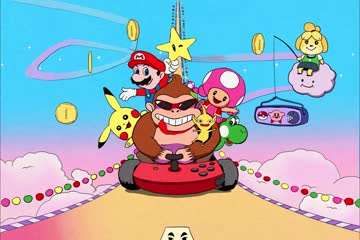
This singular focus on enjoyment has turned characters like Donkey Kong and Super Mario into cultural icons and the 136-year-old company into a global gaming empire worth over $100 billion. The success also challenges the prevailing wisdom of how a gaming company should be run — including regularly-timed jumps to next-generation consoles to spur software sales.
Nintendo repeatedly pushed back plans for the Switch 2’s launch after its designers asked for more time to perfect the games that would accompany the new hardware, according to people familiar with the matter. While the later-than-expected release tested the patience of fans and frustrated third-party game publishers, the company decided that aiming for perfection was more important, the people said, declining to be named because the information was not public. Nintendo declined to comment for this story.
“Focusing relentlessly on gameplay, making sure you don't ship a game until it's great in your eyes. To me, these are things that really separate the company,” said Reggie Fils-Aimé, who was president of Nintendo of America until retiring in 2019.
Nintendo sold 6 million units of the $450 console over its first seven weeks on the market. The launch triggered a huge spike in sales at US retailers. GameStop Corp. Regional Director John Rezza said that in his 18 years of working for the electronics chain, no Xbox from Microsoft Corp. or PlayStation from Sony Group Corp. could elicit the excitement he saw for the Switch 2. “Nintendo fans are more passionate than others,” he said.
This was despite the Switch 2 being an improved, rather than radically different, version of the earlier model. While competitors have chased greater realism and flashier visuals, Nintendo has steadfastly stayed out of the race for the best graphics and display technology. At the launch, fans didn’t seem to mind.
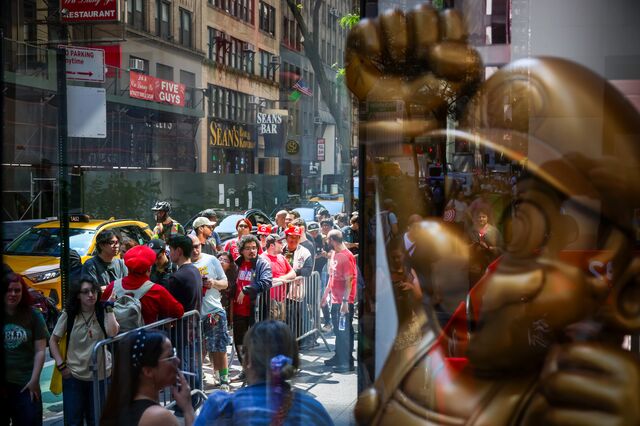
“It’s a polished version of what I have,” said Jovan Comeaux, 34, who lined up outside a GameStop in New York’s Union Square before the launch. He wore a custom jacket inspired by Pokémon’s Pikachu. Rolando Silva, another fan, acknowledged the console’s steep price tag but said it was still worth it. “If this will be anything like the Switch, I’m super excited for it,” he said.
Nintendo’s appeal, though, goes beyond hardcore fans. Following the success of The Super Mario Bros. Movie, which grossed nearly $1.4 billion in theaters after its 2023 release, the third Super Nintendo World theme park attraction opened this year at Universal Orlando Resort. Another is set to open in Singapore, and more films are in development. At home in Kyoto, the company has established a museum and its former headquarters is now a boutique hotel.
The company’s philosophy is rooted in the principles of Hiroshi Yamauchi, the founder’s great-grandson who is credited with transforming a playing-card business into a digital powerhouse over his half-century leadership stint. After joining Nintendo in 1949, he tried his hand at an eclectic mix of ventures including food, stationery and taxi services.
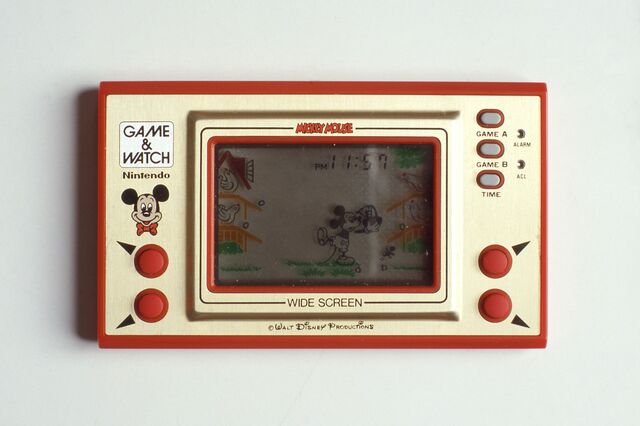
In the late 1970s, indebted and needing new direction, Yamauchi gave the go-ahead for an engineer, Gunpei Yokoi, to develop a handheld gaming device. That calculator-sized gadget, dubbed the Game & Watch, was a success, and Yokoi said it allowed Nintendo to develop its first-ever home video game console, known in the US as the Nintendo Entertainment System. It followed up with the portable Game Boy.
“He (Yamauchi) basically bet on one horse and earned a bit of money, and then used all those earnings to bet on the next horse, and that happened again and again,” Yokoi wrote in a magazine essay in 1996, soon after he quit and a year before his death in a traffic accident. He described his former boss as a “real gambler.”
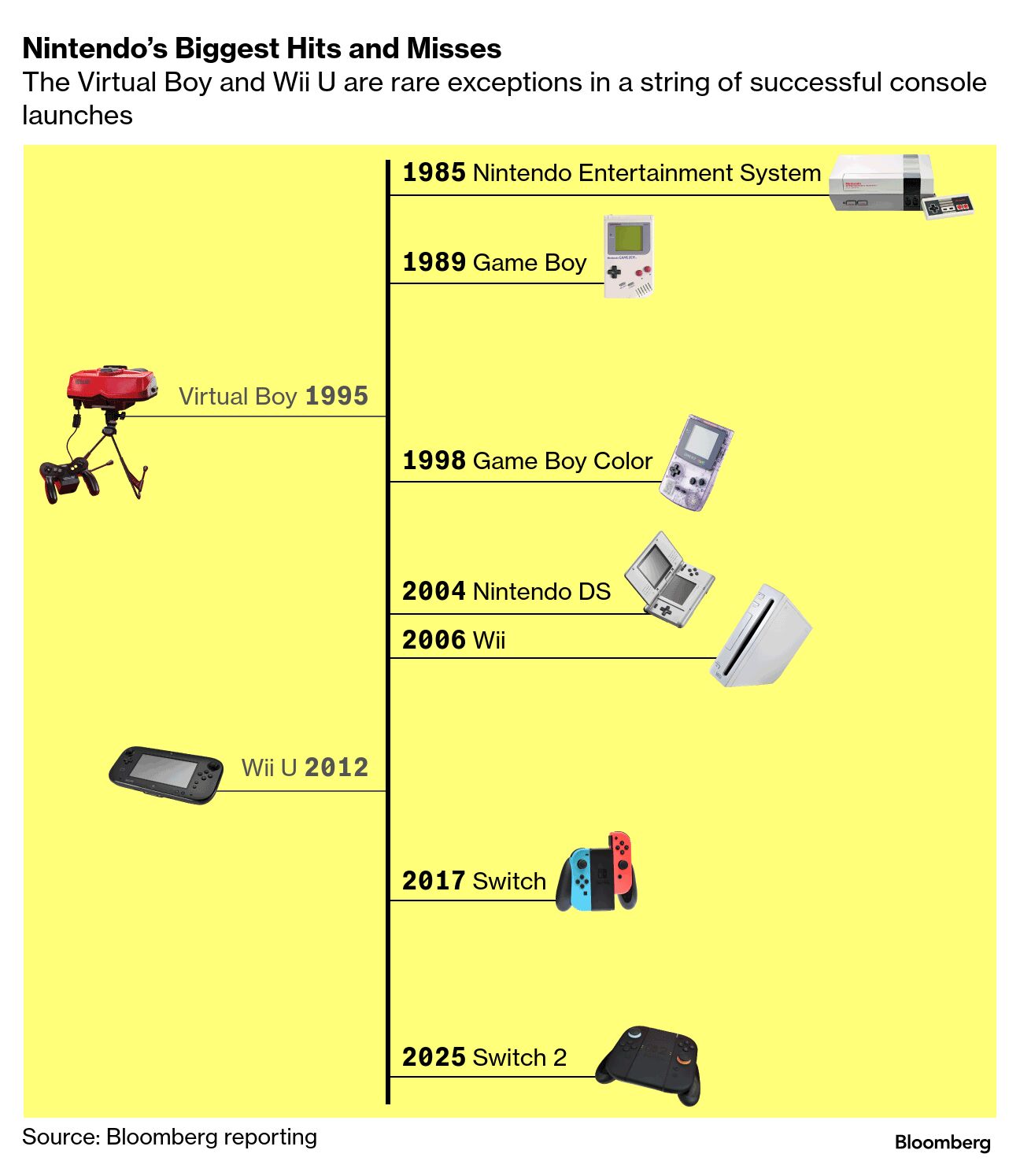
Yamauchi encouraged Nintendo’s creators including Shigeru Miyamoto, revered by fans as a god of gaming for developing classics such as The Legend of Zelda and Pikmin, to keep making big bets. This approach could at times prove disastrous, as with the 1995 Virtual Boy, a bulky 3D device meant to be worn on the head.
This experience of hits and misses made Yamauchi wary of celebrating success. Until his death in 2013, he would be heard telling staff to eschew self-congratulatory behavior, as breakthroughs could easily be followed by failure.
Nintendo’s Biggest Hits and Misses
The Virtual Boy and Wii U are rare exceptions in a string of successful console launches
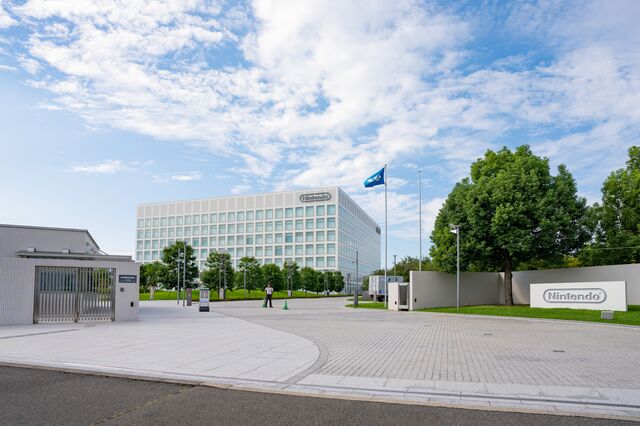
That mindset continues to permeate Nintendo’s headquarters, tucked away in a quiet neighborhood in Kyoto. The ancient Japanese capital is far removed from video game hubs like Tokyo and Los Angeles, and is known more for its traditional architecture, crafts and cuisine than technological advances.
Current and former employees often remark on the austerity of the company’s offices. Visitors expecting to see life-size figures of Mario or Zelda’s Link are disappointed. One employee explained that’s because modesty is encouraged. Another recalled that a request to replace a faulty keyboard was turned down by management, which told him to be resourceful.
Meanwhile, Nintendo is also one of the most cash-rich companies in Japan. People familiar with the company say Yamauchi was determined to have sufficient reserves to withstand the industry’s inevitable downturns — a policy that has endured long since he fully retired in 2005.
Nintendo’s Exceptionally Large Rainy-Day Fund
Its cash hoard, relative to sales, is an industry outlier
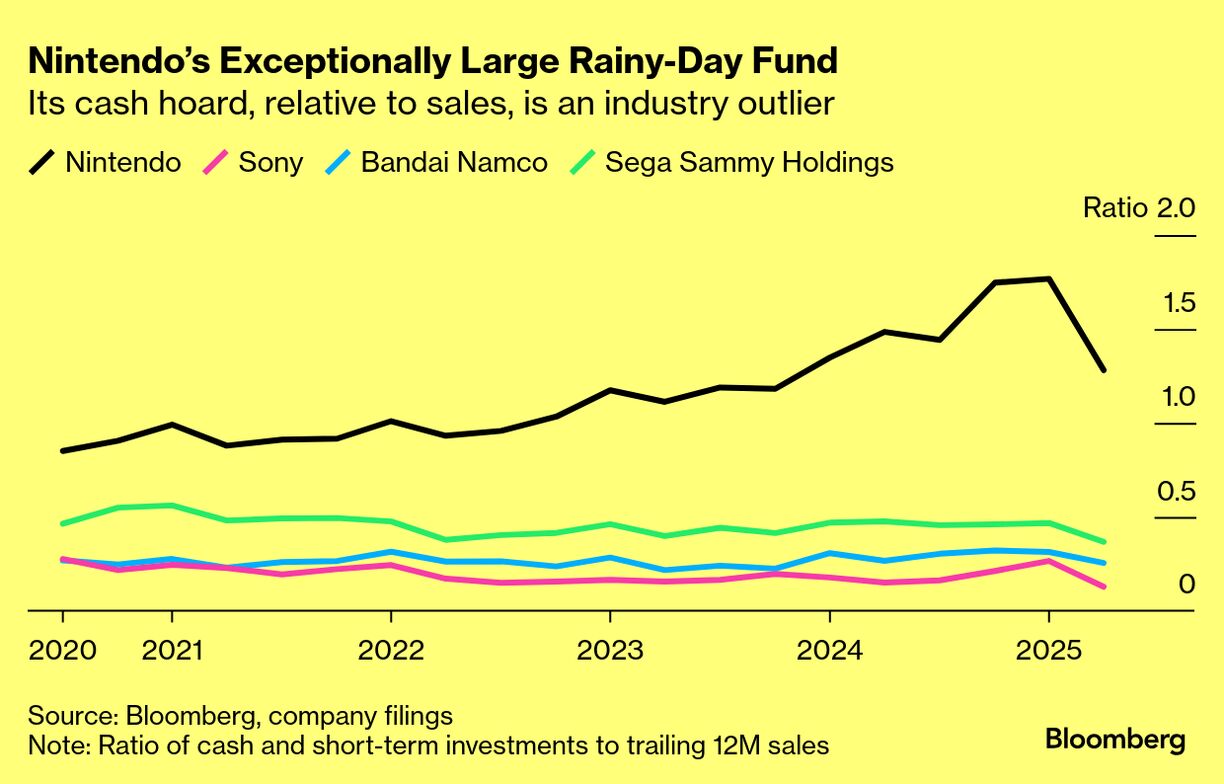
This buildup of cash goes against a government-backed initiative among Japanese companies toward greater capital efficiency through investments. Foreign investors, including activist funds, have demanded that Japanese firms boost shareholder returns via buybacks and dividends, and companies have begun complying in recent years. Institutional investors say Nintendo’s cash-to-sales ratio stands out. “I do think there’s room for improvement in terms of capital allocation,” said Hisashi Arakawa, head of equities at Aberdeen Investments, which has funds invested in Nintendo.
Yet at Nintendo’s annual shareholder meeting in Kyoto in late June, most of the dozen or so retail investors interviewed by Bloomberg sided with management. “I would prefer a rise in the stock price to more dividends,” said Isao Okada, an 84-year-old pensioner from neighboring Nara prefecture. He’d bought the shares several years ago when they were around ¥5,000 apiece. As he spoke, they were trading above ¥13,600.
Nintendo Outperforms Other Japanese Stocks
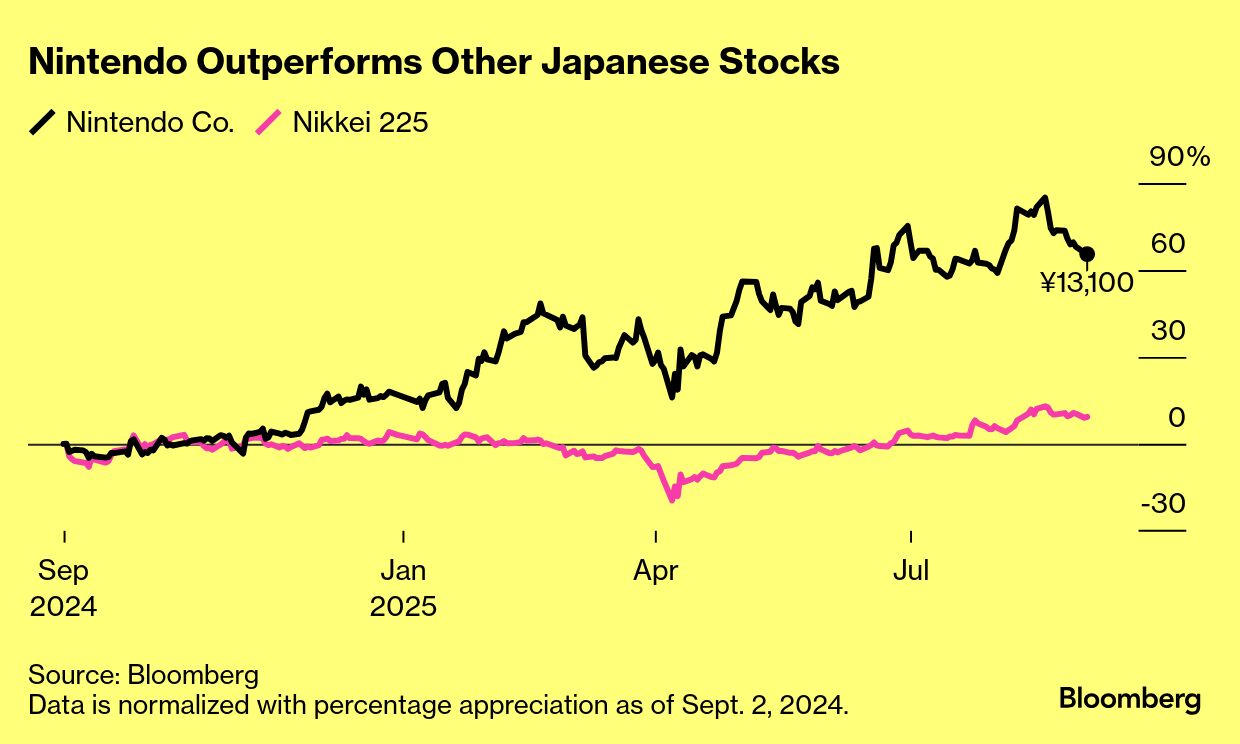
Nintendo’s cash pile, now about ¥1.5 trillion and around 120% of sales, helped it through the lean years following commercial misses like the GameCube and Wii U. It also provided a safety cushion for creators to undertake long-term projects.
“Because Nintendo has a lot of cash, people like Miyamoto can pursue bold challenges without worrying about damaging the company’s health,” said Hirokazu Hamamura, former editor-in-chief of Japan’s popular video game magazine Famitsu who now works for the online ZEN University.
Along with Miyamoto, veteran programmer Satoru Iwata, who took over the company’s leadership from Yamauchi in 2002, is credited with launching some of its most commercially successful consoles. The Wii, released in 2006, broke new ground with motion controllers that could be used as a tennis racket, bowling ball or baseball bat, and the games were designed to encourage social play.
It was a rejection of the graphics arms race and the growing popularity of violent shooting games. It was also the best example of Iwata’s “blue ocean” strategy, which sought to expand the audience rather than fight for a slice of it. Iwata, who died of cancer in 2015, emphasized the importance of providing the unexpected.
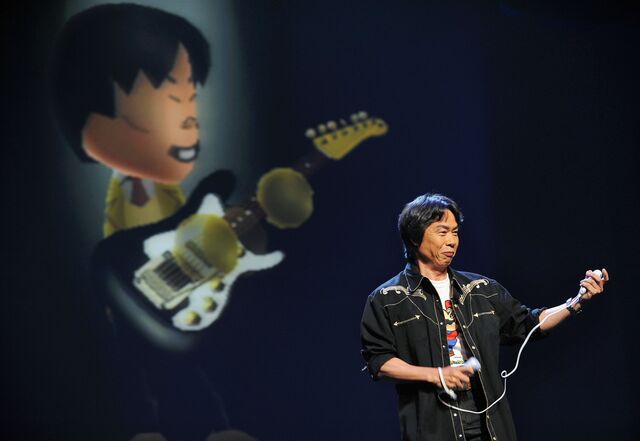
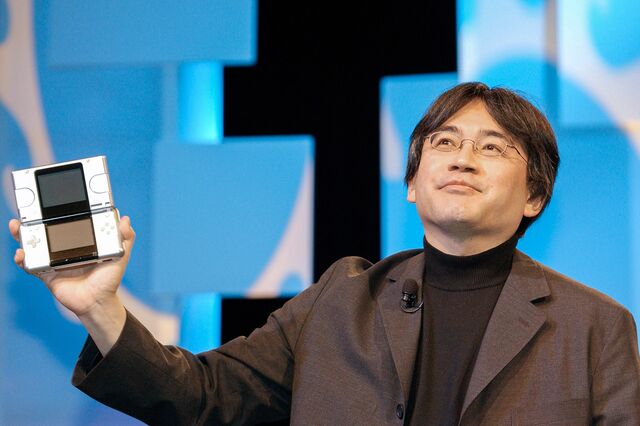
“Because they’re not essential to life, games need to deliver a surprise. And surprise, at its core, means originality,” said Shinichiro Tamaki, a former Nintendo programmer who was a member of the Wii development team.
Nintendo did occasionally try to embrace trends, including its 2016 foray into smartphone games. Pokémon Go, developed by an affiliate with Google-spinoff Niantic Inc., became a global phenomenon.
But its other mobile games went nowhere, and the company made little effort to disguise its discomfort with working on hardware platforms controlled by others. Nintendo also balked at the so-called freemium pricing model, which combines a $0 entry fee with pricey in-game upgrades.
Nintendo largely abandoned its mobile ventures after the Switch got off to a sizzling start in 2017 with the critically acclaimed The Legend of Zelda: Breath of the Wild. A string of other popular franchises, including Splatoon and Pokémon, followed. Animal Crossing: New Horizons, in which players move into an island populated by charming animal characters, became a hit during the pandemic, offering an escape from the chaos of the real world.
This caught some in the industry by surprise, as many found the Switch hardware, particularly its display, underwhelming. Tsunekazu Ishihara, the chief of affiliate The Pokémon Co., even predicted it would fail because smartphones were taking over. He later admitted that he’d underestimated that “software with absolute quality leads to sales of hardware.”
Nintendo employees say such quality comes from a workplace that’s the best in the industry for promoting creativity, even if it appears drab to those accustomed to Silicon Valley-style offices. The company’s staff turnover rate of 1.9% is exceptionally low, even by Japanese standards.
“Miyamoto refers to his team members as apprentices,” Hamamura said. “There's a sense of craftsmanship, almost like a traditional apprenticeship system, where skills and values are passed down through hands-on practice.”
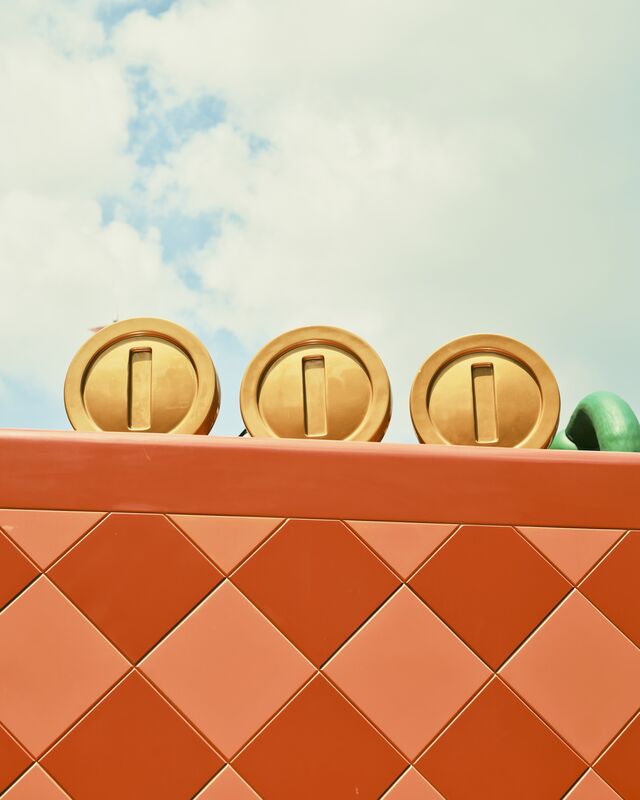

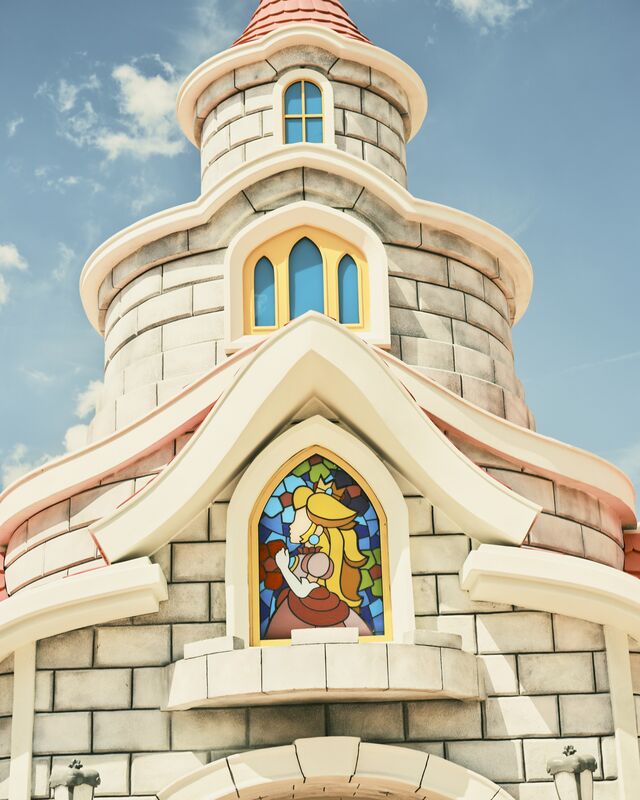
The company works with third-party publishers like Bandai Namco Holdings Inc. and Capcom Co., but its most popular games have always come from within its own studios. Developers say Nintendo sees itself as having higher quality standards than others. Even competitors acknowledge there’s some truth to this, noting the famously rigorous standards of Mario Club Co., a subsidiary in charge of quality assurance and debugging.
“Critics often say that only Nintendo games sell well on its platforms,” said Naoko Kino, who used to work for PlayStation and now runs her own game-development support company. “That’s natural, because Nintendo games are the best.”
Within the industry, many see Nintendo’s indifference to competition and its limited relationship with third-party developers as aloofness, comparable with the popular perception of Kyoto residents: reserved, tradition-bound, and subtly condescending toward outsiders. But those familiar with Nintendo argue that the company is simply trying to remain distinct.
When asked about the source of his creativity, Miyamoto, now 72 and a creative fellow at the company, has often referred to his childhood in rural Kyoto. His days spent climbing trees and exploring caves inspired him to create works that offer a sense of adventure and discovery through trial and error.
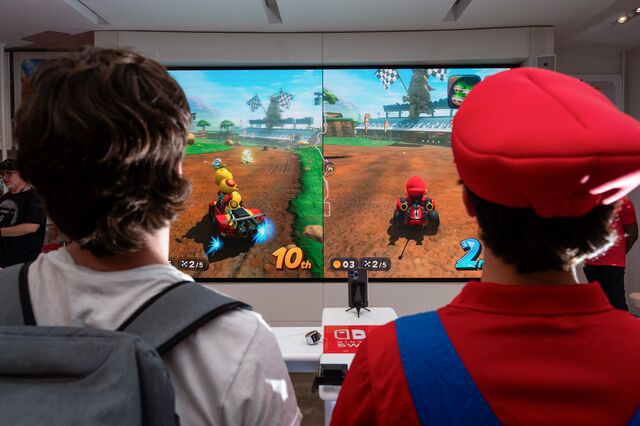
The company’s games are renowned for their playful spirit, but it’s their well-crafted core mechanics that give them life. The feel of Mario’s jumps, or the satisfaction of Splatoon’s ink-shooting and swimming, anchors the games in a familiar reality. In Switch 2’s Donkey Kong Bananza, players chase hammock-sized bananas with the help of a sidekick whose singing breaks magical seals. It’s a zany, frivolous plot where the gorilla’s punch action turns into a high-five near fellow apes, but it’s still based on recognizable physics. The gratification that players get from such interactions is a key reason many get hooked.
The company is also working on quirky new accessories. A patent filing published in August describes a fishing rod attachment in the works, showing Nintendo pursuing more ways to play rather than simply increasing processing power.
“Nintendo is best in the industry when it comes to blending fiction and reality in a game, which is one secret for helping consumers feel a sense of ease while also having the joy of some surprises,” said Hisakazu Hirabayashi, a game consultant.
It’s unclear, though, how long Nintendo’s go-it-alone strategy will continue working in its favor. As Yamauchi often cautioned his charges, the entertainment industry is fickle and success can be a matter of timing.
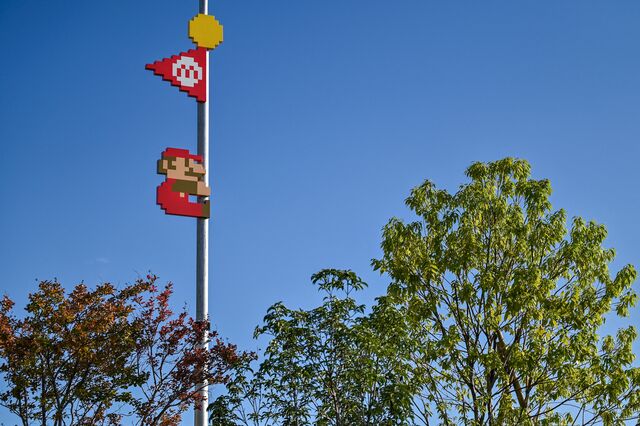
While Nintendo seeks to cash in on existing fans with growing forays into cinema and theme parks, the rest of the industry is investing in new IP and luring consumers to subscription platforms that are fundamentally changing how gamers spend their time and money.
“There’s an absolute oversupply of content, on every single platform,” Tokyo-based industry analyst Serkan Toto said. “You have the forever games: Fortnite, Minecraft, Roblox. And things like Netflix and TikTok, these weren’t around 10 years ago.”
Inside Nintendo, that’s seen as all the more reason to keep focusing on creativity over trends and technology. Former Wii engineer Tamaki says he still remembers Iwata emphasizing to him and other young developers the importance of doing things differently and taking on risks.
“It’s usually the other way around: Young people are full of energy and ideas, and middle management or executives tend to shut them down,” he said. “But at Nintendo, when we’d look around and say things like, ‘Sony is doing this, maybe we should too?’ the vibe from executives would be, ‘let them do their thing — we’re doing ours.’”