
UK Tories Fail to Deliver on Levelling Up Promises in Scotland
Scotland is losing versus London on pay, productivity and well-being, as the country’s nationalists prepare for a new leader this month
The Conservative Party’s pledge to “level up” disadvantaged parts of the UK has shown scant reward in Scotland, undermining a promised Brexit dividend and key pillar in the government’s strategy to counter pro-independence forces.
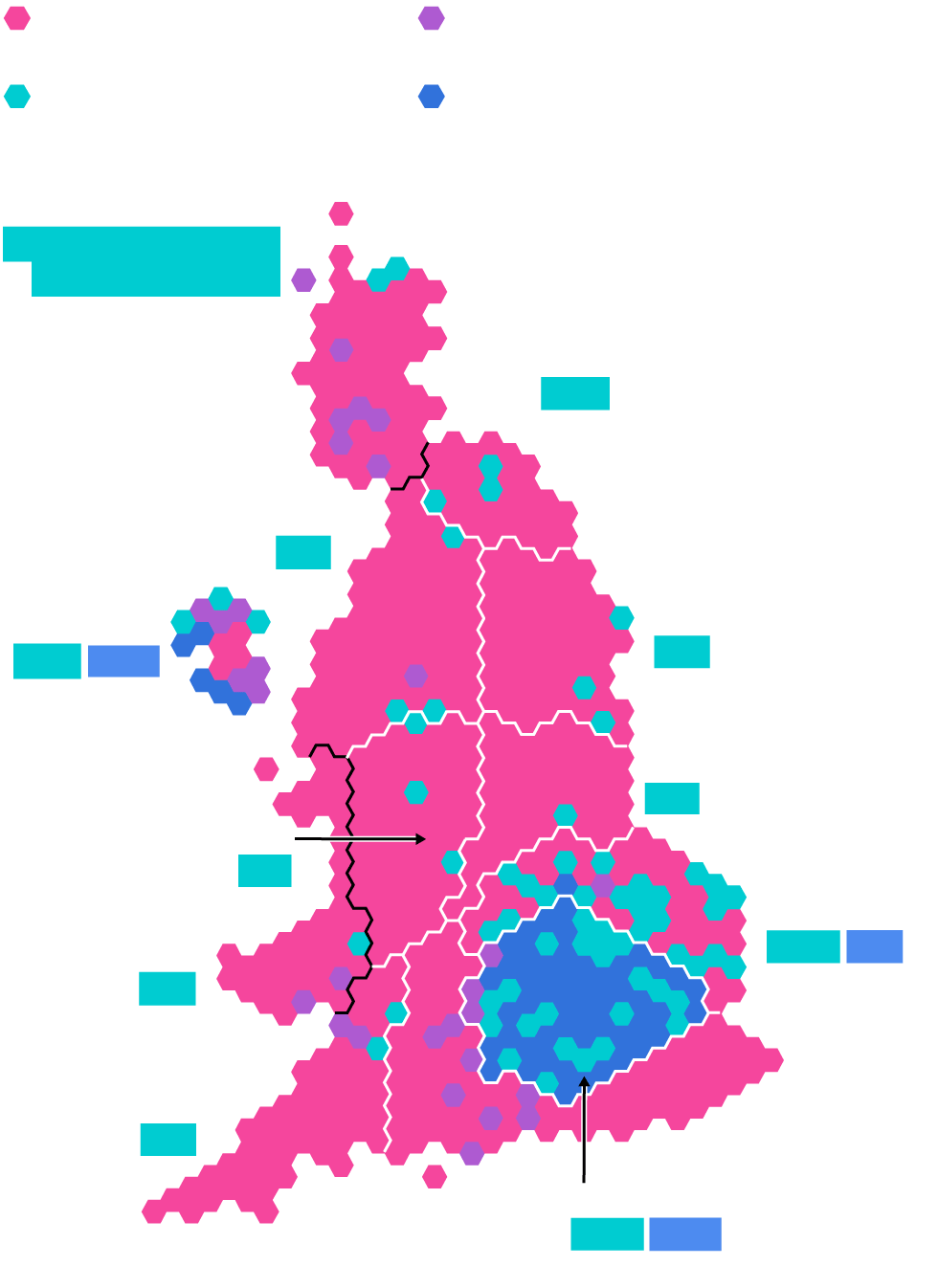
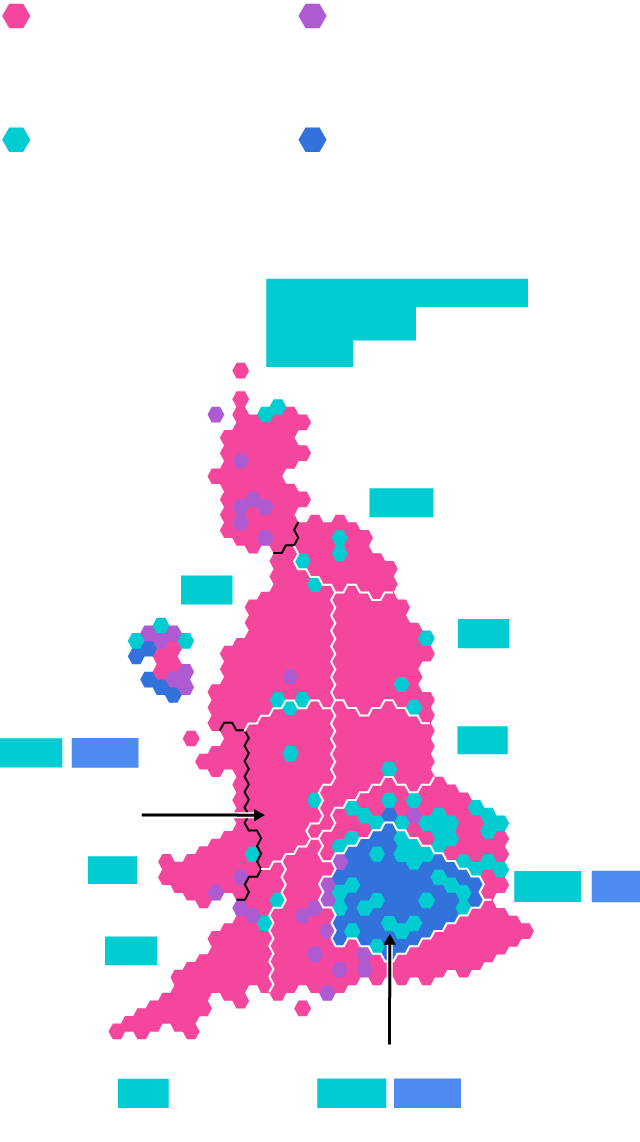
When measured against London and the wealthy South East of England, nearly all of Scotland’s 59 Westminster constituencies are falling further behind, according to Bloomberg UK’s Levelling Up Scorecard. The Scorecard tracks 12 key socioeconomic metrics measuring the success of the levelling up promise made by Boris Johnson at the 2019 UK general election.
Scotland Constituencies Among the Least Likely to Level Up

Behind in 2019 and falling or unchanged
Ahead in 2019 but falling or unchanged
Behind in 2019 but levelling up
Ahead in 2019 and gaining
Scotland
3% of constituencies
levelling up overall
NORTH EAST
10%
North WEST
4%
Northern
Ireland
Yorkshire and
The Humber
6%
28%
17%
East Midlands
2%
West Midlands
5%
East of
England
38%
2%
Wales
3%
South West
4%
South East
No overall levelling up
London
29%
levelling up
67%
gaining
Ahead in 2019
but falling or unchanged
Behind in 2019
and falling or unchanged
Ahead in 2019
and gaining
Behind in 2019
but levelling up
Scotland
3% of constituencies
levelling up overall
NORTH EAST
10%
North WEST
4%
Yorkshire and
The Humber
6%
Northern
Ireland
17%
28%
East Midlands
2%
West Midlands
5%
East of
England
38%
2%
Wales
3%
South East
No overall
levelling up
South West
4%
London
29%
levelling up
67%
gaining
Ahead in 2019
but falling or
unchanged
Behind in 2019
and falling or
unchanged
Ahead in 2019
and gaining
Behind in 2019
but levelling up
Scotland
3% of constituencies
levelling up
overall
NORTH EAST
10%
Yorkshire
and The
Humber
6%
North WEST
4%
East
Midlands
2%
Northern
Ireland
17%
28%
West
Midlands
5%
East of
England
38%
2%
Wales
3%
South
East
No overall
levelling up
South West
4%
London
29%
levelling up
67%
gaining
The widening wealth disparity and the negative impacts of Brexit are often invoked by the Scottish National Party — which will elect a new leader on March 27 following the surprise resignation of Nicola Sturgeon — as reasons for Scotland to seek independence. Scotland voted against leaving the European Union and the SNP argues the country is held back by the Conservative administration in Westminster.
In the wake of Brexit, Sturgeon and her administration in Edinburgh have been demanding another referendum on full autonomy for Scotland. London is refusing to allow one, and Prime Minister Rishi Sunak’s Tories are arguing that the nation remains better off in the three-centuries-old United Kingdom as it goes it alone outside the EU.
However, the Tories’ levelling up project has been blown off course by a combination of political chaos, inaction and insufficient funds dedicated to the effort. Meanwhile, Brexit has exacerbated labor shortages in the economy and introduced new trade frictions with the EU.



The Levelling Up Scorecard data shows Scotland’s advantage over other parts of the UK in areas such as home affordability and public spending is shrinking. The extra amount of total government spending per person that Scotland received relative to London fell from £593 in the 2019 fiscal year to £157 two years later.
Pay and productivity in Scotland is also lagging. Productivity, measured as gross value added per job, actually fell by nearly 8% in Scotland since 2019, more than any UK region other than the West Midlands and East of England.
These drags are evident when looking at Glasgow, Scotland’s largest city and somewhere that backed independence in a 2014 referendum when the nation of 5.5 million people voted 55% to 45% to stay in the UK. All seven of Glasgow’s Westminster constituencies have seen their relative position worsen since 2019. Looking specifically at Glasgow Central shows that, in addition to pay and productivity, the area is also doing worse on the number of Universal Credit recipients, high-speed broadband coverage, and the results from a UK-wide well-being survey. Civil service employment is one of the few metrics where Glasgow is faring better, and actually pulling ahead.
Levelling Up Scorecard: Glasgow Central
Progress has generally been made on bringing down crime — four of the top-10 safest constituencies in the UK are in Scotland, the rest in Northern Ireland — and increasing foreign investment. These two metrics were crucial for the only two constituencies that are levelling up overall: Banff and Buchan, as well as Gordon, both on the outskirts of Aberdeen, center of the North Sea oil industry.
Levelling Up Scorecard: Gordon
To be sure, the SNP’s critics say Scotland’s poorer performance is also evidence of the party’s failings running the devolved government, which has power over areas such as health, education, transportation, justice and some economic and tax policy. Opponents say it’s too focused on securing independence, to the detriment of public services.
The SNP finds itself at a crossroads after the resignation of Sturgeon, its leader and head of the Scottish government since shortly after the independence referendum in 2014. Bookmakers put Humza Yousaf, who served as Sturgeon’s health and social care secretary, as favorite to succeed her, though a recent poll showed the race was neck and neck with Kate Forbes, who runs Scotland’s finances.