

‘We Are Being Levelled Down’: Why the UK’s Wealth Gap Is Widening
Spiralling costs and government inertia are blamed for delays in levelling up projects designed to reduce inequality across the country
Derelict for more than 15 years, the Moat Street Works, a former lock and key factory in Willenhall, is a graffiti-daubed microcosm of the government’s stalled pledge to “level up” the UK. Funding for its redevelopment was delayed by political chaos in late 2022 which saw three prime ministers in five months, its budget was squeezed by double-digit inflation and the project was slowed by a lack of planning reform.
“It shouldn’t be like this,” said Adrian Andrew, the Conservative deputy leader of Walsall Council, pointing to swathes of overgrown bushes and rubbish behind a metal fence at Moat Street. “There’s so much to do.”
Willenhall, a town of almost 30,000 people north of Birmingham, backed Brexit in the 2016 referendum and is exactly the type of area targeted by Boris Johnson’s pledge to level up the country, which helped him to a landslide victory in the 2019 general election.
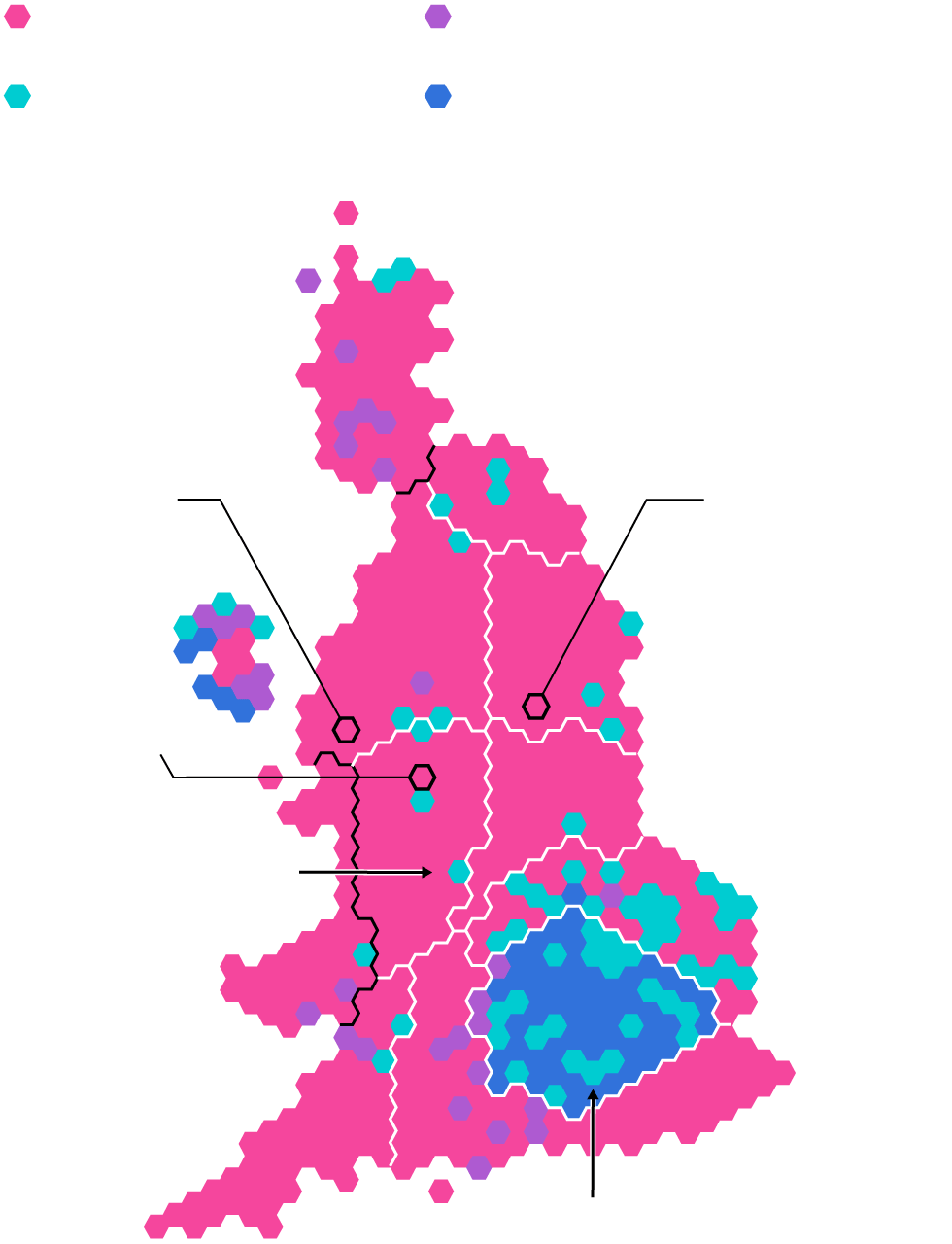
That promise has been inherited by Prime Minister Rishi Sunak, whose government is under growing pressure to prove to voters that levelling up is more than just an election slogan. Bloomberg’s Levelling Up Scorecard shows that the bulk of the UK — including Walsall North, the constituency that covers Willenhall — has fallen further behind the country’s richest region of London and the South-East since 2019.
Levelling Up Scorecards: Walsall North and Liverpool Riverside
The Moat Street project — part of a successful £20 million levelling up bid — is not unique. Headwinds such as inflation are making the task even harder. In Liverpool, which has some of the most deprived areas in the UK in terms of income, employment and health, the cost of a major regeneration effort in the city — which was allocated £10 million of levelling up funding from the government in 2021 — has increased by more than a third. Factors such as rising energy costs linked to Russia’s war in Ukraine have been blamed for the hike from £11.1 million to £15 million.
The cash shortfall is “one of the biggest risks to the project,” said Rowena Dean, head of development at National Museums Liverpool, explaining the plan to renovate derelict buildings, fix a broken bridge and restore the Canning Dock, which was opened in 1737 and used in the slave trade. Dean said they need more funding to complete the work and have asked for an extra £2 million from the local council. “It’s a massive challenge,” she said, warning that the project could be delayed without extra funds.


In Halifax, West Yorkshire, the council was awarded £12.2 million in 2021 for a new leisure center. But the project has stalled because of spiralling costs. In the former industrial city of Sheffield, 30 miles to the south, planners are having to scale back a project to revamp the derelict former site of its castle, despite it receiving £20 million of government levelling up funding.
“Who could have foreseen the way construction costs have gone in the last 18 months?” said Sean McClean, director of regeneration and development at Sheffield City Council. “We’ve got Covid, Brexit, Ukraine.”
Levelling Up Scorecard: Sheffield Central
The opposition Labour Party estimated in November that at least £576 million had been lost nationally in levelling up funds due to inflation. A frustration to those on the front-line of projects is that the Conservative government isn’t providing extra funding to cover these costs. Michael Gove, the minister in charge of the policy, defended the position on Wednesday, saying there couldn’t be a blanket approach of giving more money.
“If I were to say now ‘There’s a huge additional sum’ that would be an incentive for people potentially to say we can ask for 5%, 10%, 15% more,” Gove said. “It’s important each individual project is looked at in its own way.”
It is not just external factors stymying levelling up. The leadership crisis in the Conservative Party in 2022 caused paralysis in Whitehall — there were four different levelling up secretaries in just four months — which coincided with delays to funding allocations. Legislation, which includes planning reforms that would help expedite projects such as Moat Street, was introduced in May 2022 but is not yet law.
London Pulls Further Ahead as Most of UK Struggles to Level Up

Behind in 2019 and falling or unchanged
Ahead in 2019 but falling or unchanged
Behind in 2019 but levelling up
Ahead in 2019 and gaining
Scotland
NORTH EAST
Sheffield
Central
Liverpool
Riverside
North
WEST
Northern
Ireland
Yorkshire and
The Humber
Walsall
North
East Midlands
West MidlandS
East of
England
WaleS
South West
South East
London
Ahead in 2019
but falling or unchanged
Behind in 2019
and falling or unchanged
Ahead in 2019
and gaining
Behind in 2019
but levelling up
Scotland
NORTH EAST
Liverpool
Riverside
Sheffield
Central
North
WEST
Northern
Ireland
Yorkshire and
The Humber
Walsall
North
East Midlands
West Midlands
East of
England
Wales
South East
South West
London

Ahead in 2019
but falling or
unchanged
Behind in 2019
and falling or
unchanged
Ahead in 2019
and gaining
Behind in 2019
but levelling up
Scotland
NORTH
EAST
Sheffield
Central
Liverpool
Riverside
North
WEST
North
WEST
Yorkshire
and The
Humber
Northern
Ireland
East
Midlands
Walsall North
East of
England
West
Midlands
Wales
South
East
South West
London
The geographic distribution of funding has also stoked anger. London and the South East has seen its advantage grow in areas such as spending on transport and overall public services since 2019, according to Bloomberg UK’s Scorecard — and the latest round of £2.1 billion of levelling up funds saw £360 million of the pot go to the UK’s wealthiest region. The Labour Party has accused the government of prioritizing areas with Tory MPs and the Conservative West Midlands Mayor Andy Street called the allocation system “broken”.
“It’s appalling that we don’t get what we should,” said Mazher Iqbal, a Labour councillor and co-chair of Sheffield’s transport, regeneration and climate policy committee. “We’re being levelled down.”


The amount being spent to revitalize disadvantaged parts of Britain is another source of anger.
The government has allocated £9.7 billion of levelling up funding since 2019. But between 2010 and 2020, annual funding from the national government to local councils in England fell from £41 billion to £26 billion adjusted for inflation — and the government’s critics say pots of levelling up funding since are scant compensation.
“That’s why we’re in the mess we’re in,” said Bev Craig, the Labour leader of Manchester City Council. “None of that money comes close to what was lost.”
The next general election is due within two years and the Conservatives are trailing 20-points behind Labour in many polls. Against that backdrop Sunak risks a major ballot-box backlash if he can’t convince voters he is delivering on levelling up.



Back in Walsall North, one of the first bricks to fall in the so-called Red Wall of former Labour seats that have flipped Conservative in recent years — the deputy council leader Andrew is optimistic. He ran the successful election campaign when the Tories won the seat from Labour in 2017 and hopes the electorate will give them credit for works underway, such as construction of a new train station in Willenhall.
“These are massive undertakings,” Andrew said, while diggers and excavators mixed lime into the soil of a former copper works site in the town, preparing the ground for a future business park — which is not a levelling up project — that is expected to support 1,000 jobs.
The cost of lime has increased from £99 per tonne to £280 per tonne over the last 15 months and the site is not expected to be completed until 2027. “Some of this stuff is difficult,” Andrew said. “It’s not going to happen overnight.”