
Brazil Is Embracing the Migrant Crisis That Everyone Else Wants to Avoid
Latin America’s largest economy is linking newcomers with jobs, while its neighbors and the US struggle with a migration surge that shows no signs of slowing.
Read a free translation of this story in Spanish or Portuguese.
Across the Americas, governments have deployed troops and erected barriers to try to stem what’s become an exodus of 7.7 million Venezuelans from the once-wealthy petro state.
In Brazil, they’re welcoming the newcomers with open arms.
Venezuelan migrants crossing the country’s northern border are greeted by officials waiting to process paperwork and visas; private recruiters offering jobs; a government providing airfare to relocate them to far reaches of the country.
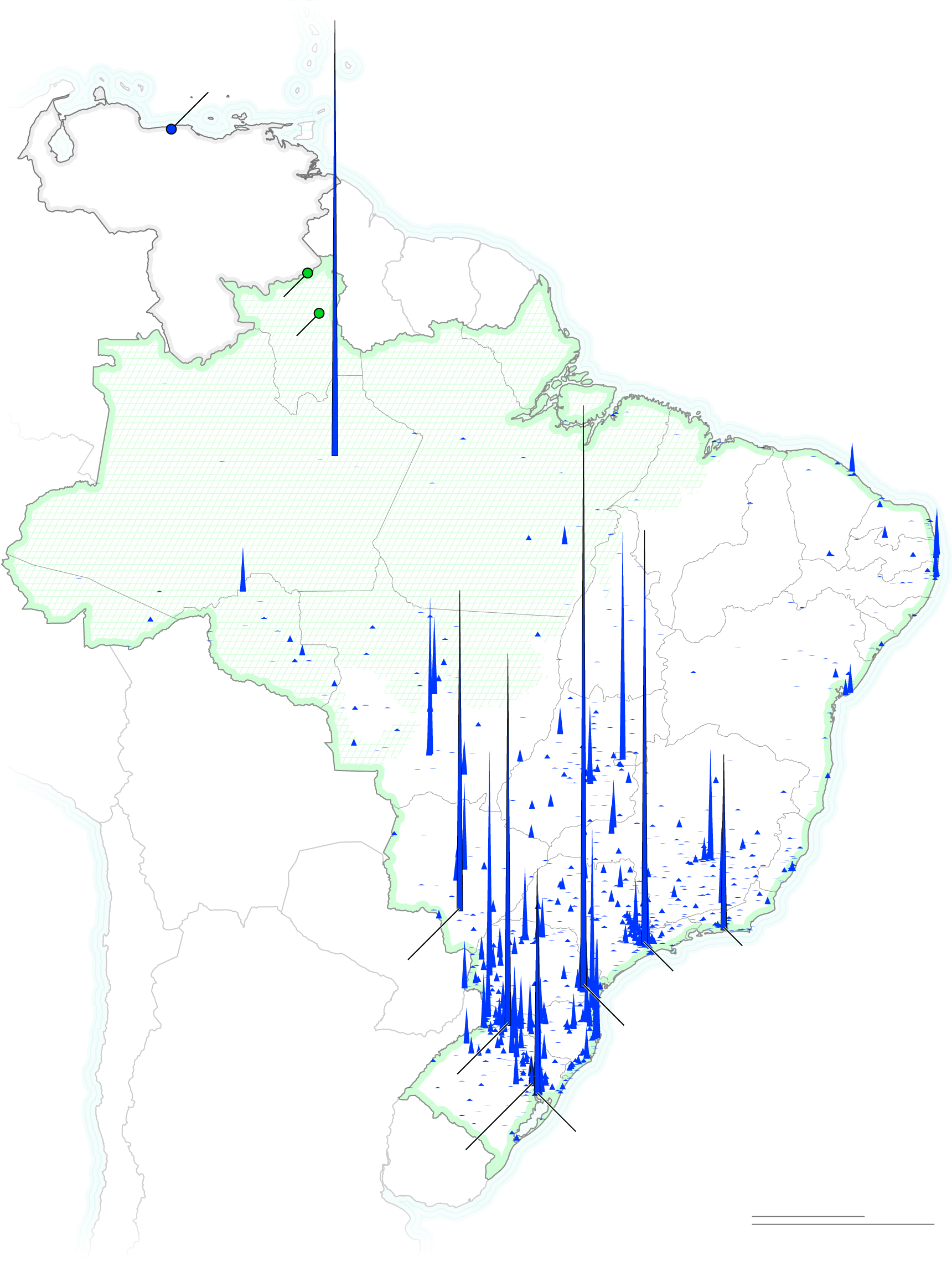
Most Migrants Are Relocated to Brazil’s Southern States
Caracas
VENEZUELA
Pacaraima
Boa Vista
5,400+
Manaus
AMAZON
RAINFOREST
BRAZIL
2,200+
Rio de Janeiro
4,000+
Dourados
5,100+
Sao Paulo
7,300+
Curitiba
4,600+
Chapeco
2,800+
Porto Alegre
300+
Montenegro
Caracas
VENEZUELA
Pacaraima
Boa Vista
5,400+
Manaus
AMAZON
RAINFOREST
BRAZIL
2,200+
Rio de Janeiro
4,000+
Dourados
5,100+
Sao Paulo
4,600+
Chapeco
7,300+
Curitiba
2,800+
Porto Alegre
300+
Montenegro
Caracas
VENEZUELA
Pacaraima
Boa Vista
5,400+
Manaus
AMAZON
RAINFOREST
BRAZIL
2,200+
Rio de Janeiro
4,000+
Dourados
5,100+
Sao Paulo
4,600+
Chapeco
7,300+
Curitiba
2,800+
Porto Alegre
300+
Montenegro

Caracas
VENEZUELA
Pacaraima
Boa Vista
5,400+
Manaus
AMAZON
RAINFOREST
BRAZIL
2,200+
Rio de
Janeiro
4,000+
Dourados
5,100+
Sao Paulo
4,600+
Chapeco
7,300+
Curitiba
300+
Montenegro
2,800+
Porto Alegre
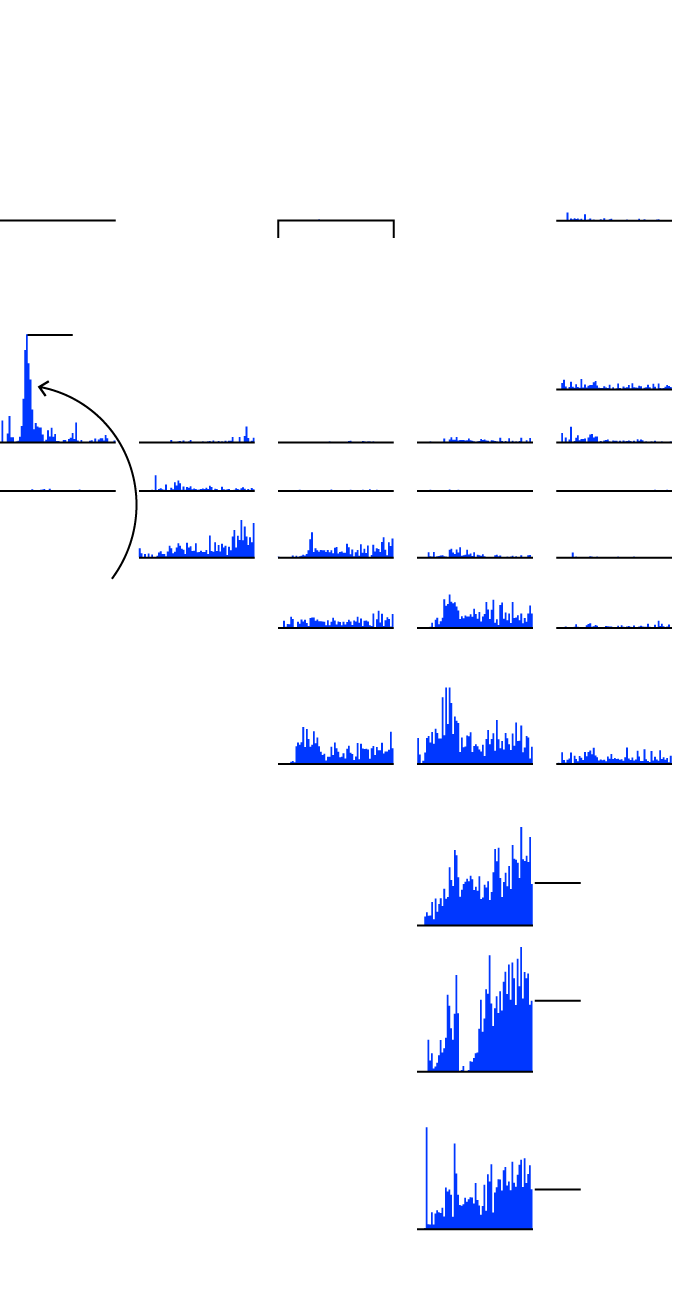
In doing so, Brazil is drawing migrants into its economy — filling many of the grueling jobs that its own citizens don’t want and powering its agricultural-exporting machine. The government has relocated more than 114,000 people, or about a quarter of the Venezuelans who have come to the country since 2018 — a clip of nearly 2,000 a month — primarily to the wealthy south, a historical center of agribusiness. The newcomers have taken up jobs in crucial sectors, including in the world’s largest meat-processing companies, or they’re connected with a sponsor or shelter to take them in while they look for work. It’s helping Brazil’s thriving agribusiness, as a country that’s already the top exporter of beef and chicken tries to cement itself as the world’s slaughterhouse.
For the migrants, the employment support offers a formal foothold in society. But the work is less than ideal: The days are long and arduous, and the jobs are located in remote parts of the country.
It raises larger questions about how governments should attend a humanitarian crisis that’s showing no signs of slowing. More than 260,000 Venezuelans made the perilous trek through the jungle, toward the US, during the first nine months of the year, according to Panama’s government. That tops the 150,000 who made the journey through the Darien Gap last year.

Rodriguez
San Felix
600km
VEN.
BRA.
Pacaraima
Stayed more
than two months
GOV. FLIGHT 3700km
Boa Vista
Stayed 15 days
Porto Alegre
Montenegro
He said he was tired of foregoing his dreams of becoming a mechanical engineer to put food on the table. “It was either eating or studying,” he said. “I prefer the former.”
“All my graduating class had gone already” to Brazil, he said. “The only one left was me.”
So he and his brother hitched a ride in the back of a semitruck and traveled for two days to the border town of Pacaraima, the main landing pad for migrants in the sparsely populated state of Roraima. There, they applied for a relocation program for Venezuelans, known as interiorização, or interiorization, that linked them with jobs at a meat-packing plant thousands of miles away.
Now settled in Montenegro, a small city in the south of Brazil, Rodriguez spends his days at a factory owned by JBS SA, the world’s largest meat supplier. The transition from fixing cars to packaging chickens wasn’t easy.
“When I first started, my hand swelled up like this,” he said, opening his fingers on the opposite hand wide enough to catch an apple. “It’s a lot of pressure.”
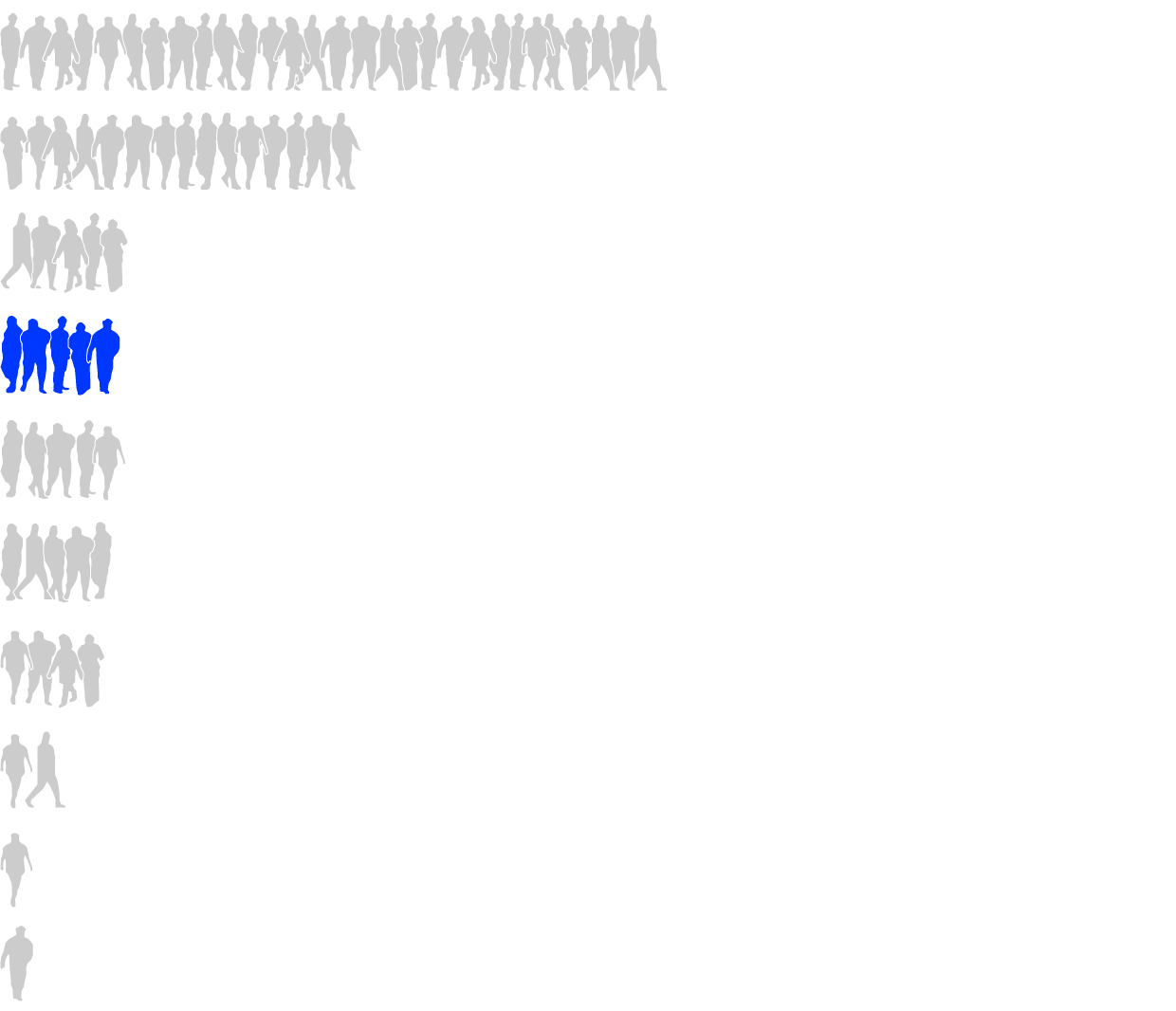
Government efforts to connect migrants or refugees with jobs is typically seen in more developed economies than Brazil. Denmark and Germany have used programs to varying success to try to integrate millions of displaced Syrians and Ukrainians. But more people have left Venezuela than in either of those war-torn nations.
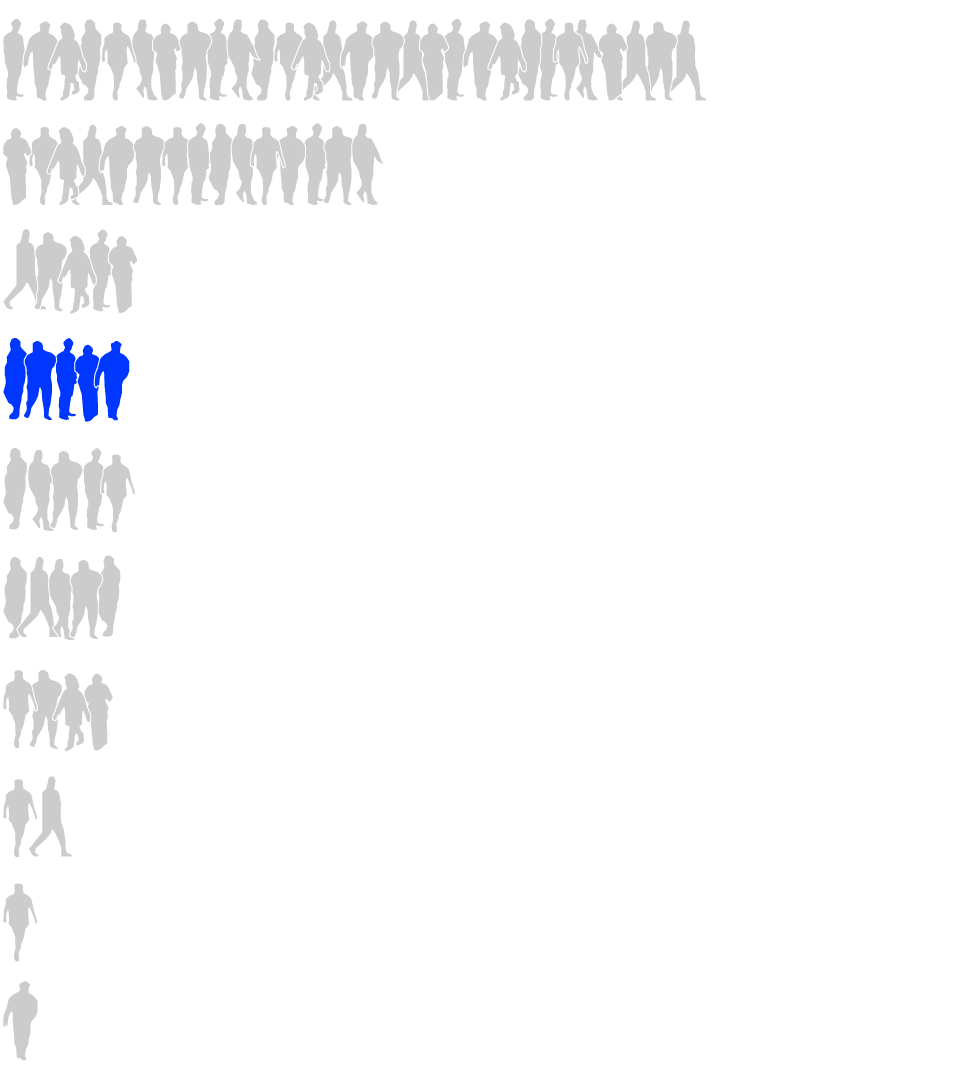
Brazil Has the Fourth-Largest Number of Venezuelan Migrants
2.9M COLOMBIA
As of October 2022
1.5M PERU
June 2023
545,200 US
September 2021
477,500 BRAZIL
March 2023
474,900 ECUADOR
June 2023
447,400 SPAIN
June 2022
444,400 CHILE
December 2021
220,600 ARGENTINA
August 2022
124,100 DOMINICAN REPUBLIC
June 2023
113,100 MEXICO
June 2023
2.9M COLOMBIA
As of
October 2022
1.5M PERU
June 2023
545,200 US
September 2021
477,500 BRAZIL
March 2023
474,900 ECUADOR
June 2023
447,400 SPAIN
June 2022
444,400 CHILE
December 2021
220,600 ARGENTINA
August 2022
124,100 DOMINICAN REPUBLIC
June 2023
113,100 MEXICO
June 2023

2.9M COLOMBIA
As of October 2022
1.5M PERU
June 2023
545,200 US
September 2021
477,500 BRAZIL
March 2023
474,900 ECUADOR
June 2023
447,400 SPAIN
June 2022
444,400 CHILE
December 2021
220,600 ARGENTINA
August 2022
124,100 DOMINICAN REPUBLIC
June 2023
113,100 MEXICO
June 2023
As Latin America’s largest economy expands its workforce, leaders in the US are locked in a vicious debate over how to attend a post-pandemic surge in migration from nations like Venezuela, Cuba, Nicaragua and Haiti. Record numbers of unauthorized people have tried to enter the US southern border under President Joe Biden, who has faced withering criticism from both sides of the political divide as he tries to revamp the federal response to asylum seekers.
Overwhelmed by the number of people arriving in border cities, some elected officials have opted to simply offload them on others. Republican governors in Arizona and Texas have bussed thousands of migrants to Democrat-led cities like Chicago, New York and Washington, DC. The predominately Venezuelan riders often lack support networks and papers to work formally, piling pressure on aid groups and cities’ emergency services. They often live in shelters and wait for months to secure work visas — if they even qualify for asylum, which can be a difficult bar to meet. The Biden administration in September granted about 500,000 Venezuelan migrants special status to legally work and live in the US for 18 months.
Migration experts say Brazil’s approach is unique because of the extent to which the government is trying to integrate the Venezuelan newcomers. The program has also survived three different administrations from right, hard-right to left.
“The approach is an investment that can generate returns,” said Pablo Acosta, the lead economist for the World Bank’s Social Protection and Jobs unit, who has studied and advised officials involved in the interiorization program.
Conversely, when a government doesn’t step in to aid migrants, that’s when they “become a burden. They are not contributing to the economy, and you have to maintain them in a sub-optimal area of the country, which can create problems,” Acosta said.
Moving South
Every day, hundreds of Venezuelans arrive to Roraima, which encompasses Brazil’s northern most savanna and Amazon rainforest. In late 2017, authorities declared a state of emergency as local services became inundated.
Opportunities are hard to come by, and shelter more so. Migrant families live in improvised tents in Pacaraima and the state’s capital, Boa Vista. Men try to pick up day gigs, while mothers and children beg at intersections. Locals have chafed from the flood of new arrivals and the friction has erupted in occasional bouts of violence.
The Brazilian government, with the support of UNHCR, the UN Refugee Agency, has tried to ease the strain on Roraima through Operação Acolhida, or Operation Welcome, its humanitarian response to the influx of people. Since 2018, it’s used the interiorization program to link participants with employers or sponsors or shelters with available space to take them in while they look for work. The program has also mitigated some of the tension as more Venezuelans enter Brazil through a state where resources and jobs are already in short supply.
Brazil’s Southern States Are the Top Destination for Migrants
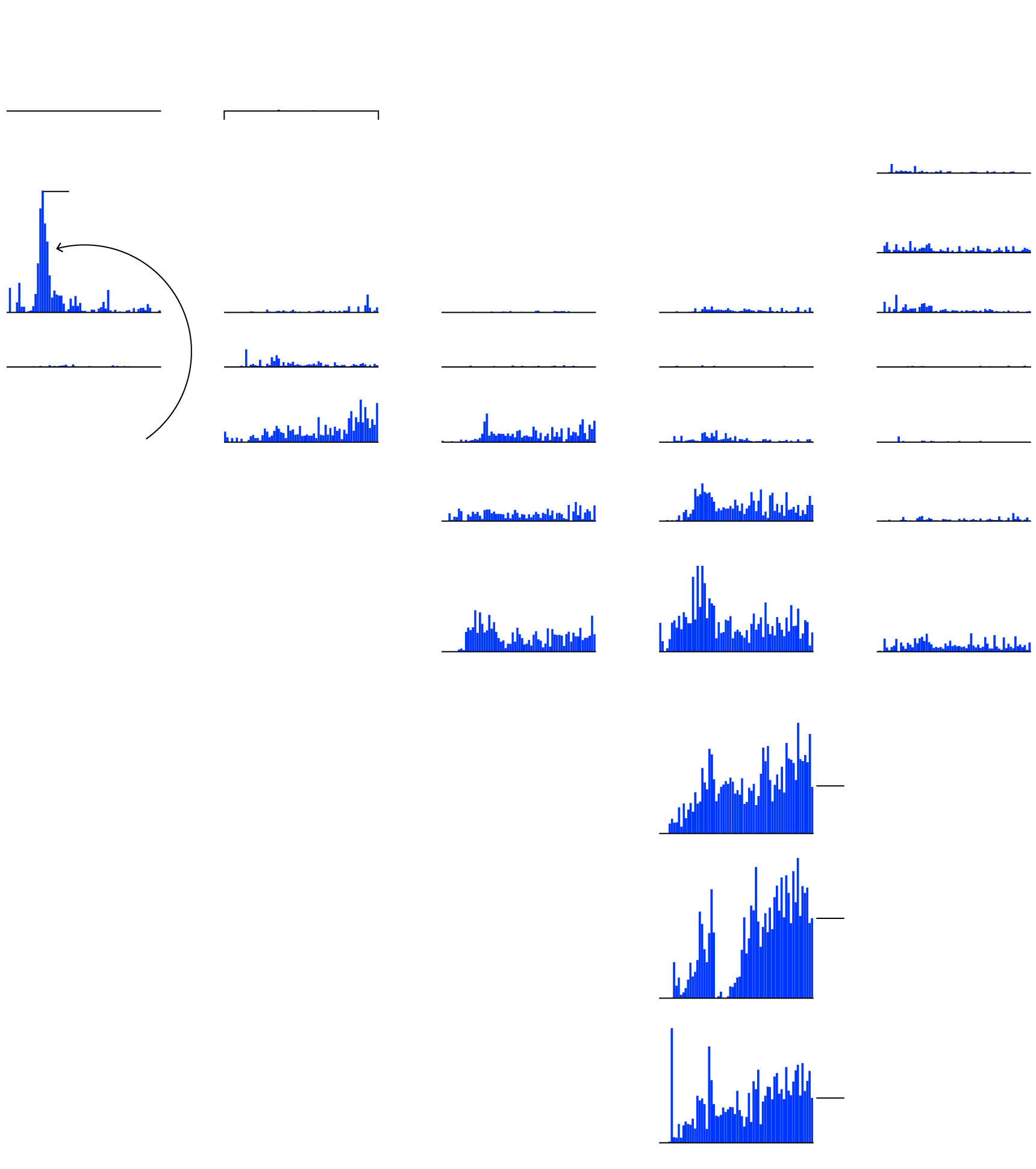
Roraima is the main entry point to Brazil; no migrants are relocated here
AMAPA
RORAIMA
APRIL
2018
SEPTEMBER
2023
838
relocations
in July 2019
RIO GRANDE
DO NORTE
PARAIBA
AMAZONAS
PARA
MARANHAO
CEARA
PERNAMBUCO
ACRE
RONDONIA
TOCANTINS
PIAUI
ALAGOAS
Many migrants were relocated to Amazonas because of its proximity to Roraima
MATO GROSSO
GOIAS
BAHIA
SERGIPE
ESPIRITO SANTO
DISTRITO FEDERAL
MINAS GERAIS
MATO GROSSO
DO SUL
SAO PAULO
RIO DE JANEIRO
+249%
in relocations to Parana, Santa Catarina and Rio Grande do Sul compared to late summer 2018
Brazil’s southern states are a top destination for migrants because of the economic opportunities available
317
relocations
in September
PARANA
548
SANTA CATARINA
306
RIO GRANDE DO SUL
Roraima is the main entry point to Brazil; no migrants are relocated here
RORAIMA
AMAPA
RIO GRANDE
DO NORTE
APRIL
2018
SEPTEMBER
2023
838
relocations
in July 2019
PARAIBA
AMAZONAS
PARA
MARANHAO
CEARA
PERNAMBUCO
ACRE
RONDONIA
TOCANTINS
PIAUI
ALAGOAS
Many migrants were relocated to Amazonas because of its proximity to Roraima
MATO
GROSSO
GOIAS
BAHIA
SERGIPE
ESPIRITO
SANTO
DISTRITO
FEDERAL
MINAS GERAIS
MATO GROSSO
DO SUL
SAO PAULO
RIO DE
JANEIRO
+249%
317
relocations
in September
in relocations to Parana, Santa Catarina and Rio Grande do Sul compared to late summer 2018
Brazil’s southern states are a top destination for migrants because of the economic opportunities available
PARANA
548
SANTA
CATARINA
306
RIO GRANDE
DO SUL
Roraima is the main entry point to Brazil; no migrants are relocated here
RORAIMA
AMAPA
RIO GRANDE
DO NORTE
APRIL
2018
SEPTEMBER
2023
838
relocations
in July 2019
PARAIBA
AMAZONAS
PARA
MARANHAO
CEARA
PERNAMBUCO
ACRE
RONDONIA
TOCANTINS
PIAUI
ALAGOAS
Many migrants were relocated to Amazonas because of its proximity to Roraima
MATO
GROSSO
GOIAS
BAHIA
SERGIPE
ESPIRITO
SANTO
DISTRITO
FEDERAL
MINAS GERAIS
MATO GROSSO
DO SUL
SAO PAULO
RIO DE
JANEIRO
+249%
317
in
September
in relocations to Parana, Santa Catarina and Rio Grande do Sul compared to late summer 2018
Brazil’s southern states are a top destination for migrants because of the economic opportunities available
PARANA
548
SANTA
CATARINA
306
RIO GRANDE
DO SUL
Roraima is the main entry point to Brazil; no migrants are relocated here
RORAIMA
AMAPA
RIO GRANDE
DO NORTE
APRIL
2018
SEPTEMBER
2023
838
relocations
in July 2019
PARAIBA
AMAZONAS
PARA
MARANHAO
CEARA
PERNAMBUCO
ACRE
RONDONIA
TOCANTINS
PIAUI
ALAGOAS
Many migrants were relocated to Amazonas because of its proximity to Roraima
MATO
GROSSO
GOIAS
BAHIA
SERGIPE
ESPIRITO
SANTO
DISTRITO
FEDERAL
MINAS
GERAIS
MATO
GROSSO
DO SUL
SAO PAULO
RIO DE
JANEIRO
317
+249%
in relocations to Parana, Santa Catarina and Rio Grande do Sul compared to late summer 2018
Brazil’s southern states are a top destination for migrants because of the economic opportunities available
PARANA
548
SANTA
CATARINA
306
RIO GRANDE
DO SUL
Read more: In Brazilian Backwater, Trapped Venezuelans Improvise New Lives
Companies are able to hire Venezuelans directly from Roraima. Migrants can apply at logistics centers for openings available around the country and conduct interviews via video calls. Meanwhile, officials near the border interview the loved ones already established in Brazil who offer to host the new arrivals.
Niusarete Lima, who coordinates interiorization at Brazil’s Ministry of Social Development, says the government’s strategy came from its experience a decade ago when thousands of Haitians began arriving on the western border following the 2010 earthquake that leveled much of Port-au-Prince. Many arrived without documentation and then fanned across the country searching for work.
The interiorization program helps normalize the process while not putting a burden on destination cities. When participants leave the border they “know exactly where they are going. And we accompany them, door-to-door,” she said.
To be eligible for interiorization, applicants are required to have completed vaccines and have their working papers in order. Migrants receive information about Brazilian labor laws, social services and their rights.
Once a contract is signed — or a sponsor is approved — the Brazilian government pays for a private flight or relocates migrants via military aircrafts.
“We notice in Brazil that immigrant integration seems to occur at a relatively more consistent and rapid level than in the United States,” said Jeffrey Lesser, a historian at Emory University.
Lesser says Brazil began to rely more on immigrants to fill jobs in the “corporate arena” after slavery was abolished in 1888. Immigration rules are also far less strict than in the US. In recent decades, Brazilian officials have given amnesty several times to groups of undocumented foreigners or those who overstayed visas, allowing them to obtain legal status.

Briceno
Maturin
800km
VEN.
Pacaraima
BRA.
Stayed three
months
Boa
Vista
GOV. FLIGHT 3700km
Porto Alegre
Montenegro
Arrived more
than a year
after crossing
into Brazil
He had first emigrated to Boa Vista in 2020 with $10 in his pocket, after the hotel where he ran security in the sticky oil city of Maturin closed. He picked up odd jobs in construction and metal work, but once his wife joined him, Briceno longed for more than a rented room and working under-the-table.
“There are so many Venezuelans and no real jobs,” he said of Boa Vista. “I couldn’t take it anymore.”
That’s why, in 2021, he and his wife applied for openings at the JBS chicken factory in Montenegro.
The factory covers more than half a square mile, encompassing a slaughterhouse, processing plants and distribution center, as well as an on-site library, cafeteria and bank for its over 2,500 employees. Nearly a tenth of the workforce, or 215 people, are Venezuelan. The figure seems set to keep growing.

Production in the sleepy town is crucial not just to JBS, which filed to list on the US stock exchange in July, but the broader economy in Brazil — which this year posted surprisingly strong growth in large part thanks to its agriculture sector. Some 412,000 chickens are slaughtered at JBS’s plant daily, and much of that food is shipped to countries in the Middle East.
‘Work, work, work’
Bloomberg toured JBS’s Montenegro plant in July. On site, signage displays the number of days without a major accident in bold magnetic numbers. Workers in jumpsuits and head coverings milled in and out of buildings as shifts changed over, or whiled away free time on their smartphones on park benches. A smell of fried chicken lingered over the property.
The tour coincided with a rotating JBS company culture day. A tent was erected on the factory lawn, where visiting motivational speakers tried to whip up tired crowds with speeches on values like humility and discipline.
The work is intense and highly physical. Schedules vary, with some working seven-and-a-half-hour shifts over six days, and others working eight-and-a-half-hour shifts over five days. Entry-level positions earn roughly 30% more than Brazil’s monthly minimum salary of 1,320 reais, or roughly $261. Some say far too much pressure is applied trying to hit production goals.
Still, with hunger and triple-digit inflation behind them, the Venezuelan newcomers describe their new lives in terms of elation and exhaustion.

Diaz
Caracas
1300km
VEN.
Pacaraima
BRA.
Spent five days
crossing border
due to Covid
controls
Boa
Vista
BUS
GOV.
Manaus
Arrived a week
after leaving
Boa Vista
GOV. FLIGHTS 2600km
Campinas
900km
Porto Alegre
Montenegro
The Caracas native uprooted his family during the pandemic, bussed across Venezuela and walked with his wife and children for long stretches until entering Brazil through its porous border, unchecked. The main entry point in Pacaraima was closed due Covid-19 controls. Once he resolved his papers, he enrolled in interiorization to connect with his mother in Montenegro.
Now filled out, the former hospital administrator laughs when describing days spent slicing chickens open on an assembly with night classes at a vocational school.
“It’s work, work, work, work, work and work,” Diaz said.
Representatives of JBS say employees stay an average seven years at the Montenegro plant. Local labor groups and current and former employees interviewed by Bloomberg describe much faster turnover.
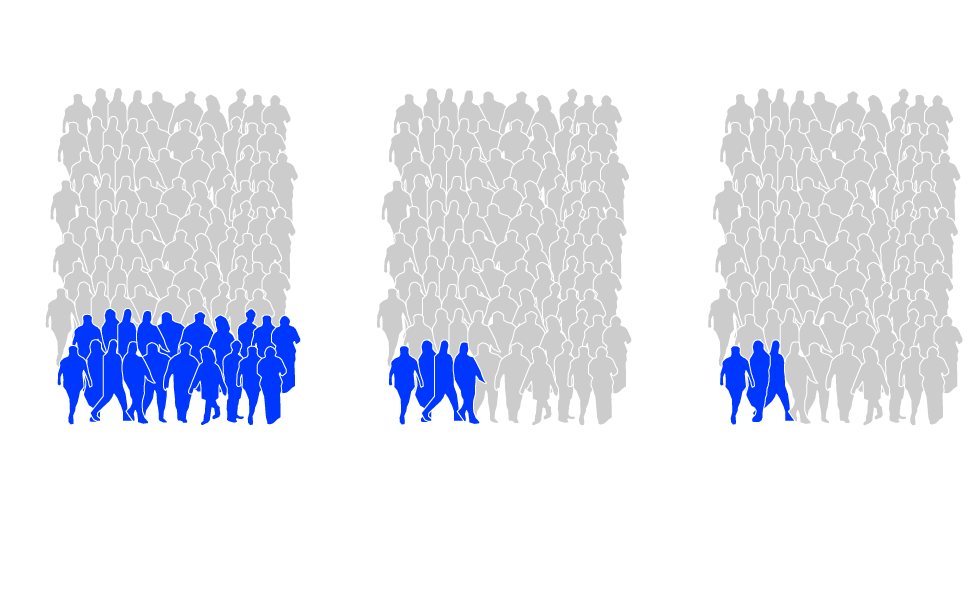
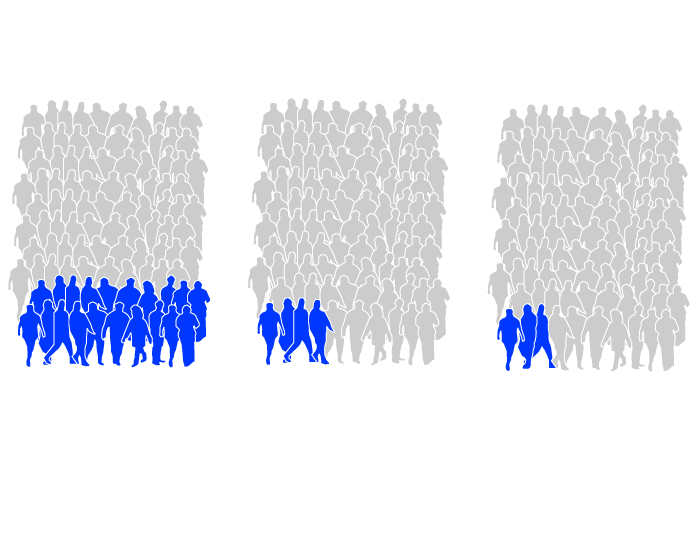
In all, JBS now employs 5,673 Venezuelans and 855 Haitians in Brazil. About 6,500 immigrants work at food-processing company BRF SA, and some 3,100 are Venezuelan. Cooperativa Central Aurora Alimentos, a producers’ cooperative that’s Brazil’s third-largest meat packer, says approximately 20% of its 42,000-person workforce are immigrants, primarily Haitians and Venezuelans.
Venezuelan Employees Make Up Sizeable Shares in Meatpacking Companies in Brazil

Cooperativa Central
Aurora Alimentos
JBS
BRF
For every 100 workers,
20 are immigrants, mostly
Venezuelan or Haitian
For every 100 workers
in Brazil, four are
Venezuelan
For every 100 workers
in Brazil, three are
Venezuelan
Cooperativa Central
Aurora Alimentos
JBS
BRF
For every 100 workers,
20 are immigrants,
mostly Venezuelan
or Haitian
For every 100 workers
in Brazil, four are
Venezuelan
For every 100 workers
in Brazil, three are
Venezuelan
Cooperativa
Central Aurora
Alimentos
JBS
BRF
For every
100 workers,
20 are immigrants,
mostly Venezuelan
or Haitian
For every
100 workers
in Brazil,
four are
Venezuelan
For every
100 workers
in Brazil,
three are
Venezuelan
“We operate in regions that are in high demand for labor, regions that are close to full employment or in full employment,” Alessandro Bonorino, a vice president at BRF, Brazil’s largest poultry producer, which has factories in the south and west of the country.
Adapting
Now, a small but quickly growing Venezuelan community is forming in Montenegro, the 68,000-person city in the green hills of the state of Rio Grande do Sul.

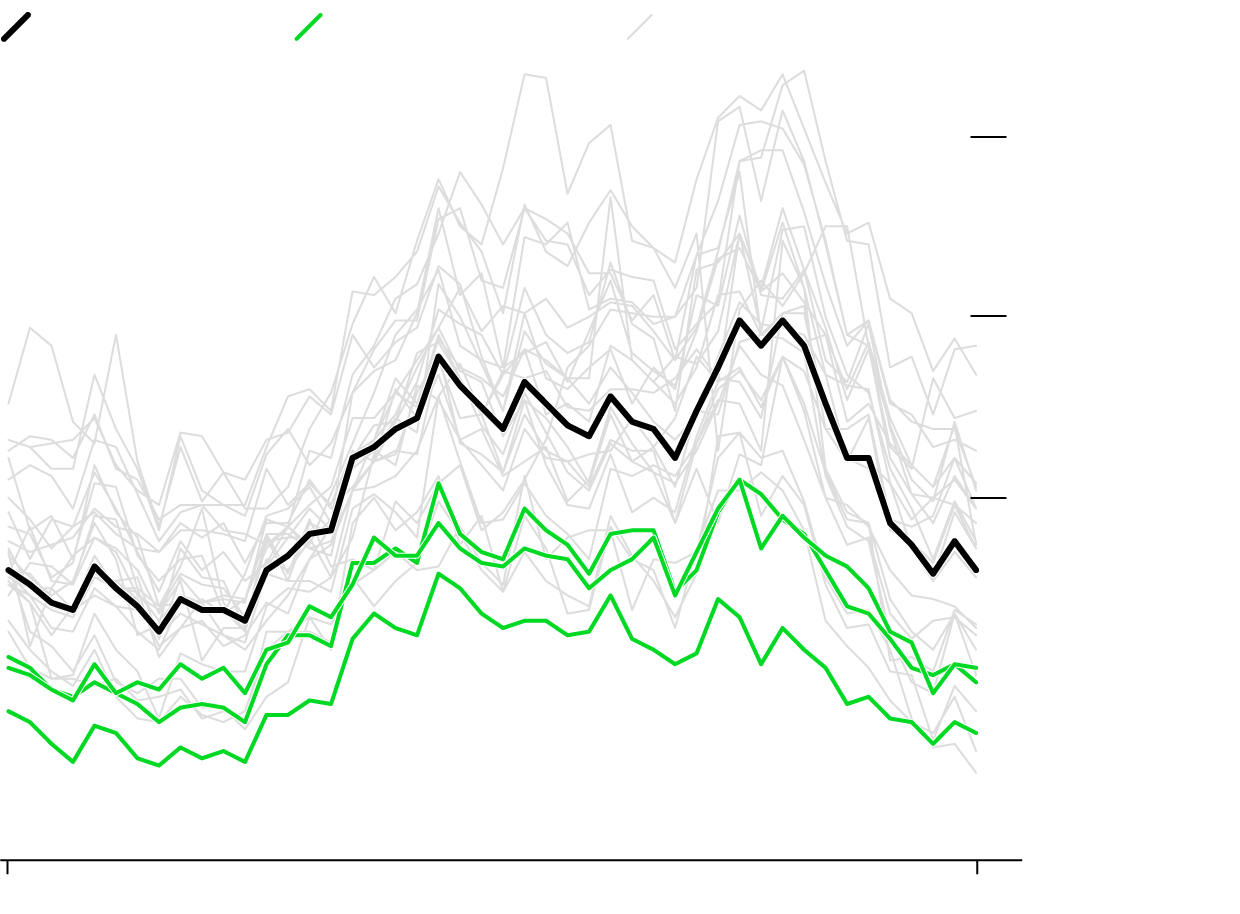
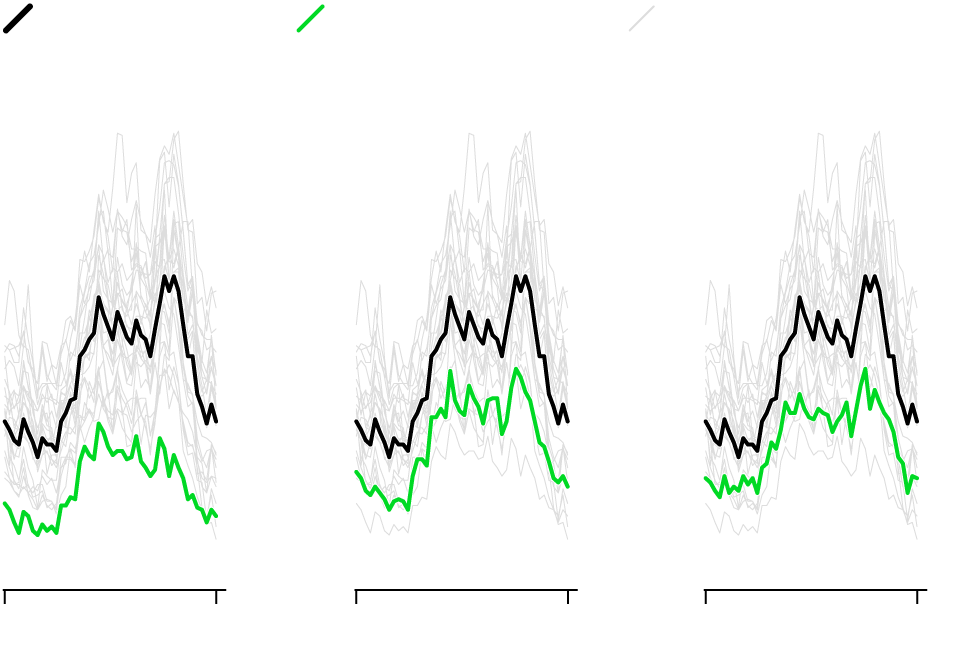
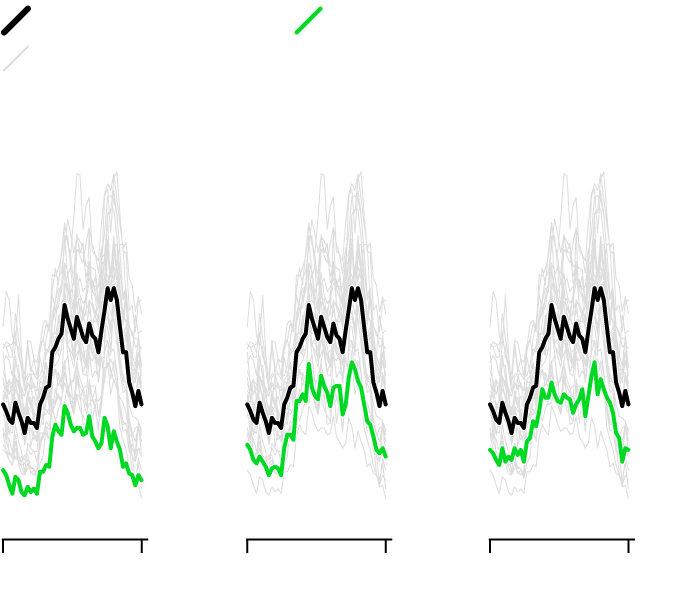
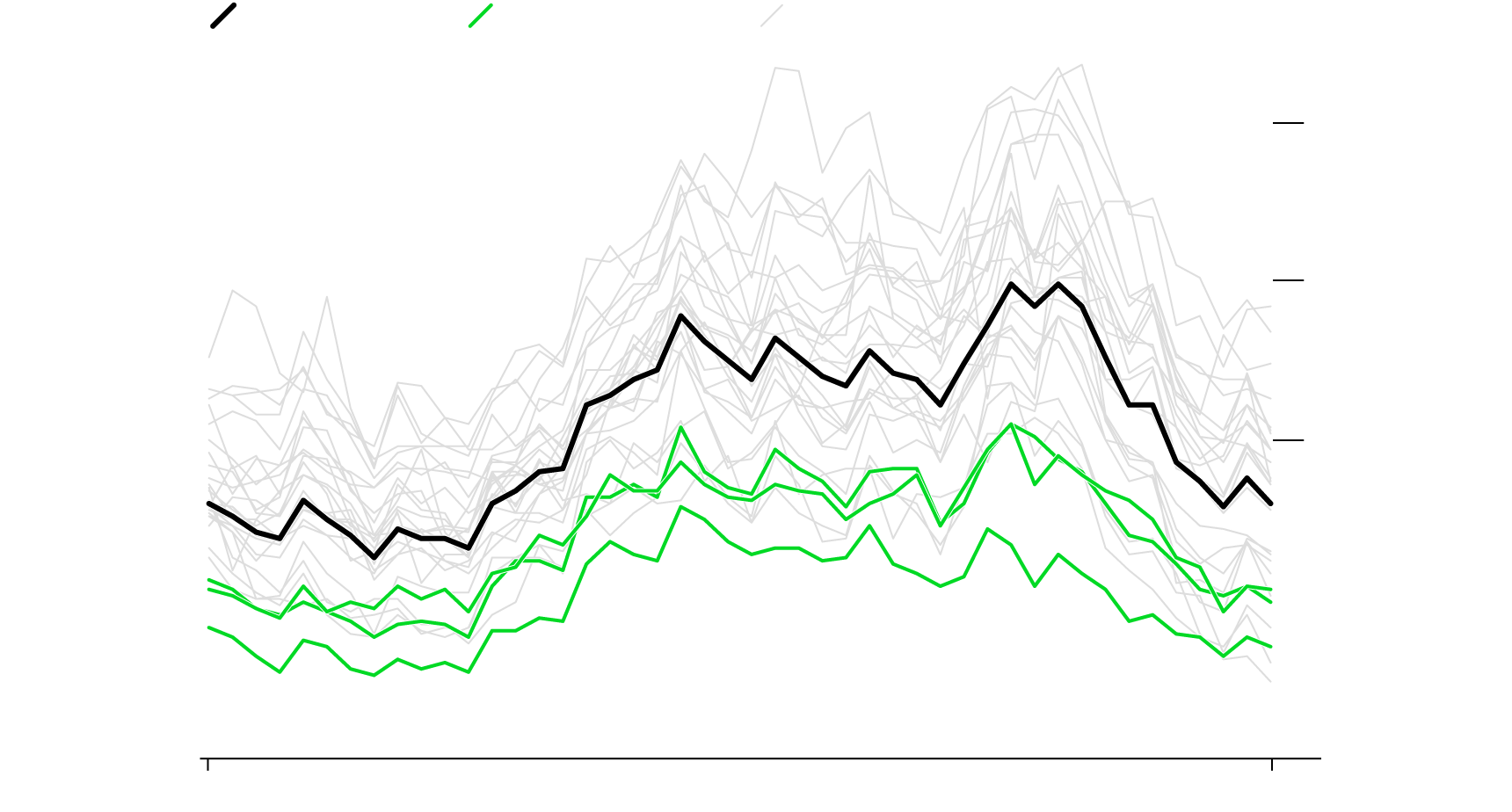
There, demand for help to keep factories and farms humming is particularly acute. Like elsewhere in the south of Brazil, the state’s jobless rate is well below the current national level of 7.8%, hitting 5.3% in June. Authorities in Montenegro say the Venezuelan population has more than tripled to over 400 people since 120 arrived to work for JBS in 2021.
Unemployment in Brazil’s South Is Lower Than National Average
National rate
Southern states
Other states
20%
15
10
8.0
NATIONAL
5.3
RIO GRANDE
DO SUL
PARANA
4.9
SANTA
CATARINA
3.5
0
1Q12
2Q23
National rate
Southern states
Other states
RIO GRANDE
DO SUL
SANTA
CATARINA
PARANA
8.0
8.0
8.0
5.3
4.9
3.5
1Q12
2Q23
1Q12
2Q23
1Q12
2Q23
National rate
Southern states
Other states
RIO GRANDE
DO SUL
SANTA
CATARINA
PARANA
8.0
8.0
8.0
5.3
4.9
3.5
1Q12
2Q23
1Q12
2Q23
1Q12
2Q23
National rate
Southern states
Other states
20%
15
10
8.0
NATIONAL
5.3
RIO GRANDE
DO SUL
PARANA
4.9
SANTA
CATARINA
3.5
0
1Q12
2Q23
Paulo Almeida, the UNHCR’s officer of livelihoods and economic inclusion in Brazil, says interiorization aims to move participants to areas of the country with more economic opportunity. In turn, the transfer “pulls” others in Roraima to follow their path as more jobs become available or family members link together.
“It is a process that’s actually linked to greater economic dynamism and the needs of local labor markets,” he said.
For many Venezuelans, this isn’t the first time they’re uprooting themselves after finding harsh reception and informal opportunities elsewhere in Latin America. Meanwhile, there are more and more migrants heading to the US as their homeland continues to deteriorate — particularly after roughly a decade of an economic spiral that culminated with sanctions that the US placed on the country in 2019.
Briceno, for instance, will soon be joined by his sister in law. His 51-year-old brother, Dixon, just arrived after a month-long journey of hitchhiking from Lima, Peru, where he had emigrated to in 2017. Briceno recommended both to JBS.
For Briceno, the move to Brazil has been a respite from the economic tailspin engulfing his homeland. After first living out of a company-provided hotel, he now rents a small home that he furnished for his wife and son.
“This was impossible in Venezuela,” he said, opening cabinets filled with dried beans and cleaning products.
Still, the newcomers are often taking up far different professions than what they had back home.

Martinez
Caracas
1300km
Hitchhiked for 15
days to border
VEN.
Pacaraima
BRA.
Boa Vista
Arrived seven
months after
leaving Caracas
GOV. FLIGHT 3700km
Porto Alegre
Montenegro
Arrived nearly
10 months after
leaving Caracas
“I was a chemical engineer in Venezuela, I still am,” Martinez said. “But when you come to another land you have to learn to do whatever you can.”
The language barrier hasn’t proven too difficult to overcome in part because of the similarities between Spanish and Portuguese. Some companies, like BRF, offer Portuguese language lessons for their employees.
Some Venezuelan employees have advanced in JBS. Earlier this year, Martinez was promoted from the factory’s floor to doing maintenance on its cooling systems. Others have struggled to adapt.
Read more: Venezuelans, Go Home: Cruel Reception Awaits Fleeing Refugees
All agreed, however, they were far better off in Brazil than back home, pointing to the comfort of a regular paycheck and the city’s tranquility. In Montenegro, chickens run freely on side streets and children can be heard laughing as they walk home unaccompanied from school.
Of course, for every one Venezuelan who goes through Brazil’s interiorization program, there are three who do not. Many take up low-paying or inconsistent work — or panhandle on the streets of the capital, Brasilia. Some have taken refuge in squatters’ settlements in costly cities like Sao Paulo.
After three months working at the plant in Montenegro, Rodriguez, the former mechanic, says he and his brother have at times considered emigrating to the US. Bagging chickens hurts his hands, and he still hasn’t been able to afford a new bed on his salary. For now though, he plans to bear through it.
“It’s a first,” he said. “I came here to study and plan to. Who knows what can happen after that.”