Big Oil Seeks Redemption in the Hydrogen Revolution
A three-part series on hydrogen energy

Photo: Bryan van der Beek/Bloomberg via Getty Images
What’s a fossil fuel company to do when the world is planning to give up on fossil fuels? Join the revolution, of course.
That helps explain the enthusiasm of Equinor ASA, Royal Dutch Shell Plc and PetroChina Co. about getting in on the switch to a hydrogen economy. For a century, oil companies have spent colossal sums of money delivering volatile liquid fuel to the power and industrial sectors. If hydrogen is supposed to replace petroleum in that equation, no one has better expertise than Big Oil.
That situation offers both opportunity and danger. As my colleague Clara Ferreira Marques has written, the European Union’s plans to spend 470 billion euros ($558 billion) switching to hydrogen by 2050 can sound almost impossibly ambitious. Still, the oil and gas sector typically spends around $500 billion developing new fields every single year. Shifting just a small share of the fossil fuel sector’s spending into hydrogen should be enough to drastically increase the technology’s scale and competitiveness.
A Sense of Perspective

Global industry spending, 2019
Fossil
Zero-carbon
Grids
$483B
Oil, gas production
$273B
Midstream,
downstream
oil, gas
$131B
Fossil
power
$311B
Renewable power
$273B
Electricity
grids
$4B
Grid-scale
batteries
$90B
Coal production
$39B
Nuclear power
$100M
Industry carbon
capture, storage
$8B
Biofuels
production
$5B
Electric
vehicles

Global industry spending, 2019
Fossil
Zero-carbon
Grids
$483B
Oil, gas production
$273B
Midstream,
downstream
oil, gas
$131B
Fossil
power
$311B
Renewable
power
$273B
Electricity
grids
$4B
Grid-scale
batteries
$90B
Coal production
$39B
Nuclear
$100M
Industry carbon
capture, storage
$8B
Biofuels
production
$5B
Electric
vehicles

Global industry spending, 2019
Fossil
Zero-carbon
Grids
$483B
Oil, gas production
$273B
Midstream, downstream
oil, gas
$131B
Fossil power
$100M
Industry carbon
capture, storage
$90B
Coal production
$39B
Nuc-
lear
$311B
Renewable power
$8B
Biofuels
$5B
Electric vehicles
$273B
Electricity grids
$4B
Grid-scale batteries
Note: Doesn’t include end-use investment, except electric vehicles and carbon capture and storage.
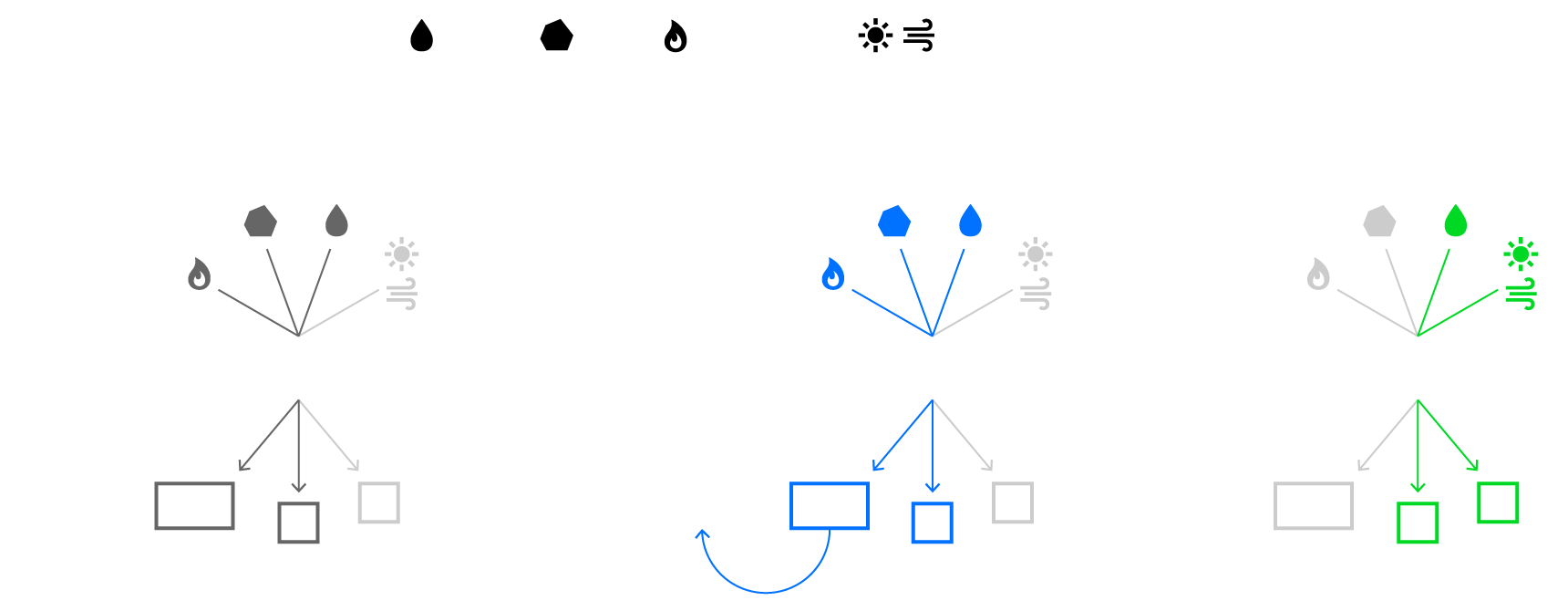
The risk, though, is that Big Oil doesn’t really have the climate’s interests at heart. Blue hydrogen — produced from fossil fuels, but with its carbon dioxide byproduct sequestered underground or consumed in other processes — may offer an intermediate step toward zero-carbon green hydrogen. On the other hand, it may end up like coal power with carbon capture and storage: a technology hailed a decade ago as a promising way of reducing emissions but now seen as a costly dead end that provided cover for a last burst of dirty coal investment in Asia.

Coal
Solar/wind
Raw materials:
Water
Natural gas
Gray hydrogen uses fossil fuels and
produces carbon dioxide as a byproduct
Blue hydrogen captures and stores
most of the carbon dioxide output
Green hydrogen’s
byproduct is oxygen
or
or
Gasifier/reformer
Gasifier/reformer
Electrolyzer
Carbon
capture,
storage
CO
O
CO
O
CO
O
2
2
2
H
H
H
Coal
Solar/wind
Raw materials:
Water
Natural gas
Gray hydrogen uses fossil fuels and
produces carbon dioxide as a byproduct
Blue hydrogen captures and stores
most of the carbon dioxide output
Green hydrogen’s
byproduct is oxygen
or
or
Gasifier/reformer
Gasifier/reformer
Electrolyzer
Carbon
capture,
storage
CO
O
CO
O
CO
O
2
2
2
H
H
H

Coal
Solar/wind
Raw materials:
Water
Natural gas
Gray hydrogen uses fossil
fuels and produces carbon
dioxide as a byproduct
Blue hydrogen captures
and stores most of the
carbon dioxide output
Green hydrogen’s
byproduct is
oxygen
or
or
Gasifier/reformer
Gasifier/reformer
Electrolyzer
Carbon
capture,
storage
O
CO
CO
CO
O
O
2
2
2
H
H
H

Coal
Solar/wind
Raw materials:
Water
Natural gas
Gray hydrogen uses fossil fuels and
produces carbon as a byproduct
or
Gasifier/reformer
CO
O
2
H
Blue hydrogen captures and stores
most of the carbon output
or
Gasifier/reformer
Carbon
capture,
storage
CO
O
2
H
Green hydrogen’s byproduct is oxygen
Electrolyzer
CO
O
2
H
Coal
Solar/wind
Inputs:
Water
Natural gas
Gray hydrogen uses fossil fuels and
produces carbon as a byproduct
or
Gasifier/reformer
O
CO
2
H
Blue hydrogen captures and stores
most of the carbon output
or
Gasifier/reformer
Carbon
capture,
storage
O
CO
2
H
Green hydrogen’s byproduct is oxygen
Electrolyzer
O
CO
2
H
With all the excitement around green hydrogen, there’s even a chance that we miss the strides being made by its highest-emission cousin, grey hydrogen — in particular the variety made from gasification of coal. That process already accounts for about 5% of China’s coal consumption. India will invest 4 trillion rupees ($54 billion) in the technology by 2030, with an aim of converting 100 million metric tons to natural gas and chemicals, coal minister Pralhad Joshi said earlier this year.
Not So Clean

Emissions ranges for hydrogen energy and fossil fuels
e/MJ
0
20
40
60
80
100g CO
2
Blue: gas
Natural gas
Crude oil
Coal
Grey: gas
Green

Emissions ranges for hydrogen energy and fossil fuels
e/MJ
100g CO
0
20
40
60
80
2
Blue: gast
Natural gas
Crude oil
Coal
Grey: gas
Green

Emissions ranges for hydrogen energy and fossil fuels
0
25
50
75
100g CO
e/MJ
2
Blue:
tgas
Natural
gas
Crude
oil
Coal
Grey:
gas
Green
Note: Hydrogen with as little as 36.4 grams CO2e/MJ is counted as “grey hydrogen,” but most emits considerably more.
A first step for investors is to make careful distinctions between the types of projects and their progress toward being built. Those concerned about decarbonization should treat all announcements of downstream spending (such as vehicle fueling networks) with a pinch of salt. In most cases, there’s no guarantee that they won’t just use grey hydrogen — which is usually more carbon-intensive than traditional fossil alternatives. That’s particularly the case in countries like China and India, where governments may see grey gas produced from coal as the best way to support jobs in a declining local mining industry while reducing dependence on imported petroleum.
Pressure Drop

Hydrogen energy cost ranges
0
1
2
3
4
5
6
7
$8/kg
Grey: gas
Grey: coal
Blue: gas
Green

Hydrogen energy cost ranges
0
1
2
3
4
5
6
7
$8/kg
Grey: gas
Grey: coal
Blue: gas
Green

Hydrogen energy cost ranges
0
2
4
6
$8/kg
Grey: gas
Grey: coal
Blue: gas
Green
More importantly, though, Big Oil needs to recognize what it can bring to the party and where it’s not needed. The key area of overlap between the current petroleum economy and a hydrogen future is likely to be in midstream infrastructure: pipelines, ships and storage facilities.
Salt caverns — artificial caves already widely used to store oil and gas, including the U.S. strategic petroleum reserve — are likely to be critical nodes in the hydrogen network. A few are already in use for industrial hydrogen, but many more will be needed. One study earlier this year estimates there’s capacity to store about 7.3 petawatt-hours of hydrogen in salt caverns near Europe’s coasts, equivalent to nearly two years of the continent’s electricity demand. Depleted oilfields can play a similar role in areas where salt formations aren’t available. No industry understands this geology better than the petroleum sector.
Engineered infrastructure will also be crucial. In the Netherlands, a consortium including Shell is planning to put green hydrogen produced by a giant 10-gigawatt offshore wind farm through pipelines serving the declining Groningen gasfield, which would otherwise be scrapped. At the port of Rotterdam, another group is hoping to spend about 2 billion euros re-powering the local industrial cluster with blue hydrogen instead of conventional fuel.
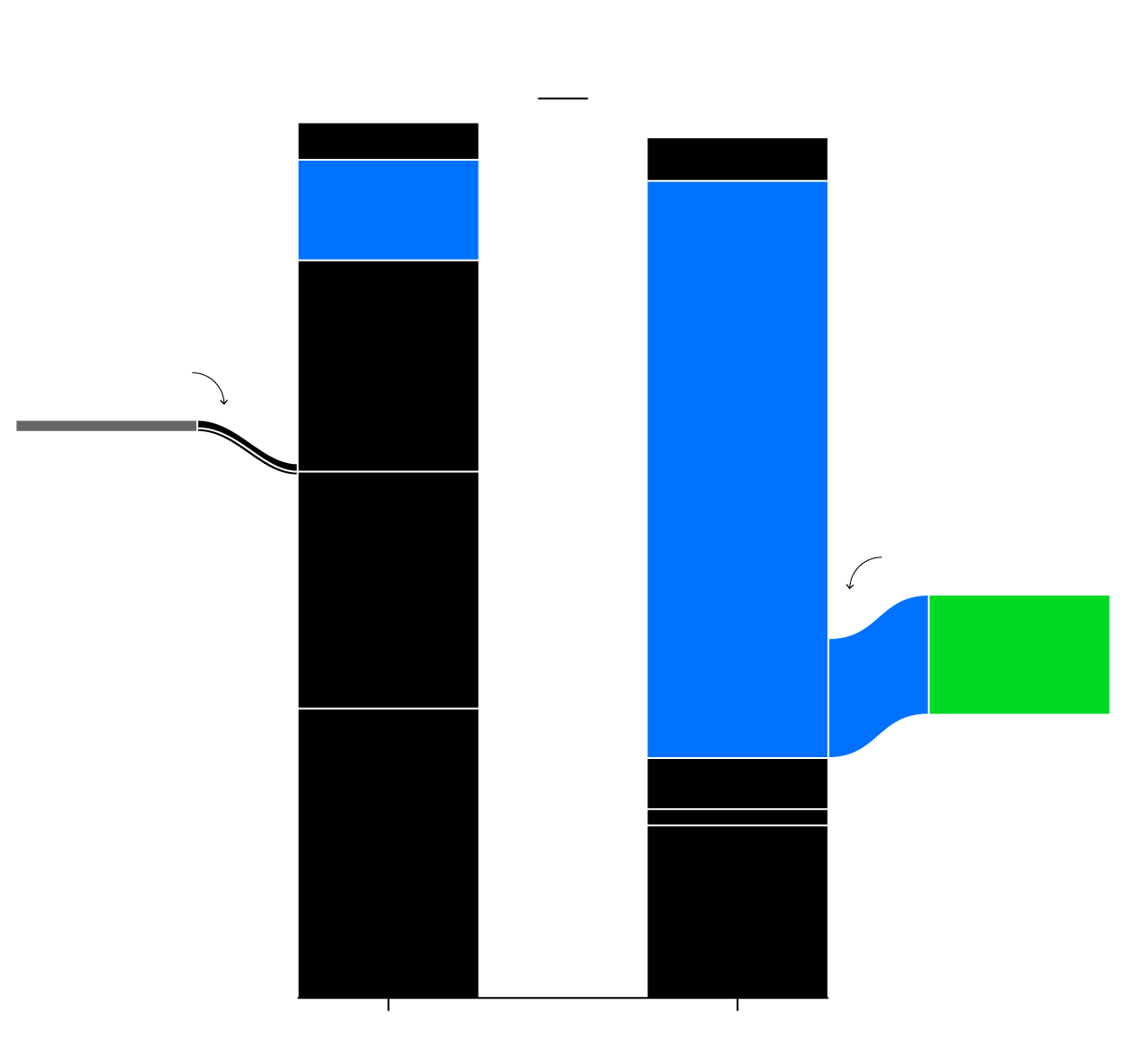
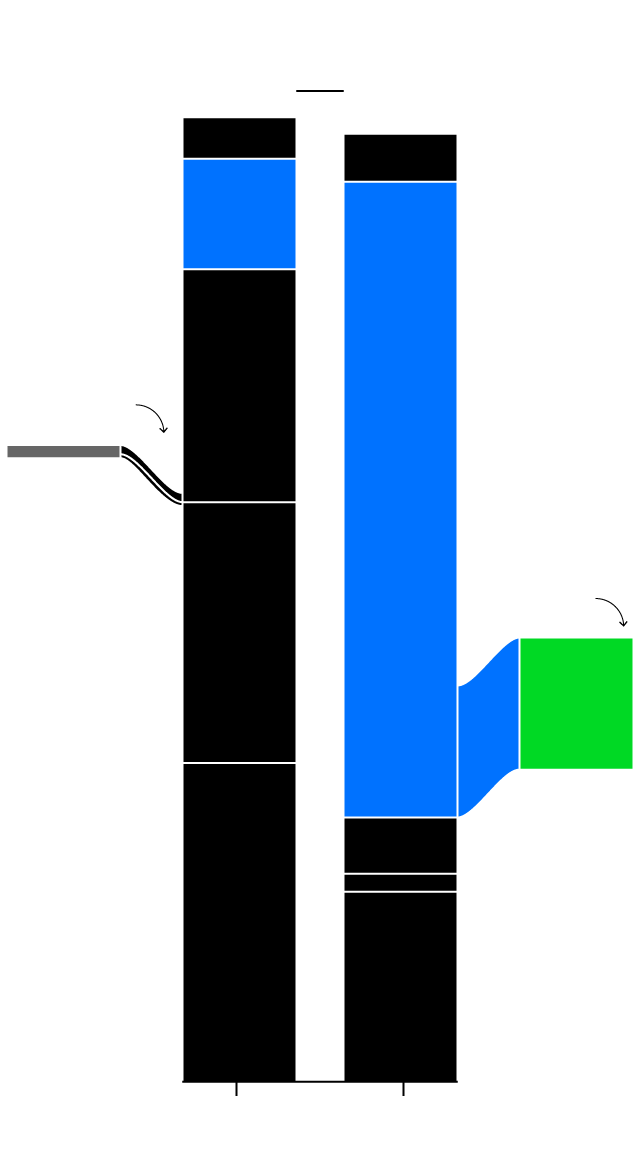
Still, the most important role for fossil fuels may prove more humdrum. For all Big Oil’s technical expertise, its dominant position in the existing energy system may prove most critical. Some 84% of the world’s primary energy still comes from oil, gas and coal. That gives fossil fuel companies an outsize share of cashflow and investment dollars — and, as we’ve argued, more spending is what’s needed to make green hydrogen competitive with dirtier alternatives.
The scale of the challenge is vast. The world will need to produce 80 exajoules of hydrogen a year by 2050, according to the Hydrogen Council. Doing that with electrolyzers, the only viable zero-carbon pathway, would require more electricity than the entire world produced in 2019. That will need about nine times more wind and solar generators than exist worldwide to date, according to BloombergNEF.
Gas Bubble
Energy generated
600 exajoules
Nuclear
Nuclear
Renewables
Currently, most
hydrogen energy
is made from gas
and coal, about
8 exajoules
All hydrogen
energy should
be made from
renewables
by 2050, about
80 exajoules
Natural gas
Gray hydrogen
Renewables
Coal
Green
hydrogen
Natural gas
Coal
Oil
Oil
0
2019
2050 forecast
Energy generated
600 exajoules
Nuclear
Nuclear
Currently, most
hydrogen
energy is made
from gas and
coal, about
8 exajoules
Renewables
By 2050, all
hydrogen
energy
should be
made from
renewables
about 80
exajoules
Natural gas
Gray hydrogen
Renewables
Coal
Green
hydrogen
Natural gas
Coal
Oil
Oil
0
2019
2050 forecast
Energy generated
600 exajoules
Nuclear
Nuclear
Renew-
ables
Most
hydrogen
energy is
made from
gas and coal,
about 8
exajoules
By 2050, all
hydrogen
energy
should be
made from
renewables,
about 80
exajoules
Natural
gas
Gray
hydrogen
Renew-
ables
Coal
Green
hydrogen
Nat. gas
Coal
Oil
Oil
0
2019
2050 forecast
It’s going to prove difficult to do that without a spending boom that will make the past decade’s outlay on renewable power look modest. Still, if there’s any industry that’s in a place to deliver such a splurge, it’s one that’s been synonymous with bold, transformative investment since the days of John D. Rockefeller. To conquer the 21st century energy industry, oil’s giants should remember the lesson of their rise to dominance in the 19th: Go big, or go home.