Economics + Businessweek | The Big Take
The Fed Chair Who Fought Back
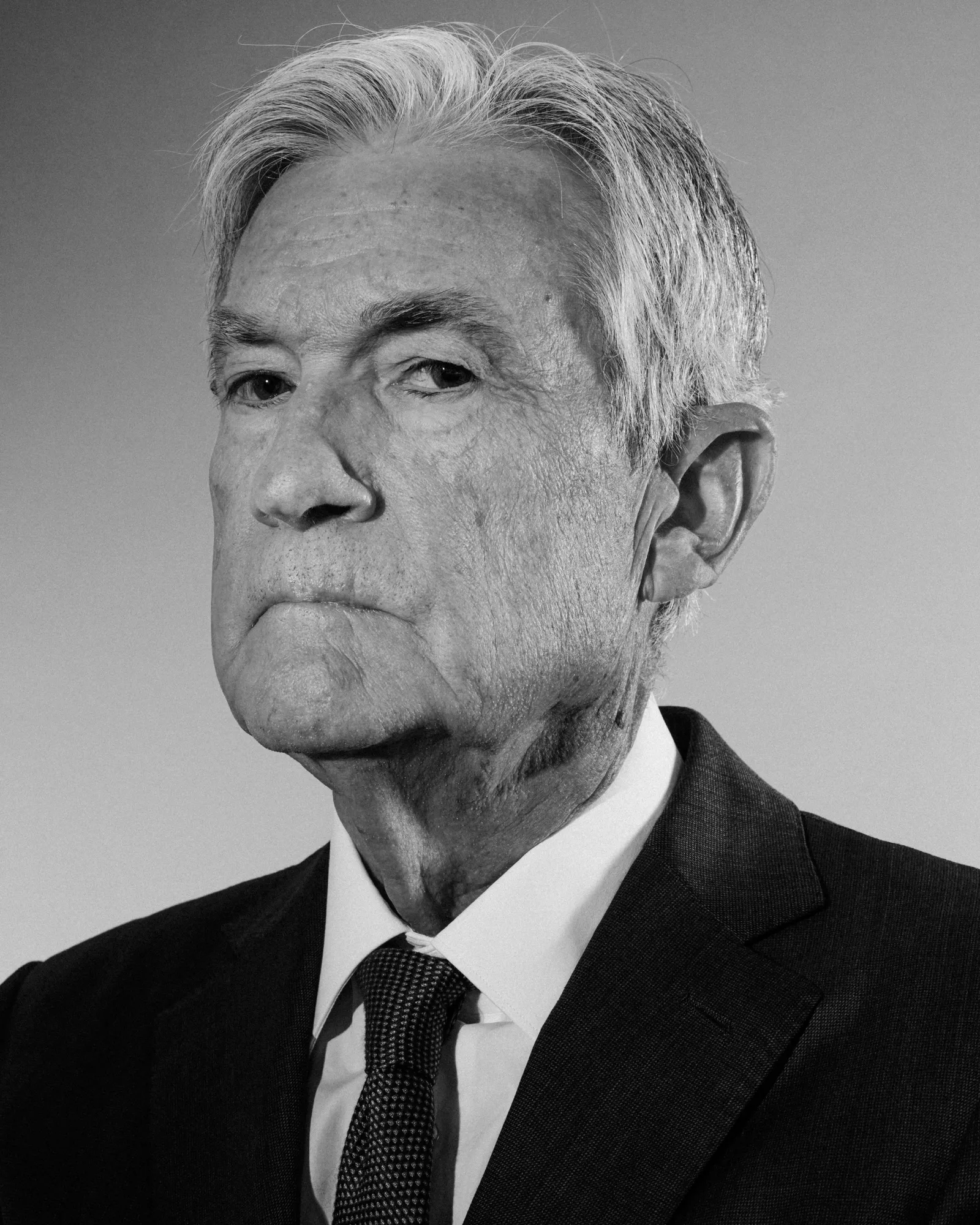
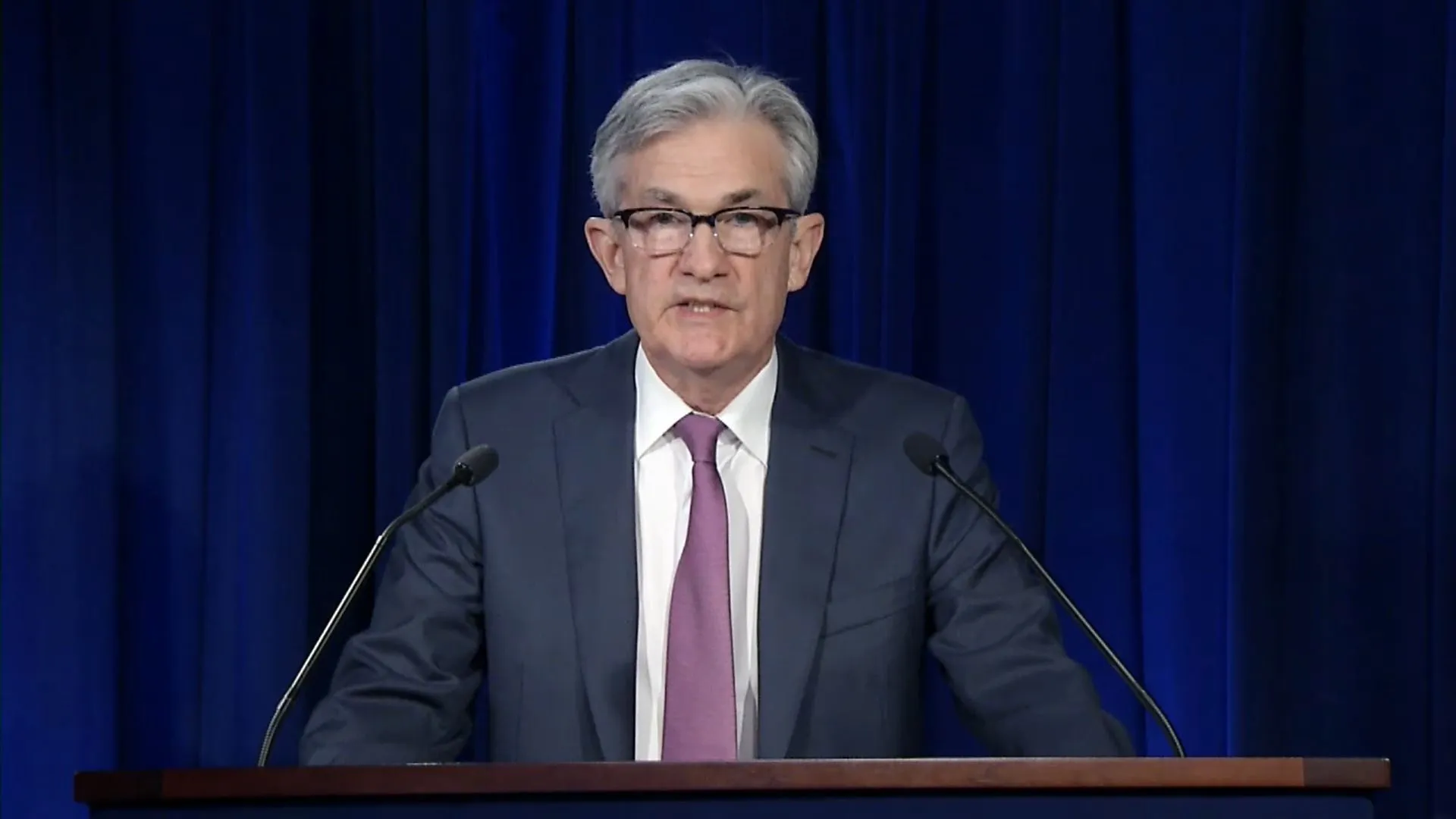
The visuals were nothing special: man in suit addresses camera against a plain blue backdrop. The run-time was only two minutes. But Jerome Powell’s video message to the American public one Sunday night in January was charged with drama — and may turn out to be the defining moment of a rollercoaster eight years leading the world’s most powerful central bank.
Just days earlier, the Federal Reserve had received subpoenas from the Department of Justice, the culmination of an intense pressure campaign by Donald Trump for lower interest rates. For years, Powell had refrained from confronting the president, worried that doing so would undercut the Fed’s public-service mission.
The subpoenas were enough to flip him into resistance mode.
“The threat of criminal charges is a consequence of the Federal Reserve setting interest rates based on our best assessment of what will serve the public, rather than following the preferences of the president,” Powell told the nation.
Even before this battle turned existential, Powell’s time in charge had been more volatile than most. He’d had to tackle one five-alarm fire with no modern precedent — a global pandemic and economic shutdown — and another soon after when inflation spiked to 40-year highs. He steered the Fed through a regional bank crisis that brought charges of lax oversight, and internal ethics scandals that prompted the resignations of top officials.
The Fed’s failure to contain inflation is the biggest stain on Powell’s record, critics say. Though price pressures fell substantially from their peak — without triggering the recession many feared — he will leave the job on May 15 with inflation above the central bank’s 2% target for five straight years.
“This is what really defines his approach and will be a critical part of his legacy”
But, as Trump attempts the biggest government overhaul in a century, amassing executive power in the White House, the Fed has been one of few institutions to fight back — catapulting Powell to new levels of public recognition, and perhaps cementing his legacy. At stake, he and his allies argue, is the Fed’s ability to do its job without interference from politicians who have elections to win — and hence the stability of the US economy itself.
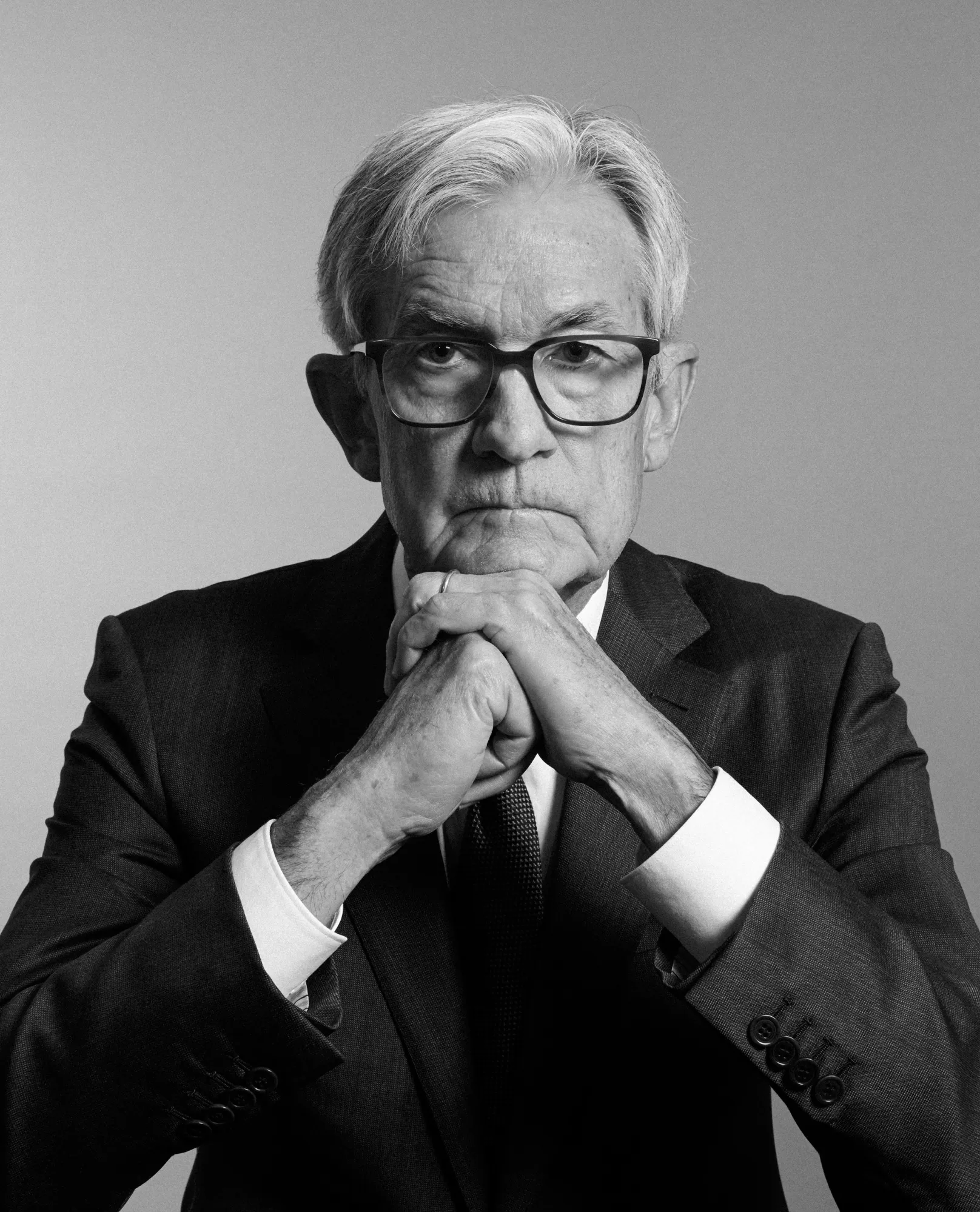
Powell sees it as a matter of integrity, and his immediate predecessor agrees. “This is what really defines his approach and will be a critical part of his legacy,” said Janet Yellen, the former Fed chair and Treasury secretary.
Big Take
Taking Stock of Jerome Powell as Fed Chair
Signs of trouble were apparent from early in Trump’s second term, when he intensified his verbal attacks. The president dubbed Powell “Too Late,” publicly mused about firing him and called him a “numbskull,” among many other insults.
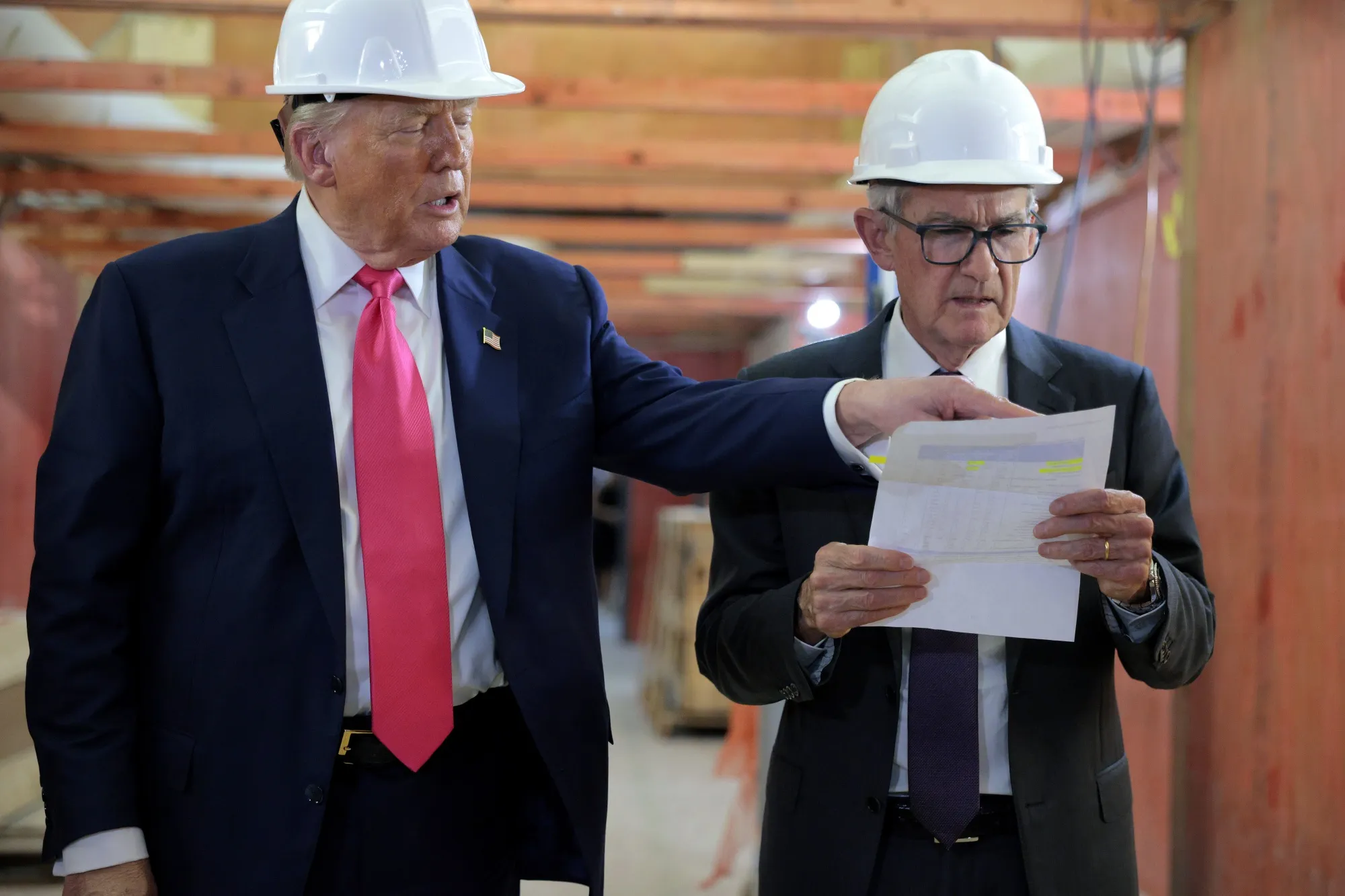
Meanwhile, Trump’s team was zeroing in on the Fed’s renovation of its headquarters, whose budget has ballooned since approval in 2017. In the summer of 2025, Trump visited the site in person — generating one of the most iconic images of Powell’s term: the Fed chief and president in hard hats and suits, standing side-by-side in the sweltering summer heat.
In a scene all but set up for the memes it would spawn, Trump declared the cost had risen even higher than the official $2.5 billion price tag — only for Powell, after putting on his reading glasses and examining the document handed to him, to tell the president he’d gotten the numbers wrong.
After that outing, Trump seemed placated — for a while. But then he escalated, with the extraordinary attempt to fire Governor Lisa Cook over unproven allegations of mortgage fraud. No president before had ever tried to remove a Fed governor, and the case now awaits a decision from the Supreme Court.
And that fall, administration officials quietly opened a probe into the renovation — leading to the subpoenas that have shaped Powell’s final chapter at the Fed.
Nothing looms larger now than the battle with Trump, and Powell is pulling every lever at his disposal. In a sharp break with tradition, he’s said he’ll stay on at the Fed as a governor until the legal attacks from the White House stop. And he’s mobilized allies he spent years cultivating in Congress — which is where, in a way, his Fed story began.
A lawyer by training and a private equity dealmaker by profession, Powell interspersed his finance career with stints in public service. By 2011, the latter path had taken him to a Washington think tank where he helped broker an end to perhaps the most serious of America’s periodic debt-ceiling crises.
It was painstaking work, involving long hours of meetings with lawmakers to outline the consequences of a US default — and it helped catch the eye of President Barack Obama, who’d later pick Powell as a Fed governor. When Trump took office and started looking around for a successor to Yellen, Powell — a Republican — got the nod.
There wasn’t much of a honeymoon period: Trump quickly turned against his own nominee. There’d been political pressures on the central bank before, but typically behind closed doors. Now the president was openly sniping at the Fed chair, a harbinger of much more to come.
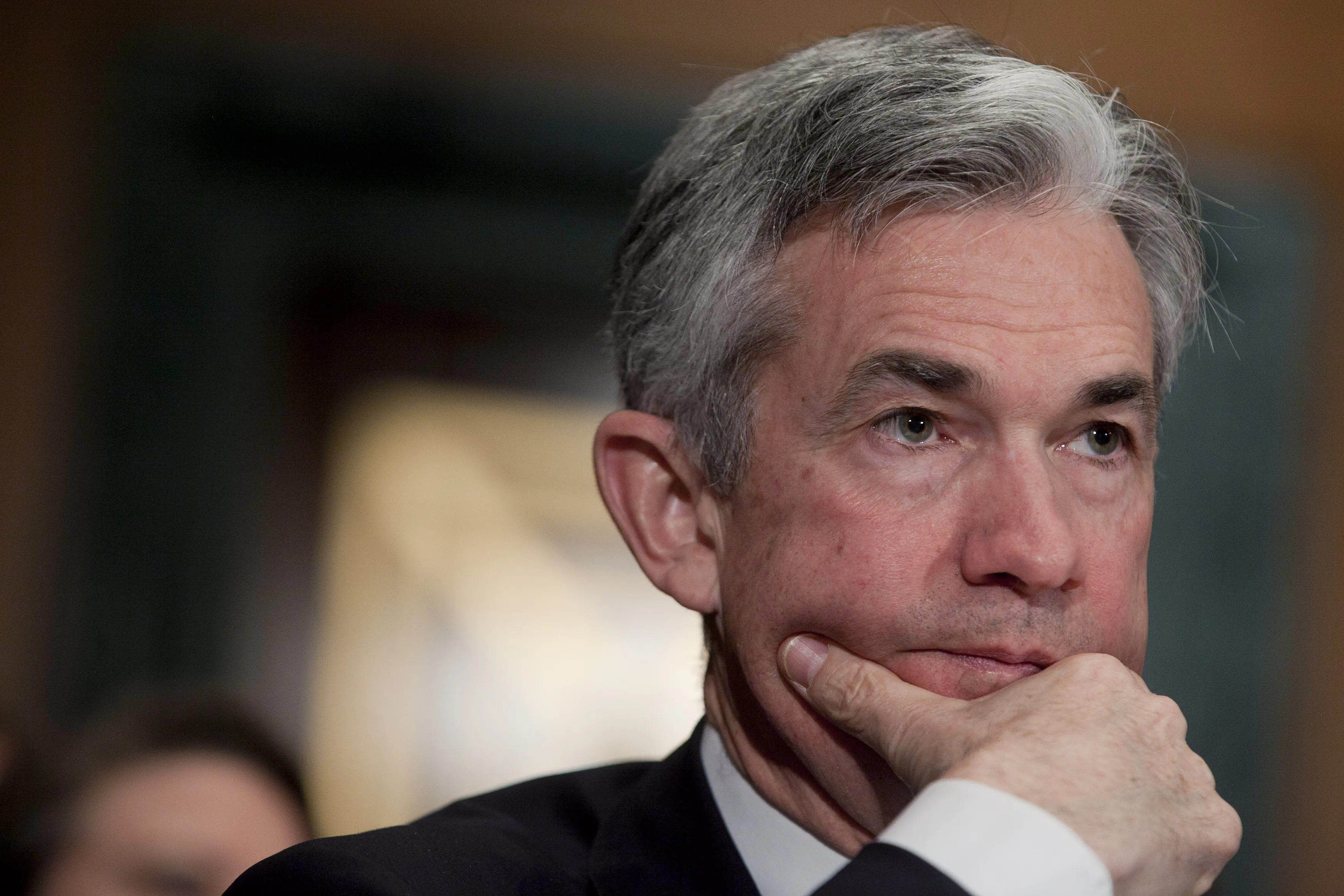
The Fed hiked rates four times in Powell’s first year at the helm in 2018, as it pulled away from years of ultra-low rates after the global financial crisis. Trump, then as now, was trying to speed up the economy with tax cuts —and got mad when monetary policy pushed in the opposite direction.
At the same time, something peculiar was going on in the job market. Unemployment, which had taken years to recover from the financial crisis, dropped below 4% in early 2018 — and kept falling, to historic lows. That should’ve stoked inflation, according to economic theory, because companies would have to hike wages to compete for workers. It didn’t happen. Instead, people often left behind in the job market — including Black workers, women and disabled Americans — were getting hired.
It was a major shift, and in his second year as chair, Powell — the first Fed chief without an economics degree in four decades — tried to enshrine it into a policy that meant throwing entrenched orthodoxies out the window. The Fed would now try to make up for periods when a sluggish economy kept inflation below-target, like in the 2010s, by allowing prices to rise faster at times — so long as inflation averaged 2% over time. And it would refrain from choking off labor markets with rate hikes based on the specter of inflation, rather than the reality.
Unfortunately for Powell and the Fed, this new doctrine took effect in August 2020. By then, the world had changed dramatically.
Absent Trump’s second-term assault on the Fed, the Covid-19 period would likely have been at the core of Powell’s legacy.
At a press conference in early March 2020, Powell was one of the first Washington leaders to register the emergency in all its gravity. He’d been in Saudi Arabia that February, with global finance ministers and central bankers, and grasped that the virus was likely headed America’s way. “We were being advised that there would likely never be Covid vaccines,” said Richard Clarida, who was Fed vice chair at the time. “You’re potentially looking at shutting down a big chunk of the economy for a year or more, which is a very sobering realization to have as a policymaker.”
Within a few weeks, 22 million Americans had lost their jobs, sending unemployment to the highest levels since the Depression-era 1930s. By mid-March, the Fed had slashed interest rates all the way back to zero.
By then, the Fed — like most of white-collar America — was essentially working online. But it was busy like never before, injecting liquidity into markets that were starved for cash. The Fed rolled out a series of giant bond purchases and market backstops, including unprecedented purchases of debt directly from corporations and municipal governments.
For policymakers, what loomed largest was the dragged-out recovery of the 2010s — when the challenge was how to pump up the consumer. Only Congress could inject cash directly into the real economy, by ramping up unemployment insurance or offering a credit lifeline to small businesses. More explicitly than his predecessors, Powell urged lawmakers to do so.
“This is the time to use the great fiscal power of the United States,” he told a virtual press conference in April 2020, a month into the emergency. That’s how things played out into early 2021, with Congress approving roughly $5 trillion in stimulus under Presidents Trump and Joe Biden.
Measured by growth and employment, it worked. The pandemic recession was deep but short, lasting just two months — and at the end of 2021, unemployment was back below 4%.
But the other critical gauge of Fed performance was headed in the wrong direction — fast.
The US got slammed by the worst inflation in decades as the economy reopened after pandemic lockdowns.
Supply chains were still broken. Workers were scarce. Consumers were eager to get out and spend, after months of being cooped up indoors — and they were flush with savings, thanks in part to the stimulus Powell had urged.
In some ways the Fed’s pandemic playbook was a rerun of what it did after the 2008 crash — except bigger, faster, and accompanied by a much more powerful dose of public spending. But differences in both the underlying crisis and the policy response created an entirely new dynamic. It wasn’t long before some observers began to wonder if Powell and his team had been fighting the last war.
In a Bloomberg Opinion column in May 2021, Mohamed El-Erian — the former PIMCO chief executive — zeroed in on the key distinction that would dominate that year. “Today, demand is not a problem” for most businesses, he wrote. “It is surging. Rather, they are struggling to secure supplies.” The Fed, he suggested, “would be well advised to consider a range of possible outcomes.”
As pressures built, Powell leaned into traditional central-bank thinking: Price increases were being driven by supply disruptions that would resolve themselves over time, and that monetary policy couldn’t fix anyway and shouldn’t react to. That’s what led him to describe the post-pandemic inflation as likely “transitory” — a tag that would later haunt him.
For a while in the summer of 2021, a series of encouraging inflation readings suggested Powell and the Fed’s assessment might be right. Then inflation took off again.
Within a few months, Powell conceded it was “probably a good time to retire” the T-word. By year-end, El-Erian would label it “probably the worst inflation call in the history of the Federal Reserve.”
Interest Rates During the Powell Years
Frequent economic changes drove interest-rate swings

Source: Federal Reserve
And by March 2022 — after Russia’s invasion of Ukraine hit food and energy markets, and with inflation already well on its way to a four-decade high — Powell and colleagues had seen enough. They began hiking rates. By year-end they’d raised the benchmark by 4.25 percentage points, the sharpest tightening of policy since Paul Volcker, the revered Fed chair in the 1980s.
Powell still blames the delayed response on bad inflation forecasts. Critics say there’s more to it.
Fed officials remained too preoccupied with the long-run risks of unemployment, which had dominated their pre-pandemic thinking, according to Adam Posen, president of the Peterson Institute for International Economics. And they were slow to react as the inflationary impact of all the Covid spending became clear. “The Fed cannot control fiscal policy, but it’s certainly allowed to respond to it,” Posen said.
Powell’s defenders point out that most forecasters — and economies across the globe — struggled with the curveballs the pandemic threw at them.
The whole idea of transitory inflation was “a widely shared analytic error,” said Jared Bernstein, chair of the White House Council of Economic Advisers during the Biden administration. “I think Powell’s been a lot like a very good pilot of an airliner that's going through turbulence,” Bernstein said.
The Fed’s Two Mandates Pose Challenges
Powell faced high unemployment and inflation during his time as chair

Sources: Bureau of Labor Statistics, Bureau of Economic Analysis
Note: Target inflation rate set in 2012.
Once the storm had passed, though, the Fed acknowledged the need for a back-to-basics rethink.
The second big policy review of the Powell era undid most of the first one. Out went the idea that periods of above-target inflation should be tolerated.
As for labor markets, the 2020 framework — which took effect amid a national reckoning over racism ignited by George Floyd’s murder that year — had emphasized “broad-based and inclusive” goals, putting a focus not just on how many jobs were created, but who was getting them. The new guidelines in 2025 marked a return to more traditional thinking and struck the word “inclusive.”
In the end, and contrary to the predictions of many Fed-watchers, pandemic inflation subsided without the kind of jump in unemployment that often accompanies drastic rate hikes. Posen describes this as “relatively costless disinflation,” and counts it as a “huge triumph” for the Powell Fed. The chair himself takes pride in mostly pulling off the sought-after “soft landing” — even as he acknowledges that still too-high inflation leaves the Fed with work to do.
After early 2021, inflation never returned to the 2% target on Powell’s watch. That’s an enduring risk to the Fed’s credibility, since Americans may start wondering whether the central bank will ever regain its grip — especially as new price shocks keep arriving, like tariffs in 2025 and this year’s war with Iran.
The return of inflation has transformed US politics too. After so many price hikes — like for housing, groceries and used cars —Trump’s pledge to tackle the cost of living helped swing the 2024 election his way.
“He will likely be praised in history for people’s perception of his defense of the Fed”
Fed chairs have typically been evaluated on their inflation record, said Michael Faulkender, who held top roles at the Treasury Department during both Trump terms. Normally Powell “would go down with a pretty poor record,” he said. “Instead, I think he will likely be praised in history for people's perception of his defense of the Fed.”
There were other bumps in the road for Powell. A regional banking crisis in 2023 saw the collapse of Silicon Valley Bank and two other lenders, among the biggest bank failures in US history. The Fed’s rescue effort ensured there was no wider spillover — but the episode left some analysts wondering if its regulators could have done more to prevent the collapse in the first place.
There’s also been a series of embarrassing ethics scandals, leading critics to call for more transparency and accountability at the Fed, and spurring Powell to implement tougher rules in 2022 limiting how Fed policymakers can invest. Even so, the trouble continued: Governor Adriana Kugler resigned last year after violating the Fed’s investment and trading policies.
After Trump’s return to the White House, Powell pared back efforts on diversity, equity and inclusion and announced staffing cuts in step with Trump’s drive to shrink the federal workforce. The Fed also pulled out of a coalition of global central banks that studies climate risks, which it had joined right after Biden was elected president.
Powell said shifts like these, reflecting the directives of a new administration when appropriate, are consistent with longstanding Fed practice. But critics on both sides of the aisle seized on the changes. At a congressional hearing early last year, Powell got dinged by Republican Tim Scott for “flip-flopping in the political wind” — and moments later by Democrat Elizabeth Warren, who accused him of “wading deeper into politics” to placate Trump.
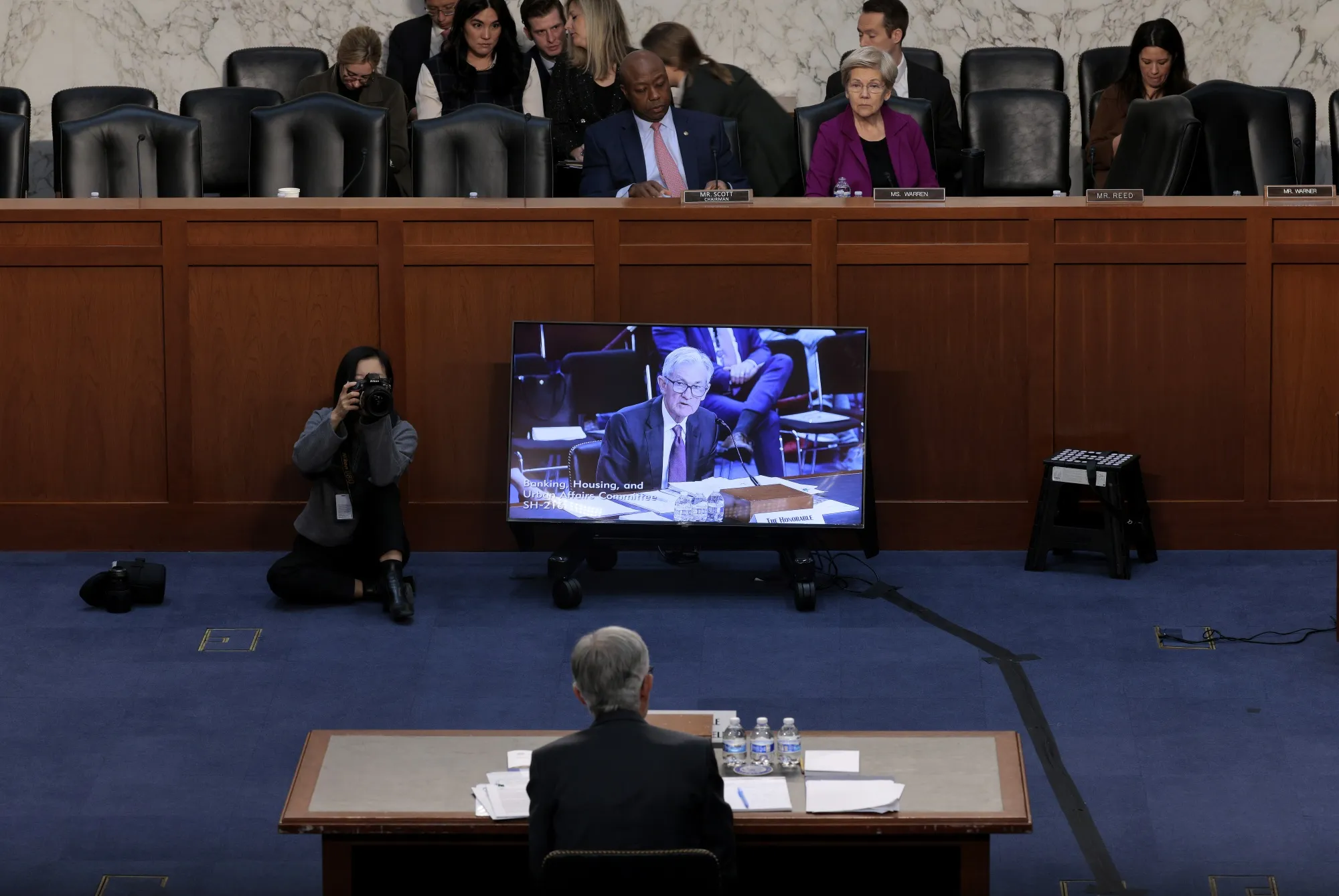
Measured against Powell’s climactic fight with Trump, though, all of this looks like a subplot — and when it really mattered, key members of Congress from both parties stood up to take his side. That was vindication for the Fed chief, who’d vowed early on to “wear the carpets of Capitol Hill out.”
Most notably, Republican Senator Thom Tillis promised to hold up the nomination of Trump’s pick to replace Powell, the former Fed Governor Kevin Warsh, until the DOJ ended its probe. His pledge proved consequential: US Attorney Jeanine Pirro announced her office would close the investigation and let the Fed’s internal watchdog pick it up.
But Pirro reserved the right to reopen the matter — a threat she’s repeated this month — and Powell evidently isn’t assured that the investigation is truly over. He now says he’ll remain at the Fed for a “to-be-determined” period in his underlying role as a governor, where his term extends until January 2028.
It’s unusual — and controversial — for a Fed chair to stay on in this way. But Powell worries that Trump’s legal attacks are putting the central bank’s independence at risk, leaving him no choice. In doing so, he’s denying Trump an immediate opportunity to appoint a governor who might be more open to presidential demands.
Soon, the task of protecting the Fed will fall to Warsh. In Senate testimony last month — faced with questions about how he’d handle presidential pressure for lower rates and Democratic accusations that he’d be a “sock puppet” for Trump — he pledged to act independently.
Warsh criticized the Powell Fed for failing to rein in post-Covid inflation, calling it a “fatal policy error,” and promised major overhauls of policy and communications. He’ll quickly face his own challenges: Trump’s expectations will likely collide with a Fed that’s inclined to leave rates unchanged for now and faces new inflation risks from the US war on Iran.
Powell has offered tips for whomever came next: Stay out of elected politics, maintain good ties with Congress, recognize the talent and hard work of Fed staff. “Ultimately, each of us will want to look back at the arc of our lives and know that what we did was the right thing,” he said in March.
Come the next Federal Open Market Committee meeting in June, Powell is set to attend as a regular member around the table. He says he has no plans to act as a “shadow chair” or undermine his successor.
It’ll be another phase in a Fed career that could be summed up by the most famous lyric from Powell’s all-time favorite band, the Grateful Dead: What a long, strange trip it’s been.
“His real testing moments were in 2020 during Covid-19, and then in 2025 and 2026 during the Trump administration's all-out assault on central bank independence,” said Peter Conti-Brown, a leading Fed historian. “His place in history is secure on the basis of either one.”