
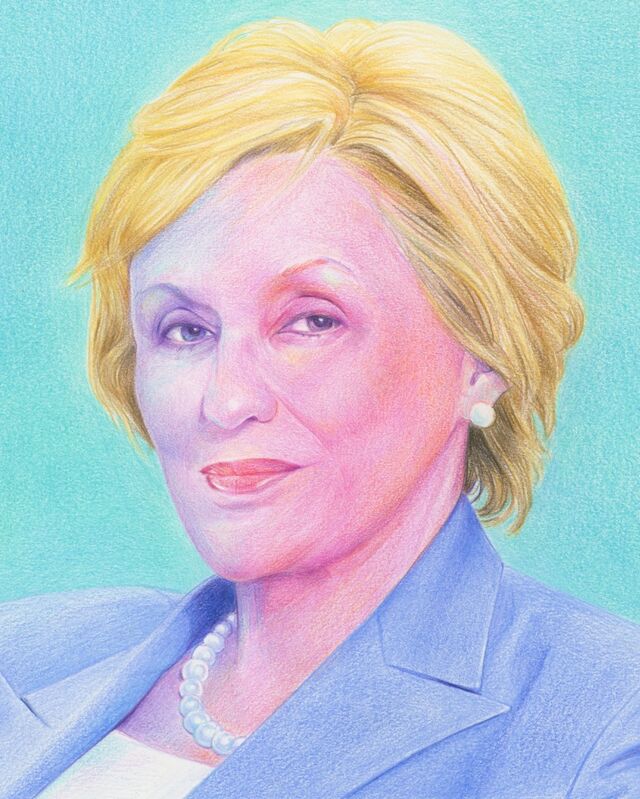
Tina Brown: ‘I’m Concerned About American Women’
The onetime Vanity Fair editor and Substack convert talks to Mishal Husain about this moment in US politics, and what’s next for media.
What does someone who’s spent 50 years in media see as journalism’s next frontier?
For Tina Brown, the answer is Substack, a newsletter platform to which she has taken with enthusiasm, even though it’s a far cry from the vast teams (and budgets) she had editing Vanity Fair and the New Yorker. That period made her better known in the US than in her native Britain, but Brown has also written books on the royal family and co-founded a journalism initiative at a British university.
In a wide-ranging conversation in London, Brown and I talked about people who have surprised her (among them one Donald Trump), about women on Instagram, and (in an ‘asking for a friend’ kind of way) about what works in media today.
This interview, recorded before the US strikes on Iran, has been edited for length and clarity.
Tina, you’ve long been a player in — as well as an observer of — media and power, and I wondered if I could start with some words from your book The Vanity Fair Diaries?
Sure, I’m intrigued.
The ones I’ve chosen are from January 1991. You’re watching the airstrikes on Iraq at the beginning of the Gulf War and you say: “There we were watching this massive attack as if it were a movie or a game, some strange new form of entertainment. I realized nothing like this had ever happened on TV before, not in real time. Real people were dying and what we felt was mainly excitement at the spectacle.”
That’s interesting because of the Middle East now, but also because of that moment in media, the beginning of the 24-hour TV news age — which is probably now leaving us.
It is an extraordinary thing to consider that. We really hadn’t seen that before. And now it’s what we live amongst. I don’t know whether it’s leaving. I still feel that one does turn to cable news when these massive things happen. But I also know that world is definitely dying. Cable news channels are not the future. 1 So it’s a bit alarming because if we’re really just going to be left with this massive universe of streaming things, I don’t know where we are going to get the focus.
1 She is speaking here about the shift from traditional TV to streaming and how it’s playing out at major media conglomerates — none of which are particularly keen to own cable companies anymore. In May, streaming’s share of total US television usage hit 44.8%, according to Nielsen, outpacing the combined share of broadcast and cable for the first time ever.
What about this moment in American politics? How does it feel to you?
It feels like a madhouse because we’ve got a president who does everything from the top down. When I read that President Trump is assembling his intimate advisers in the War Room, I’m thinking, Look at who those advisers are. This Fox News guy heading the Pentagon, Pete Hegseth, [and] Tulsi Gabbard, who’s the director of intelligence. You have a real estate guy [Steve Witkoff] 2 who’s never had any experience of diplomacy. This is what I think is so unsettling, the feeling that our leadership is just so amateurish in such a huge crisis.
2 Trump has been friends with Witkoff since the 1980s. As Bloomberg noted in March, his role as a key envoy and proxy for the president has shaken up Washington’s traditional power structures.
The president has a mandate – majorities in both houses of Congress and a sweeping victory in the electoral college last year. You’ve known him for decades. Could you ever have imagined that that New York property developer you started to cover when you were editing Vanity Fair would one day be president of the United States?
No, it would’ve seemed a cartoonish notion. He did always seem like somebody who was going further than where he was. He has this extraordinary will to win that you can’t take away from him.
His exile for four years actually turns out to have been the most lethal thing for the Democrats or anyone who disagrees with him. In those four years he sat there thinking, Okay, next time around I’m doing it completely differently. You have to have a loyalty pledge before you even come near my White House. The only thing that is Trump’s dilemma now is that he also always said, No more foreign wars. 3
3 To stop engaging in “endless” or “forever” wars has been a Trump refrain since his first campaign for the White House. Way back in November 2013, he criticized then-President Barack Obama for suggesting the US could strike Iran, saying it was a result of Obama’s “inability to negotiate properly.”
I heard you speak recently about the need for a “conglomerate of courage.” I wonder where you think the Democrats are in all of this. Who do you see as the person who in three years’ time could challenge this administration?
We haven’t seen anyone yet who has the charisma, the media power, that Trump commands. And I do strongly feel that this is now an absolutely critical part of the skillset required to even run for anything. 4 If you don’t have it, you are just not going to get through the noise. You cannot be a thoughtful, good-on-television-sometimes, strategic person and think you’re going to win the presidency.
4 In a book we reviewed last year, sociologist Julia Sonnevend unpacks the importance of magnetic personalities to modern politics, identifying specific techniques such as “de-masking” — letting the public into private moments — and “re-staging,” or moving an event to a surprising setting.
Are you saying you can’t be US president without being a celebrity?
It’s possible that you haven’t been a celebrity before, but by the time you are in that race, you have to have celebrity skills. You have to be a multi-platform person. Trump isn’t just brilliant in front of a crowd. He has such a sense of his audience and what they want, and he really approaches his presidency like episodes of a reality show.
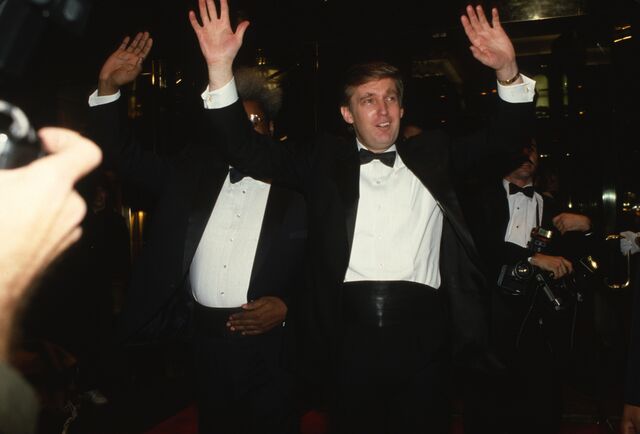
You did like him, didn’t you? When you were in New York together?
Very much. Look, New York is full of showboating, huckster-ish, swinging kind of guys who are kind of fun to sit with at dinner. They’re not necessarily people you would adore spending a huge amount of time with, but they’re fun and they light up a room. And that’s what Trump was.
He was a refreshing character at that time. But you know, he did change, 5 and he changed during the time that I was covering him.
5 Brown has said that she thinks the end of Trump’s first marriage and his financial problems in the 1990s were factors. In 2018, she told Politico: “Before the divorce, he was seen as a somewhat appealing con man — a big mouth but a big figure. After, with the divorce and the bankruptcies, he seemed like a more tawdry person.”
You sound worried about this moment in America. And yet, I’m also struck by the fact that I think a lot of the Tina Brown we see today is because of America, or made in America.
[Brown laughs.]
You went there 40 years ago, and I read that you looked around New York and felt American women were so ahead of British women, that they had this confidence. They knew how to speak, they knew how to present themselves, and you learned from that.
I did actually. I was far more retiring, personally — not in my career, but in terms of getting up on a stage and making a speech. I’d never actually done that before I came to the US. Even during my time at the New Yorker, I always put my writers on television. I never wanted to be the one who was on television.
That changed when I started writing my books. When you have to go out there and promote, now I recognize that it’s so much a part of what you have to do. 6
6 In 2009 Brown founded Women in the World, a live journalism platform to “discover and amplify the unheard voices of global women on the front lines of change.” Before the Covid pandemic shut it down, the final annual summit in New York asked the question “Can Women Save the World?”
So I did learn from American women.
I have to say that I’m concerned about American women at the moment. I feel women in America are going through a really invisible time. Where are they in all of this? It seems to be a completely male-dominated world-affairs platform, or women in the Trump group are in this mold [where] appearance is the first thing you notice.
It’s kind of impacted everything. I mean, Instagram now: Women of substance keep posing on Instagram as if they’re Kim Kardashian. I’m looking at women who are running big agencies in advertising or who are women of substance and they’re posting pictures of themselves in bikinis and it’s all sort of frothy, it’s ridiculous. 7
7 I don’t know who she is thinking of here but my own Instagram feed flashed before my eyes at this moment. Definitely no bikinis, but there are some selfies...
It’s a very odd moment, I think, and a rather disappointing one.
But Tina, you came from the world of magazines, pages and pages of advertising. You have to work quite hard to find the actual articles. It’s a version of your old world.
It is a version except that in between the adverts were also fabulous pieces about politics and world affairs. 8 We really did do very good journalism in Vanity Fair. It’s hard now to find places to do strong journalism. It’s vanishing.
8 Brown has long said her journalism is “high-low,” combining what might otherwise have belonged in different publications. The famous August 1991 issue of Vanity Fair, for example, featured a naked, pregnant Demi Moore on the cover and also had pieces about Saddam Hussein and Vaclav Havel.
You’ve made a success of your newest venture. You are on Substack and we see you in your own voice, with your opinions, holding forth in your own right. Which aspect, if any, do you miss of the old world? The impact? The teamwork?
I would say all of it. But mostly, one of my great joys in life is assigning stories. I can, in Fresh Hell, give my take on the Iran situation or whatever. But there is not the ability to assign reporters to do that sort of juicy, deep dive into Does Iran really have weapons of mass destruction? I miss being able to call these writers and say, You should go now and do this story.
I do also very much miss, at times, the visual component of magazines — working with photographers’ pictures and the hierarchy of excitement that you can create by saying, Okay, huge, double-page spread, big splash, incredible picture, big headline. You can’t do that digitally. It’s all the same. It’s just a little picture and a headline, and a social media blast and a TikTok thing.
Get the Bloomberg Weekend newsletter.
Big ideas and open questions in the fascinating places where finance, life and culture meet.
By continuing, I agree to the Privacy Policy and Terms of Service.
I want to ask you about royal celebrity because you wrote about and commissioned pieces about Princess Diana. You knew her as a person. Do you think she was hounded by the press?
It’s a very interesting question. Of course Diana was hounded by the press, but she was a real collaborator in her own celebrity victimization. You have to give her a huge pass because she was sort of a child when she married Charles. Imagine you’re 20 and dealing with the monarchy, and your husband isn’t actually in love with you. I have huge sympathy for her, struggling with that era of her life.
But the second part of her life, her late 20s and early 30s, she really played the press like a fiddle in many ways. She was in constant contact with them. And there is a way to be private if you want to be. There are many major celebrities in Hollywood who do lead a very private life. The George Clooneys of the world aren’t spending their time trailed by people. Diana was actually tipping off the press a lot of the time on where she was. And she really did use the press as leverage in her various romantic situations.
Going back to what we said at the beginning, she had everything we’re talking about. She didn’t just have this incredible telegenic star power. She knew how to use it and she knew when, and exactly in what manner to deploy it.
I want to come back to you. I was struck, reading about the way that you’ve described your long marriage to Sir Harry Evans, who was already editor of the Sunday Times — a crucial role in British journalism – when you met him. You were incredibly young at the time, only 21. In stark contrast to Charles and Diana, he was really supportive of your career and enjoyed all the attention you got, because you became more famous than him once you came to America.
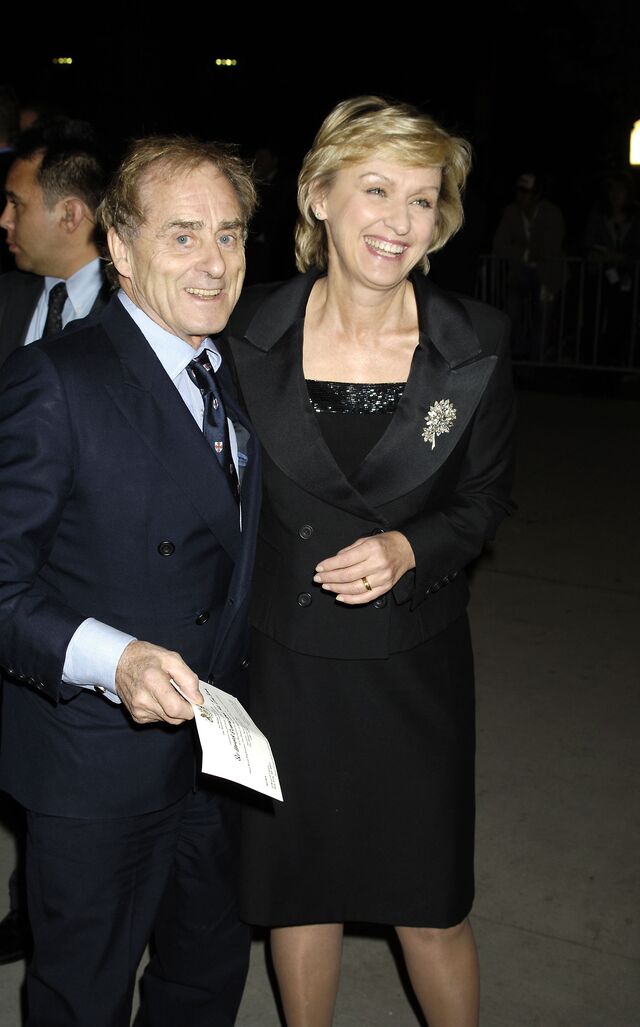
Only in America, yes. Harry was steadfast, but also he was very self-confident. In the end, a man who’s threatened by his wife’s success is essentially insecure. And Harry wasn’t insecure. He had a kind of masculine self-confidence that just wasn’t threatened by it. He enjoyed it, he thought it was exciting, and he taught me so much as an editor. He was really my mentor as well as my husband. 9
9 Evans’ successes at the Sunday Times included uncovering the thalidomide scandal of the 1950s and early ’60s. He was later forced out of the Times newspapers soon after they were bought by Rupert Murdoch. After Evans’ death in 2020, Brown co-founded a journalism fellowship and the UK’s Truth Tellers summit in his honor.
When I used to come home in the evening, I would bring the dummy, the fake magazine with all the pictures stuck in, as they were in those days. And he’d say, ‘You should lose this. This isn’t right. Make the picture bigger.’ He was my third eye and my critic and he loved it. And when it succeeded, he couldn’t have been more pleased.
At the height of your powers, during the years you were editing the New Yorker, there was a moment where you suggested to Si Newhouse of Condé Nast that the New Yorker could be more than a magazine. It could have a radio show, what we might today call a podcast, attached to it. And he said, basically, ‘Get back in your box.’
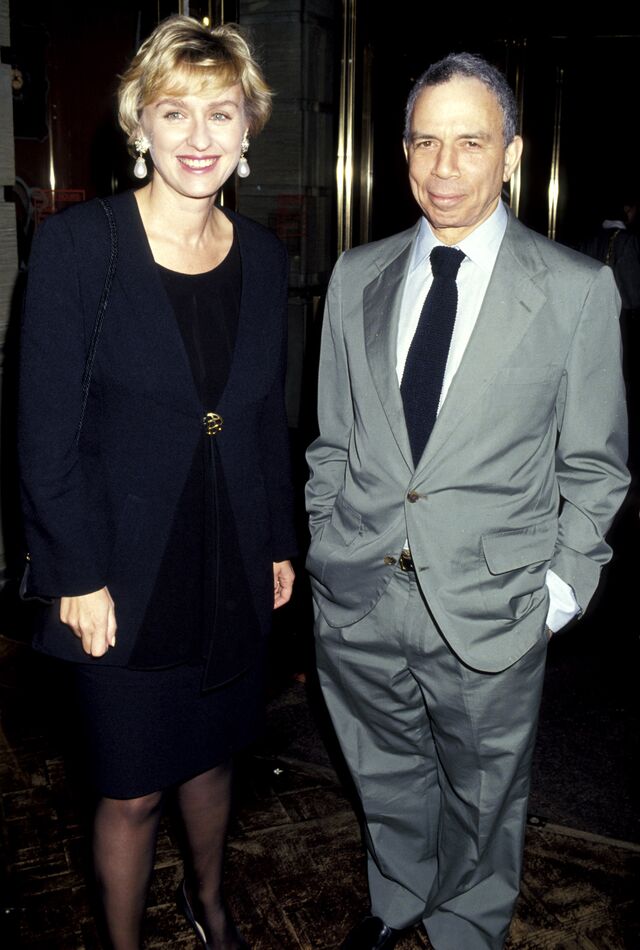
Totally. He actually uttered the phrase — which is the final thing that made me leave — ‘Stick to your knitting.’ 10 Like, ‘Stay in your lane.’
10 I found this breathtaking, largely because of how senior she was at the time. My one experience of this kind was when I was about 30 and had only recently moved from production to being in front of the camera. I ventured an opinion on TV graphics, asking whether the markets arrows could be made bigger, for clarity. “Stick to what you are good at,” an editor said, “which is presenting.”
I thought, We’ve reduced the losses at the New Yorker, but we’re never going to turn this into profit if we just depend on advertising, because it was a serious weekly magazine and that’s not what advertisers want. I remember saying to him, ‘We could be like the HBO of print. People will pay for the New Yorker. We should have a book-publishing arm and we could do a radio show. I’m constantly being asked about turning pieces into movies and they are sold to the movies. We get nothing out of it. Why can’t we have a production arm?’
It took him 15 years after I left to finally go in that direction. 11
11 A decade after Brown resigned, the 2008 financial crisis took a considerable toll on Condé Nast. But the relationship between Newhouse and Brown benefited both parties for years: “Newhouse encouraged Brown to live the life she chronicled: Every lunch was a power lunch, every dinner a party,” according to our review of a recent book about the media empire.
Let’s close by looking to the future. There are some recent Reuters figures on news consumption, which I have to say are not encouraging. 12 I have an interest here because I’m part of something new here at Bloomberg Weekend, so I’m going to ask you to distill all your years of experience to advise me. What works in engagement, so that people are prepared to come back week after week?
12 The Reuters Digital News Report 2025 fount that the shift to social media and video platforms “is further diminishing the influence of ‘institutional journalism’ and supercharging a fragmented alternative media environment containing an array of podcasters, YouTubers and TikTokers.”
I’m going to bore you by saying I still firmly believe in quality, but done with enough flair to lure people to listen. I do not think putting a 20,000-word Pulitzer prize-winning article out there [means] that people are going to read it. They’re not. They’re just not.
I have always been able to do this with my magazines, taking that content and bringing it to people. And it’s really about seduction points – the headlines, the packaging, the presentation, the graphics, the music. It’s all enormously important to getting people to listen and read and so forth.
You have to keep thinking all the time, People will be bored. People won’t read it. It has to be the number one thought in your mind. However serious your publishing is, you still have to be good at seduction. An ability to lure people through that door will always be about that.
I am writing down the word ‘seduction’ and making a note that it is not to be confused with bikinis on Instagram, which we know you are firmly against.
I am so against. Mainly because I can’t wear a bikini on Instagram. I wish all those who can happiness and health.
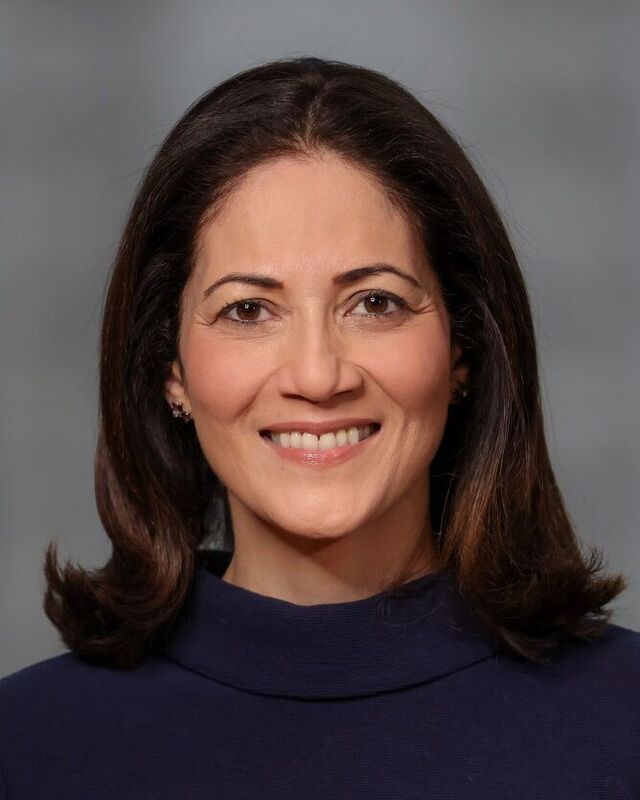
Mishal Husain is Editor at Large for Bloomberg Weekend.