Cornering Classic Cars
In two years, McKeel Hagerty has transformed his modest family business for vintage vehicles into a conglomerate with unprecedented control of the entire industry.
Every August, the world’s most discerning car collectors descend on Carmel-by-the-Sea, California, for an unadulterated automotive orgy. The occasion is Monterey Car Week, where enthusiasts staying at four-night-minimum resorts arrive on dew-drenched hotel lawns in the early hours to ogle vintage Jaguars and Porsches. By afternoon they’ll cram into white auction tents to bid millions on the blue chips, a Mercedes-Benz 300 SL Gullwing or a Ferrari 250 GTO. Come evening, Bugatti, Lamborghini and Rolls-Royce will host candlelit dinners overlooking the yachts in Carmel Bay and offer VIPs private meetings with top-ranking car executives and sneak peaks of upcoming models. Flexjet parking is always on tap; the loafer and scarf count is high.
The week climaxes on Sunday at the Pebble Beach Concours d’Elegance, a car show on the 18th fairway of the golf course. It’s like a very fancy dog show, but for cars. As guests order seafood towers and sip Champagne, navy-jacketed judges inspect the purebreds of the auto world: Alfa Romeos and Bentley Blowers decorated with liveries from races won last century; Duesenbergs and Packards with art deco fenders the size of card tables; Lamborghinis painted as bright as Skittles. The winner gets ribbons, a trophy, a bump in their car’s value—and bragging rights.
This year brought with it an unusual addition to the upper-crust ranks: a Midwestern insurance company working hard to fit in. Auto brokers, nouveau riche collectors, restorers and retired racing champions gossiped near auction tents and late-night fire pits, noting that Traverse City, Michigan-based Hagerty Inc. had given itself a makeover.
On Wednesday, Hagerty hosted a gala at a local jet hangar. On Thursday its newly acquired Broad Arrow auction house took in $55.3 million in total sales. On Saturday, it sponsored free food and drinks in a suite at Laguna Seca Raceway. On Sunday, it was Chief Executive Officer McKeel Hagerty himself, shaking hands near the winners podium. “They did seem to be everywhere during Car Week,” says Greg Fazzio, a Hagerty insurance customer who attended the festivities.
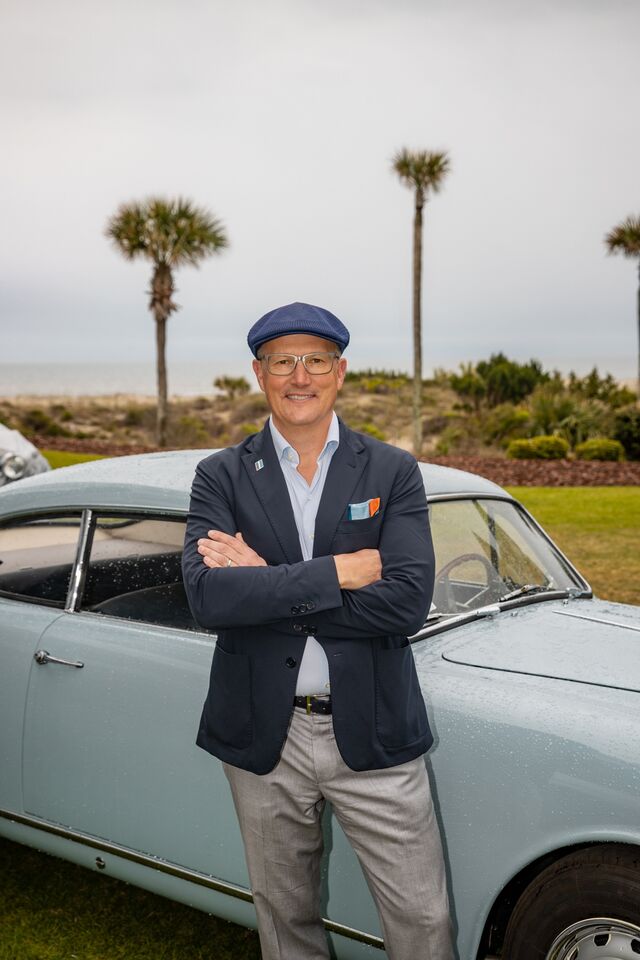
Recently, Hagerty—the man and the brand—has been on a tear. The company, founded in 1984 by McKeel’s parents, has long insured classic cars and provided market data on their fluctuating values. In the past two years it’s tried to trade in its humble image for something much more audacious—that of a conglomerate that owns every aspect of the collectible car universe, including auctions, brand experiences, data, events, logistics, media and storage. It’s acquired half a dozen major car events nationwide, such as the intimate Amelia Island Concours d’Elegance in Florida and the exclusive California Mille rally. It’s opened car storage clubs in Chicago, Los Angeles, Miami and five other cities. It’s purchased a handful of auto-related tech companies, including the creator of a motor sports event management system and a tech provider, Speed Digital. It also operates DriveShare, a peer-to-peer classic car rental service it bought and relaunched in 2017, and runs an online classifieds section for 753,000 paying members. In recent years it began publishing Hagerty Drivers Club, a bimonthly magazine, and Radius, a quarterly distributed to top collectors.
Hagerty says that by cornering the market he’ll save classic car culture, a loose term used to describe the disparate local groups of car aficionados scattered across the country and, these days, social media. It’s a universe made up of an estimated 43 million collectible vehicles, whose values have risen more than 190% in the past decade, according to the Knight Frank Luxury Investment Index.
Hagerty says this culture is threatened by increasingly stringent transportation regulations and a declining interest in the more traditional aspects of the hobby, like learning how to operate a manual transmission. As people become captivated with autonomous driving, he says, the network required to preserve old cars—brokers, collectors, curators, drivers, investors and mechanics—dwindles. Those gorgeous old Bentleys and Jaguars with their rumbling engines and antiquated brakes are already so rare that seeing one drive across a concours lawn is like encountering a Bengal tiger in the wild. If they’re not protected and well cared for, Hagerty believes, this endangered species will go extinct. “I love the car world,” he says. In 2014 he created the National Historic Vehicle Register to document important cars in America’s past. “I really wanna see it last long term, but I don’t think that’s a given.”
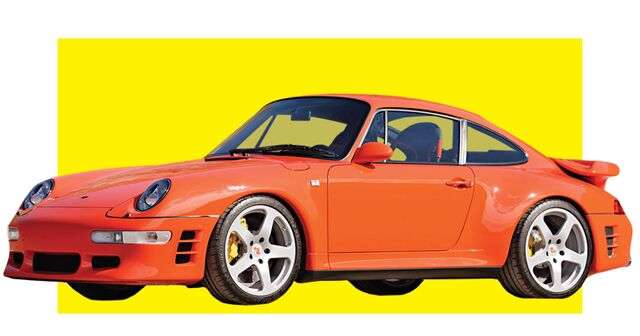
Offered by: Gooding & Co., Estimate: $1.4-$1.8m, Similar sale: $764k (RM Sotheby's, 2021), Sold for: $1.6m
The industry has never witnessed a shake-up like this. Hagerty’s growing empire not only presents uncomfortable potential conflicts of interest, it also raises the question of whether the nation’s 120-year-old classic car culture—rich with hundreds of tribes devoted to everything from American lowriders to Italian exotics—can maintain its diversity under an expanding corporation posing as its savior. “There is a terrific automotive lifestyle business being built before our eyes,” says Donald Osborne, an automotive appraiser, TV host and writer who worked as a consultant for Hagerty for a decade and hasn’t been seen in public without a bow tie for years. “But what does that have to do with insuring collector cars?”
•••
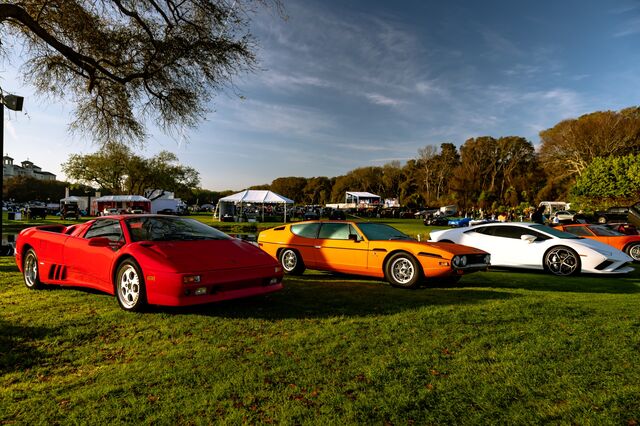
There’s no one kind of car collector. Muscle heads love the guttural roar of the V-8 engine in a vintage Mustang. Palm Springs country clubbers swoon for those old Porsche 356s that channel the Volkswagen Beetle. #Vanlife enthusiasts import tiny, velour-lined Toyota HiAce vans, hipsters get into bidding wars over 1980s Broncos, and Rodeo Drive scions endure yearslong waiting lists for customized Ferrari 296 GTBs and Lamborghini Aventadors.
Most have just one vintage car they drive on the weekend. They don’t need the workaday insurance of a Honda commuter, just something to cover the limited miles they put on the old ’Vette. Classic car insurance considers minutiae such as how and where a car is stored, down to the terrain of the driveway and the topography surrounding the garage. It also evaluates variables like how often, when and by which means a car is transported, how many miles it may be driven a year and how much it may gain in value.
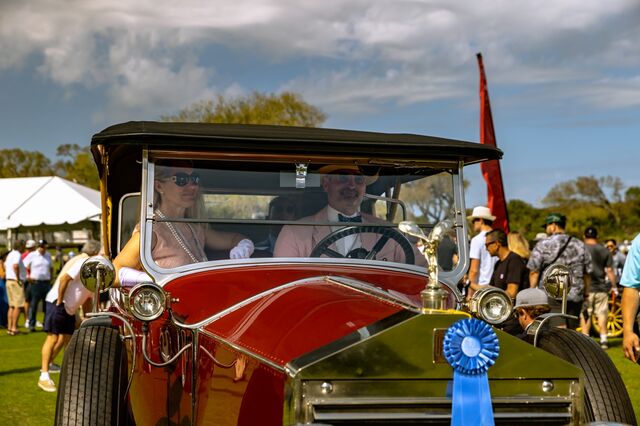
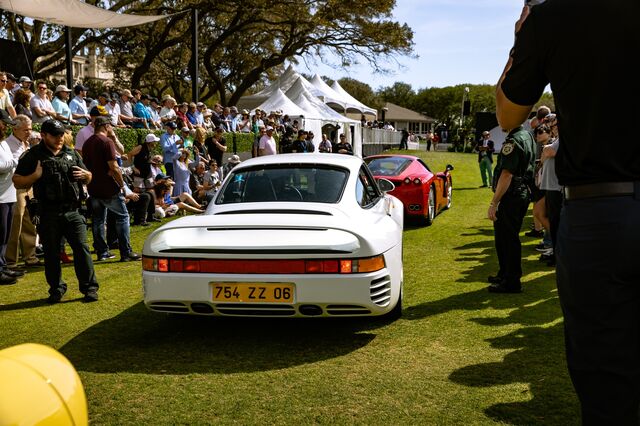
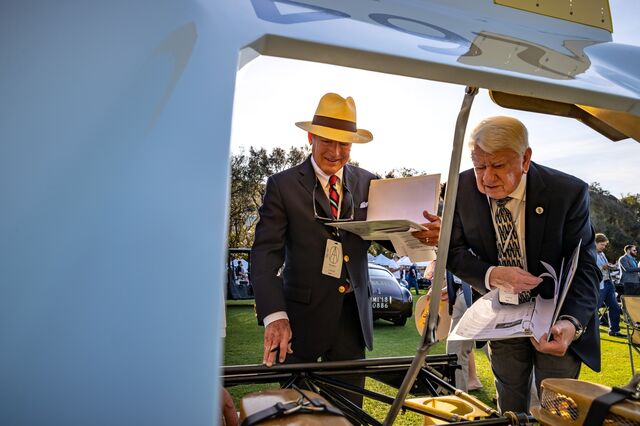
In past decades, Hagerty has earned a reputation in a market with competitors such as AIG, American Collectors Insurance, Chubb and Grundy for fair pricing, friendly employees and transparent data. Its value guides help give eager buyers a sense of where they can expect prices to go, and Bloomberg has long cited Hagerty data in its coverage of collectible cars. “McKeel should have great credit for transforming it from what was a relatively minor insurance company into the most important classic car insurer, at least in America,” says Steven Harris, a renowned New York architect and Porsche collector. “I think if I were to imagine what McKeel is thinking, he’s thinking that this is the next transformation.”
Hagerty restored his first car—a 1967 Porsche 911S—at 13, mostly using money he made mowing lawns in Traverse City, 250 miles north of Detroit. At 18 he was selling insurance for his parents’ company. But after graduating from Pepperdine University, he decided to go to seminary to become a Russian Orthodox priest. (He was raised Methodist.) In the early ’90s he changed his mind, instead pursuing a Ph.D. in philosophy at Boston College—until he changed his mind again. By 1995 he was back at the family business. Frank, his father, had retired, and his mom and two sisters were running the faltering 35-person company.
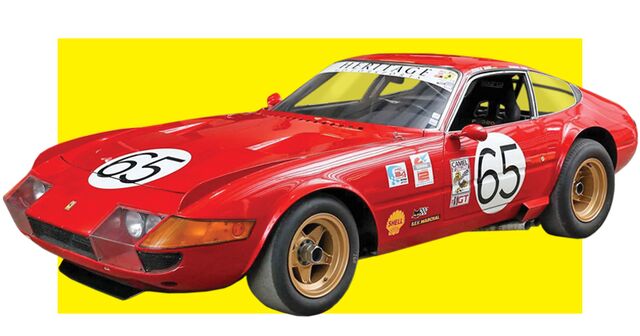
Offered by: Broad Arrow Auctions, Estimate: $600k-$650k, Similar sale: $800k (Bring a Trailer, 2022), Sold for: $588k
Hagerty says his years studying religion gave him insight into how communities are built. “When I thought about this very nichey, very fragrant, very beautiful world of the Orthodox church, it reminded me a lot of the car world—this idea that there are these deeply passionate people—about these things that may or may not be really widely recognized in society,” he says. Insurance was a boring trade, but he already had ideas about how to build it into something sexier and more lucrative. “If we just created more of a car club that was about the members, we’d never have to talk about insurance ever again,” he recalls thinking at the time.
By 2000, he was CEO. The company, owned by the three siblings and their parents, was insuring about 175,750 vehicles, a fraction of the 2.2 million cars it insures today. (Geico, by comparison, insures more than 28 million.) He eventually married his third wife, Soon Nguyen, a glamorous publicist from Los Angeles who represented Lamborghini and other high-end clients. She’d taken on the Hagerty business before they were married, and within a few years became its senior vice president for brand strategy. “It really felt like working for a very small family company when I first worked with Hagerty,” says Osborne, the consultant and industry fixture. “Soon brought LA to Traverse City. The style and polish that the company has today, its image, is all her.”
Hagerty started polishing his personal brand, too. In 2016 he became chairman of the Young Presidents’ Organization, and a year later he co-founded Grand Ventures, an investment fund targeting tech startups with ties to the Midwest. He started writing books and launched an eponymous blog, where he now shares self-helpy business wisdom.
Then, in 2019, he quietly bought the Greenwich Concours d’Elegance in Connecticut. “I knew about the deal, but Greenwich wasn’t exactly a show I attended,” says one prominent automotive broker who asked to remain anonymous to protect his business relationship with the company. The concours, set along the harbor overlooking Long Island Sound and featuring about 100 vintage Ferraris and Mercedes-Benzes, wasn’t particularly respected among the elite car set. “It was kind of funky and needed a little bit of an overhaul,” says Hagerty, who won’t disclose how much he paid for it. Even if the event didn’t have prestige, he finally had entry into the subculture of the obsessives. “You gotta play very heavily in the car culture space,” he says. “It’s the only way [to save driving]. Insurance is certainly not gonna do it.”
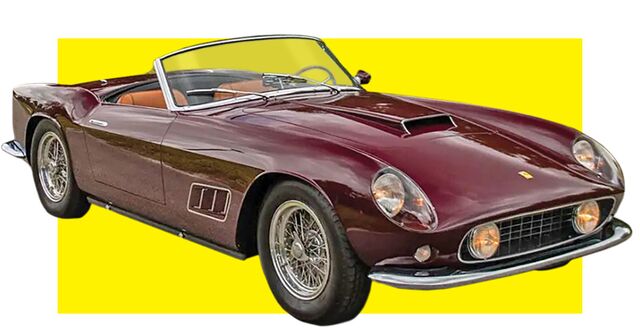
Offered by: RM Sotheby’s, Estimate: $9m-$11m, Similar sale: $7.7m (Gooding & Co., 2015), Sold after auction for undisclosed price
The following year, Hagerty acquired its first rally, an invite-only, multiday group drive called the California Mille, long operated by members of the prominent Swig real estate family, for an undisclosed amount. Then, in 2021, the company tried to buy the granddaddy of them all, the Pebble Beach concours. Sandra Button, the concours’s chairperson for more than two decades, is notoriously protective of her crown jewel. McKeel was rebuffed, according to multiple sources close to the matter. “She will never sell, especially not to Hagerty,” says one person close to the matter who requested anonymity for fear of professional backlash from Hagerty. Pebble Beach concours officials declined to comment. Hagerty declined to confirm or deny the reported purchase attempt.
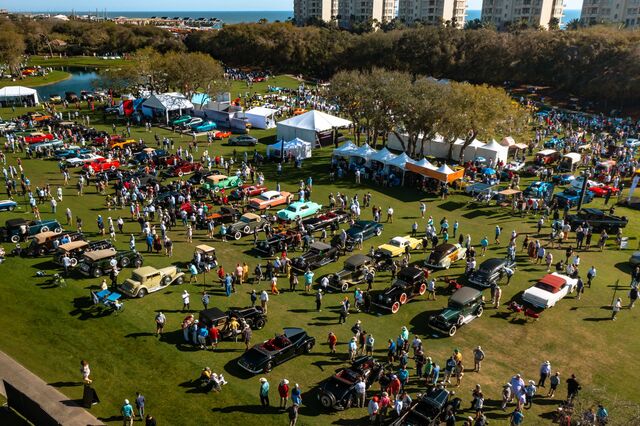
If the snub happened, it didn’t appear to discourage McKeel, who’d also set his sights on the Amelia Island Concours d’Elegance, run by its octogenarian founder, Bill Warner. Held on the Ritz-Carlton Hotel golf course, Amelia Island was the second-most prestigious car show in the US after Pebble Beach. With its laid-back beachy Florida vibe and the RM Sotheby’s auction tent set right on the hotel grounds, it had an insider feel that made it a favorite among the industry’s more discreet and established buyers. Plus, the Warners gave it a mom and pop touch that endeared them to a loyal following who trekked back to the island year after year. “My wife was equally involved with me, up at 5 a.m. every morning to wave people onto the field,” says Warner, who sold it to Hagerty for an undisclosed amount in June 2021.
By then, collectible cars were experiencing a pandemic boost, and McKeel decided to take his growing conglomerate public via a special purpose acquisition company, or SPAC. With the trendy financial vehicle, he could avoid the hoops of an initial public offering—which would be particularly helpful since one of his sisters with whom he owned the business had some troubling health issues. “I just had this fear that something could happen to one or both of my older sisters, and if I didn’t get this underway, it would be really hard to do later because of just how tightly held the business was.” The company announced its SPAC plans in mid-August. A week later, Kim Hagerty died after what the family described as an accidental fall. (Hagerty declined to share specifics.) On Dec. 3, the company went public at a valuation just over $3 billion. “My gosh, it turned out to be very, I mean, good timing,” says Hagerty.
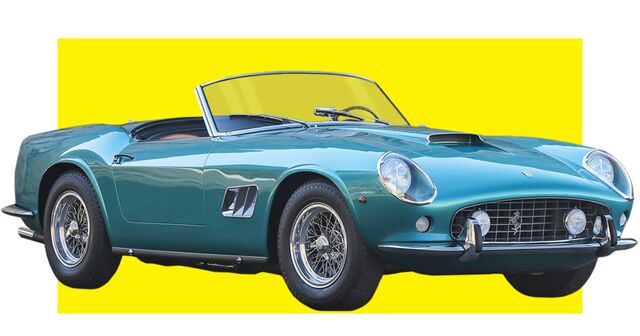
Offered by: Gooding & Co., Estimate: $18m-$20m, Similar sale: $8.6m (RM Sotheby’s, 2012), Sold for: $18m
Joining the public markets raised the company’s profile and allowed it to continue its acquisition spree. By summer, it purchased Broad Arrow Group Inc., which owns the classic cars auction house of the same name. The move was controversial not only because Hagerty named Broad Arrow the official auction house of Amelia Island’s concours—where RM Sotheby’s, the classic cars division of the auction stalwart, had long dominated—but also because it elevated a high-profile Sotheby’s defector. Just months earlier, Broad Arrow CEO Kenneth Ahn, who’d been president of RM Sotheby’s, joined a group of his former employees and started Broad Arrow as a direct competitor, resulting in multiple lawsuits between the two companies. (The cases have since been settled.) RM Sotheby’s has announced it will hold a dueling concours and auction to the Amelia in Florida the same weekend in March next year.
Hagerty says the vision for his new empire is not dissimilar to USAA, which offers members insurance, banking and other services, including perks on car rentals, home security, shopping and travel. “If somebody decides to sell a car at one of our auctions, I hope we get ’em as an insurance customer,” he says.
But critics say the company’s new grip on the industry goes beyond symbiosis—it now has an unprecedented advantage. With access to valuable information about specific vehicles, Hagerty can identify, insure, store and even set values at its own auctions. It also helps fund the International Chief Judge Advisory Group (ICJAG), which sets the judging standards at a given event. Concours judges evaluate things such as how close to original a car is, its overall condition and quality, and whether, for instance, the engine must start as criteria for winning—aspects often enforced arbitrarily and to different degrees, depending on the show. In 2020, Nigel Matthews, who was already a Hagerty global brand ambassador, became ICJAG chairman. “This development gives Hagerty a huge lever with which to influence, if not outright control, a huge piece of the market,” says Daniel St. Pierre, a longtime car enthusiast based in Edmonton, Alberta. “They now essentially own the supply chain from the product to the sales machinery to the service [insurance] business.” (A spokesperson for Hagerty says Matthews is not involved in Best in Show or Best in Class decisions, and all results are overseen and verified by a third-party accountant.)
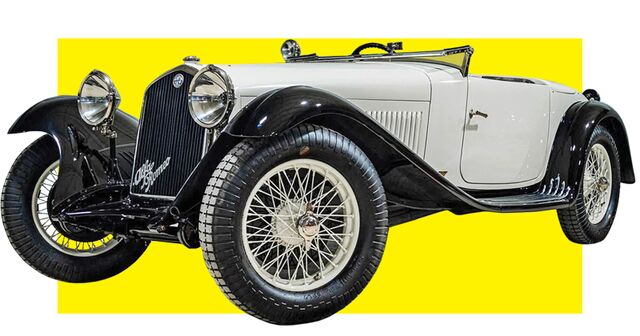
Offered by: Broad Arrow Auctions, Estimate: $1.5m-$2m, Similar sale: $1.6m (Gooding, 2017), Sold for: $1.3m
Hagerty’s biggest potential conflict of interest is data, which is extremely valuable in the secretive world of million-dollar cars. Because insurance policies require vehicle identification number, location and other private information, Hagerty can access the details of thousands of expensive cars far better than even the companies that made them—and becomes the de facto authority on their valuation. It can use that information to help match buyers and sellers in closed-door deals and arrange insurance for any cars sold at auction, setting values along the way. For example, someone looking for a rare Porsche 550 Spyder (which recently sold for $4.1 million) could work with Hagerty staff to find out where one of the fewer than 100 made is located, then make an offer—based on and backed by Hagerty values—to buy the vehicle. The presumed margins for Hagerty on these private sales would be substantial, since it wouldn’t have the overhead expense of selling the car via auction.
It’s not illegal, but the market edge is eye-opening. “They’re setting the values, they’re having the auctions,” says one former employee who requested anonymity for fear of backlash from the company. “They have an online marketplace and now online auctions, and they’re telling people what to pay for stuff, telling people what to buy next.” Says Warner, former owner of the Amelia Island concours: “It’s a fair concern.”
•••
It’s not uncommon for wealthy collectors to have egos as delicate as their rarefied cars. At the California Mille in 2021, at least three regulars noted that they weren’t invited after Hagerty took over, and the oversight felt personal, they said, preferring to stay anonymous so as not to rouse more Hagerty ire. Those who did pay the $9,500 entry fee reported lackluster accommodations, a disorganized driving route and three dinners where the only meat offered was pork. (A Hagerty spokesperson says that only one of the dinners included pork.)
During Monterey Car Week in 2022, a clueless staffer at Hagerty’s hospitality suite refused entry to the celebrity Formula One race car designer Gordon Murray. A horrified onlooker offered her own wristband to Murray, only for him to be denied entry a second time. “The Hagerty company culture is rural,” says one former employee on condition of anonymity. “But there’s a lot of ambition. There’s a lot of ‘We’re the next Apple, we’re the next Peloton.’ ”
Car shows aren’t a particularly lucrative business. The cost of vendors, logistics, awards, insurance and staff is hardly defrayed by the negligible entry fee for local shows, which aren’t big enough to attract major sponsors. Many of the events Hagerty has purchased were run by families who wanted to get out of the business anyway. “We never made a lot of money,” Warner says of his Amelia show, which he describes as an “altruistic charity endeavor” that cost $3 million to produce annually. “I had a staff of nine and a lot of volunteers, but we were rolling the dice every year.”
Other shows were embarrassingly outdated, in dire need of logistical and technological upgrades that Hagerty has delivered since taking over. “The whole industry is so sleepy and backward it’s screaming for disruption,” one observer says. Of course, old-world idiosyncrasies are often what give car shows their charm. Exploiting efficiencies that come with scale without steamrolling what makes the events special will be the challenge.
Hagerty continues absorbing even the quirkiest bits. In February 2022 it licensed the Concours d’Lemons, a festival where people drive their oddball junkers to a golf course and parade them around as if they were mint-condition championship automobiles. The following month, Hagerty paid an estimated $3 million for Radwood, a show that celebrates 1980s and ’90s-era cars such as Ford Escorts and Volkswagen Rabbits. “I’m fascinated by the business model and how this is gonna make any money,” says Harris, the Porsche collector.
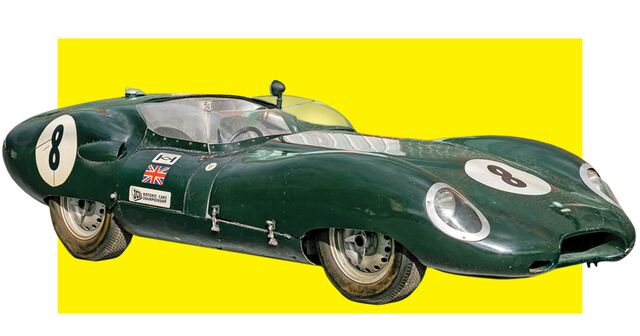
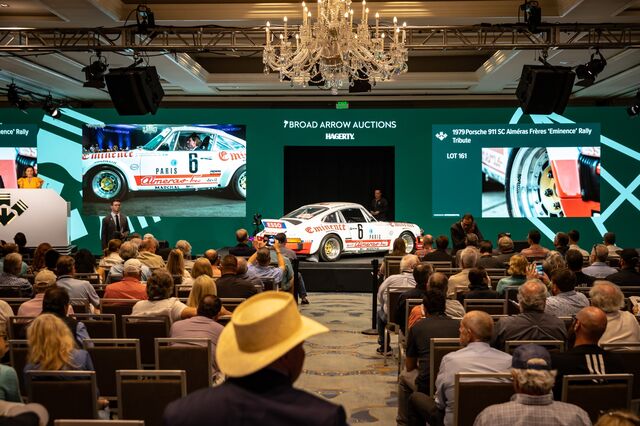
Offered by: Bonhams, Estimate: $600k-$800k, Similar sale: $423k (Gooding & Co., 2023), Sold for: $775k
Hagerty declined to itemize which, if any, of his acquisitions have turned a profit. “Existing [and] potential profitability are of course considered but are not the only factors,” he says of the company’s financials, which he’s not required to break out by individual businesses in financial statements. Insurance still generates more than 90% of revenue, which was $787 million in 2022, up 27% from 2021. But growing at the speed of a Bugatti comes with a cost. Last year the company offered a voluntary retirement program, which 30 employees accepted, then in December it laid off 6% of its staff, according to US Securities and Exchange Commission filings, eliminating more than 100 jobs.
Hagerty believes consolidating the industry under its banner will keep America’s car culture alive, even though it’s not all that clear the culture needs saving. These days popular hangouts such as Lower Manhattan’s Café Leon Dore are pulsing with Alfa Romeo and Porsche groupies, while coffee meetups from Malibu to Montauk are drawing teen and twentysomething car fans who spend their free time playing Gran Turismo and watching Netflix’s docu-series Formula 1: Drive to Survive. Last year online auction platform Bring a Trailer—half of whose users are 44 or younger, according to a company spokesperson—reported a record $1.3 billion in sales of classic cars. Even auction sales of the oldest, most expensive classics are up, and increasingly popular with buyers under 50, according to Bonhams. “It seems like every show that I go to, it’s starting to get a younger crowd, a more diverse crowd,” says Bradley Brownell, a co-founder of Radwood who’s now director of the Crawford Auto-Aviation Museum in Cleveland. “I just don’t know that Hagerty is the one doing that.”
At the 2023 Amelia concours weekend in early March, Hagerty’s corporate fingerprints were everywhere. As 25,000 car enthusiasts rolled in, they received QR codes for entry, alerting them about impending rain, scheduling changes and parking, while jumbo screens broadcast the awards ceremony across the main lawn. Meanwhile, old-timers grumbled they could no longer park freely along the country road leading into the concours, instead having to leave their cars in nearby fields for $40 a day. Hurley Haywood, the retired American racing driver, expressed disappointment to anyone who’d listen that he had to purchase tickets to the opening dinner, when in prior years he’d attended for free. The vibe, as it were, has shifted. “If Hagerty can bring corporate organization and financial support to events that might not exist, good for them, that’s terrific,” Osborne says. “On the other hand, I think it’s important to understand why people participate in those events in the first place.”
(Updates to include Sotheby’s auction in 20th paragraph. A previous version of this story corrected Hagerty's corporate relationship to ICJAG, and its licensing of Concours d’Lemons.)