Putin’s High-Tech Russian Submarines Goad NATO Deep Below the Atlantic
NATO is fighting back against Russia’s submarine threat in cat-and-mouse games reminiscent of the Cold War

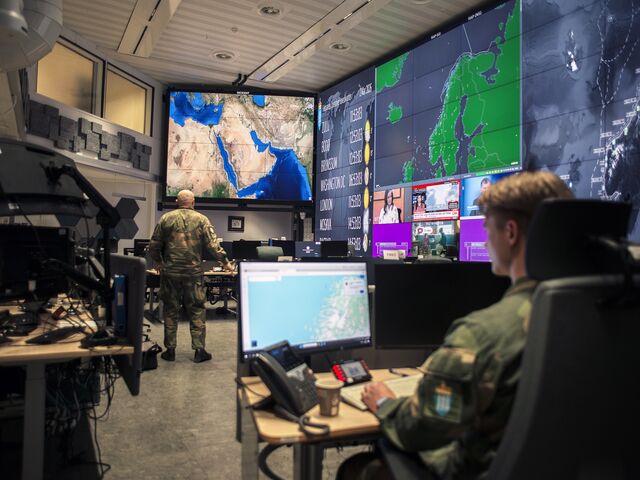
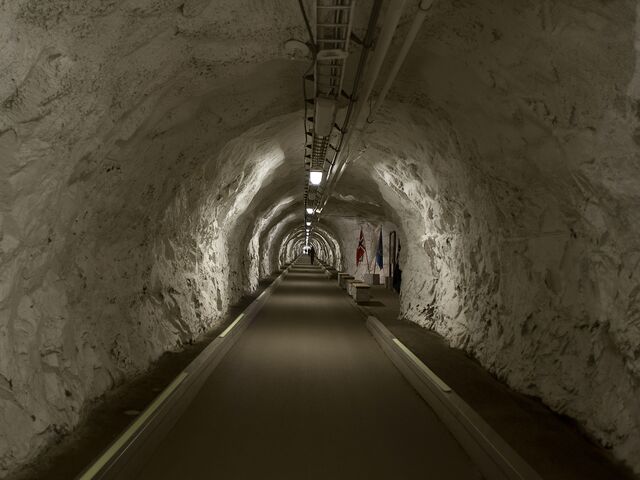
Four hundred meters inside a hollowed-out mountain behind a double set of blast doors, operators sit in a darkened room at computer stations facing a bank of floor-to-ceiling screens displaying a map of northern Norway and the Arctic region.
In this military facility designed to withstand a nuclear strike, data is collected from sensors across the far north monitoring everything from the seafloor all the way up to space, sifted for anomalies, and analyzed for threats such as shadow fleet ships and unidentified aircraft.
Increasingly, Norwegian Joint Headquarters in Reitan, a 30-minute drive from the Arctic town of Bodø, is also spearheading NATO’s intensifying efforts to track the submarines of Russia’s Northern Fleet. Whether transiting south from the Kola Peninsula and into the North Atlantic or lurking under the polar ice cap, these modern nuclear-powered vessels are the most muscular expression of Vladimir Putin’s burgeoning seapower.
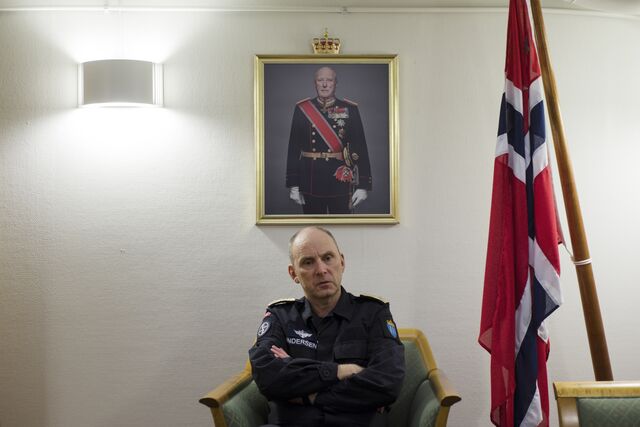
“They’re good,” Vice Admiral Rune Andersen, the joint headquarters’ commander, said in his compact underground office, flanked by a portrait of Norway’s King Harald and an oil painting of a naval sailing ship from centuries past.
“I think a lot of us were quite surprised about the lack of competence and the performance of Russian forces” after Putin’s all-out invasion of Ukraine in 2022, Andersen said in an interview in early March. “I do not transfer that to the submarine force. They are the prioritized units in the Russian military.”
Putin has put considerable effort into reconstituting the navy after its post-Soviet demise, with a raft of new vessels entering service in the past decade. Submarines are a particular focus, prompting a robust response from frontline NATO states, primarily Norway, the UK and — for now, at least — the US.
The result is that even with the world’s gaze fixed on the Gulf, NATO and Russia are facing off in something akin to a return to Cold War-era anti-submarine warfare in the North Atlantic, only with new and increasingly sophisticated technology.
A rare glimpse of the threat came on April 9, when British Defense Secretary John Healey made public that the armed forces, acting with Norway’s help, had disrupted a covert Russian operation targeting subsea infrastructure in and around UK waters. It began when a Russian attack submarine was picked up as it entered international waters in the High North, and was tracked around the clock for weeks.
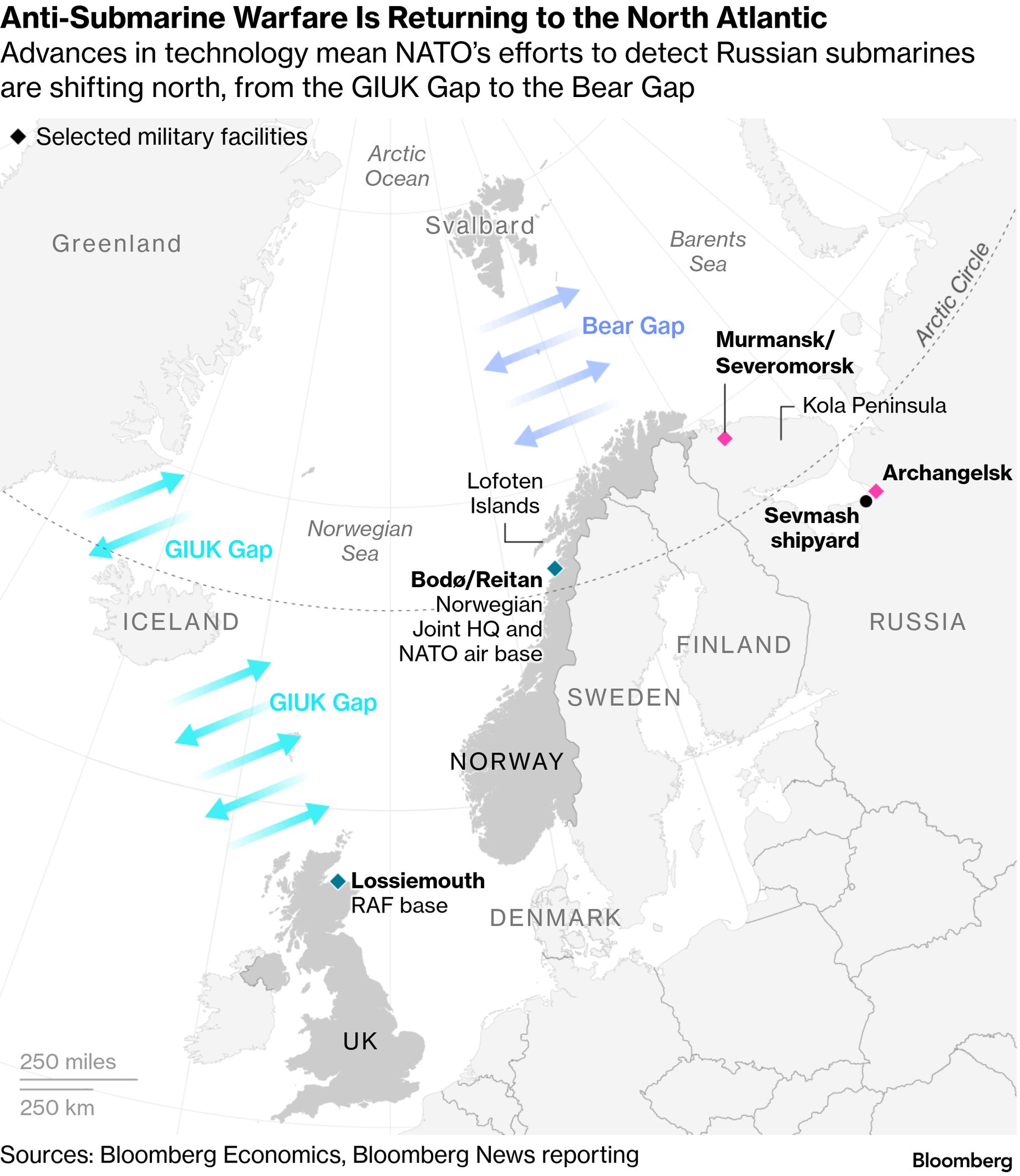
Anti-Submarine Warfare Is Returning to the North Atlantic
Advances in technology mean NATO’s efforts to detect Russian submarines are shifting north, from the GIUK Gap to the Bear Gap
Increased submarine activity adds to the Arctic’s rediscovered strategic significance, as witnessed by President Donald Trump’s frustrated attempt to gain control of Greenland. It’s a bone of contention that he resurfaced when castigating NATO for failing to join his war on Iran, and again talked of quitting the alliance.
European officials say that there’s a disconnect between the president’s rhetoric and the reality of US military cooperation on the ground and at sea, however, and US troops were in evidence at the Reitan facility.
But Europe is also making a show of assuming more responsibility for Arctic operations. It explains the rush of interest in coordinating with Norway, which pitches itself as NATO’s “eyes and ears in the North.”
German Chancellor Friedrich Merz and Canadian Prime Minister Mark Carney were in the Norwegian Arctic on March 13 to observe NATO exercises as the guest of Prime Minister Jonas Gahr Støre. Germany and Norway are jointly procuring submarines and have a joint missile program, while Canada is in talks with Germany’s TKMS over the purchase of 12 new submarines.
Even so, responding to the Russian submarine operation, the head of the Royal Navy, General Sir Gwyn Jenkins, told the BBC that the UK was “holding on in the Atlantic in terms of our ability to track them with allies, but only just.”
Sharing a border with Russia, Norway has long experience in monitoring the Kola Peninsula, which hosts one of the largest concentrations of nuclear weapons in the world.
Russian submarines are assigned to operating areas in the Atlantic, “so for them it’s about how to get there undetected,” said Andersen, former chief of the Norwegian Navy. Typically, the naval chokepoint between Greenland, Iceland and the UK, known as the GIUK gap, was where the subs could be picked up transiting south.
Advances in technology are moving the chase north. That means attempting to detect and track submarines before they leave the relative shallows of the Barents Sea and enter the waters off Norway, which can be up to 4,000 meters deep.
“We are following them 24/7, 365 days a year,” Norwegian Defense Minister Tore O. Sandvik said in an interview in Oslo.
“We don’t lose those submarines,” he added. “And when I say we, then I mean NATO. The British, Americans, French, Germans are terrified of not knowing where these nuclear boats are, if they manage to get out there and hide.”

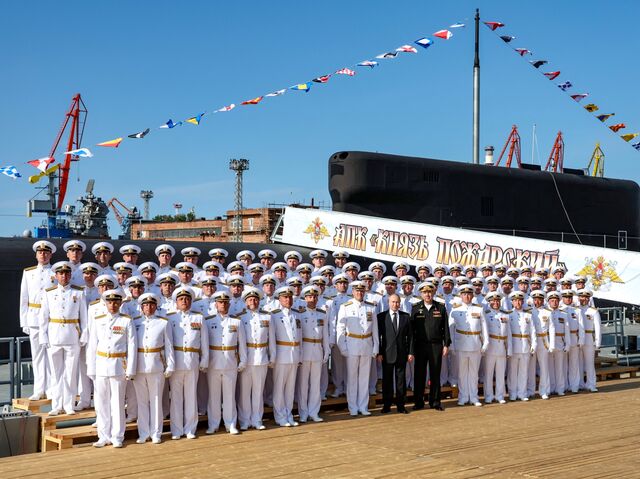
In July last year, Putin visited the Sevmash shipyard near Archangelsk in Russia’s far north. There, he raised the flag on a Borei-A class nuclear submarine and officially entered it into service with the Northern Fleet based in Severomorsk, next to Murmansk.
Named after the Greek god of the north wind, Boreas, the vessel is one of seven due by 2030, Putin said in a speech to the crew. He pledged to “fully implement our plans to create a modern, powerful navy, capable of ensuring Russia’s security and defending our national interests across all areas of the world ocean.”
In the past six years, five Borei-A class strategic ballistic missile submarines (SSBNs), and four Yasen-M class multiple-role submarines were added to the navy, he said. They are one leg of Russia’s nuclear “triad” along with land-based intercontinental ballistic missiles and strategic bombers.
A sustained effort through the 2010s to re-establish Russia as a leading maritime power has seen additional pushes since 2023, with some “significant practical results,” including advances in missile technology and uncrewed vessels, Andrew Monaghan, a senior fellow at the Royal United Services Institute in London, wrote in a recent paper for the NATO Defense College.
In summer 2024, Putin appointed Nikolai Patrushev, one of his closest advisers, to oversee shipbuilding and lead a reformed coordinating body directly reporting to the president. In April 2025, Putin announced a federal funding program for the navy of some $100 billion over 10 years. To Monaghan, these efforts to develop Russian seapower are key to Putin’s plans for a coming period of “geo-economic competition.”
Above all, that means the Arctic. As the largest Arctic power, Russia is making a concerted play to capitalize as the region warms three to four times faster than the rest of the planet. Under Putin, Moscow is building military bases and other infrastructure to assert its control of the so-called Northern Sea Route that’s opening up, as well as of fish stocks, oil and gas and other subsea mineral deposits.
Russia still lags well behind the West — and China — in overall ship numbers, and its navy has suffered serious setbacks in the Black Sea at the hands of Ukraine, including the sinking of the fleet’s flagship.
Its Northern Fleet is a different beast, according to Mike Plunkett, senior naval platforms analyst at Janes, the defense intelligence company. The premier arm of the Russian Navy, it is seen as the one most likely to be engaged in operations against NATO forces in a war, and as such it gets the best and newest equipment first.
While it receives new vessels, the US has run into significant delays to its submarine-construction programs amid a severe workforce shortage that does not apply to Russia, or to China.
The US Navy still enjoys a slight advantage in submarine numbers, but it has a different strategic focus to Russia’s fleet that makes direct comparisons hard.
True, Russia’s Borei-class submarines are not as quiet as latest-generation western ballistic missile submarines, which “operate alone in the open ocean and therefore put a much higher premium on staying undetected,” said Plunkett. But they take advantage of the Arctic ice pack and are often guarded by attack submarines, so “this is not as much of an issue” for Russia.
Similarly, the Yasen, or Severodvinsk-class as it is known outside Russia, can’t match its western counterparts on noise, but its “significant anti-ship and land attack capability” with a large number of missiles “would pose a serious threat in wartime.” What’s more, he said, “their improved technology level means that they are much harder for Western navies to track.”
Russian Navy Commander-in-Chief Admiral Alexander Moiseev, in an interview with the official defense ministry newspaper, Red Star, published March 19 to mark “Submariner Day,” said that a program is under way to develop still more advanced, fifth-generation submarines.
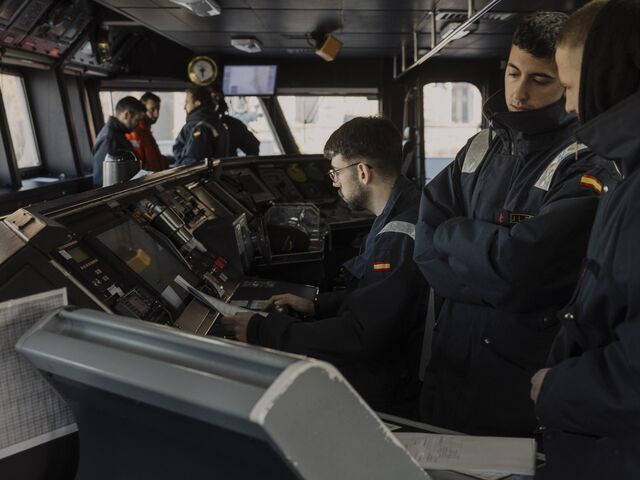
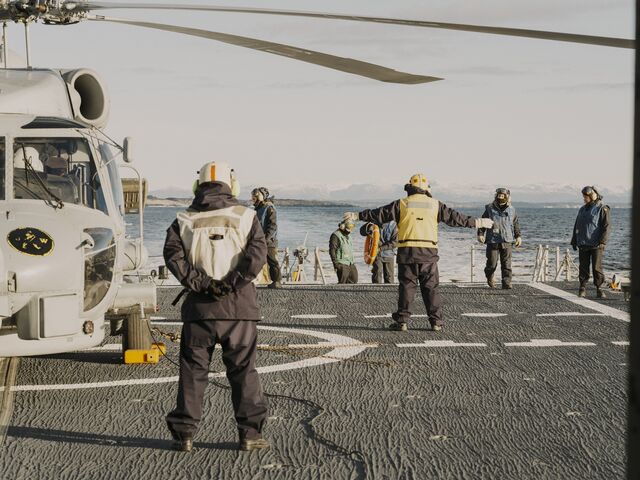
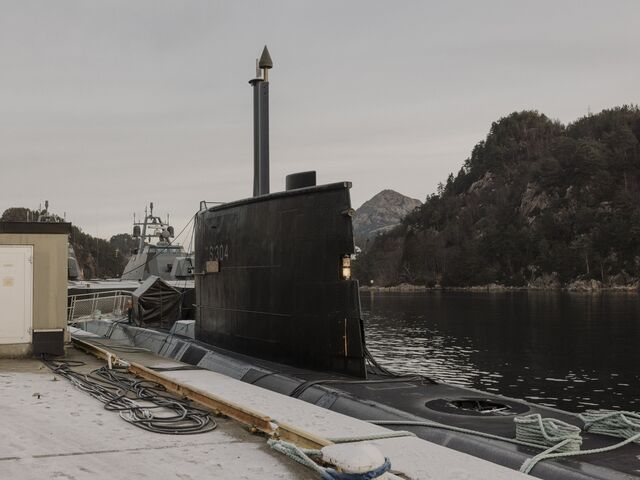
On the cliffs of a sea-carved headland in northwestern Scotland is a memorial to the Arctic convoys that ferried aid to their Soviet allies during World War II. Back then, merchant vessels loaded with fuel, weapons, ammunition and food would set out from Loch Ewe on a journey over the north of Norway, braving German attacks and brutal conditions on their way to Murmansk and Archangelsk.
Today, British military aircraft working with Norwegian and German allies leave from a base in northeastern Scotland a morning’s drive from Loch Ewe to track and intercept vessels leaving those same Russian ports.
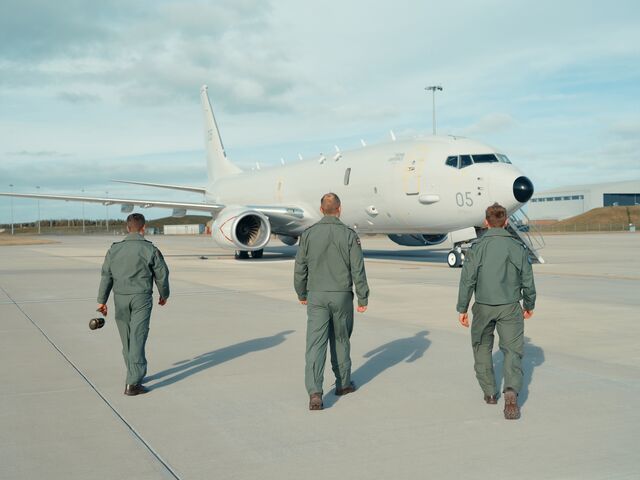
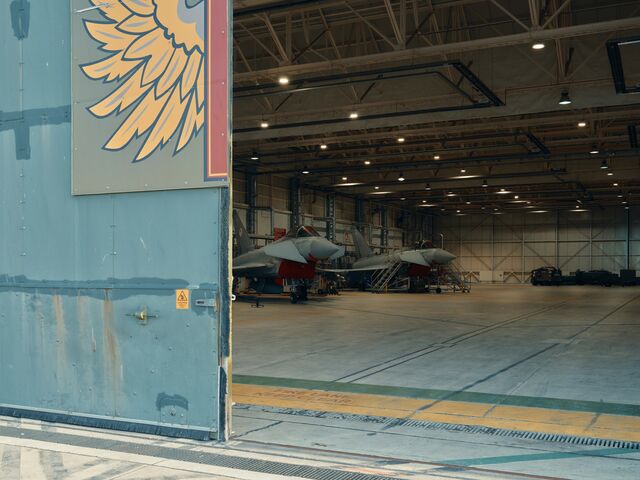
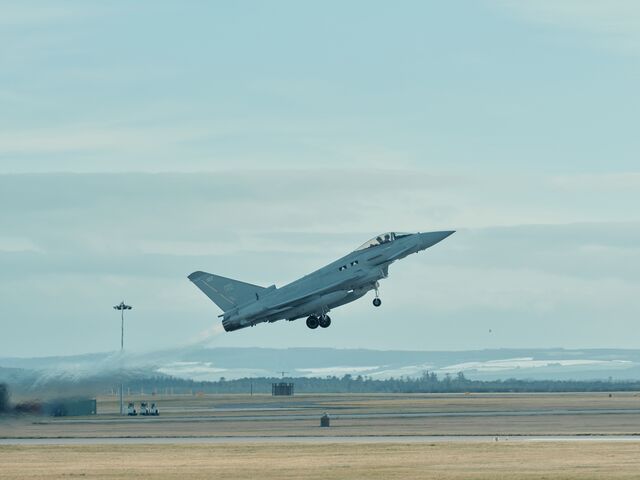
RAF Lossiemouth, near the mouth of the River Spey in whisky country, is the front line of NATO’s defense against Russian incursions from the north. The base is home to four squadrons of Typhoon fighter jets as well as the UK’s fleet of nine P-8 Poseidon aircraft, which the Royal Air Force calls the world’s best anti-submarine platform.
Although airborne incursions have receded since 2022, the Ministry of Defence has recorded a 30% increase in Russian submarines entering UK waters in the past two years. That was before April’s operation, in which P-8s were deployed.
“There’s a resurgent Russian threat and we are well resourced to counter that threat,” said RAF Squadron Leader Jamie Lamb.
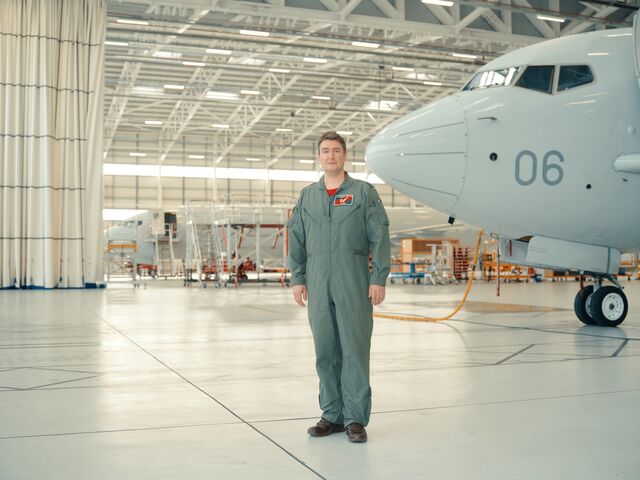
Lamb commands 201 Squadron, which conducts maritime reconnaissance patrols using Poseidons. Based on the Boeing 737, the aircraft is equipped with a bank of computer stations, cutting-edge radar technology, a high-definition camera, torpedoes, and up to 129 marine sensors known as sonobuoys. The gear is secretive enough that the RAF would only permit photographs of the plane’s exterior.
The list of visiting dignitaries speaks to the growing nature of the threat. German Defense Minister Boris Pistorius was at Lossiemouth in October for a trip on a P-8 — Germany has ordered eight of its own for nearly $3.5 billion. In December, Norway’s Støre joined UK Prime Minister Keir Starmer at the base, where they toured a P-8 and discussed the training of pilots and crews under a Norwegian-UK defense agreement. Three months earlier, Norway struck a £10 billion deal with the UK for at least five British Type 26 frigates designed to detect, track and combat submarines.
Sonobuoys float beneath the surface listening for noise or emitting sonar pings. Diesel subs are quiet but need to surface to charge their batteries, when they are vulnerable to detection. Nuclear vessels can stay underwater almost indefinitely, so locating them is intelligence-led. It’s hard work — the running joke is that ASW should stand for Awfully Slow Warfare rather than anti-submarine warfare.
“I think it’s fair to say that any new generation Russian submarine is good,” Lamb said when asked what his P-8s are up against. Neither officers nor officials would be drawn on their estimated success rate; how many subs remain undetected is classified.
With its precipitous mountains and spectacular beaches looking out on the Norwegian Sea, the Lofoten Island chain is a magnet for tourists even during the long months of winter. What visitors don’t see is that just off the western coast, the continental shelf drops off to great depths.
“It’s a natural hiding place,” said Emilie Åsberg, the chief executive officer of defense technology firm Havguard. Wearing golden slippers and a modest cardigan against the snow piled high in the streets of her hometown of Leknes, the largest municipality in Lofoten, her nonchalance toward the Arctic cold switched to seriousness when discussing her work.
Havguard — from the Norwegian Hav for ocean — is developing integrated sensors and AI-driven software for defense clients including the Norwegian military, allowing detection of undersea threats as well as protection of civilian infrastructure like ports, cables, oil and gas installations and offshore wind parks.
A core element of the work focuses on technology that enables communication through the polar ice, where Russia’s ballistic missile submarines like to hide. It’s what Åsberg characterized as a technology race among NATO, Russia, and China.
“We’re trying to look at what is possible in terms of physics, and seeing how can we push those boundaries to create some new emerging or even disruptive technologies,” she said in an interview in Leknes alongside Ryan Nichols, Havguard’s chief operating officer. “I mean, it’s a hiding playground up in the Arctic, and we can’t do anything with what we cannot see.”
Havguard has another site in Oslo that Åsberg calls a branch office. She’s only half joking: this part of the world is increasingly at the nexus of international security activity. There’s the Andøya Space facility in Vesterålen — to the north of Lofoten — which doubles as a weapons testing center, and a Norwegian submarine base nearby. Bodø, a 25-minute flight from Leknes, has been chosen to host NATO’s third Combined Air Operations Centre.
The Cold War redux is not wholly unwelcome for Bodø. Razed by German forces in 1940, after WWII it became the location for one of the largest US military bases in Europe. It even played a part in one of the Cold War’s flashpoints, the U-2 incident: the US spy plane that was shot down over the Soviet Union in 1960 was bound for Bodø. Soviet leader Nikita Khrushchev responded by threatening to strike the town with nuclear weapons.
“It just symbolizes how strategic this place was,” Mayor Odd Emil Ingebrigtsen said over strong coffee in city hall, austere on the outside and redone in Nordic chic inside. Bodø lost some 1,000 military personnel and their families after the Cold War. Renewed defense activity means jobs and investment centered on a new airport, and an injection of people and vibrancy.

Unusually, the municipality took over the abandoned military facilities, including fighter plane shelters, hangars and a series of bomb-proof halls carved out of the rock that can be used to accommodate 3,000 troops.
“Then the world changed and now they want it back,” Ingebrigtsen said.
For Vice Admiral Andersen, the erosion of Moscow’s conventional forces in Ukraine puts greater emphasis on its nuclear arsenal as a projection of power, which helps explain its investments in submarines and advanced missiles. Russia said in October that it had successfully tested a nuclear-propelled missile with “unlimited range,” dubbed Skyfall by NATO. Days later, Putin boasted of a nuclear-powered, nuclear-capable underwater drone that can be fired like a torpedo.
Although Andersen cautioned observers less familiar with the Arctic to “breathe deeply,” he stressed that NATO needs to be ready to counter a more dangerous Russia.
“Everything that Russia develops in terms of new missile systems, new threats, are tested and tried in the North,” Andersen said. And that only underlines the importance of Norway’s role to the alliance in monitoring and sharing its intelligence with allies, including the US, he added.
For all the upsurge of Russian activity and injection of US uncertainty, the military is eager to stress that not everything has changed. Kola has hosted Russia’s nuclear arsenal for decades. The Arctic is still cold and inhospitable, covering vast distances, even if awareness of its strategic importance has reawakened. Russia’s willingness to use military force and its scaled-up weapons production are the new factors adding to heightened geopolitical volatility.
Taken together, there is no question the region has become a focal point in a new Cold War.
“The Ukraine war, all the security dynamics, the High North, it all comes back to the Russians and the Kola Peninsula and their nuclear submarine fleet,” said Havguard’s Nichols, a former US fighter pilot and military attaché. “All of these things come back to the status of what the Russians are doing there.”