High in the Arctic, Norway’s Uneasy Ties With Russia Are Fraying
Arctic-power rivalry means Svalbard’s strategic importance is growing — but that can’t hide the Norwegian outpost’s identity crisis.
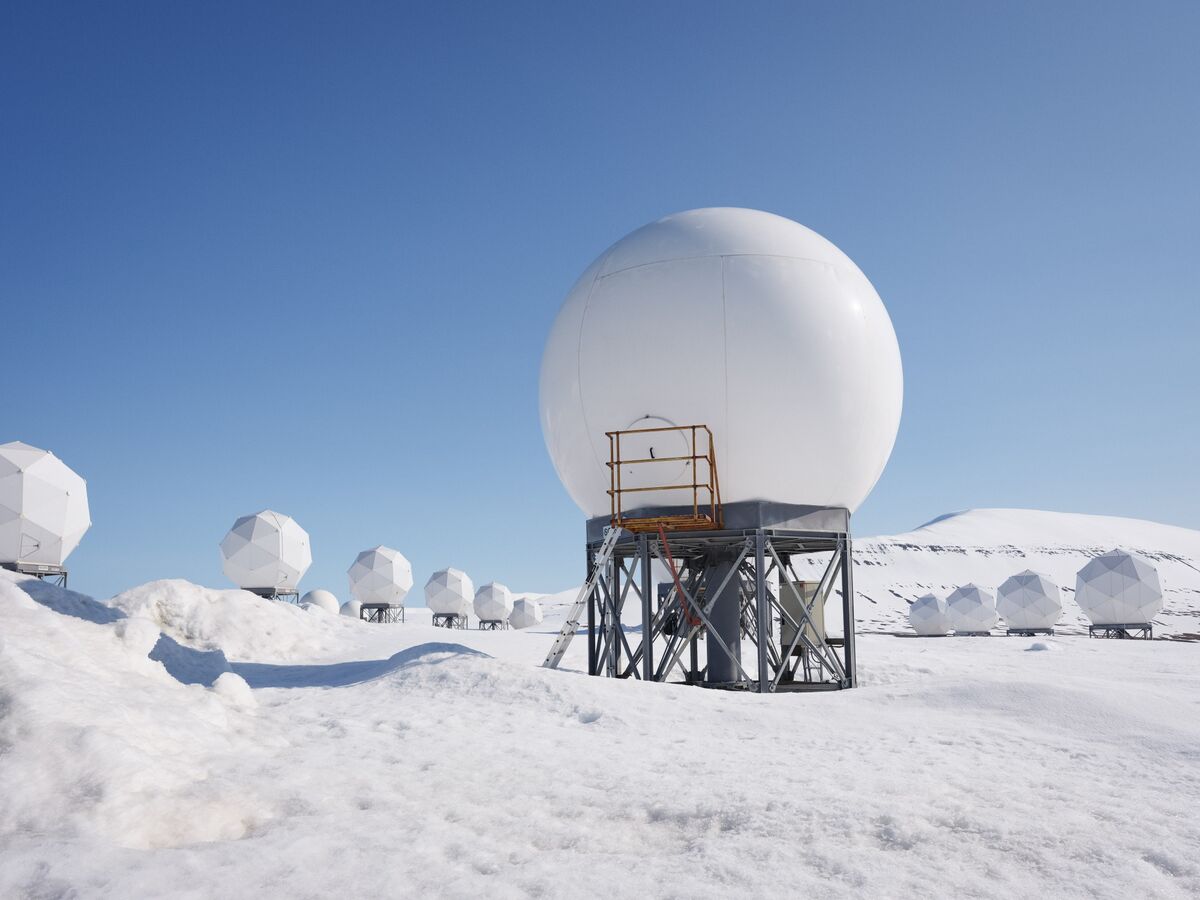
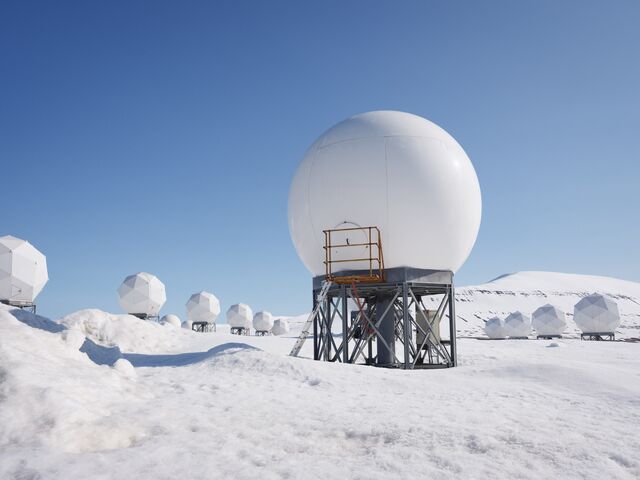
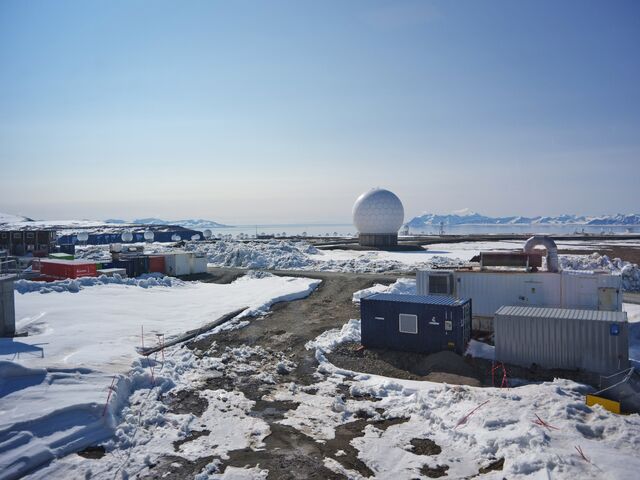
On a wind-blasted plateau high above the most northerly town on Earth, arrays of white spherical domes stand like sentinels in the Arctic snow.
Hidden from casual observers below in Longyearbyen, the main settlement on Svalbard, this is the world’s largest satellite ground station — by some way.
Known as Svalsat, the site comprises 170 radio domes, or radomes. Inside are enormous dish antennae that track and communicate with satellites, downloading data used for weather observation, climate research, maritime surveillance, navigation, and search and rescue. One dish whirrs into motion every 15 seconds on average, spinning around and tipping to the correct azimuth to lock on and link up with its designated target.
“The world is so dependent on satellite services these days,” said Ole Kokvik, the facility’s director. “People are not aware.”
While largely unknown outside technical circles, Svalsat’s critical role in global communications is one measure of how strategically significant the Norwegian territory of Svalbard has become.
That rising importance is increasingly exercising Norway’s government at a time when US President Donald Trump says he wants control of Greenland, and as fellow Arctic power Russia’s war on Ukraine demonstrates the Kremlin’s willingness to advance its territorial ambitions by force.
It’s a reality that’s introduced a sense of unease going into today’s national elections as voters wake up to the potential impact of a proliferation of international threats.
There’s “a new situation in the High North,” states Norway’s first National Security Strategy, released by the office of the prime minister in May.
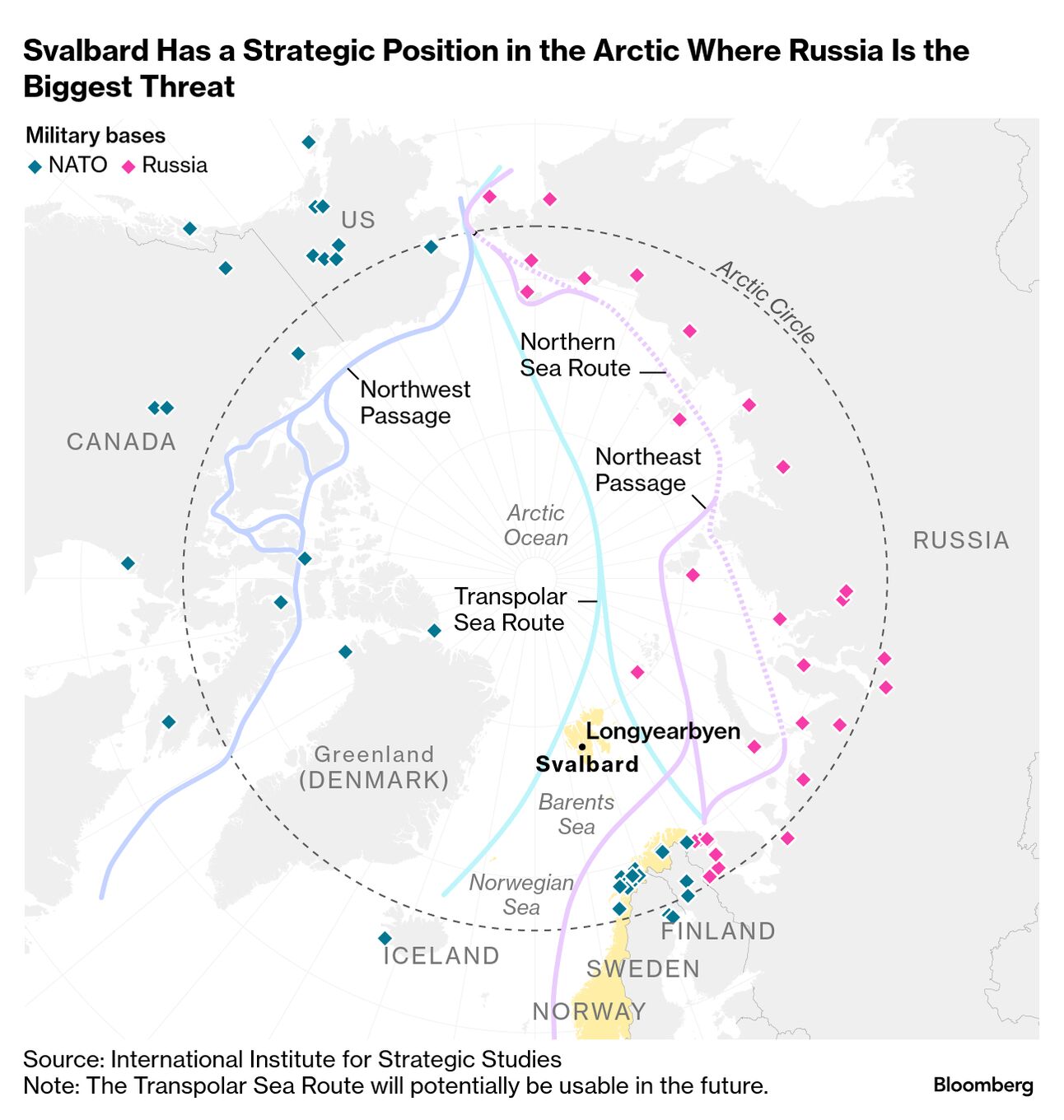
“Growing geopolitical competition is amplifying the strategic importance of the Arctic,” it says, adding that while relations with Moscow have traditionally been stable in the region, “our neighbor to the east has become more dangerous.” The Kola peninsula, key to Russia’s nuclear capabilities, is immediately to Svalbard’s southeast.
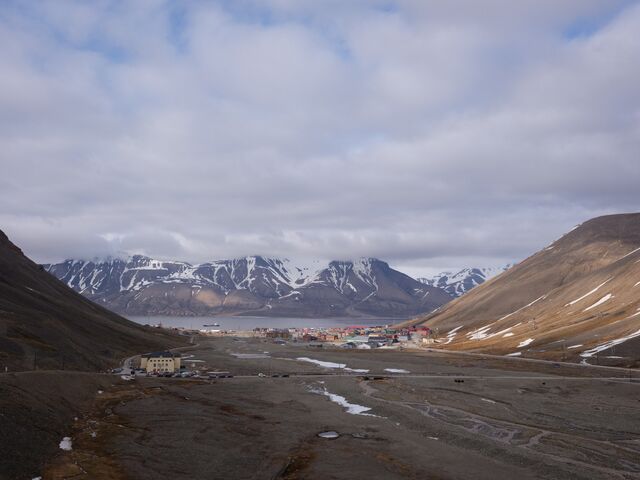
Longyearbyen Mayor Terje Aunevik sees the growing interest first hand — he’s hosted a stream of high-level visitors in the Svalbard capital lately: Norway’s King Harald V made the trip in June, following a US army delegation, some 40 members of the NATO parliamentary assembly and a rush of lawmakers from Oslo. Norway’s prime minister made the trip in August.
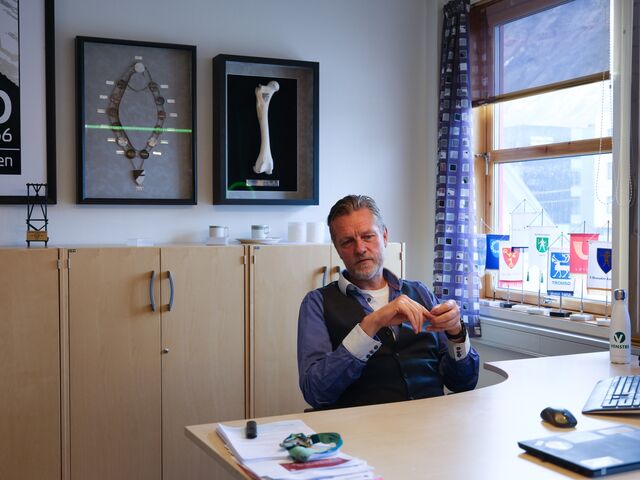
“This year has been just crazy,” Aunevik said in his office, his heavy ceremonial chain crafted from local minerals framed on the wall behind his desk alongside a polar bear femur, and a reindeer skin on the couch to the front.
Aunevik, a dog musher by profession, likes to refer to Svalbard as a small community with great importance. It’s always been a popular destination for Norwegian politicians learning about issues related to climate change and Oslo’s plans for the region, all the more so in an election year, he explained. Russia’s full-scale invasion of Ukraine brought a change in focus from climate to security. And then came Trump’s designs on Greenland.
While few in Longyearbyen took Trump’s remarks literally, the fact the US president is talking about an island that lies closer to Svalbard than Longyearbyen is to the Norwegian mainland, and which belongs to fellow Nordic nation Denmark, concentrated minds on the Arctic. Now, “there’s a kind of FOMO going on,” said Aunevik.
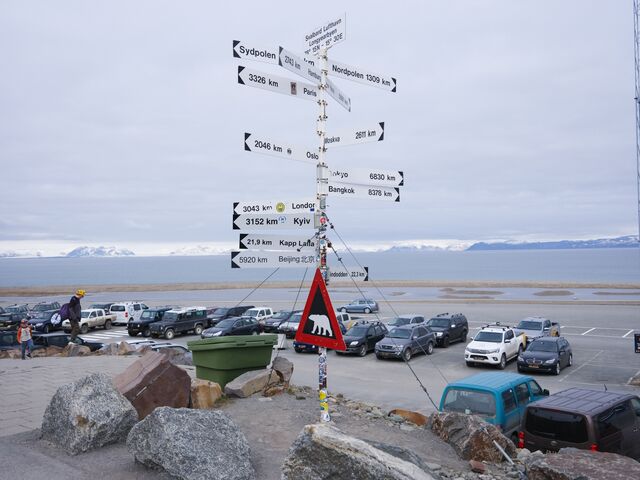
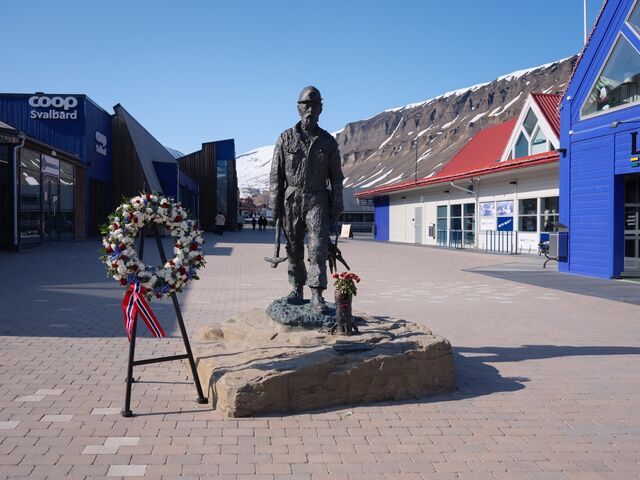
The archipelago, whose main island is Spitsbergen, lies at a latitude of 78 degrees North, meaning it is the closest sizeable habitation to the North Pole. That status as a High Arctic hub, with resources, a commercial airport and ice-free anchorage thanks to the tail end of the Gulf Stream, makes it the northern outpost of choice, placing it on the frontline of today’s international tensions.
“The High North is our most strategically important area,” Prime Minister Jonas Gahr Store told Bloomberg News in July. And that means asserting sovereignty over Svalbard. “I keep repeating this: Svalbard is just as Norwegian as our capital, Oslo,” he said.
Svalbard Has a Strategic Position in the Arctic Where Russia Is the Biggest Threat
One way Norway projects that sovereignty is Svalsat, a science-fiction-like installation set in a lunar landscape with spectacular views north over the deep blue Isfjorden Bay to the desolate, snow-capped mountains beyond. It was used as a backdrop for the latest Mission Impossible movie — fictionally transposed to Russia.
The improbable location is integral to Svalsat, owned by Kongsberg Satellite Services, or KSAT. LEO (Low Earth Orbit) satellites follow different paths, but passing over the pole as the Earth rotates offers optimal cover of the planet. “This is a unique geographical location for polar orbit satellite communications,” Kokvik said over strong coffee and chilled cans of Svalbard glacier water.
The US National Oceanic and Atmospheric Administration (NOAA) uses Svalsat to forecast hurricanes, mitigating billions of dollars in damage. Icebergs are tracked using its data, the North Sea oil and gas sector relies on it, and it helps determine precise geolocation. KSAT works with NASA, the European Space Agency and Eutelsat OneWeb, a competitor to Elon Musk’s Starlink. It’s expanding, with a data center under construction, a new solar electricity system to power it, and plans to increase the number of radomes to more than 300.
KSAT is owned partly by the Norwegian state through Space Norway and partly by defense and maritime company Kongsberg Gruppen ASA, which itself is 50% owned by the state. Kongsberg works with the Norwegian military and “close allies,” said Kokvik, whose background is in aerospace, and before that, the Norwegian National Security Authority.
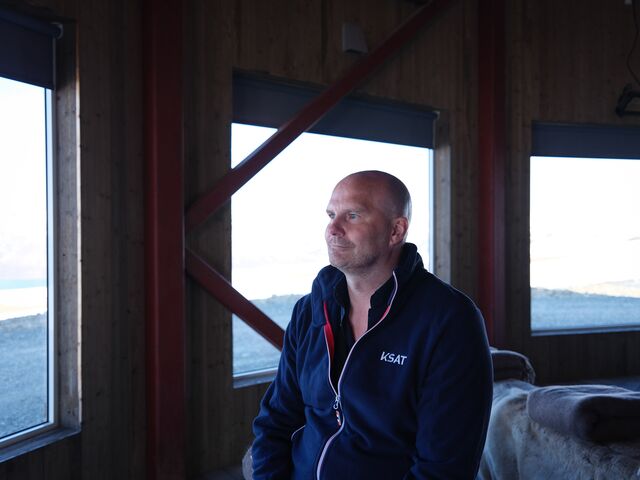
Svalsat, he acknowledges, can provide “support” for military satellites but is not allowed to download military data under the Svalbard Treaty, which guarantees Norwegian sovereignty over the archipelago while imposing certain conditions, including neutrality and a degree of demilitarization.
Russia — which has reportedly established a satellite ground station further north still, at its Nagurskoye airbase on Franz Josef Land — has been critical of Norway laying subsea cables to connect Svalsat with the mainland, claiming that its actions breach the treaty. Kokvik is dismissive. “We don’t waste time on it,” he says. “How others interpret the Svalbard Treaty isn’t our concern.”
But how others do so is one of Norway’s main challenges in trying to keep tensions low in the Arctic. Norway is “too eager” to demonstrate its control over Svalbard, and by repeating this is weakening its position in the Arctic, says Russian Ambassador Nikolay Korchunov. “It’s like trying to tidy one’s room with a sledgehammer,” he said in an interview at the embassy in Oslo, days after returning from a visit to Svalbard. Russia wants stability in the High North, he said, but would like Norway to act in a more cooperative manner.
Throttling west in a powerful work boat from Longyearbyen to Svalbard’s other main town of Barentsburg, occasional remnants of early mining settlements are evident along the shore where colonies of walrus like to gather.
Early explorers came to Svalbard 500 years ago in search of the northeast passage connecting the Atlantic to the Pacific Ocean. They quickly discovered its natural resources, first establishing hunting grounds for whales — the slow-moving bowhead whale was almost wiped out — then mining its high-quality coal.
Norway is now closing its last coal pit, and the whales are protected. But with the Arctic warming four times faster than elsewhere on Earth, the northeast passage is again on the agenda: as Mayor Aunevik put it, a “tipping point” will come “when it makes sense to go through.”
Where once it was a legal free-for-all, the Svalbard Treaty of 1920 guarantees equal rights to all comers to live and carry out commercial activities as well as to conduct scientific research. The Soviet Union made full use of the provisions: As recently as the 1980s, there were two Soviet mining towns on Svalbard with more than 2,000 people in total: Pyramiden has since been largely abandoned and only Barentsburg remains, now down to some 400 inhabitants.
Arriving by sea — there is no road from Longyearbyen, although it’s accessible by snowmobile until about May — the first sight of Barentsburg is of a huge mound of coal alongside the harbor. On the overlooking hill, a star and the Cyrillic slogan, Peace to the World, are picked out in red.
The town between is a jumble of Soviet-era buildings, some with fading murals painted on the walls, other older structures empty and decaying, and a few more modern constructions. A research station occupies a separate section.
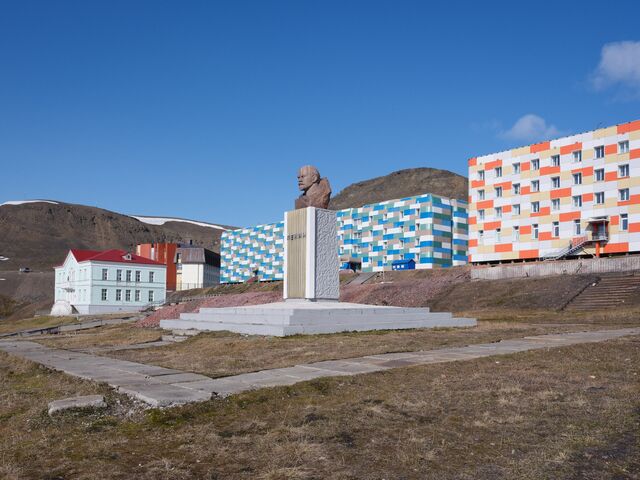
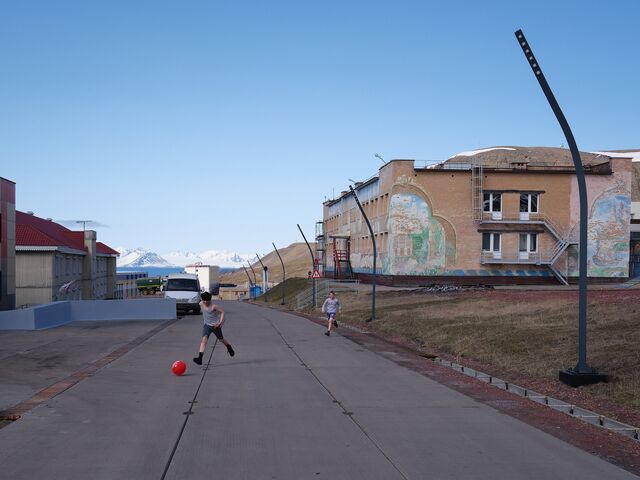
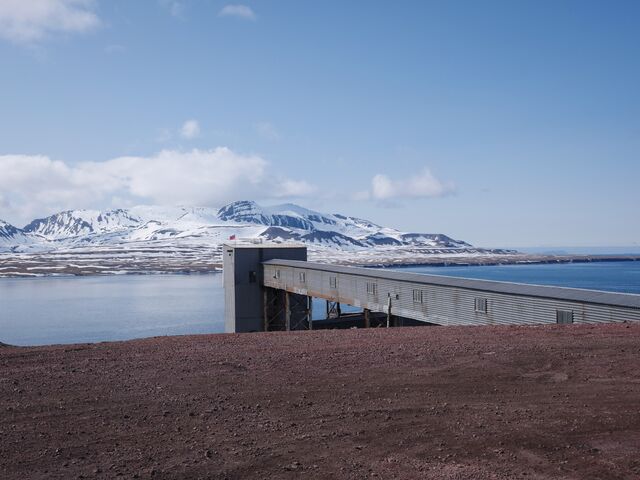
The white, blue and red flag of the Russian Federation is ubiquitous. A bust of Lenin still stands near apartment buildings. Behind him, a banner spells out: “Our Goal — Communism!”
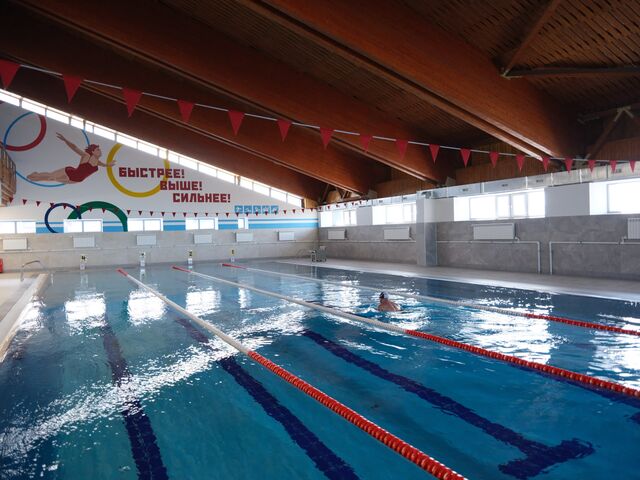
This is a company town, owned by Trust Arktikugol, a Russian state-backed entity, which provides a school, shop, library, Orthodox church, canteen, sports and entertainment facilities. Arktikugol’s director, Ildar Neverov, runs the mine and the town.
He is credited with reinvigorating the settlement, installing a new gym and renovating the swimming pool — popular developments in a location where there are 2 ½ months of polar night in winter. He has encouraged tourism, established a brewery and signed cooperation agreements with Russian universities.
Routinely described in Svalbard as “well connected,” he was pictured on a panel at the International Arctic Forum in Murmansk in March. President Vladimir Putin attended the forum’s plenary session, pledging to “do everything to strengthen Russia’s global leadership in the Arctic.”
Neverov politely declined an interview request when approached in Barentsburg.
As for the mine, few see it as commercially viable, but rather a statement of intent, one that has become more pressing as the race for the Arctic intensifies.
Following Putin’s February 2022 invasion of Ukraine, most tour operators in Longyearbyen stopped taking visitors to Barentsburg to avoid giving money to the Russian state and indirectly funding the war. Youth sports events between the two settlements were broken off, reciprocal national day celebrations cancelled, and suspicions grew on each side.
“People who come here know where they’re coming to, that it’s a Russian settlement,” said Natalia Timofeeva, while seated in the town’s Soviet-era theater, the walls carrying painted banners and murals of what elsewhere is a bygone era.
Ukrainian miners from the Donbas used to make up a sizeable proportion of the workforce, but many quit the town after Putin’s aggression. Those who are left, along with Russians, Tajiks and others, are overwhelmingly Russian speaking.
Timofeeva, a Russian national who grew up in a town some 300 kilometers from Moscow and provides tours of Barentsburg and Pyramiden, is candid that the invasion of Ukraine and the sanctions that followed have made life in Svalbard’s Russian settlements more difficult. “We are a close-knit community that try to support each other,” she said.
The strains between Norway and Russia are proving to be an added layer of friction for Longyearbyen, a resilient community that finds itself struggling with an identity crisis. Just as Trump’s focus on Greenland shone a light on Denmark’s relationship with its Arctic territory, so Svalbard’s new reality is forcing questions of Norway and how it sees the fate of its northernmost outpost.
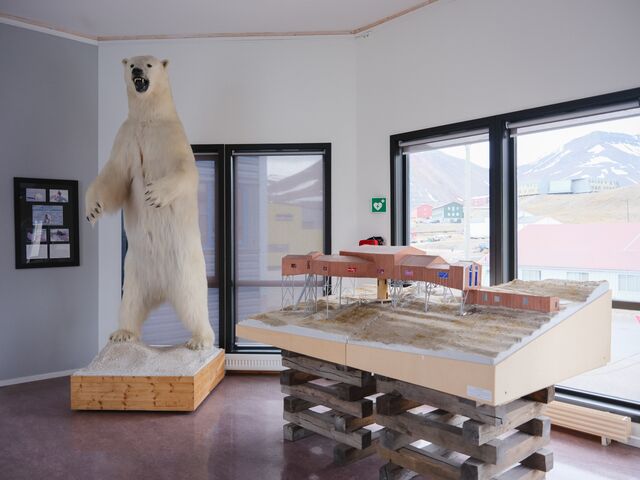
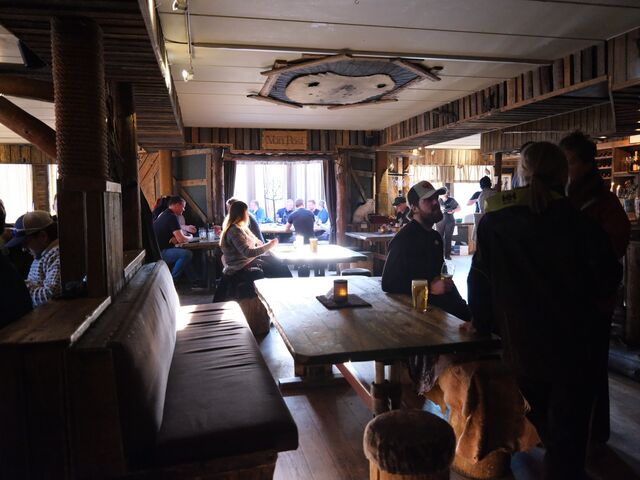
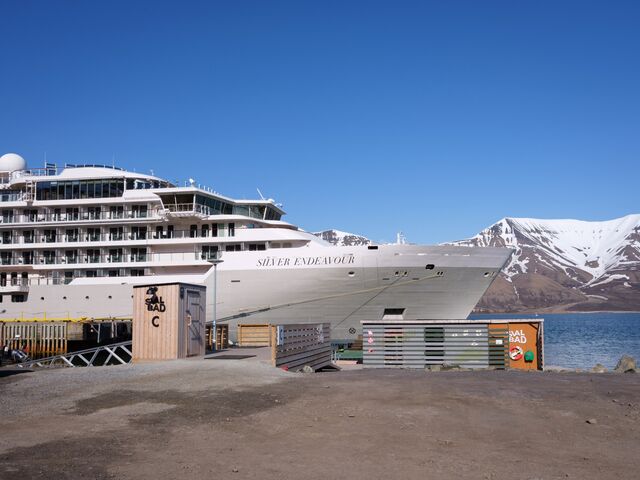
Store, the Labor prime minister, has consistently raised the High North as a priority, though in reality there is a little to differentiate the main parties on Arctic policy at this election. Yet many in Svalbard see a contradiction between Oslo’s claims to “exercise national control” and the everyday experience of an archipelago caught, through no fault of its own, between an industrial past and an uncertain future.
There are unresolved issues over what replaces mining — the Global Seed Vault is a vital international resource but doesn’t offer more than a handful of jobs — and an active debate over how much tourism to allow. Allied to that is the sustainability of a population of some 3,000 comprising more than 50 nationalities, many of whom work in tourism and don’t have equal rights to Norwegians.
Then there are urgent problems of essential services, with energy prices doubling after the closure of the coal-fired power plant, housing scarce and huge additional costs looming as a result of the need to replace rotting stilts that were formerly driven into permafrost which is now melting. Everything has to be imported — Svalbard is 60% glacier and 27% barren rock — meaning costs are high, even with no VAT.
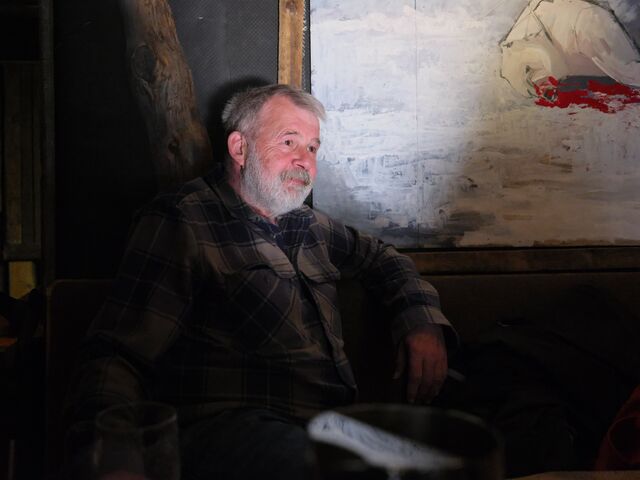
“It was a great place to grow up,” said Magnus Huseby, a longterm Svalbard resident who conducts tours, as he prepared for one of his busiest days of the year: a cruise liner carrying some 3,000 people was due in the next morning. “We were cut off for five-to-seven months of the year, the company looked after us, society looked after us.” He paused, cradling his beer: “And now?”
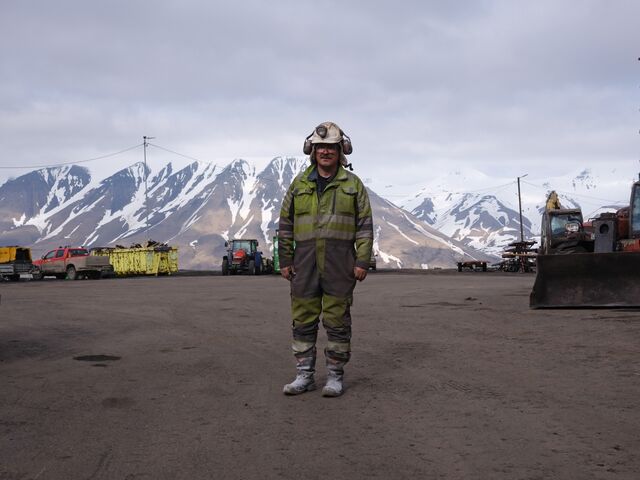
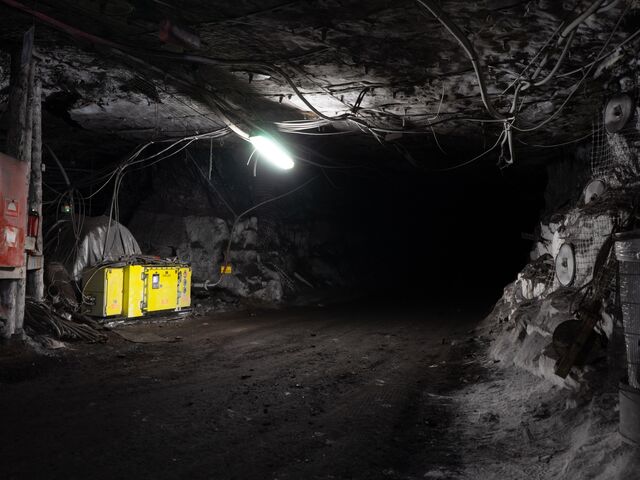
Norwegian state-owned company Store Norske operates the last coal mine on Svalbard, Gruve 7, just outside Longyearbyen. King Harald and Queen Sonja, both in their late 80s, took an underground tour in late June to mark its impending closure, alongside safety inspector Svein Jonny Albrigtsen, a Svalbard veteran of 40 years.
“We have been the stability in town now for many years,” he said, driving down the mine tunnel toward the coalface. “They will have problems to get families to stay here.”
He tried to convince politicians from the prime minister down to keep the mine open, winning a two-year extension due to the energy crisis caused when European countries cut off coal imports from Russia. But that time is now up. By contrast with Barentsburg, “the Russians will never close their mine,” he said. “It’s strategic.”
Packing away his headtorch as he ended his shift, he added: “It will be a new world now in town with the miners gone.”
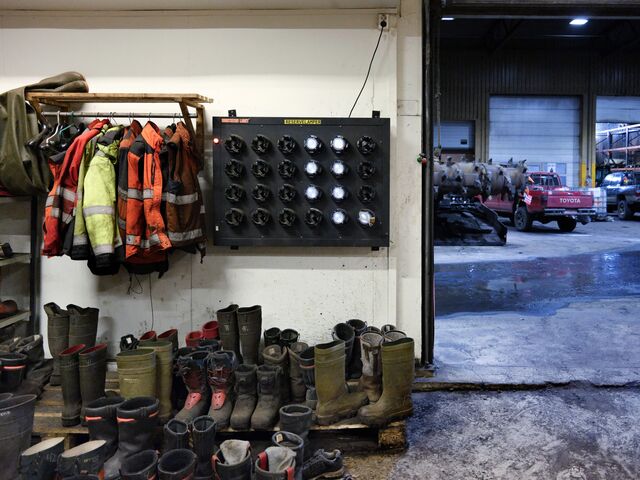
In truth, it’s already changed. Whereas until the 1980s Longyearbyen was a mining company town, it’s now environmentally aware and characterized by Norway chic, with a huge, well-stocked supermarket, fine dining restaurants, a Radisson Blu “polar hotel,” and direct flights to Oslo.
But it’s deceptive: this remains a community on the edge, attuned to the tenuousness of human life in the High Arctic. Snow mobiles lie parked up on crates during the summer months, when huskies are put to work pulling tourists on wheeled sleds. Both make for great tourist snaps, but there’s never any doubt the conditions require such specialized gear: An avalanche in 2015 wiped out 11 houses and killed two in Longyearbyen. Signs warn of polar bears at the town limits, and visitors are advised not to leave without an armed guide. A camper was killed by a polar bear near the airport; an electric fence now surrounds the area.
The town has a hospital, but it’s equipped for emergencies only and there is no maternity unit or elderly facilities. Mothers are sent south to give birth; old people must leave for the mainland. In Svalbard, “everyone is living on borrowed time,” said the mayor.
It’s a reality confronting longtime residents Solveig Oftedal, a lawyer and local assembly lawmaker, and Terje Johan Johansen, a retired mine manager. From their wooden cabin above the shoreline just outside Longyearbyen, they regularly see Beluga whales and occasionally spot a blue whale, the world’s largest mammal, which feeds in the polar waters and blows a waterspout 10 meters or more in height. “The first time I saw one, I thought it was a sailboat,” said Oftedal.
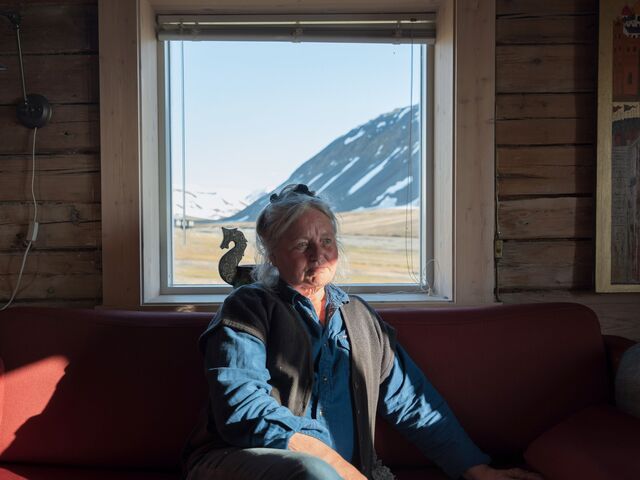
In their time in Svalbard, they’ve seen Longyearbyen change from a rough and tumble settlement with a clear identity to a community caught in the global political currents which, while resilient, seems to have lost its moorings. Even during the darkest days of the Cold War contacts with the Russians survived, they said. Now, Putin’s aggression against another of Russia’s neighbors means those, too, have gone.
“Some day the war will be over,” said Oftedal, her bright eyes sparkling in the midnight sun. “And we will go on.”