
For years, many on Wall Street have thought of cryptocurrencies as a fringe asset class. Yet a recent <meta itemprop="type" content="WebLink">survey from Fidelity found that more than half of institutional investors in Asia, Europe and the U.S. currently invest in digital assets -- and a majority also expect they will in the future.
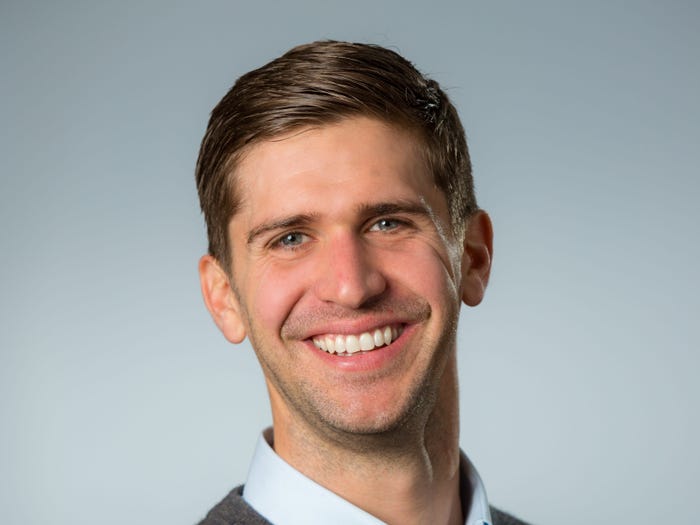
Steve Kurz, the global head of asset management at Galaxy Digital, a crypto investment manager, joined the “What Goes Up” podcast to talk about the growing interest in cryptocurrencies among big institutional investors like pensions and endowments, the growth of smaller tokens and his views on Bitcoin futures ETFs.
Below is a lightly edited transcript of the interview highlights. Click <meta itemprop="type" content="WebLink">here to listen to the full podcast, and subscribe on Apple Podcasts, Spotify or wherever you listen. (Disclosure: Bloomberg <meta itemprop="type" content="WebLink">partners with Galaxy on a number of indexes, including the Bloomberg Galaxy Crypto Index.)
Q: Galaxy made an acquisition in the active-fund business -- talk to us about how the fund-of-funds business works, what you look for in other funds to invest in?
A: Galaxy’s asset management business acquired Vision Hill in May of this year. And Vision Hill is run by two wonderful brilliant guys, Dan Zuller and Scott Army. And for the three years before that, they had been building a database and real connectivity to the crypto funds all around the world -- passive funds, hedge funds, venture funds. And when you think about the need for a fund of funds, what does a fund of funds do? It wraps a number of different fund investments under one vehicle. In the traditional world -- maybe Blackstone would argue with me -- you would look at that and say, well, why do you need that model when people can go find their own managers themselves? That’s true -- 20 years later. I would analogize the crypto funds space to the hedge-fund space in the early 2000s. There are 850 funds -- it’s a shocking statistic, that people don’t understand the breadth and scope of that.
And they’re divided out in many different ways and when you go to a pension or to an endowment, or a sovereign-wealth fund, and they say, ‘Great, we believe in the crypto future, we believe in Web 3.0, what do we do now?’ OK, you can buy Bitcoin, you can buy Ethereum, maybe you can buy a venture fund -- but what else is there? And intuitively they go to hedge funds because it’s kind of an alternative asset. And then they say, ‘Well, wait, who are the big hedge-fund players?’ And the answer is there really aren’t big hedge-fund players. There are a handful that have reached some escape velocity -- a couple $100 million here or there -- but how can someone put $200 million into that? They can’t do that.
So it was a real pain-point for large institutions to access this more active body of the asset class. And we just felt that it was part of our mission, which is both education and access, to give that tool in the toolkit...
So we look for great entrepreneurs, talented entrepreneurs who have built good fund-management businesses. And then on the back end, we look for really robust, thoughtful approaches that can scale that are regulatory compliant, and that meet a set of standards that we’re in the process of helping define for the asset class.
Q: One of the appeals of indexing is you get diversity, but that’s tricky in the crypto world considering that Ether and Bitcoin are so huge compared to everyone else. A Galaxy index caps the weights at 40% on each. Do you think other coins will catch up to the point where it’ll naturally bring down those weightings, or is there a case to be made for an equal-weighted crypto funding?
A: Indexes are important for a million different reasons, but with a new asset class, it’s as much about the taxonomy and defining that taxonomy as it is anything else ... What we really wanted to focus on over time was the growth of the asset class. And our view was that if you want Bitcoin exposure, or if you want Ethereum exposure or any single-asset exposure, you can go to other places, including our single-asset vehicles. You don’t need to go to an index to do that for that exposure. And we felt that the way to facilitate the growth of the space was to set that 40% cap and then start to educate around -- forget the weightings for now -- really educate the verticals. And so Bitcoin is digital gold, Ethereum is Web 3.0, DeFi is an entire construct.
So, I expect that you will have a number of very large assets in crypto, in our large-cap index. It is difficult at the moment to see how something could compete with a $500 billion market cap in Ethereum, or $1 trillion-plus in Bitcoin. But look at how quickly we’ve seen aspects of the space grow, so we just don’t know. And anyone who says they know, I think is either confused or telling a story.
Q: You said recently that in order for digital assets to continue to flourish, they must be accessible to all investors, but that the <meta itemprop="type" content="StoryLink"><meta itemprop="suid" content="R18Q7KT0G1KW">launch of the futures ETFs concerns you. Why is that?
A: It’s a nuanced discussion. On some level, as a crypto company, Galaxy looks at something like this from the SEC favorably. It’s important that there’s an engagement and that there is, for the first time, this regulated public-fund construct that’s available in the United States. So at a broad level, we think that’s progress and we applaud the regulators for that...
When you look under the hood, and you think about something like USO, the <meta itemprop="suid" content="R1E1JET0G1KY"><meta itemprop="type" content="StoryLink">roll dynamic is a real issue. And when you bring new participants to a new market in a volatile asset, that’s already enough -- you don’t need to have structural questions on top of that, like leverage, which is obviously a feature of the products that are approved and out there.
And it reminds me a little bit of the trust structure -- we chose not to do a trust structure for Bitcoin access, just like we’re choosing, at the moment, not to engage with the futures product. The tracking relative to Bitcoin hasn’t been great. That doesn’t mean that a company like Grayscale isn’t very important for the space when the market really needed something like that, just like the market needs a futures ETF right now. But I would call that more of a trading vehicle as opposed to an investor retail vehicle. And so we’re focusing on the spot ETF and putting all our energy into that project in <meta itemprop="suid" content="R0M8TQT0AFB4"><meta itemprop="type" content="StoryLink">partnership with Invesco.
Q: What’s the climate among institutional investors? What kind of allocations are they thinking about? And if you got in an elevator with Ken Griffin of Citadel, and he asked how to value this, what do you say to him?
A: When you look at the institutional allocators, first of all, a $100 trillion-plus market globally -- a number of necessary structural impediments to doing anything different in place, whether it’s the investment committees or the consultants. So really, you can’t fake it with this crowd, nor should you try. And so for the last four years, why did we focus on indexing first? And then we treated service providers like clients. You needed all those pieces in line before you could even have a credible conversation. So a lot of that, between the period of time when crypto was down 95% of where we are today, was happening behind the scenes: the conversations, the product structures being developed, even the valuation frameworks were being tooled around with a little bit so that when you came out of this and the world exploded and had a catalyst for crypto to really matter -- which is Covid -- you’re not starting from zero. Every single institution that you can think of in every vertical, they have people who have done work on this. It’s been socialized with their committees, and they’re much further along than you would expect.