The Year Latin Music Took Over the World
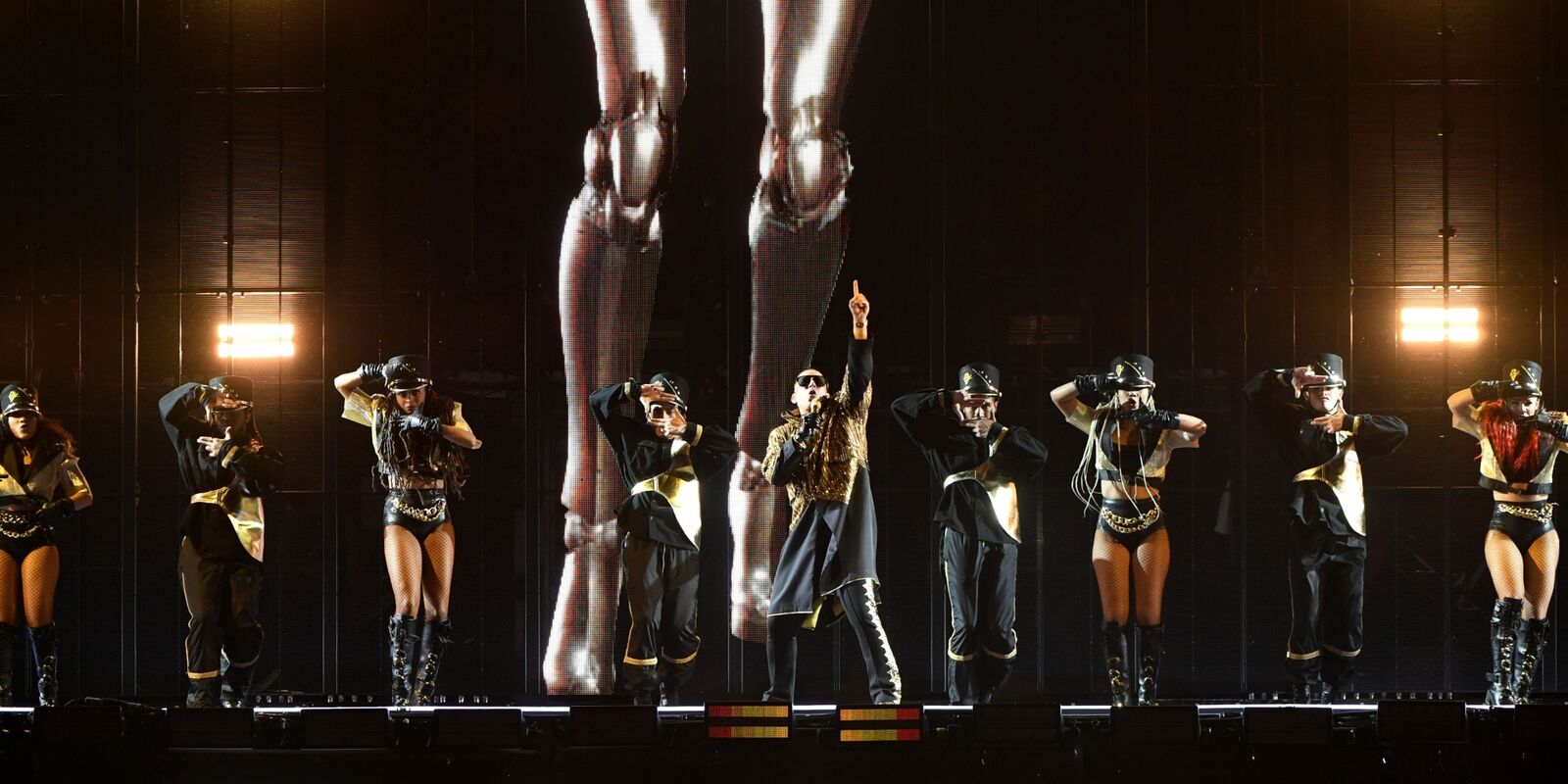
Almost 20 years after bringing reggaeton to the mainstream with the hit song Gasolina, Daddy Yankee planned to retire with a final tour of 26 shows in 2022. But after he put tickets on sale for a Los Angeles show in July, his plan changed. The tickets sold out in half an hour, and his promoter, Henry Cardenas, received an influx of calls from all over the Western hemisphere.
“People started calling from every country,” Cardenas said. “I wasn’t thinking of going to El Salvador or Guatemala.”
What was supposed to be a modest farewell trip turned into one of the biggest tours of the year. In the last five months, the Puerto Rican rapper has performed 86 shows, grossing more than $140 million. Along the way, he made more money than all but seven acts, including concert mainstays such as Garth Brooks, the Rolling Stones and Lady Gaga.
Daddy Yankee is one of three Latin musicians to rank among the year’s 25 biggest tours, a sign of the genre’s growing power. During the first half of the year, Latin music accounted for more than 6% of all consumption in the US, according to Luminate, a jump of 34% from just two years ago.
It’s easy to write this off as the Bad Bunny effect. The Puerto Rican trap star had the biggest tour of 2022 and was the year’s most popular streaming act. But that would overlook the depth of talent and fandom coming from Latin America. Latin acts accounted for 22 of the 200 biggest tours in the world this year. They also claimed eight of the top 25 spots in Bloomberg’s latest Pop Star Power Rankings.
See other Pop Star Power Rankings
Cardenas, who hails from Colombia and moved to the US in 1972 to go to school in Chicago, has been promoting Latin acts for 46 years. He got his start by hiring DJs to spin disco records at parties for students at colleges in the Chicago area.
He was a key figure during the boom in Latin music that took place around the turn of the century when pop singers like Marc Anthony, Enrique Iglesias and Shakira gained a following in the US. In 2005, he promoted Daddy Yankee’s first tour in Latin America and the US to promote the album Barrio Fino. Back then, artists had to travel to New York, Chicago and Mexico City to promote their work and had a hard time reaching audiences outside of those major urban areas. Reggaeton — and Latin music in general — didn’t sustain the breakthrough on a global stage.
That’s changed in the past few years, as evidenced by another Daddy Yankee track — “Despacito,” the most popular song in the world during 2017. Singers and rappers such as J Balvin and Karol G now rank among the most popular stars in the world.
Global distribution has helped. Whereas acts once needed to compete for shelf space in Walmart and a spot on radio playlists, any artist can now upload a song to Spotify.
“The big difference is the digital era,” Cardenas said. “When Daddy Yankee and Ozuna come out with a record, it goes global immediately.”
On this tour, Daddy Yankee has performed in a dozen cities in Mexico, nine more than they initially planned. He sold out a stadium in Mexico City five nights in a row (after having originally planned for only a single performance). And he’s played in a lot of US cities that he had never visited before.
While Daddy Yankee recorded the first reggaeton hit to cross over outside of the Spanish-speaking world, Bad Bunny has now set a new, higher bar. The 28-year-old sold more than two million tickets, and his tour is on pace to gross more than $430 million — a new record.
With Daddy Yankee retiring and Bad Bunny taking a year off, it will be up to a new artist next year to step up and keep Latin music’s momentum going strong.