US Needs Another Decade to Fix $1.2 Trillion Rare Earth Crisis
For the past year, President Donald Trump has waged a campaign to break America’s dependence on the rare earths that remain Chinese leader Xi Jinping’s unbeatable leverage over the global economy.
From White House meetings to boardroom negotiations, US officials and their allies around the world have poured billions of dollars into mining, refining and other industrial facilities. While Beijing’s might was amassed over decades, Trump pledged last November that ending US reliance on rare earths would take just 18 months.
Yet the ones that matter most remain out of reach.
China’s chokehold is likely to loosen on some of the more abundant light rare earths used in a huge proportion of consumer electronics by the end of this decade. But when it comes to some of the key so-called heavy rare earths — essential for high-performance magnets and military technologies and targeted by China’s export curbs last year — Beijing’s dominance will likely persist longer, until at least the mid-2030s, according to projections and data supplied to Bloomberg from three critical mineral consultancies.
For two of the most important elements, dysprosium and terbium, countries outside of China will still meet less than a fifth of demand by 2035, according to data from one of those consultancies, McKinsey & Co. CRU Group and Benchmark Mineral Intelligence offered similar projections and interpretations.
The Deficit Will Remain for Rare Earths Essential for EVs and Fighter Jets
Sources: McKinsey MineSpans
Note: Chart shows refined rare earths supply. Analysis as of Q1 2026
“Meaningful diversification will take longer than many anticipate,” said Michel Van Hoey, a senior partner at McKinsey focused on the metals and mining industry.
Projections depend, of course, on demand, which could ultimately change in the coming years as new technologies sprout up, including the ability to make magnets that contain smaller amounts of the heavies. That means supply gaps with China may have less influence on global markets.
The stakes have grown more urgent amid the Iran war. The US may have already drawn down more than half its prewar stockpile of key munitions, an analysis by the Center for Strategic and International Studies found. Much of the technology depends on heavy rare earths with few viable substitutes. Japan has spent more than a decade trying to reduce its reliance on Chinese rare earths, yet China still accounts for 76% of its supply — underscoring the difficulty of diversification. For the heavies, dependence is even higher: Nearly 100% until last year.
The elements loomed at this week’s summit between Trump and Xi. Though China paused an expansion of export curbs late last year, the reprieve only runs through November, and analysts say a full rollback is unlikely.
Economic exposure is significant: About 4% of US GDP, or roughly $1.2 trillion, comes from industries that use rare earths. Some could face shutdowns if China halted supplies, according to Bloomberg Economics.
The heavy ones are especially problematic because of how difficult they are to process and their relative rarity compared to the lights.
WATCH Breaking China’s Rare Earths Monopoly
Earlier this year, the Pentagon signed a deal to source supplies from the Australian company Lynas Rare Earths Ltd., the only one outside China that refines heavy rare earths, a product it started offering in 2025.
Meeting demand will be hard. Global appetite for dysprosium and terbium alone runs into the thousands of tons annually, according to industry estimates. In the first quarter of 2026, Lynas produced a combined 8 tons of them.
“The heavier the rare earths, the higher the cost of refining,” said Neha Mukherjee, a research manager with Benchmark Mineral Intelligence, noting that China can do so “at a very low cost and very efficiently.”
While these elements ultimately represent a small share of the total market, tiny amounts strengthen magnets and improve heat resistance, making them essential for F-35 fighter jets, Virginia-class submarines, electric vehicles and other advanced technologies.
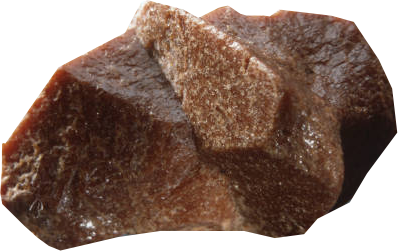
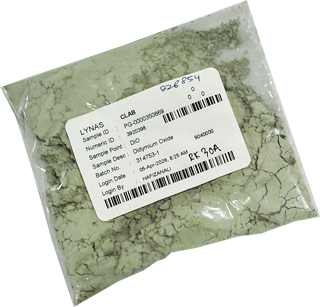
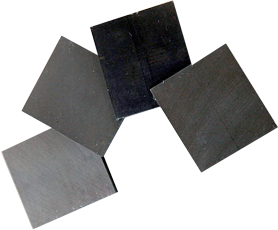
Rare earths move through three stages in manufacturing: mining the ore, chemically separating it into oxides, and converting those into metals and magnets. China dominates all three, but its grip is tightest on refining and magnet production.
Lynas is one of the few companies outside China that has built the mine-to-oxide link, and the only one that has mastered heavy rare earth refining. That capability took years to hone, and right now its output meets only a small share of total global demand.
A handful of other companies are currently operating projects, with several more likely in the coming years. Few are currently equipped to handle heavy rare earths. Mining capacity continues to outpace refining, which is more capital-intensive and often environmentally challenging.
The ambition to build an alternative supply chain is global. New projects are being announced from Brazil to Australia, with the US among the most aggressive in trying to build its own supply chain from scratch.
Yet even if all planned projects are completed, a significant deficit to meet total demand outside China is projected to remain by 2035 — widening at each stage of the rare earth magnet chain.
Source: International Energy Agency
Note: Analysis focuses on magnet rare earths only.
Sources: Benchmark Mineral Intelligence; Bloomberg Economics; International Energy Agency; Bloomberg reporting; company filings
Heavy Rare Earths Are Even Harder to Find
For countries trying to build an alternative, the first problem is geology. The US has few viable deposits of certain rare earths, some of which are economically concentrated in a small number of locations globally.
The next problem is getting those deposits into production. Rare earth projects can face long permitting timelines, local opposition and environmental concerns. Some ores contain radioactive elements.
Then comes the step China has spent decades perfecting: separation. Heavy rare earths must be pulled apart from one another and refined to extreme purity, a slow and chemically delicate process that depends on specialized equipment, patient capital and experienced operators, which the country dominates. China holds by far the largest number of relevant patents and has been tightening export controls on select technologies since at least 2008, with restrictions becoming progressively stricter over time.
Even when the elements are refined, the magnets they go into are another strength of China’s. The country produces the vast majority of them.
In comparison, the US has one-fifteenth the number of graduates in mining-related programs, according to Marina Yue Zhang, an associate professor at the University of Technology Sydney who specializes in Chinese industrial policy.
“China possesses several thousand rare earth separation experts,” she said. “The US has fewer than 100.”
The reason those experts are so tricky to replace is hidden in the chemistry.
Heavy rare earths are harder to tell apart
More abundant in nature, light rare earths are relatively distinct from each other.
Heavy rare earths are scarcer and more difficult to chemically differentiate. Once dissolved, neighboring elements behave nearly identically, which makes clean separation challenging.
Each pass separates only a small amount
To separate the target rare earth, refiners run the solution through a long chain of tanks. At each stage, an oily liquid draws out a bit more of the ●desired rare earth while an acidic liquid carries off more of ●everything else.
(Oily, sticky)
(Acidic)
Dozens of these stages may be needed to produce material pure enough for commercial use.
Ultra-high purity can take 1,000 stages or more. China routinely gets there, few others do. One weak separation can ripple through the cascade, leaving trace impurities that weaken magnets or compromise electronics. This is where the experience of skilled talent comes in.
China Has a Persistent Price Advantage
Cost is another advantage for China. By undercutting rivals, its producers can still drive price swings that make it difficult for more expensive projects elsewhere to survive.
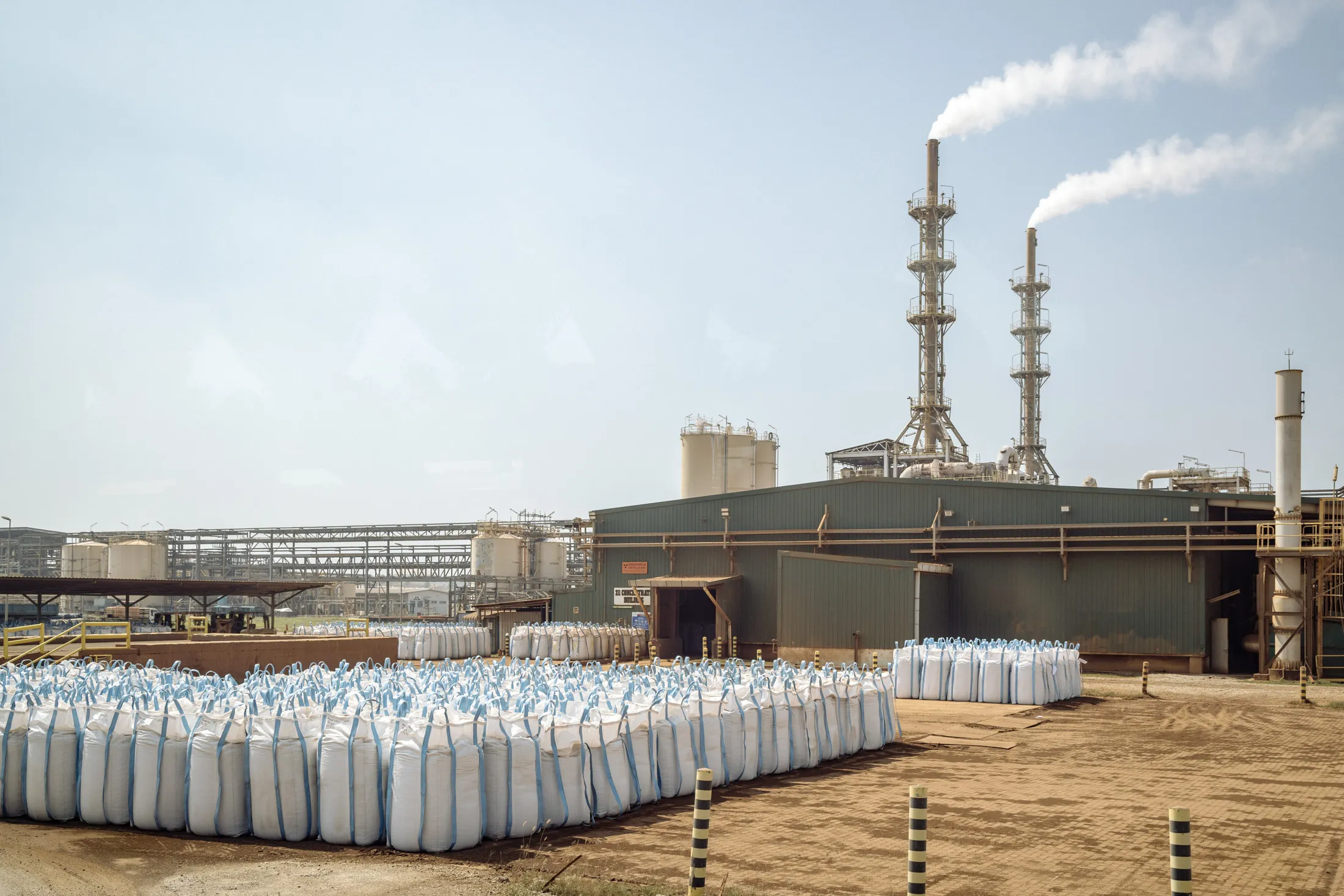
Sacks of ore from Australia before heading into the cracking and leaching process at the Lynas Advanced Materials Plant in Kuantan, Malaysia. Photographer: Ian Teh/Bloomberg
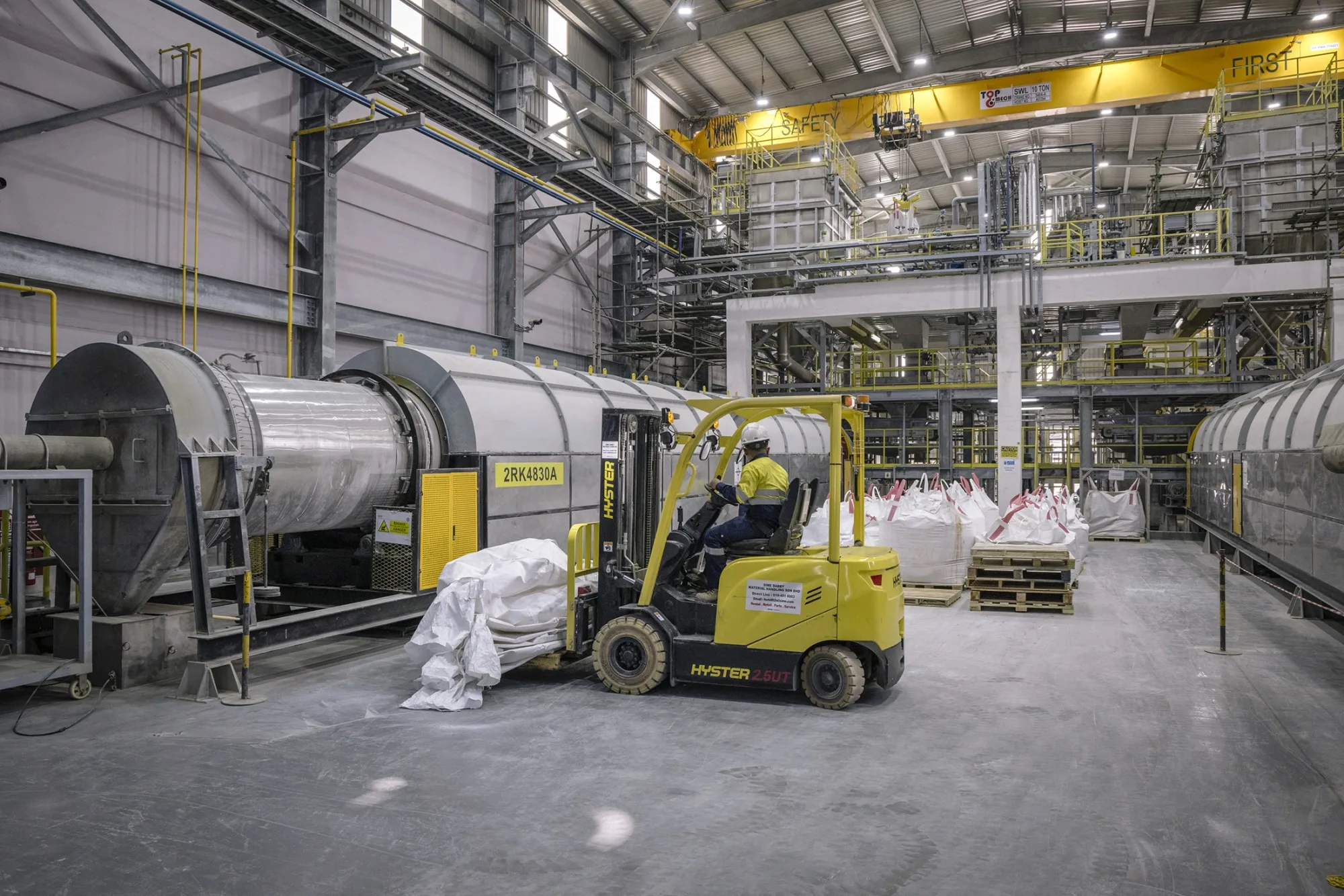
A rotary kiln that helps bake separated rare earths into the final powdered product at the Lynas Advanced Materials Plant. Photographer: Ian Teh/Bloomberg
In the early 2010s, Beijing imposed export restrictions on rare earths that created a supply squeeze and pushed up the price of neodymium-praseodymium oxide — a light rare earth material used in magnets — to more than $200 per kilogram.
The spike triggered a wave of new production from companies like Lynas, as well as expanded Chinese output, a dynamic Western suppliers say can make it tough for competitors to remain viable. Lynas Chief Executive Officer Amanda Lacaze said she “vividly” remembers having to sell the oxide for around $29 per kilogram at the time. Global prices have rallied over the past year to well over $100 a kilogram.
Another problem is that rare earths are rarely produced in isolation. Heavy elements are often extracted alongside lighter ones, meaning the economics are tightly linked. If the price of neodymium-praseodymium falls, for instance, it can undermine the viability of the entire mix.
That vulnerability, combined with China’s low-cost, vertically integrated system, has pushed the US and its allies to pursue a rare earths trade bloc in recent months. The goal is to build an autonomous Western market, underpinned by price floors and other measures, to shield governments and businesses from Chinese pricing pressure.
Forging consensus is tricky. Much of the diplomacy, led by the Trump administration, has exposed divisions. Japan has been reluctant to take steps that could provoke China, which opposes the formation of “small groups” it says disrupt global trade. In Europe, some leaders remain wary of price floors, arguing they could distort markets and raise costs.
“You can look at the stats, but a lot of this is going to depend on things that are really difficult to quantify: How well is the US going to work with allies?” said Chris Kennedy, the economic statecraft lead at Bloomberg Economics. “We still don’t know the extent to which that’s possible right now under this administration, or how China will respond.”
High prices may also trigger a demand response. Magnet makers are trying to reduce exposure to dysprosium and terbium by using smaller quantities or, in some cases, redesigning products to avoid them altogether. Japan’s Proterial Ltd. has cut its use of heavy rare earths “significantly” over the past two years, Chief Executive Officer Sean Stack told the Nikkei news agency.
There are limits to that shift. Many applications still rely on them for performance, meaning demand is unlikely to disappear.
“Lots of people are trying to work out what they can do to conserve heavies,” said Rowena Smith, chief executive of Australian Strategic Materials. “But if you’re a near-term producer, you should be sitting comfortably — people will prefer to have them if they can.”
Governments Are Pledging More Capital
Even partial independence from Beijing will be tough in the near-term.
Project Blue, a critical minerals market researcher, is more bullish than other consultancies about heavy rare earth supplies outside China by the end of the decade. They pointed to the number of projects already in the pipeline, especially for magnets.
But CRU Group says most new projects are still at an early stage and are likely to come online later than expected, with the heavies remaining the main bottleneck. Benchmark Mineral Intelligence expects China and Myanmar, a key supplier to Beijing, to still account for almost 80% of global supply of dysprosium and terbium in 2031.
The lights aren’t necessarily a done deal either. On a recent investor call, James Litinsky, Chief Executive Officer of MP Materials Corp., which operates the US’s only active rare earths mine at Mountain Pass, California, said a shortage of neodymium-praseodymium oxide will remain a “binding constraint” on magnet production outside China for at least the next five years.
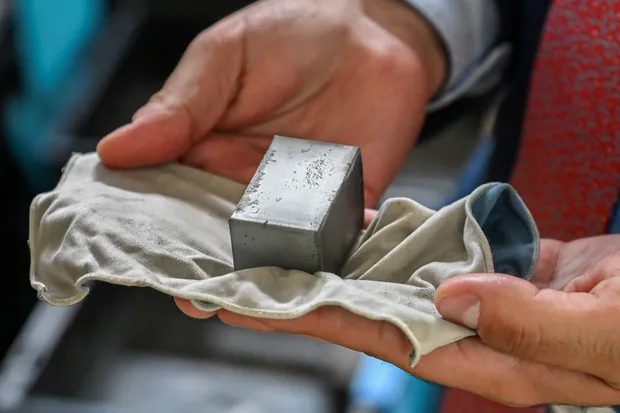
A rare earth magnetic bar produced at a Neo Performance Materials Inc. magnetic plant in Narva, Estonia. Photographer: Sergei Stepanov/Xinhua News Agency/Getty Images
That doesn’t mean China will always dominate, said Gracelin Baskaran, director of the Critical Minerals Security Program at the Center for Strategic and International Studies. Over the past year, Washington has made rare earths an “absolute focal point,” deploying tools such as equity, concessional financing and public procurement.
“We have rolled out the entire industrial policy toolkit for our rare earths,” she said. “That’s exactly what China did.”
The approach is beginning to draw capital. Investments totaling $6.3 billion were announced last year for projects outside China, with more than 60% coming from the US government, according to Benchmark Mineral Intelligence. A further $2.8 billion followed in the first quarter of 2026.
The push has brought in a wide range of players. MP Materials is expanding mining and magnet production in California and Texas. Smaller firms are experimenting with extracting the elements from coal waste and tailings. In April, USA Rare Earth Inc. agreed to acquire Brazilian miner Serra Verde Group for $2.8 billion, one of the largest deals in the industry.
Energy Fuels Inc., a uranium producer, doubled-down on the sector after Trump took office, leveraging its processing expertise to move into refining and separation, said Chief Executive Officer Ross Bhappu. The company opened a pilot facility in Utah last year, producing its first kilogram of dysprosium in October and about 40 kilograms so far, while also beginning small-scale terbium output.
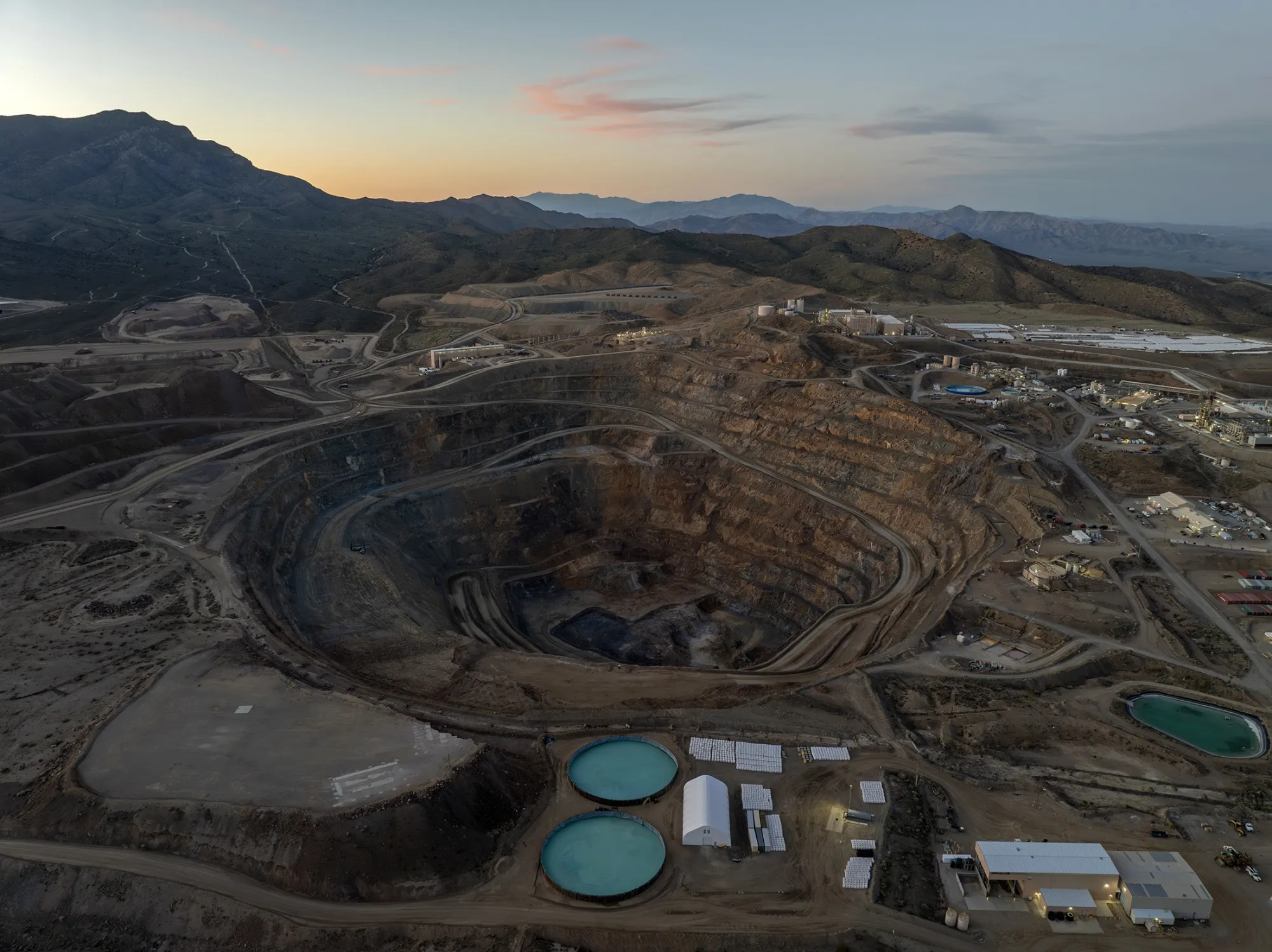
Mountain Pass rare earths mine in California in April. Photographer: David McNew/Getty Images
Western manufacturers will increasingly have to lean on non-Chinese suppliers despite higher costs or face disruptions, he said, pointing to episodes such as Ford Motor Co. temporarily idling operations last year amid constraints.
“We can’t be reliant on a geopolitical risk issue that could shut our factories down,” Bhappu said. “There are only going to be a handful of companies that are successful in narrowing the gap for what the US consumes versus what China is sending over here.”
Building Alliances Is a Diplomatic Tightrope
Ultimately, the build-out will depend on how effectively governments can strike cross-border deals. Brazil, home to the largest rare earth reserves outside China, will be central to that effort.
In Minas Gerais, an ancient volcanic region has concentrated rare earth elements in ionic clay deposits similar to those in China and Myanmar. Australian-listed Meteoric Resources NL and Viridis Mining and Minerals Ltd. are leading development, targeting first production in 2028.
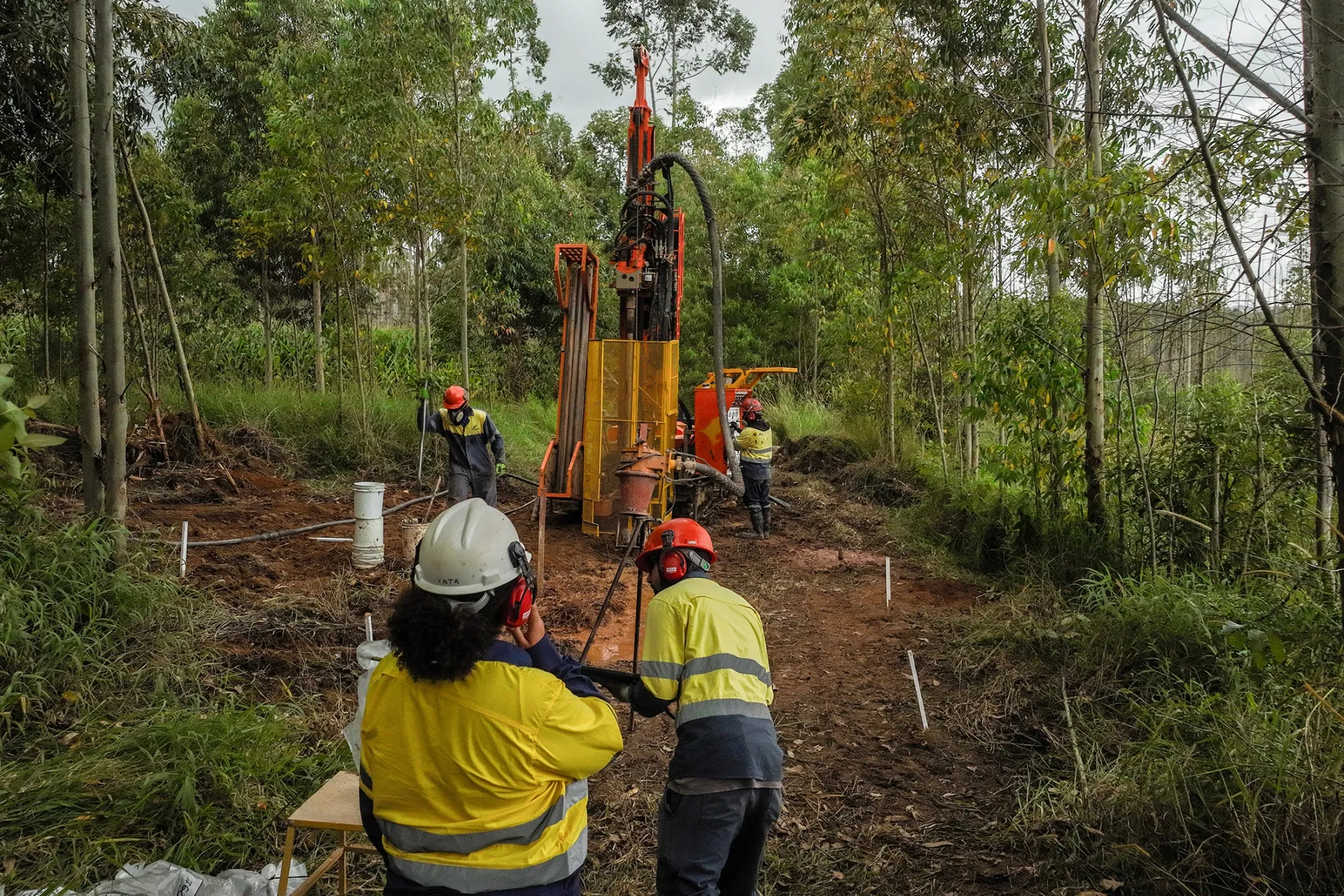
Drillers pump water into the soil to retrieve samples using a hydraulic drill at Meteoric Resources’ rare earth project in Poços de Caldas, Minas Gerais, Brazil, in March. Photographer: Dado Galdieri/Bloomberg
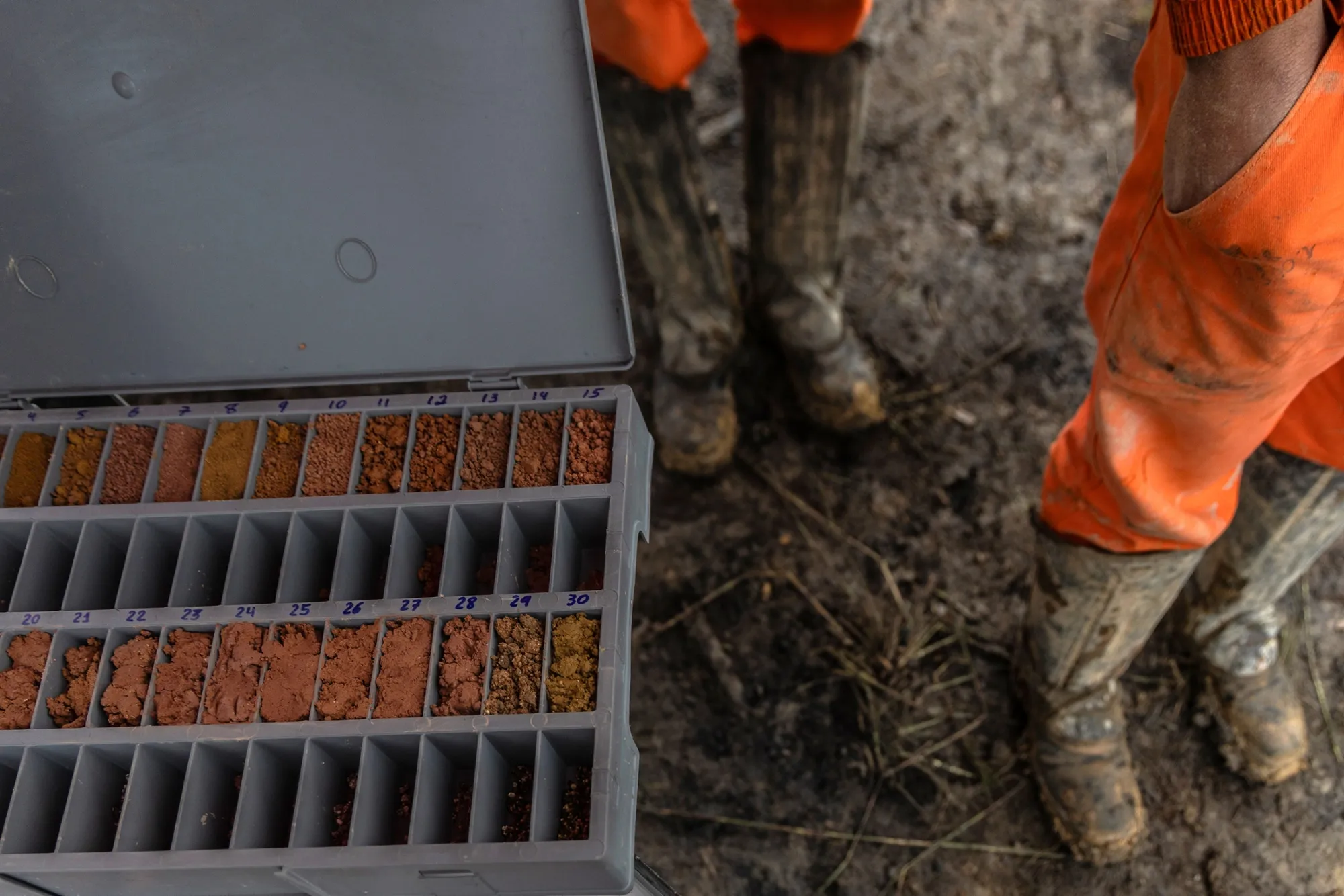
Soil samples collected at the Viridis’s rare earth project, prepared for laboratory analysis to detect rare earth minerals, in Poços de Caldas. Photographer: Dado Galdieri/Bloomberg
Warehouses in Poços de Caldas are already filled with plastic bags containing samples. Geologists say the deposits are rich in dysprosium, terbium, neodymium and praseodymium, with higher recovery rates than comparable ones in China. It’s an advantage that could help the companies weather price manipulations.
“We can withstand a dumping campaign by China,” said Klaus Petersen, a geologist and Brazil country manager for Viridis.
Together, Meteoric and Viridis expect to supply about 10% of current global demand for dysprosium and terbium, and aim to build refining capacity to avoid shipping material to China.
That potential has drawn US and European interest, though politics has complicated progress. A planned US partnership on critical minerals faltered in March when a US Embassy-hosted summit in Sao Paulo went ahead without senior members of President Luiz Inacio Lula da Silva’s government, which has clashed with Trump.
Structural hurdles also persist. Brazil’s bureaucracy remains an obstacle, and while the government wants a full rare earths supply chain, it lacks cohesive policies linking mining, processing and manufacturing, Bank of America analysts wrote in February.
For now, the proposed mine and processing sites are surrounded by brush and farmland, often accessible only by four-wheel drive during rainy days. To achieve vertical integration, much more is needed, said Meteoric executive director Marcelo de Carvalho.
“We’ll need to have tax benefits to attract the right capital and the right people,” he said.
New Supply Chains Still Aren't Enough
Lynas is trying to model the way forward.
Founded in the 1980s as a small gold explorer in remote Western Australia, the company pivoted in the 2000s after discovering rare earth deposits at Mount Weld, setting out to build an integrated supply chain outside China.
After China’s first rare earth embargo pushed Japanese companies to seek alternative suppliers, Japan invested $250 million in 2011, but the company struggled for years with low output, quality issues and falling prices.
The partnership has since strengthened, with a supply deal through 2038 that includes minimum pricing, set volumes and priority access for Japanese buyers to most of Lynas’s heavy rare earth output.
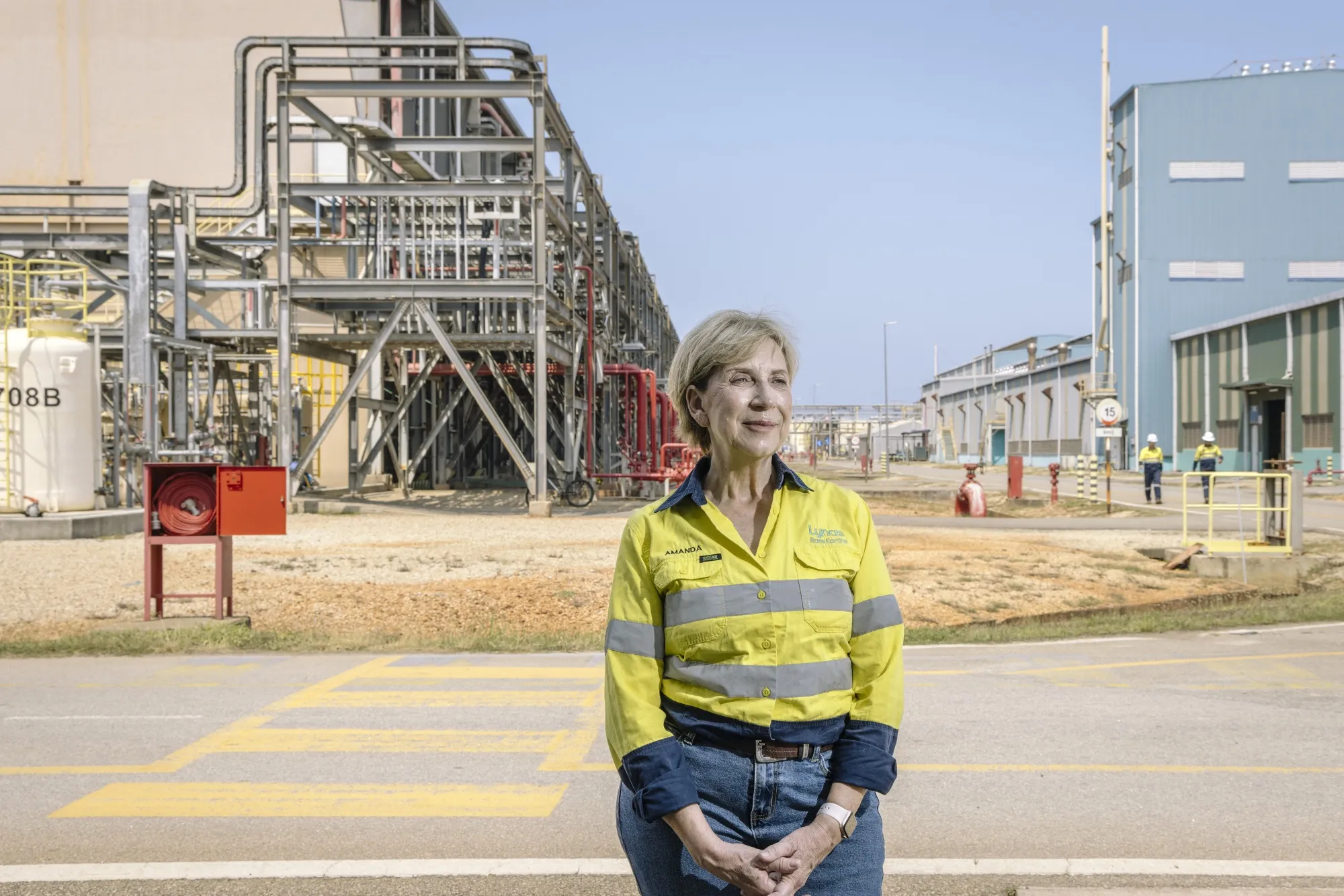
Amanda Lacaze, chief executive officer of Lynas Rare Earths. Photographer: Ian Teh/Bloomberg
“We went through tough times,” said Chief Operating Officer Pol Le Roux. “We still make some mistakes from time to time. Just not so often.”
Even so, limitations persist. Until Lynas began delivering dysprosium and terbium last year, Japan relied almost entirely on China for heavies. More broadly, although Tokyo cut its dependence on rare earths in general from about 90% in the early 2010s to 60% by 2020, that figure has since climbed again, reaching roughly 76% as of January, reflecting in part an increase in demand.
As alternative options emerge, China isn’t standing still either. Instead of just exporting raw materials, Beijing is now moving further down the value chain — selling magnets embedded in finished components like motors, and deepening reliance on Chinese manufacturing. Companies like JL Mag Rare-Earth Co. are expanding rapidly, producing parts for robots and EVs for major global brands.
And as for Trump’s 18-month timeline for independence?
Kennedy of Bloomberg Economics said the US is still far from rare earth self-sufficiency.
“There’s no doubt that China will retain that leverage until at least when Trump is leaving office,” he said.